
In the sophisticated world of horology, few terms carry as much weight, utility, and aesthetic appeal as “chronograph.” For the uninitiated, a watch is a device designed to tell time. For the enthusiast, a watch is a mechanical marvel, and a chronograph represents one of its most complex and storied complications. At its simplest, a chronograph is a watch that functions as a stopwatch, allowing the wearer to measure elapsed time while simultaneously displaying the current time. Yet, to dismiss it merely as a stopwatch is to overlook the intricate engineering, the historical significance, and the design language that has defined this complication for over a century.

The Technical Anatomy of a Chronograph
Understanding what a chronograph is requires a look under the dial. Unlike a standard time-only watch, which utilizes a gear train to move the hour, minute, and second hands, a chronograph incorporates an additional mechanism designed to start, stop, and reset a dedicated set of hands, often referred to as the “chronograph seconds” or “sweeping seconds” hand.
How the Mechanism Operates
The heart of a mechanical chronograph is its transmission system, which links the movement’s mainspring to the chronograph mechanism. When the wearer presses the pusher—usually located at the 2 o’clock position—a clutch engages, transferring energy from the gear train to the chronograph seconds hand. When the pusher is pressed again, the clutch disengages, freezing the hand in place. A third press, typically on the pusher located at the 4 o’clock position, triggers a heart-shaped cam system that resets the hands to zero.
Column Wheel vs. Cam-Actuated Systems
Within the realm of high-end watchmaking, the debate between column wheel and cam-actuated (shuttle) systems is a focal point of technical appreciation. The column wheel is widely considered the traditional, superior method. It features a rotating wheel with vertical pillars that control the start, stop, and reset functions. The action is crisp, precise, and highly satisfying to the touch. Conversely, cam-actuated systems—pioneered in the mid-20th century to reduce manufacturing costs—are more robust and easier to service, though they lack the tactile delicacy of their column-wheel counterparts.
The Evolution and Historical Significance of Chronographs
The chronograph was not merely born out of a desire for complexity; it was born out of necessity. In the early 19th century, horse racing and artillery fire required precise measurement of durations that could not be tracked with a standard watch.
From Race Tracks to Cockpits
Louis Moinet is often credited with creating the first chronograph in 1816, designed specifically for tracking astronomical objects. However, it was Nicolas Mathieu Rieussec who brought the complication into the public eye in 1821 with his “time writer,” which used ink to mark intervals on a rotating dial. As the 20th century dawned, the focus shifted from stationary tracking to mobile precision. Pilots required chronographs to calculate fuel consumption and navigation intervals, while racing drivers relied on them to shave milliseconds off their lap times.
The Space Race and the Iconography of Design
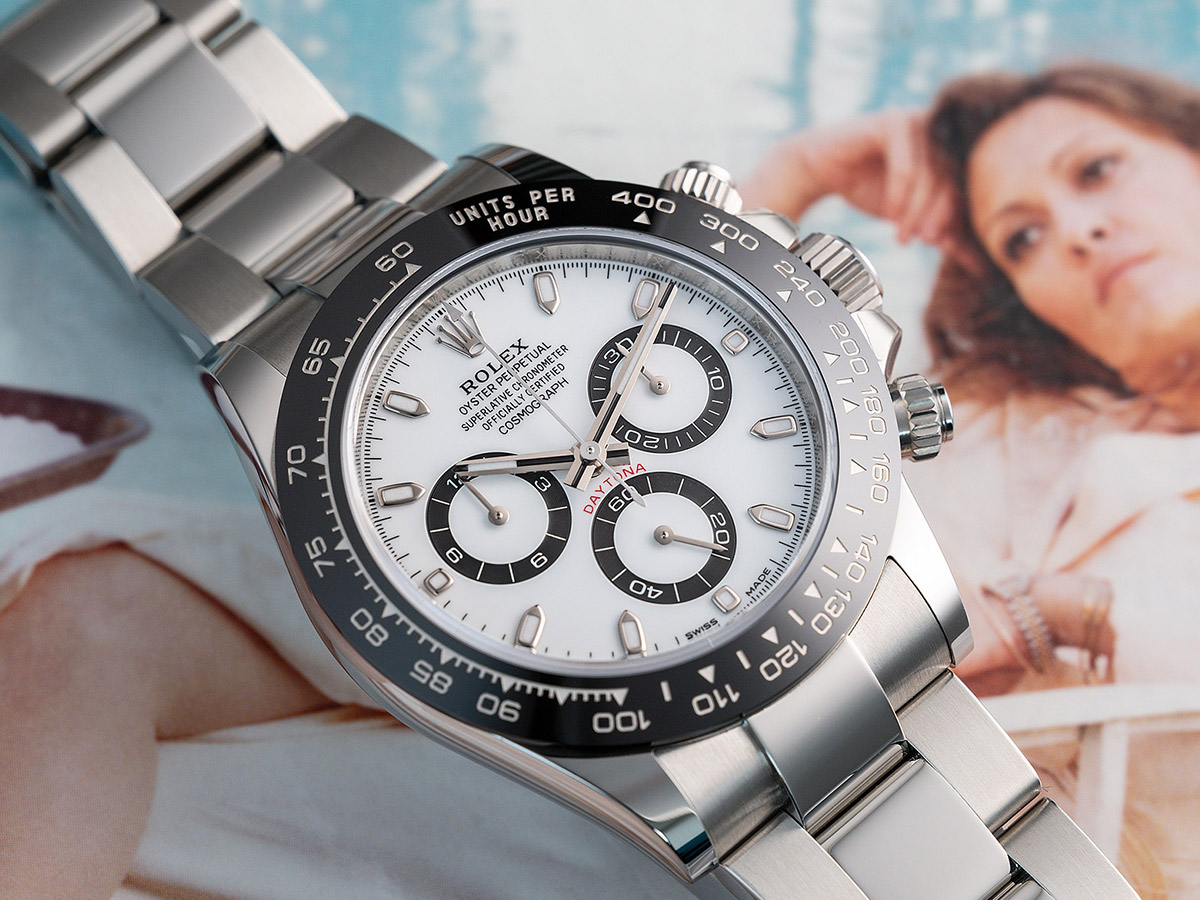
Perhaps the most famous iteration of the chronograph is the model designed for the Apollo missions. The ability to measure precise intervals under extreme conditions—such as a vacuum or zero gravity—cemented the chronograph’s status as a tool of ultimate reliability. This historical usage defined the “tool watch” aesthetic: a busy dial featuring three sub-dials (registers) for tracking seconds, minutes, and hours, protected by a sturdy case and often featuring a tachymeter scale on the bezel.
Decoding the Dial: Registers and Scales
When you look at a chronograph, you are essentially looking at a data-processing interface. The layout of the dial is dictated by the movement’s architecture, but the presence of registers and scales provides the “why” behind the complication.
Understanding the Sub-Dials
Most modern chronographs utilize a “tri-compax” layout, featuring three sub-dials. One register typically tracks the running seconds of the watch itself (to ensure the watch is wound and ticking), while the other two registers accumulate the elapsed minutes and hours of the chronograph function. Some watches feature a “bi-compax” layout, which removes the hour register for a cleaner, more vintage aesthetic, or a “monopusher” layout, where a single button handles all three operations.
The Functionality of the Tachymeter
A common feature found on the bezel or the perimeter of a chronograph dial is the tachymeter scale. This allows the user to calculate speed based on travel time over a fixed distance (usually one kilometer or one mile). By starting the chronograph when passing the first marker and stopping it at the second, the seconds hand will point to a number on the tachymeter scale, which represents the user’s average speed in units per hour. It is a brilliant example of analog computing, turning a mechanical device into a functional measurement tool.
The Modern Appeal: Why Chronographs Persist
In an era where smartphones can track time to the thousandth of a second with perfect atomic synchronization, the mechanical chronograph remains more popular than ever. This persistent demand is not driven by utility, but by the emotional and aesthetic value of mechanical engineering.
The Tactile Experience
There is an undeniable pleasure in engaging the pushers of a high-quality chronograph. The mechanical feedback—a firm, responsive “click”—creates a physical connection between the wearer and the movement. Unlike a digital stopwatch, which is cold and abstract, the mechanical chronograph is visceral. It allows the wearer to interact with the passage of time rather than simply observing it.
Design Versatility
Chronographs are inherently more complex and visually layered than simple three-hand watches. This gives designers immense freedom. Whether it is a vintage-inspired racing watch with high-contrast registers or a modern, skeletonized masterpiece that reveals the gears in motion, the chronograph is a canvas. It balances the need for legibility with the desire for artistic expression. For many, the chronograph is the “holy grail” of watch collecting precisely because it represents the perfect intersection of form and function.

A Legacy of Excellence
Ultimately, “chronograph” translates to “time-writer.” While we may no longer use them to track horse races or time re-entry into the Earth’s atmosphere, the chronograph remains a symbol of human ingenuity. It is a testament to the belief that even in a digital world, there is a profound, irreplaceable value in the mastery of gears, springs, and manual precision. Whether you are a pilot, an engineer, or simply a collector of fine objects, the chronograph serves as a reminder that time is not just something to be observed; it is something to be measured, managed, and appreciated. When you fasten a chronograph to your wrist, you are wearing more than just a timepiece—you are wearing a history of technical ambition and the enduring pursuit of precision.
aViewFromTheCave is a participant in the Amazon Services LLC Associates Program, an affiliate advertising program designed to provide a means for sites to earn advertising fees by advertising and linking to Amazon.com. Amazon, the Amazon logo, AmazonSupply, and the AmazonSupply logo are trademarks of Amazon.com, Inc. or its affiliates. As an Amazon Associate we earn affiliate commissions from qualifying purchases.