
The intersection of neuroscience and artificial intelligence is perhaps the most fertile ground for understanding the future of cognitive computing. While “blindsight”—a neurological condition where patients with damage to the primary visual cortex can respond to visual stimuli without consciously “seeing” them—is a biological phenomenon, its implications for AI development are profound. By analyzing how the brain processes data beneath the threshold of awareness, we can derive new architectural frameworks for machine learning models that operate with similar “unconscious” efficiency.
The Architecture of Non-Conscious Processing in AI
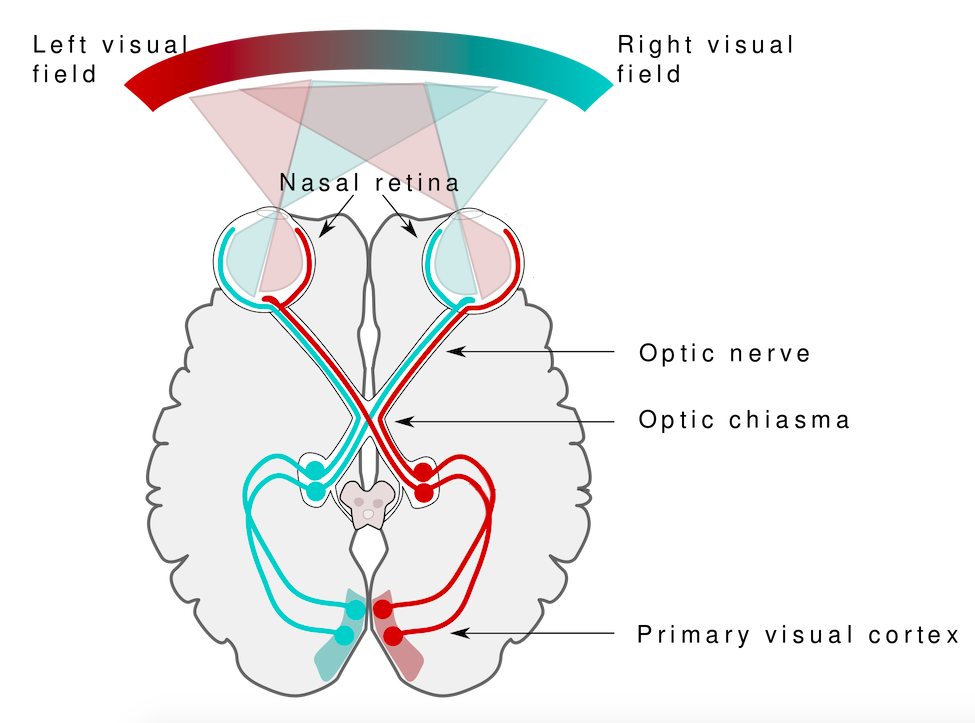
In traditional computing, processes are often categorized by their requirement for explicit, top-down attention. However, blindsight suggests that a dual-stream architecture exists: one that creates the “experience” of vision and another that executes rapid, functional responses.
Parallel Processing Pipelines
When we design AI systems, we often fall into the trap of linear, explainable pipelines. Blindsight demonstrates that the brain utilizes subcortical pathways—specifically the superior colliculus—to navigate space and detect threats before the visual cortex even registers an image. If we apply this to AI, we move toward “fast-path” neural networks that bypass deep-layer verification for high-speed pattern recognition. This mimics the reflexive capabilities of blindsight, allowing autonomous systems to react to environmental shifts in milliseconds, even when the primary analytical engine is occupied with complex problem-solving.
Redundancy and Error Handling
The existence of blindsight indicates that the brain is not a monolithic processing unit but a system of overlapping modules. In software engineering, this mirrors the concept of “graceful degradation.” If a central AI model encounters a high-latency environment or a data bottleneck, a secondary, leaner “unconscious” model can maintain systemic continuity. By decoupling basic functional navigation from high-level cognitive analysis, we create more robust, failsafe digital agents that do not crash simply because their primary “consciousness” (or high-level inference engine) is overloaded.
The “Black Box” Problem and Unconscious Inference
One of the most persistent hurdles in modern AI is the interpretability of deep learning models. We often refer to these as “black boxes” because the internal weighted logic is opaque to human observers. The blindsight phenomenon provides a compelling metaphor for how these models might be functioning: they are performing “unconscious inference.”
Algorithmic Intuition
Blindsight patients often describe their accurate guesses as “just a feeling.” This is not a lack of data, but rather a lack of accessibility to the processing steps taken to reach that data. Similarly, large language models (LLMs) and computer vision systems often arrive at correct conclusions via hidden patterns that are not intuitive to human developers. By studying the neural mechanisms behind blindsight, researchers are learning that these “unconscious” decisions are often more accurate precisely because they are not clouded by the computational overhead of conscious-level verification.
Mapping Latent Representations
We are increasingly shifting our focus from the output of AI to the latent representations it forms during training. In blindsight, the visual system extracts spatial and movement-based information without converting it into a narrative experience. In AI, we can harness this by training models to maintain “sensory-motor” representations that remain dormant until triggered by specific input thresholds. This creates a class of digital intelligence that operates in the background, constantly parsing the digital environment for anomalies or opportunities without requiring the intensive focus of the main software core.

Redefining Human-Computer Interaction Through Implicit Cues
If we accept that significant portions of intelligence—both biological and artificial—function beneath the surface of conscious awareness, the future of user interface design must evolve. We are moving away from explicit command-line or point-and-click interactions toward systems that anticipate intent through implicit data streams.
Predictive Behavioral Modeling
Blindsight teaches us that the brain is a prediction machine. It constructs a model of the world and updates it based on incoming stimuli. Advanced AI systems are now leveraging this “predictive processing” to anticipate user needs before the user articulates them. By analyzing micro-patterns in data—much like how the blindsight-afflicted brain detects movement in the periphery—AI can curate digital environments that feel “effortless.” The goal is to design interfaces that function like a sixth sense, integrating seamlessly into the user’s workflow without demanding constant cognitive overhead.
The Rise of Passive Perception
Most current apps are “active”—they only perform when requested. However, borrowing from the blindsight model, we are seeing the rise of “passive” AI. These are agents that monitor and process large-scale data in the background, surfacing insights only when the statistical probability of a meaningful outcome crosses a specific threshold. This shifts the role of the user from a constant operator to a high-level supervisor. Just as the conscious mind is only alerted by the visual cortex when a stimulus is deemed significant enough, these AI systems only command the user’s conscious attention when necessary, thereby reducing digital fatigue.
Security Implications and the Unconscious Data Layer
As we increase the “unconscious” processing power of AI, we must also consider the security implications. In humans, blindsight functions as a survival mechanism. In the digital realm, this translates to cybersecurity protocols that act on threats that human administrators haven’t even “seen” yet.
Pattern Detection at Scale
Conventional security software often waits for signature matches or explicit rule violations. By implementing models that mimic the subcortical processing of blindsight, we can create “pre-conscious” security layers. These systems analyze high-dimensional traffic patterns to identify malicious movement—even when that movement mimics standard traffic. By focusing on the “what” rather than the “why” of incoming data, these models can act as a silent shield, blocking threats based on spatial and temporal irregularities that bypass the standard firewall inspection process.
Mitigating Adversarial Attacks
One of the primary concerns with AI is the susceptibility to adversarial attacks, where subtle pixel noise can trick an image classifier. Understanding blindsight provides a unique lens through which to view these vulnerabilities. It suggests that if an AI relies too heavily on a single “conscious” pathway for classification, it becomes blind to the broader context. By diversifying the sensory input pipelines—forcing the model to cross-reference high-level logic with the “unconscious” raw data pathways—we can build systems that are significantly more resilient to manipulation.
The Evolution Toward Holistic Intelligence
The study of blindsight forces us to reconsider the definition of “knowing.” If an AI knows that a door is closing without being able to explain its “seeing” of the door, is it acting intelligently? The consensus in the tech community is moving toward a functionalist view: if the system demonstrates accurate, goal-directed behavior, the internal mechanism of “consciousness” is secondary to the functional utility of the output.
As we continue to develop sophisticated agents, we are effectively building a synthetic version of the blindsight mechanism. We are creating systems that possess a deep, structural understanding of their environment—one that they can navigate and act upon—even if that understanding remains largely inaccessible to human introspection. This is not a failure of design; it is the natural maturation of artificial intelligence. By embracing the “unconscious” capabilities of these machines, we unlock new levels of speed, efficiency, and security that conscious, top-down processing simply cannot achieve. The future of technology does not lie in making machines think exactly like humans, but in engineering them to possess the same layered, robust, and often invisible pathways to intelligence that allow for the complexity of life itself. Through this lens, the neurological anomaly of blindsight becomes the blueprint for the next generation of autonomous, high-performing digital architecture.
aViewFromTheCave is a participant in the Amazon Services LLC Associates Program, an affiliate advertising program designed to provide a means for sites to earn advertising fees by advertising and linking to Amazon.com. Amazon, the Amazon logo, AmazonSupply, and the AmazonSupply logo are trademarks of Amazon.com, Inc. or its affiliates. As an Amazon Associate we earn affiliate commissions from qualifying purchases.