
In the rapidly evolving landscape of digital communication, the humble avocado emoji ( ) has transcended its origins as a mere representation of a stone fruit to become a significant linguistic marker within the tech ecosystem. Since its introduction in 2016 as part of Unicode 9.0, the avocado emoji has served as a fascinating case study in how technology influences human expression. To understand what the avocado emoji means, one must look beyond the kitchen and into the intricate world of character encoding, user interface (UI) design, and the algorithmic processing of visual metadata.

In the tech sector, emojis are not just colorful icons; they are standardized units of data that facilitate cross-platform communication. The avocado emoji, in particular, has become a staple of modern digital parlance, representing everything from health-conscious lifestyles to specific socio-economic demographics. This article explores the technical foundations of the avocado emoji, its role in software design, and how it is utilized by social media algorithms to categorize and rank digital content.
The Evolution of Unicode: How the Avocado Entered the Digital Lexicon
The journey of the avocado emoji from a design concept to a global digital standard is a testament to the rigorous processes of the Unicode Consortium. This non-profit organization is responsible for maintaining the Unicode Standard, ensuring that text—and by extension, emojis—can be transmitted across different devices, operating systems, and languages without losing their meaning.
The Role of the Unicode Consortium in Symbol Standardization
Before the avocado appeared on your smartphone keyboard, it had to undergo a complex approval process. Proponents of the emoji had to prove its “expected usage level” and “distinctiveness.” From a technical perspective, the inclusion of the avocado emoji was part of a broader movement to expand the “Food & Drink” category to better reflect global culinary trends. Once approved, it was assigned a specific code point: U+1F951. This hexadecimal value is what allows a server in California to send a message to a device in Tokyo and ensure that both users see an avocado rather than a broken “tofu” character (the empty box that appears when a character is unsupported).
Cross-Platform Rendering: Why Your Avocado Looks Different on iOS vs. Android
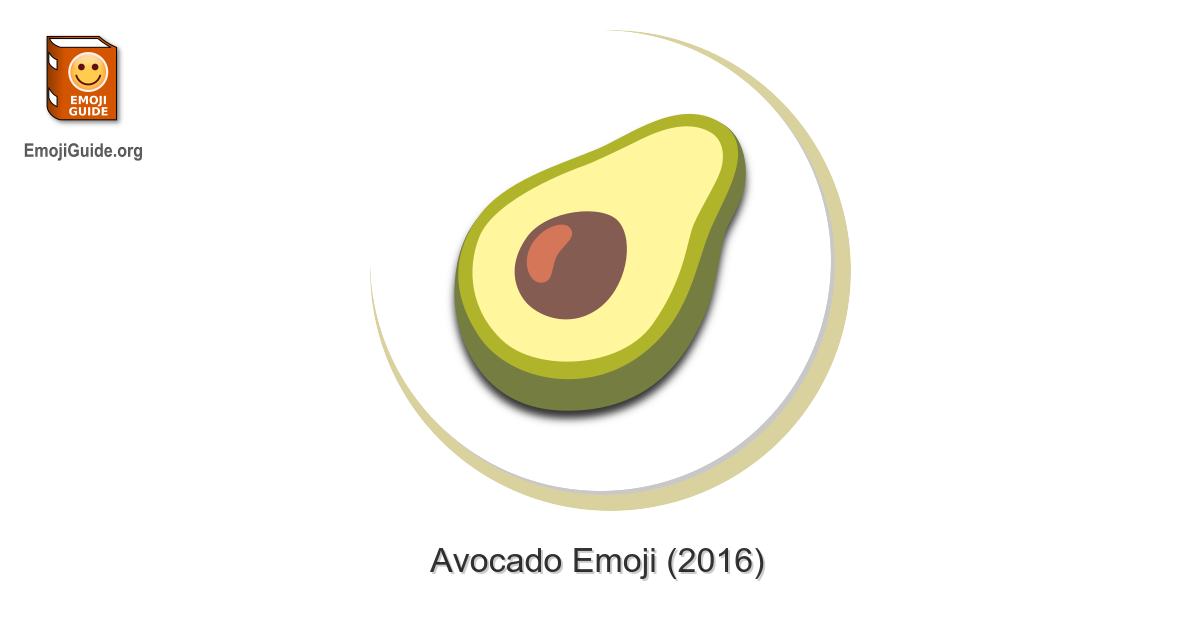
While the Unicode code point is universal, the visual representation—the glyph—is determined by the software manufacturer. This leads to subtle but significant differences in how the avocado emoji is perceived. Apple’s rendition is known for its photorealistic texture and vibrant green hue, optimized for Retina displays. In contrast, Google’s Noto Color Emoji set often emphasizes flatter, more “material design” aesthetics.
For developers and UI/UX designers, these discrepancies are critical. A symbol must be legible at 16×16 pixels and 128×128 pixels alike. The technical challenge lies in creating a vector-based image that retains its “avocado-ness” across different screen technologies, from OLED mobile displays to low-resolution desktop monitors.
Digital Linguistics and the Shift Toward Visual-First Communication
The avocado emoji serves as a cornerstone of digital linguistics—the study of how language is used in tech-mediated environments. In many software applications, emojis function as “lexical substitutes,” where a single icon replaces an entire phrase. In the case of the avocado, the technological “meaning” is often tied to the context of the app in which it is used.
Emojis as Metadata: How Algorithms Use Symbols
Modern social media software and search engines do not just see the avocado emoji as a picture; they see it as metadata. When a user includes in an Instagram caption or a TikTok comment, the platform’s algorithm categorizes that content. Because the avocado is frequently associated with “wellness,” “veganism,” and “brunch,” the tech infrastructure uses this symbol to build a preference profile for the user.
From a data science perspective, emojis are high-density information packets. They provide sentiment and topical context that text alone might lack. If a fitness app’s AI sees a high frequency of the avocado emoji in a user’s logs, it may trigger programmatic recommendations for high-fat, healthy-eating content. Thus, the “meaning” of the avocado is partially defined by the data clusters it belongs to within a software’s database.
Sentiment Analysis in Social Media Software
Natural Language Processing (NLP) tools used by tech companies are increasingly sophisticated in how they interpret emojis. Sentiment analysis software assigns a “polarity” to symbols. The avocado emoji generally carries a high “positive sentiment” score. Tech companies use these scores to monitor brand health or to filter content in “Safety and Integrity” modules. Unlike ambiguous emojis (like the “clown” or “skull”), the avocado remains relatively stable in its positive, lifestyle-oriented connotation, making it a reliable data point for machine learning models.

The Technical Infrastructure of Emoji Deployment
Integrating emojis like the avocado into software requires a robust technical framework. It isn’t as simple as pasting an image into a text box; it involves complex layers of character encoding and API integration.
Font Sets and Character Encoding (UTF-8)
The backbone of emoji technology is UTF-8 (Universal Character Set Transformation Format—8-bit). This encoding system allows for the representation of over a million different characters. When you type an avocado emoji, your keyboard software sends the sequence 0xF0 0x9F 0xA5 0x91 to the application’s text buffer.
Software developers must ensure that their databases are configured to “utf8mb4” (in MySQL, for example) to properly store these four-byte characters. Older systems using standard three-byte UTF-8 would often crash or truncate data when encountering an emoji. The avocado, therefore, represents a period of technical transition where software had to be modernized to support a more visually diverse set of data.
API Integration for Emoji Pickers
The “Emoji Picker” seen in apps like Slack, Discord, or WhatsApp is a sophisticated piece of software engineering. These pickers often rely on external APIs or libraries like emoji-mart or emoji-datasource. These tools map the Unicode code point to a localized string. When a user searches for “healthy” in a search bar, the software’s internal dictionary maps that keyword to U+1F951. This demonstrates how the tech world has indexed human concepts into a searchable, icon-driven database.
UX Design and the Psychology of the Avocado Iconography
From a User Experience (UX) perspective, the avocado emoji is a powerful tool for creating engagement. Its popularity is not accidental; it is a result of how our brains process visual stimuli within digital interfaces.
Why Certain Icons Go Viral in App Interfaces
The avocado became a “tech darling” because of its unique shape and high contrast. In a sea of circular yellow “smilies,” the oblong green shape of the avocado stands out. UX designers often utilize this “pop-out effect” to draw attention to specific areas of a mobile interface. If a food delivery app wants to highlight its “Healthy Options” section, the avocado emoji is a more efficient UI element than a text label, as it is processed by the brain much faster than written words.
Contextual Prediction and Predictive Text AI
The predictive text engines on iOS and Android (driven by Recurrent Neural Networks or Transformers) have learned the contextual “meaning” of the avocado. When a user types “let’s get breakfast,” the keyboard’s AI often suggests the avocado emoji. This is the result of training models on billions of lines of anonymized chat data.
In this sense, the “meaning” of the avocado emoji is a reflection of collective human behavior as mirrored by AI. The technology doesn’t know what an avocado is in a biological sense; it knows that the character U+1F951 frequently follows words related to “toast,” “lunch,” and “clean eating.” The emoji has become a node in a massive neural network of human intent and technological response.
Conclusion: The Future of Visual Data in Tech
The avocado emoji is more than a cultural trend; it is a vital component of the modern digital stack. It represents the successful implementation of global standards (Unicode), the complexity of cross-platform software engineering, and the power of algorithmic categorization. As we move toward a more visual-centric internet—driven by augmented reality (AR) and sophisticated AI—the role of standardized symbols like the avocado will only grow.
For technologists, developers, and data scientists, the avocado emoji serves as a reminder that every character we type is a piece of data that carries weight. Whether it’s being used to train a sentiment analysis model, decorate a UX interface, or facilitate a cross-border conversation, the avocado is a testament to the seamless integration of human culture and technological innovation. Understanding what the avocado emoji “means” is, ultimately, about understanding how we have successfully translated the complexities of our physical world into a structured, digital format.
aViewFromTheCave is a participant in the Amazon Services LLC Associates Program, an affiliate advertising program designed to provide a means for sites to earn advertising fees by advertising and linking to Amazon.com. Amazon, the Amazon logo, AmazonSupply, and the AmazonSupply logo are trademarks of Amazon.com, Inc. or its affiliates. As an Amazon Associate we earn affiliate commissions from qualifying purchases.