
In the rapidly evolving landscape of mobile software and digital ecosystems, ASO stands for App Store Optimization. While often described as “SEO for apps,” ASO is a distinct technical discipline focused on improving the visibility and conversion rate of mobile applications within digital marketplaces like the Apple App Store and Google Play Store. As of 2024, there are millions of applications competing for attention on these platforms. Without a robust ASO strategy, even the most innovative software can remain buried under layers of algorithmic filtering, never reaching its intended user base.
Defining ASO within the Modern Software Ecosystem
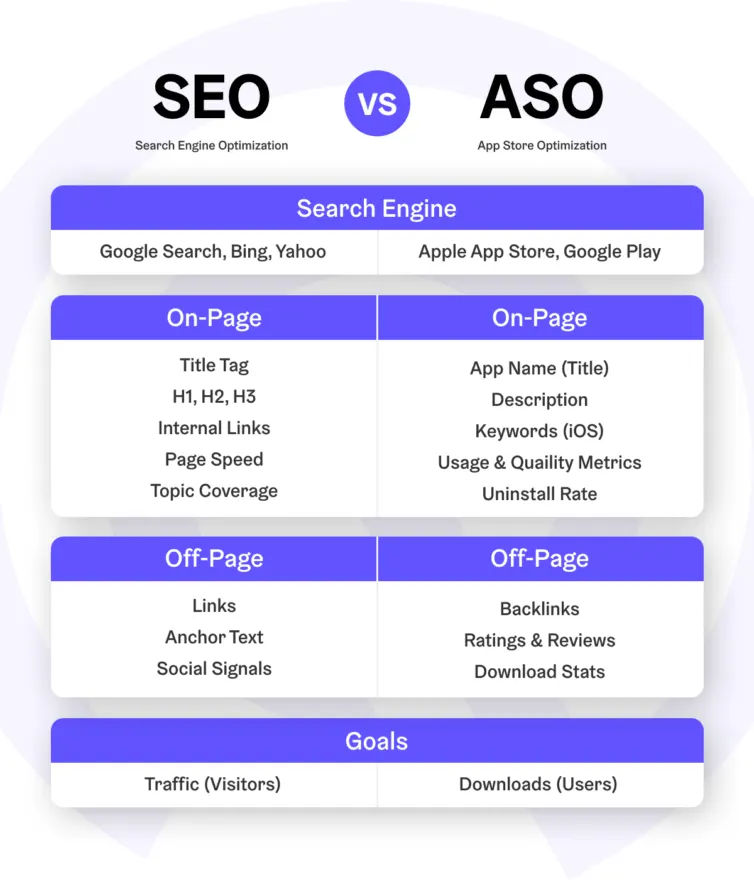
To understand what ASO means in a technical sense, one must view the app stores not just as digital storefronts, but as complex search engines and discovery platforms. These platforms utilize sophisticated algorithms to match user queries with the most relevant, high-quality software solutions available.
The App Store as a Search Engine
At its core, ASO is the process of optimizing a mobile app to rank higher in store search results and to appear more frequently in “Featured” or “Related” categories. Much like traditional web search engines, app stores use a variety of signals to determine an app’s relevance. These include textual data, historical performance metrics, and user engagement signals. When a user types a query like “photo editor” or “task manager,” the app store’s algorithm parses millions of data points in milliseconds to present a curated list of recommendations. For developers and tech companies, ASO is the mechanism used to influence these algorithms.
Why Technical Optimization Matters for App Growth
The importance of ASO cannot be overstated in a “mobile-first” world. Statistics consistently show that over 65% of app discoveries happen through direct searches within the app stores. If an app does not appear in the top three to five results for its primary keywords, its chances of organic acquisition drop significantly. Beyond simple visibility, ASO also encompasses Conversion Rate Optimization (CRO). This is the technical art of ensuring that once a user finds the app listing, they actually click “Download.” This involves a data-driven approach to visual assets and messaging, ensuring that the app’s value proposition is communicated instantly.
The Core Elements of On-Metadata Optimization
On-metadata optimization refers to the elements of an app listing that the developer has direct control over. These are the primary signals that tell the store’s algorithm what the app does and who it is for.
Keyword Indexing and Algorithm Logic
The technical foundation of ASO lies in keyword indexing. On the Apple App Store, developers are provided with a specific “keyword field” limited to 100 characters. This field is invisible to users but is crucial for the algorithm. On Google Play, however, the logic mimics traditional SEO more closely; the algorithm scans the app’s title, short description, and long description to identify relevant terms through Natural Language Processing (NLP).
Effective keyword strategy involves more than just selecting popular terms. It requires a balance of search volume (how many people are looking for the term) and competition (how many other apps are fighting for that term). Technical tools are used to analyze “keyword difficulty” scores, allowing developers to target long-tail keywords where they have a higher probability of ranking.
App Title and Subtitle Engineering
The App Title is the most weighted metadata element in both major stores. From a technical standpoint, including high-traffic keywords in the title significantly boosts ranking potential. However, both Apple and Google have strict character limits (usually 30 characters) and guidelines against “keyword stuffing.” The Subtitle (Apple) or Short Description (Google) provides an additional layer of indexing. These fields must be engineered to satisfy the algorithm while remaining readable for the human user. In the tech world, this is often a delicate balance of data-driven keyword placement and user-centric communication.
The Impact of Descriptions on Google Play Ranking
For Android developers, the “Long Description” is a vital technical asset. Google’s algorithm uses this space to understand the context and utility of the software. Unlike Apple, which does not use the description for keyword indexing, Google Play’s spider crawls the 4,000-character description to index the app for a wide variety of related searches. Utilizing a semantic keyword strategy—where related terms and synonyms are integrated naturally—helps the app appear in “Similar Apps” and “Suggested for You” sections, which are powered by machine learning models.
Technical Off-Metadata Signals and Performance Metrics
Off-metadata factors are external signals that the developer cannot change directly within the store console. These factors are often reflections of the app’s technical health and market reception.
Download Velocity and Installation Trends
One of the most influential ranking factors in ASO is “download velocity.” This refers to the number of installs an app receives within a specific timeframe (usually the last 24 to 72 hours). A sudden spike in downloads tells the algorithm that the app is currently trending, often leading to a temporary boost in search rankings. From a technical perspective, this means that ASO is not a vacuum; it must be synchronized with external traffic sources, such as social media campaigns or press releases, to create the momentum necessary to “break” the algorithm.
User Retention and App Stability as Ranking Factors
In recent years, app store algorithms have become more sophisticated, moving beyond simple download counts to focus on “App Quality.” Technical performance metrics—such as crash rates, ANR (App Not Responding) incidents, and battery usage—now directly impact ranking. Google Play, in particular, penalizes apps with high crash rates by pushing them lower in search results. Furthermore, “retention rate” (the percentage of users who keep the app after 30 days) is a key signal. If thousands of users download an app but uninstall it within minutes, the algorithm perceives the app as low-quality or misleading, leading to a loss in visibility.
The Feedback Loop: Ratings, Reviews, and Bug Reporting
Ratings and reviews serve as both social proof for users and data points for the algorithm. A high average rating (above 4.0) is generally required for top-tier visibility. Beyond the numerical score, the algorithm analyzes the text within reviews. If users frequently mention specific features or, conversely, complain about “bugs” or “lag,” the algorithm notes these keywords. Developers often use automated sentiment analysis tools to monitor these reviews, allowing them to address technical issues quickly and maintain their standing in the store.
Creative Optimization and Conversion Rate Mechanics
While keywords help people find the app, the creative assets convince them to install it. This is where ASO intersects with UI/UX design and behavioral psychology.
The Psychology of Iconography and UI Screenshots
An app’s icon is often the first technical “touchpoint” a user has with a brand in the store. It must be designed to stand out against a variety of backgrounds and system themes (such as Dark Mode). Following the icon, screenshots are the most influential visual factor. In the tech industry, “feature-driven” screenshots are the standard. This involves using the first two screenshots to showcase the app’s most powerful or unique technical capability. High-resolution imagery, clear captions, and a logical flow of information are essential for converting a “page view” into an “install.”
Video Previews and App Store Engagement
App preview videos offer a dynamic way to showcase software functionality. These short clips (usually 15-30 seconds) allow users to see the interface in action before committing to a download. From a technical perspective, these videos must be optimized for “silent viewing,” as they often autoplay without sound. Using text overlays to highlight key interactions ensures that the technical value of the app is communicated even in a high-distraction environment.
A/B Testing: The Scientific Method in ASO
The most successful tech companies do not guess which icons or screenshots will work; they use A/B testing. Both Google Play Console and Apple App Store Connect provide native tools (Store Listing Experiments and Product Page Optimization, respectively) to run split tests. This involves showing different versions of a listing to a small percentage of users and measuring which version results in more downloads. By iterating based on hard data, developers can incrementally improve their conversion rates, which in turn signals the algorithm that the app is highly relevant to users.
Advanced ASO: AI, Localization, and Future Trends
As artificial intelligence and global connectivity continue to reshape the tech landscape, ASO is becoming more complex and automated.
Leveraging Artificial Intelligence for Competitor Analysis
AI tools are now used to perform deep-dive competitor analysis. These tools can track daily keyword movements across thousands of apps, identifying gaps in a competitor’s strategy. Furthermore, generative AI is being used to draft initial versions of app descriptions that are optimized for specific NLP parameters. This data-driven approach allows tech teams to stay ahead of market shifts in real-time.
Technical Localization Beyond Language Translation
ASO on a global scale requires “Localization,” which is far more than just translating text. It involves adapting the app’s metadata and creatives to fit the cultural and technical norms of different regions. For example, search behavior in Japan differs significantly from that in the United States. Technical localization might involve changing the app’s screenshots to reflect local UI preferences or adjusting keywords to account for regional dialects. A fully localized app can see a 200% to 300% increase in downloads compared to a version that is only available in English.

The Shift Toward Personalized App Store Experiences
Looking forward, the “What does ASO mean?” question will increasingly be answered by personalization. Both Apple and Google are moving toward showing different content to different users based on their past behavior. Features like Apple’s “Custom Product Pages” allow developers to create up to 35 different versions of an app listing, each tailored to a specific audience or referral source. This represents the next frontier of ASO: a highly technical, segmented approach to user acquisition where the “one-size-fits-all” store listing is replaced by a dynamic, data-responsive experience.
aViewFromTheCave is a participant in the Amazon Services LLC Associates Program, an affiliate advertising program designed to provide a means for sites to earn advertising fees by advertising and linking to Amazon.com. Amazon, the Amazon logo, AmazonSupply, and the AmazonSupply logo are trademarks of Amazon.com, Inc. or its affiliates. As an Amazon Associate we earn affiliate commissions from qualifying purchases.