
In an increasingly data-driven world, the ability to organize, process, and retrieve information efficiently is paramount. Whether you’re a software developer, a data analyst, or simply a regular user navigating a digital interface, you constantly interact with organized data. One of the most fundamental concepts underlying this organization is “ascending order.” Far from being a mere technical jargon, understanding ascending order is key to comprehending how technology brings structure and clarity to vast amounts of information. It’s the silent architect behind many of our seamless digital experiences, from finding a specific file on your computer to filtering products on an e-commerce website. This article delves into the meaning, significance, and multifaceted applications of ascending order within the realm of technology.
The Core Concept: Defining Ascending Order
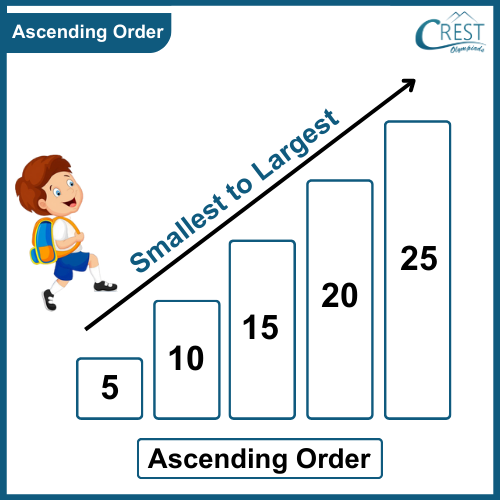
At its heart, ascending order is a method of arranging data in an increasing sequence. This principle is universally applicable across various data types, providing a standardized way to bring structure to disorder.
From A-Z to 0-9: Alphabetical, Numerical, and Chronological Sorting
The definition of “increasing” adapts gracefully to the type of data being sorted:
-
Alphabetical Order (A-Z): For textual data, ascending order means arranging items from the beginning of the alphabet to the end. This is common for lists of names, product categories, or dictionary entries. For example, “Apple,” “Banana,” “Cherry” is in ascending alphabetical order.
-
Numerical Order (0-9): For numerical data, ascending order implies arranging numbers from the smallest value to the largest. This is crucial for financial reports, scientific data, or inventory counts. For instance, 1, 5, 10, 100 is in ascending numerical order.
-
Chronological Order: When dealing with dates and times, ascending order means arranging events from the earliest to the latest. This is indispensable for calendars, event logs, and historical timelines. A sequence like January 1, 2023; February 15, 2023; December 31, 2023 illustrates ascending chronological order.
Beyond these common types, ascending order can also apply to other data structures, such as Boolean values (False before True) or custom sequences defined by specific rules, often within programming contexts.
Why Order Matters: The Efficiency and Clarity of Organized Data
The fundamental reason for employing ascending order (or any order) in technology is to enhance efficiency and clarity. Imagine trying to find a specific book in a library where books are shelved randomly, or locating a transaction in a bank statement where entries are not ordered by date. The task would be incredibly time-consuming and prone to errors.
In technology, this principle scales to enormous proportions. Ordered data:
-
Facilitates Search: Searching for specific items becomes significantly faster when data is sorted. Algorithms like binary search, for instance, can only operate on sorted data, drastically reducing search times from linear to logarithmic.
-
Improves Readability: Human comprehension is greatly aided by logical organization. Ordered lists, tables, and reports are easier to scan, interpret, and analyze.
-
Enables Analysis: Many analytical tasks, such as identifying trends, finding minimum/maximum values, or segmenting data, rely on data being in a specific order.
-
Ensures Consistency: Standardized ordering ensures that all users or systems interacting with the data perceive and process it in the same predictable manner.
The Counterpart: A Brief Look at Descending Order
While this article focuses on ascending order, it’s useful to briefly acknowledge its inverse: descending order. Descending order arranges data from the largest to the smallest (numerically), Z-A (alphabetically), or latest to earliest (chronologically). Many technological applications provide the option to switch between ascending and descending order, offering flexibility to users based on their immediate needs – for example, viewing the most recent emails first, or the highest-priced items at the top of a product list.
Ascending Order in Software and Data Management
The concept of ascending order is not just theoretical; it’s deeply embedded in the very fabric of how software operates and how data is managed across various technological platforms.
Databases and Querying: SQL’s ORDER BY Clause
In the world of databases, particularly relational databases managed with SQL (Structured Query Language), ascending order is fundamental for retrieving and presenting data. The ORDER BY clause is specifically designed for this purpose. When you query a database, the results are not inherently sorted. To get them in a logical sequence, you use ORDER BY followed by the column(s) you wish to sort by. By default, ORDER BY sorts in ascending order (often implicitly ASC), but you can explicitly specify ASC for clarity.
Example: SELECT ProductName, Price FROM Products ORDER BY Price ASC;
This query would retrieve product names and their prices, sorted from the lowest price to the highest. Database management systems rely heavily on efficient sorting algorithms to execute these queries rapidly, even on massive datasets.
Spreadsheets and Data Analysis: Excel, Google Sheets, and Beyond
Spreadsheet software like Microsoft Excel, Google Sheets, and LibreOffice Calc are indispensable tools for data analysis, and their sorting capabilities are among their most frequently used features. Users can easily select a range of data and sort it based on one or more columns in ascending order. This functionality is crucial for:
-
Organizing sales figures by date or product ID.
-
Listing employees by their last name.
-
Ranking students by their scores from lowest to highest.
These tools often provide intuitive interfaces for sorting, allowing even non-technical users to manipulate data effectively and gain insights.
Programming and Algorithms: The Heart of Efficient Sorting
At a deeper level, ascending order is the desired output of countless sorting algorithms that form the bedrock of computer science. Programmers constantly write or utilize libraries that implement algorithms like Bubble Sort, Insertion Sort, Merge Sort, Quick Sort, Heap Sort, and Radix Sort. Each of these algorithms takes an unsorted collection of items and arranges them in a specific order, typically ascending, based on predefined criteria. The choice of algorithm often depends on factors like the size of the data set, the type of data, and performance requirements. Understanding how these algorithms achieve ascending order is a core part of computer science education and practical software development.
Operating Systems and File Management: Organizing Your Digital Workspace
Even your everyday interaction with an operating system relies on ascending order. When you open a folder in Windows Explorer, macOS Finder, or a Linux file manager, you typically see files and folders listed alphabetically by name. You can often choose to sort them by date modified (earliest to latest), size (smallest to largest), or type, all of which are forms of ascending order. This simple yet powerful feature allows users to quickly locate files, manage their storage, and maintain a tidy digital workspace, showcasing how deeply integrated ascending order is into user experience design.
Practical Applications and User Experience
The practical impact of ascending order extends far beyond backend systems, directly influencing the usability and effectiveness of countless applications we interact with daily.
E-commerce and Product Listings: Enhancing Shopper Navigation

Consider any online shopping website. When browsing products, users are almost universally given options to sort results. “Sort by Price: Low to High” or “Sort by Name: A-Z” are direct applications of ascending order. This allows shoppers to quickly find the cheapest items, compare products alphabetically, or locate specific brands, significantly enhancing the shopping experience and facilitating purchasing decisions. Without these sorting capabilities, navigating large product catalogs would be overwhelming.
Email Clients and Communication: Managing Your Inbox Flow
Email clients like Gmail, Outlook, or Apple Mail frequently use ascending order principles. While most default to displaying the newest emails first (descending chronological order by received date), users can almost always sort their inbox by “Sender A-Z,” “Subject A-Z,” or “Date (Oldest First)” – all examples of ascending order. This flexibility is crucial for managing vast amounts of communication, finding old threads, or identifying emails from a specific contact.
Streaming Services and Content Libraries: Curating Your Viewing
Streaming platforms and media libraries also leverage sorting. When browsing movies or TV shows, you might find options to sort by “Title A-Z,” “Release Date (Oldest First),” or even “Genre A-Z.” For large personal music libraries, sorting by “Artist A-Z” or “Album A-Z” is standard. These features help users efficiently navigate extensive content catalogs, discover new media, or locate specific items they wish to consume.
Financial Software and Reporting: Clarity in Complex Data
In personal finance apps, banking portals, and business accounting software, ascending order is indispensable. Transaction histories are often sortable by date (earliest to latest), amount (smallest to largest), or payee (A-Z). Investment portfolios can be sorted by stock symbol (A-Z) or acquisition date. Financial reports, income statements, and balance sheets often present data in a structured, ascending manner to ensure clarity, facilitate auditing, and support informed financial decisions.
Beyond the Basics: Advanced Concepts and Performance
While the fundamental concept of ascending order is straightforward, its implementation and optimization in complex technological systems involve several advanced considerations.
Stability in Sorting: Preserving Relative Order
A crucial concept in advanced sorting is “stability.” A sorting algorithm is considered stable if it preserves the relative order of records with equal keys. For example, if you have a list of students, and two students named “John Smith” appear in a certain order before sorting, a stable sort based on last name will ensure they remain in that same relative order after the sort. This is important when data is multi-sorted (e.g., first by department, then by last name). If the last name sort isn’t stable, the prior department sort’s relative order for “John Smith” might be lost.
Performance Considerations: The Big O of Sorting Algorithms
The efficiency of sorting algorithms is typically measured using Big O notation, which describes how the running time or space requirements grow as the input size increases. Different algorithms have different Big O complexities (e.g., O(n log n), O(n^2)). For smaller datasets, the choice of algorithm might not significantly impact performance, but for massive datasets, an O(n log n) algorithm like Merge Sort or Quick Sort is drastically faster than an O(n^2) algorithm like Bubble Sort, making efficient ascending order critical for large-scale data processing.
Distributed Sorting: Handling Massive Datasets
When datasets grow to sizes that exceed the memory capacity of a single machine (petabytes or exabytes of data), traditional sorting methods become inadequate. This is where distributed sorting comes into play. Frameworks like Apache Hadoop (with MapReduce) or Apache Spark allow sorting to be performed across clusters of machines, where data is partitioned, sorted locally on each machine, and then merged into a single, globally sorted result. Achieving ascending order across such distributed systems is a monumental engineering feat, essential for big data analytics and large-scale data warehousing.
Custom Sorting Logic: When Standard Isn’t Enough
Sometimes, the standard alphabetical, numerical, or chronological ascending order isn’t sufficient. Developers often need to implement custom sorting logic. This might involve:
-
Sorting by a complex calculated field.
-
Applying specific business rules (e.g., sorting product categories in a predefined marketing sequence rather than alphabetically).
-
Handling locale-specific sorting rules (e.g., how “Å”, “Ä”, “Ö” are sorted in Swedish compared to standard English).
Programming languages and frameworks provide mechanisms to define custom comparison functions, allowing developers to precisely control how “ascending” is interpreted for unique data structures and business requirements.
The Future of Data Ordering: AI and Machine Learning’s Role
As technology advances, even the fundamental concept of data ordering is evolving, with artificial intelligence and machine learning poised to play an increasingly sophisticated role.
Intelligent Sorting: Leveraging AI for Contextual Organization
Current sorting relies on explicit rules. However, AI could introduce “intelligent sorting” that goes beyond simple ascending or descending. Imagine an email client that sorts your inbox not just by date or sender, but by perceived urgency or importance based on content analysis, sender history, and your past interactions. Or an e-commerce site that sorts product reviews to show the most “helpful” ones first, even if “helpful” is a nuanced, AI-determined metric. This moves towards a more dynamic and personalized ascending order that anticipates user needs rather than just responding to explicit commands.
Predictive Ordering: Anticipating User Needs
Building on intelligent sorting, predictive ordering could proactively arrange data in the most useful ascending sequence before the user even expresses a preference. For example, a project management tool might automatically surface tasks in an ascending order of “risk score” or “impact on deadline,” calculated by an AI, presenting the most critical information first without manual intervention. This moves from reactive ordering to proactive data presentation, making systems even more intuitive and efficient.
Ethical Considerations in Algorithmic Sorting
As AI takes on more responsibility for sorting and ordering information, ethical considerations become paramount. How does an algorithm decide what’s “important” or “relevant” to be placed in an ascending order of priority? Could biases in training data lead to certain information being perpetually ranked lower, effectively hidden? Transparency in how these intelligent sorting mechanisms work, and accountability for their outcomes, will be crucial to ensure fairness and prevent algorithmic bias from reinforcing existing inequalities or limiting access to diverse information.

Conclusion: The Unseen Foundation of Digital Interaction
Ascending order, in its various forms, is an unassuming yet indispensable concept in the technological landscape. It is the invisible force that brings method to digital madness, allowing us to navigate vast seas of information with ease and efficiency. From the fundamental algorithms powering databases and operating systems to the user-friendly interfaces of our favorite apps, ascending order consistently plays a critical role in enhancing clarity, enabling analysis, and improving user experience. As technology continues to evolve, pushing the boundaries with AI and machine learning, the essence of ordering data in a logical, increasing sequence will remain a cornerstone, adapting and growing in sophistication to meet the ever-expanding demands of our interconnected, data-rich world. Understanding “what ascending order means” is not just about a technical definition; it’s about appreciating a fundamental principle that underpins virtually every digital interaction.
aViewFromTheCave is a participant in the Amazon Services LLC Associates Program, an affiliate advertising program designed to provide a means for sites to earn advertising fees by advertising and linking to Amazon.com. Amazon, the Amazon logo, AmazonSupply, and the AmazonSupply logo are trademarks of Amazon.com, Inc. or its affiliates. As an Amazon Associate we earn affiliate commissions from qualifying purchases.