
In the world of corporate identity and product nomenclature, few acronyms carry as much weight, controversy, or misunderstanding as “AR.” To the general public, the letters are frequently associated with “Assault Rifle,” a term that has become a flashpoint in social and political discourse. However, in the realm of brand history and industrial design, the truth is far more clinical. The “AR” in AR-15 stands for ArmaLite Rifle.
This distinction is not merely a piece of trivia; it is a profound case study in brand strategy, trademark evolution, and the risks of a naming convention that loses control of its own narrative. The journey of the AR designation—from a niche engineering code to a global household name—offers essential lessons for brand managers and corporate strategists on how identity is formed, how it is diluted, and how it can eventually be redefined by the market.

The Origin Story: ArmaLite and the Birth of a Naming Convention
To understand the AR-15, one must first understand ArmaLite, a small but revolutionary engineering firm founded in the mid-1950s. ArmaLite was not a traditional firearm manufacturer; it was a division of the Fairchild Engine and Airplane Corporation. This pedigree is critical to the brand’s identity. Because it was born out of the aerospace industry, the company approached design through the lens of modern materials—aluminum, plastics, and fiberglass—rather than the heavy wood and steel that defined the industry at the time.
From Engineering Hub to Global Icon
The “AR” prefix was established as a standardized naming convention for all of the company’s projects. It was a systematic approach to branding that prioritized clarity within the company’s internal portfolio. Before the AR-15 ever existed, there was the AR-1 (a paratrooper rifle), the AR-5 (a survival rifle for pilots), and the AR-7.
From a brand strategy perspective, ArmaLite was utilizing an alphanumeric nomenclature system. This is a common tactic in tech and industrial sectors—think of Boeing’s 700-series or Apple’s iPhone iterations. The goal was to create a cohesive family of products where each new model inherited the prestige of the “AR” brand while signaling a new stage of technological evolution. The AR-15 was simply the 15th design in their catalog.
The AR Series: A Systematic Branding Logic
The systematic nature of the “AR” designation highlights a classic branding decision: the choice between evocative naming and descriptive or alphanumeric naming. ArmaLite chose a code-based system, which is highly effective for business-to-business (B2B) relationships and government contracting. In these sectors, buyers value consistency and technical specifications over emotional resonance.
However, the risk of alphanumeric naming is that it leaves a vacuum. When a brand does not provide a narrative or a clear, descriptive name for its product, the public will often fill that vacuum themselves. In the case of the AR-15, the vacuum was filled by the term “Assault Rifle,” creating a brand perception crisis that continues to this day.
Trademark Dilution and the Genericization of “AR”
One of the most significant challenges in brand management is protecting a trademark from becoming a generic term. When a product becomes so successful or ubiquitous that its brand name is used to describe an entire category, the company loses its exclusive rights and its ability to control the brand’s image. This is known as “genericide.”
How a Brand Name Becomes a Category Name
While the AR-15 design was revolutionary, ArmaLite lacked the manufacturing capacity to produce it on a massive scale. In 1959, the company sold the rights to the AR-10 and AR-15 designs to Colt’s Manufacturing Company. This sale was a pivotal moment in brand history. Colt possessed the marketing muscle and the production infrastructure to take the AR-15 to the global stage.
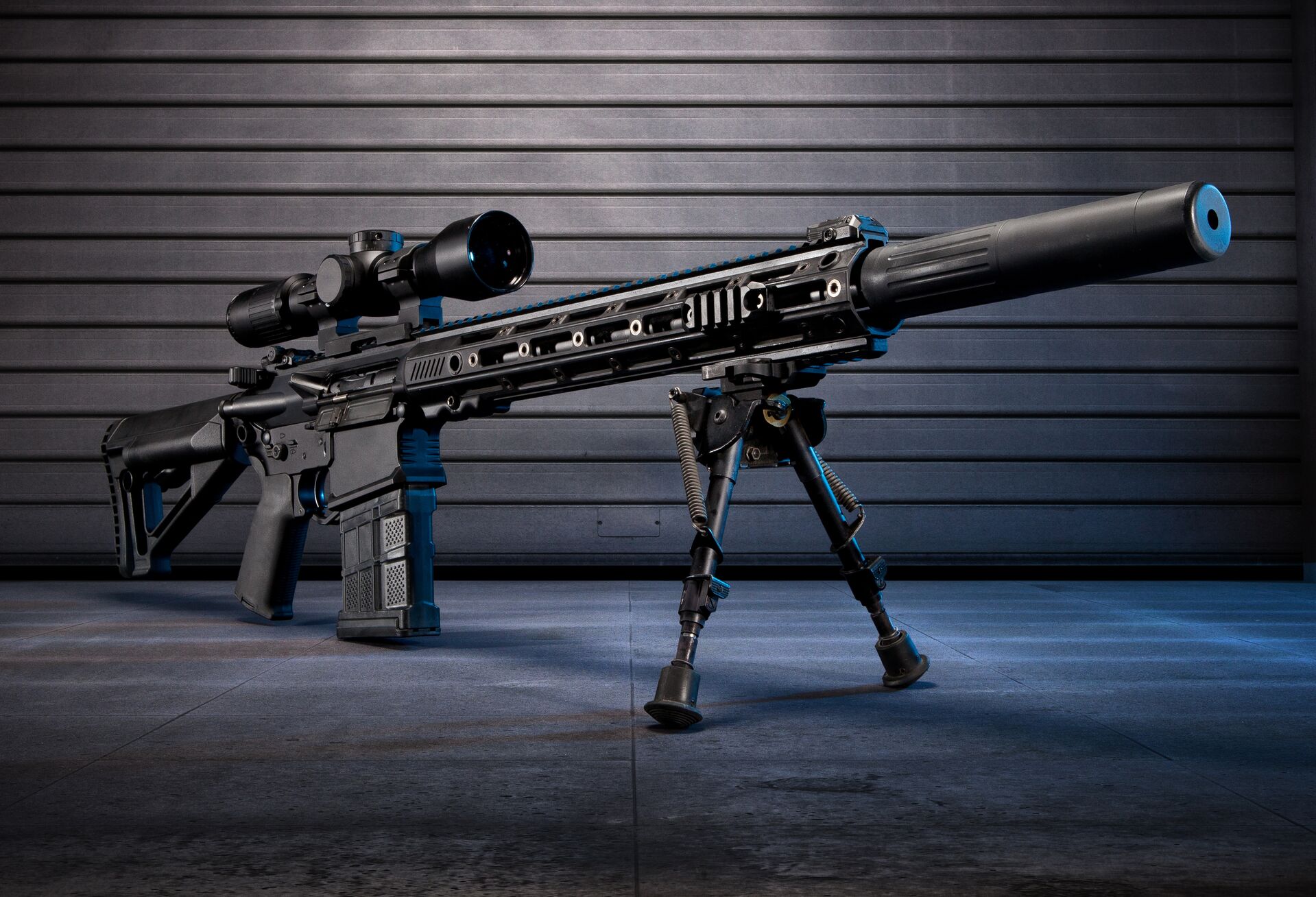
Under Colt’s stewardship, the AR-15 became the platform upon which the U.S. military’s M16 was built. As the patent eventually expired, dozens of other manufacturers began producing their own versions of the rifle. Because “AR-15” had become the industry standard for that specific internal architecture, the name transitioned from a specific product identifier to a category descriptor. Today, when a consumer looks for an “AR-type” rifle, they are looking for a platform, not necessarily a product manufactured by ArmaLite.
The Colt Acquisition and the Licensing of a Legacy
The transition of the AR brand from ArmaLite to Colt, and eventually to the public domain, illustrates the complexities of intellectual property in brand strategy. When a brand sells its “crown jewel” naming rights, it often experiences a loss of identity. ArmaLite continued to exist, but it was forever overshadowed by the very name it created.
For modern businesses, this serves as a warning. Protecting the nomenclature of a flagship product is essential for long-term brand equity. If the “AR” designation had been more aggressively protected as a proprietary brand mark rather than an engineering shorthand, the company might have maintained a more distinct presence in the market.
The Brand Perception Crisis: Meaning vs. Misinterpretation
In the 21st century, the AR-15 has become one of the most polarizing brand names in existence. This is largely due to the linguistic drift where “AR” is widely misinterpreted as “Assault Rifle.” From a brand strategy standpoint, this represents a failure of communication that has resulted in significant negative brand equity for the “AR” moniker.
The Cost of Naming Ambiguity
The confusion between ArmaLite and “Assault Rifle” is not just a matter of semantics; it has real-world implications for the industry. When a brand name becomes synonymous with a controversial category, the brand itself becomes a lightning rod. This is a unique challenge in corporate identity: how do you manage a brand when the public’s definition of your name is fundamentally different from your own?
The firearms industry has attempted to combat this through “rebranding” efforts, such as the introduction of the term “Modern Sporting Rifle” (MSR). This is a strategic move to move the conversation away from the “AR” designation and its associated baggage. However, replacing a deeply ingrained brand name is an uphill battle, especially when the original name has decades of cultural momentum behind it.
Linguistic Drift in Corporate Identity
Linguistic drift occurs when the meaning of a word or acronym changes over time due to common usage. In branding, this can be a double-edged sword. On one hand, you want your brand to be a household name. On the other hand, you do not want it to be redefined in a way that contradicts your brand values.
The “AR” case study teaches us that brands must be proactive in defining their acronyms. If a company uses a shorthand or a code, it must consistently reinforce what that code stands for. If ArmaLite had maintained a high-profile marketing presence that emphasized the “ArmaLite” name rather than just the “AR” prefix, the “Assault Rifle” misconception might not have taken such deep root in the public consciousness.
Lessons in Brand Strategy from the AR-15 History
The history of the AR-15 provides a masterclass in the long-term consequences of naming decisions. For brand strategists and business leaders, several key takeaways emerge from this narrative.
Protecting Your Nomenclature
The first lesson is the importance of trademark vigilance. If a brand uses a specific prefix or naming logic, it should treat that logic as a core asset. Allowing other companies to use similar naming conventions—or failing to correct the public when they misinterpret the name—leads to the dilution of brand value. Companies like Google and Xerox have spent millions of dollars in marketing campaigns specifically designed to remind the public that their names are trademarks, not verbs. ArmaLite, largely due to its size and focus on engineering over marketing, was unable to do this.
Navigating Negative Brand Equity
When a brand name acquires negative connotations, the instinct is often to distance the company from the name. We see this in corporate history frequently—Philip Morris rebranding as Altria, or ValuJet becoming AirTran. In the case of the AR-15, manufacturers have had to decide whether to lean into the “AR” heritage or pivot to new designations.
Successful brand strategy requires an honest assessment of “brand baggage.” If the “AR” name carries too much weight in a specific market segment, a sub-brand or a new product line may be the only way to reach new audiences. This is why many manufacturers today focus on the “platform” capabilities (customization, modularity) rather than the “AR” name itself.

The Future of the ArmaLite Legacy
Today, the “AR” designation exists in a strange limbo. It is a source of pride for enthusiasts who understand its engineering roots as the ArmaLite Rifle, and it is a symbol of controversy for those who believe it stands for something else. This duality is the ultimate expression of how a brand name can escape the control of its creator.
For the modern ArmaLite company (which has changed ownership several times), the “AR” legacy is both a blessing and a burden. It provides an immediate association with one of the most successful designs in history, but it also ties the company to a narrative it did not fully author.
In conclusion, the “AR” in AR-15 is a reminder that in the world of branding, names are never just letters. They are vessels for history, identity, and public perception. Whether a name stands for an engineering firm in Hollywood or a controversial category of products depends entirely on how well the brand manages its story. For any business developing a new product line, the “AR” story is a powerful reminder to choose your names carefully, define them clearly, and protect them fiercely.
aViewFromTheCave is a participant in the Amazon Services LLC Associates Program, an affiliate advertising program designed to provide a means for sites to earn advertising fees by advertising and linking to Amazon.com. Amazon, the Amazon logo, AmazonSupply, and the AmazonSupply logo are trademarks of Amazon.com, Inc. or its affiliates. As an Amazon Associate we earn affiliate commissions from qualifying purchases.