
In the rapidly evolving landscape of digital technology, the acronym APM has become a cornerstone for developers, IT operations teams, and business stakeholders alike. At its most fundamental level, APM stands for Application Performance Management (or sometimes Application Performance Monitoring). It refers to the practice of tracking and managing the performance, availability, and user experience of software applications.
As businesses migrate toward cloud-native architectures, microservices, and complex distributed systems, the importance of APM has shifted from a “nice-to-have” diagnostic tool to a mission-critical strategic asset. When a mobile banking app lags, an e-commerce checkout page fails to load, or a healthcare portal crashes, the underlying cause often lies within the intricate web of code and infrastructure that APM is designed to oversee.
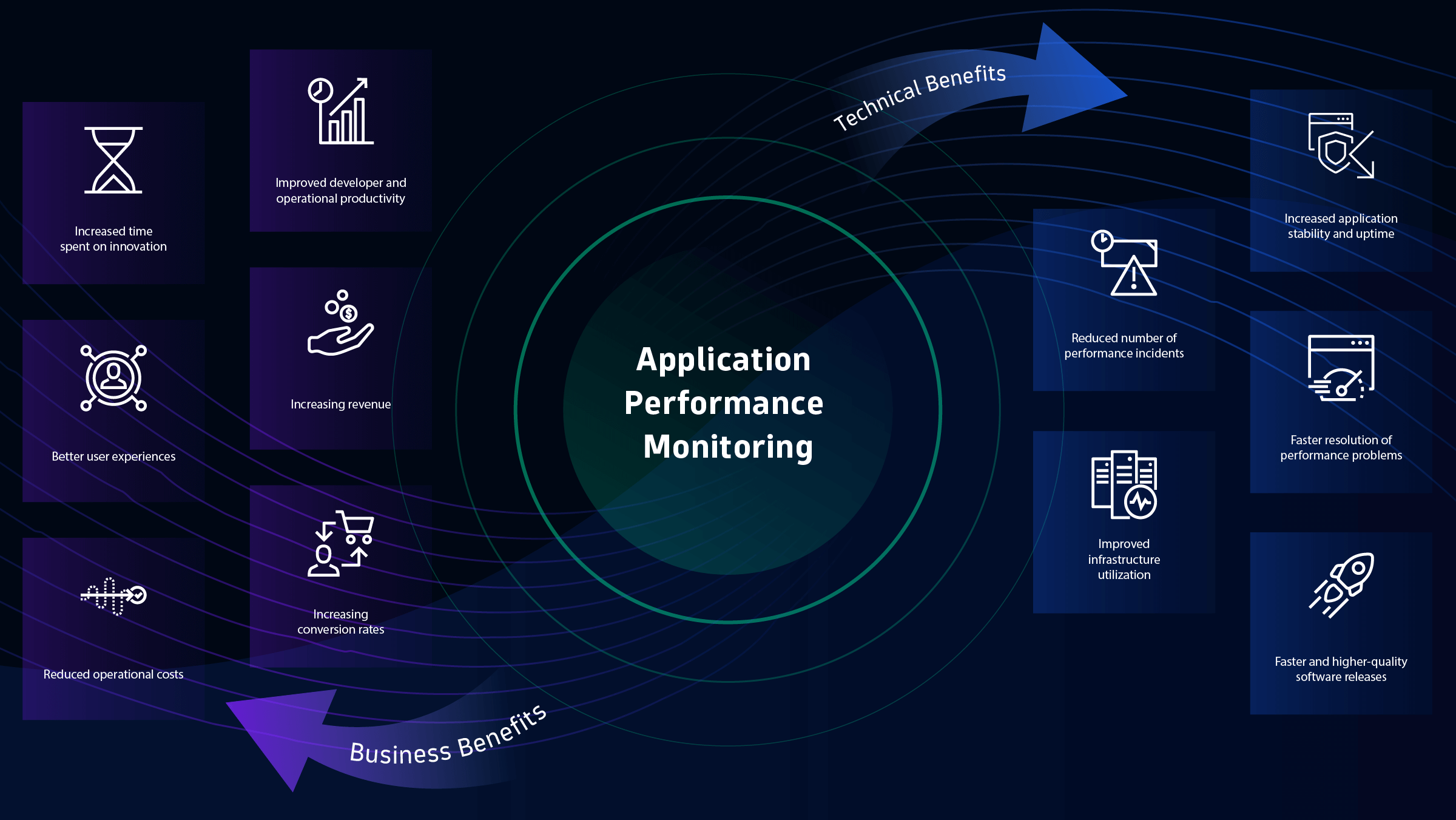
The Core Pillars of Application Performance Management
To understand what APM truly encompasses, one must look beyond the simple definition and examine the functional layers that make up a robust APM strategy. Modern APM is not just about checking if a server is “up” or “down”; it is about deep visibility into the digital ecosystem.
Digital Experience Monitoring (DEM)
The most visible aspect of APM is how the end-user interacts with the application. Digital Experience Monitoring tracks performance from the perspective of the customer. This involves monitoring page load times, response times for specific actions, and the overall fluidity of the user interface. By using techniques like synthetic monitoring (simulating user behavior) and real-user monitoring (RRM), teams can identify whether a performance dip is localized to a specific geographic region, a particular browser, or a specific device type.
Application Discovery, Tracing, and Diagnostics (ADTD)
As applications have moved away from monolithic structures toward microservices, the path a single request takes has become incredibly complex. A single click might trigger a dozen calls to different internal and external services. ADTD allows developers to map these dependencies. Through “distributed tracing,” APM tools can follow a single transaction across various containers, databases, and third-party APIs. If a slowdown occurs, ADTD helps pinpoint exactly which microservice or database query is the bottleneck.
Infrastructure Visibility and Resource Monitoring
An application does not exist in a vacuum; it lives on servers, in containers, or within virtual machines. APM integrates with infrastructure monitoring to provide a holistic view. It tracks CPU utilization, memory consumption, disk I/O, and network latency. By correlating infrastructure health with application performance, IT teams can determine if a code bug is causing a memory leak or if the underlying cloud hardware is simply under-provisioned for the current traffic load.
The Evolution from Monitoring to Management
While “Monitoring” and “Management” are often used interchangeably when discussing APM, there is a subtle but vital distinction between the two that reflects the maturity of a company’s tech stack.
Monitoring: The Reactive Phase
Monitoring is the act of collecting data. It involves gathering metrics, logs, and traces to see what is happening in real-time. In a traditional monitoring setup, a dashboard might show a red light when a server hits 95% capacity. This is reactive; the problem has already occurred or is about to occur, and the team is alerted to fix it.
Management: The Proactive Phase
Management goes a step further. It involves the policies, processes, and automated responses used to ensure that performance targets (Service Level Objectives or SLOs) are consistently met. Application Performance Management utilizes the data gathered during monitoring to make informed decisions. This might include auto-scaling resources during peak traffic, automatically rerouting traffic away from failing nodes, or using historical data to predict when a system might fail before it actually does.
The Role of Observability
In recent years, the term “Observability” has begun to supersede APM in some circles. While APM tells you what is broken, observability focuses on why it is broken by examining the internal state of the system through its external outputs. A comprehensive APM strategy today is essentially the implementation of observability in a way that aligns with business outcomes.
Leveraging AI and Automation in Modern APM
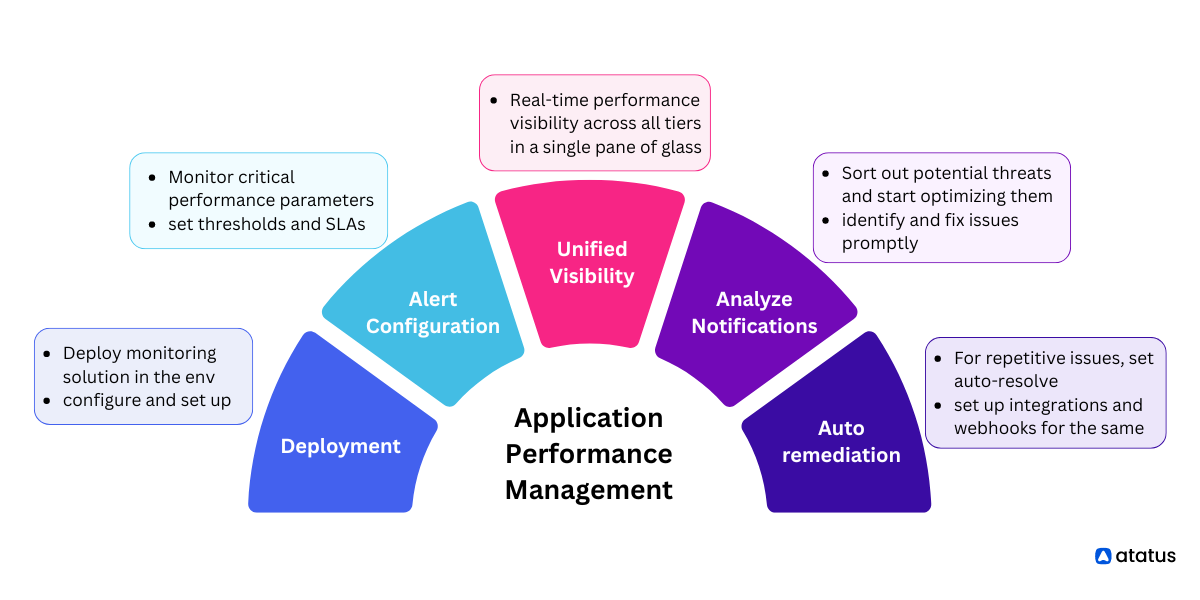
The sheer volume of data generated by modern applications is staggering. A single enterprise application can generate terabytes of telemetry data every day. Human operators cannot possibly parse through millions of log lines to find a needle in a haystack. This is where Artificial Intelligence for IT Operations (AIOps) becomes an essential component of APM.
Predictive Analytics and Anomaly Detection
Traditional APM relied on static thresholds—for example, “send an alert if response time exceeds two seconds.” However, a two-second response time might be normal during a massive data backup at 2:00 AM but catastrophic during peak shopping hours. AI-driven APM tools use machine learning to establish a “baseline” of normal behavior. They can then detect anomalies that deviate from this baseline, even if they haven’t crossed a hard threshold yet.
Automated Root Cause Analysis (RCA)
When a system fails, the first question is always “What changed?” AI can correlate thousands of events across the stack—code deployments, configuration changes, and infrastructure spikes—to automatically identify the root cause of an issue. This drastically reduces the Mean Time to Repair (MTTR), ensuring that technical teams spend less time in “war rooms” and more time building new features.
Intelligent Alerting and Noise Reduction
One of the biggest challenges in tech operations is “alert fatigue.” When a single failure triggers a cascade of hundreds of alerts, the critical information often gets lost. Smart APM platforms group related events into a single incident, providing context and silencing the noise. This ensures that when an engineer’s phone buzzes, it is for a legitimate, actionable problem.
Strategic Implementation: Best Practices for High-Performance Teams
Implementing an APM solution is not as simple as installing an agent on a server. It requires a strategic approach that bridges the gap between the engineering team and the business side of the organization.
Aligning Technical Metrics with Business KPIs
The most successful tech organizations don’t just track “latency”; they track how latency affects conversion rates. For example, a retail company might discover that every 100ms of latency results in a 1% drop in sales. By aligning APM metrics with Key Performance Indicators (KPIs), the IT department can demonstrate the direct financial value of performance optimization.
Integrating APM into the CI/CD Pipeline
Performance should not be an afterthought that is checked only after code is in production. Modern DevOps practices involve “shifting left,” which means integrating APM tools into the Continuous Integration/Continuous Deployment (CI/CD) pipeline. By running performance tests in staging environments, developers can catch inefficient code or resource-heavy queries before they ever reach the end-user.
Establishing a Culture of Transparency
APM data should not be siloed within the operations team. Providing developers, product managers, and even executives with access to performance dashboards fosters a culture of shared responsibility. When everyone can see the real-time health of the application, the organization can make better decisions about where to allocate engineering resources—whether that means fixing technical debt or launching new features.
The Future of APM: Cloud-Native and Beyond
As we look toward the future, the scope of APM continues to expand. We are moving into an era of “Full-Stack Observability,” where the boundaries between application code, cloud infrastructure, and user behavior become increasingly blurred.
Serverless and Function-as-a-Service (FaaS)
The rise of serverless computing (like AWS Lambda or Google Cloud Functions) presents a new challenge for APM. In a serverless environment, there is no “server” to monitor in the traditional sense. APM tools must adapt to monitor short-lived execution environments, focusing heavily on execution time and cold-start latency.
The Convergence of Performance and Security
There is a growing trend of merging APM with security monitoring, often referred to as Application Protection or DevSecOps. Since many performance anomalies (like a sudden spike in traffic or memory usage) can also be signs of a cyberattack (like a DDoS or a buffer overflow), integrating security insights into the APM dashboard allows teams to respond to both performance and security threats simultaneously.

OpenTelemetry and Standardization
For a long time, APM was dominated by proprietary agents that locked companies into specific vendors. The rise of OpenTelemetry—an open-source observability framework—is changing that. By providing a standardized way to collect and export traces, metrics, and logs, OpenTelemetry allows businesses to switch between different APM backends without rewriting their instrumentation. This democratization of data is making high-level APM accessible to organizations of all sizes.
In conclusion, “What does APM stand for?” is a question with a simple literal answer but a complex operational reality. Application Performance Management is the invisible engine that keeps the digital world running smoothly. By providing deep visibility, enabling proactive fixes, and leveraging the power of AI, APM ensures that as our technology grows more complex, our ability to manage it stays one step ahead. For any modern tech-driven enterprise, mastering APM is no longer an option—it is a fundamental requirement for success in the digital age.
aViewFromTheCave is a participant in the Amazon Services LLC Associates Program, an affiliate advertising program designed to provide a means for sites to earn advertising fees by advertising and linking to Amazon.com. Amazon, the Amazon logo, AmazonSupply, and the AmazonSupply logo are trademarks of Amazon.com, Inc. or its affiliates. As an Amazon Associate we earn affiliate commissions from qualifying purchases.