
The modern camper is no longer a simple shelter on wheels; it is a mobile ecosystem that demands reliable power. Whether you are working remotely from a national park, running a high-end refrigerator, or simply charging your laptop, electricity is the lifeblood of the RV lifestyle. At the heart of this electrical architecture sits the power inverter. Understanding how this gadget functions is essential for anyone looking to transition from a plugged-in campground dweller to a true boondocker.
The Core Functionality: DC to AC Conversion
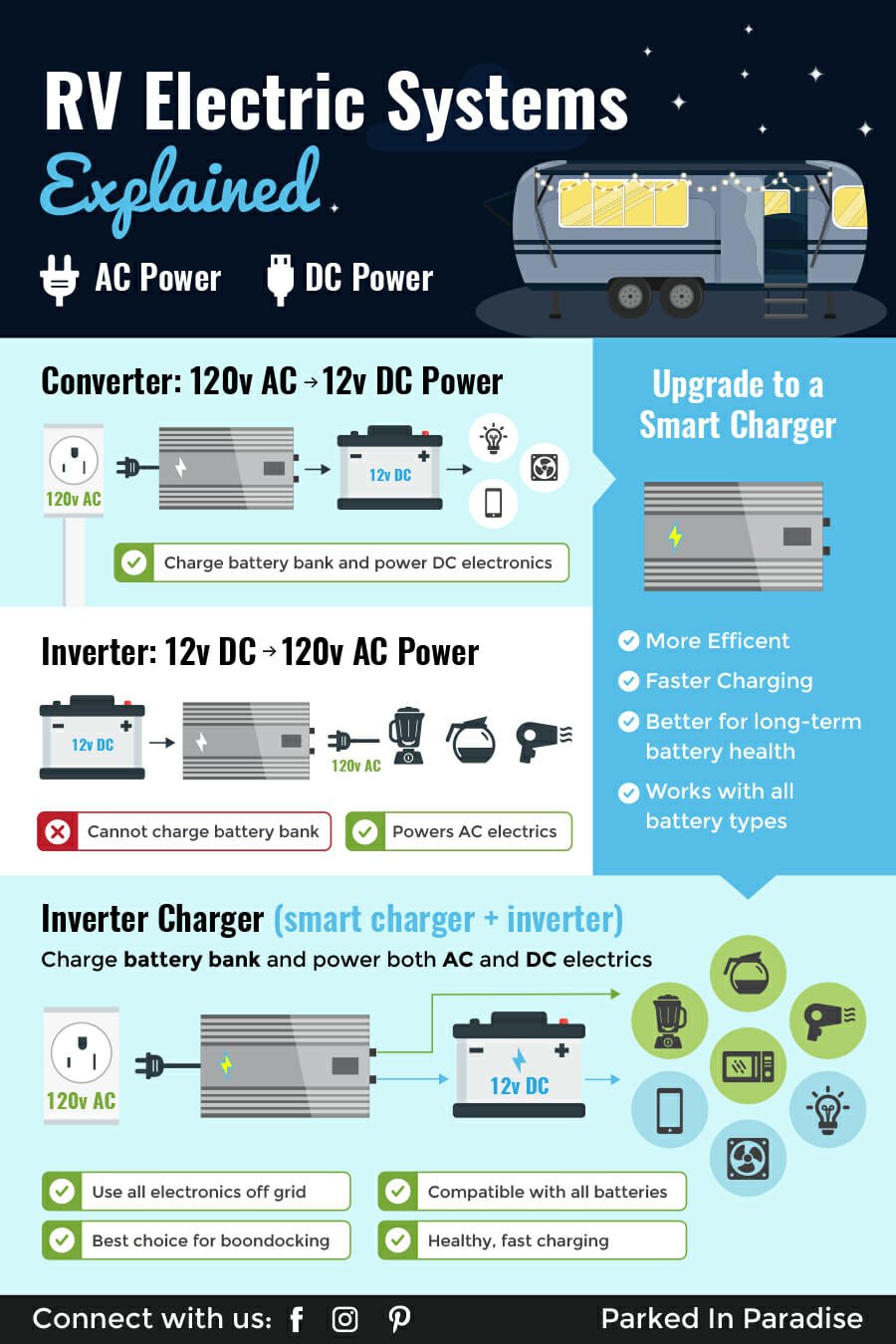
To understand an inverter, you must first understand the fundamental divide in your camper’s electrical system. A recreational vehicle is essentially built on two distinct power grids: the 12-volt Direct Current (DC) system and the 120-volt Alternating Current (AC) system.
Understanding the Electrical Divide
Your camper’s battery bank operates exclusively on 12-volt DC. This is the same type of power found in your automotive battery. It is efficient for lighting, water pumps, and fans, but it is incompatible with the standard household appliances you likely brought from home. Your coffee maker, microwave, television, and laptop charger are designed to pull 120-volt AC—the same high-voltage current that flows through the wall outlets in your house.
The Role of the Inverter
The inverter acts as a bridge between these two worlds. It takes the low-voltage DC power stored in your deep-cycle batteries and “inverts” it into high-voltage AC electricity. Without an inverter, your batteries are essentially useless for any device that features a standard three-prong wall plug. The inverter uses sophisticated electronic switching and a transformer to rapidly oscillate the DC current, mimicking the sine wave of the power provided by the electrical grid. This transformation is what allows you to use a hair dryer or a kitchen blender while sitting in the middle of a remote desert.
Types of Inverters: Modified vs. Pure Sine Wave
Not all inverters are created equal. When shopping for gadgets to upgrade your camper, the most critical decision you will make is choosing between a “Modified Sine Wave” inverter and a “Pure Sine Wave” inverter. This technical distinction dictates the longevity of your appliances and the efficiency of your power usage.
Modified Sine Wave Inverters: The Budget-Friendly Option
Modified sine wave inverters are the older, more affordable technology. They produce a “stepped” or “square” wave rather than a smooth, curved one. While they work perfectly fine for simple resistive loads—such as space heaters, incandescent light bulbs, or old-fashioned toasters—they can be problematic for modern, sensitive electronics. Because the wave is jagged, it can cause motors to run hotter, lights to flicker, and digital clocks to keep inaccurate time.
Pure Sine Wave Inverters: The Gold Standard
Pure sine wave inverters are the tech-forward choice. They produce an electrical output that is cleaner and smoother than the power coming from your home’s utility company. This is essential for sensitive equipment. Devices such as modern LED televisions, sophisticated medical equipment (like CPAP machines), high-end laptop power bricks, and sensitive audio equipment require a clean sine wave to function without overheating or failing. Investing in a pure sine wave inverter is a proactive measure to protect your expensive gadgets from electrical noise and damage.
Sizing Your Inverter: Matching Output to Demand
A common mistake among new RV owners is purchasing an inverter that is either too small to power their needs or unnecessarily large, leading to wasted battery capacity. Determining the right size requires a brief audit of your power consumption habits.
Calculating Your Wattage Requirements
To size your inverter, you need to calculate your “peak” load. Look at the data plate on every appliance you intend to run simultaneously. If you want to use a 1,000-watt microwave and a 500-watt coffee pot at the same time, your inverter must have a continuous rating of at least 1,500 watts. However, you must also account for “surge wattage.” Many appliances with motors, like air conditioners or refrigerators, require a massive surge of power for a split second when they first kick on. A high-quality inverter will be rated for both a continuous load and a peak surge, ensuring it doesn’t trip its internal breakers during the startup cycle of a compressor.
Understanding the Efficiency Loss
Inverters are not 100% efficient. The process of converting DC to AC generates heat, which is simply lost energy. Most high-quality inverters operate at 85% to 92% efficiency. This means that to get 100 watts of power to your laptop, you might actually be drawing 115 watts from your batteries. If you are boondocking, this “hidden” cost of conversion must be factored into your battery capacity planning. If you leave a large inverter turned on 24/7 without a load, the unit itself will continue to pull a small amount of power just to keep its internal circuitry alive, slowly draining your battery bank even when you aren’t using your devices.
Installation and Safety Best Practices
Installing an inverter is a technical project that requires careful attention to wiring, ventilation, and safety protocols. Because inverters deal with high current, poor installation is a leading cause of electrical fires in recreational vehicles.
Cable Thickness and Voltage Drop
The most important rule in inverter installation is the use of proper cabling. DC electricity at low voltage requires very high amperage to produce a significant amount of power. If your cables are too thin, they will act like resistors, heating up and causing a significant “voltage drop.” This drop will cause your inverter to trigger a “low voltage shutdown” alarm, even if your batteries are technically full. Always follow the manufacturer’s recommendations for cable gauge (thickness) based on the length of the run from the battery to the inverter.
Ventilation and Placement
Inverters are heavy consumers of power, and they generate heat as a byproduct. They are equipped with internal cooling fans, which must have adequate airflow. Installing an inverter in a cramped, unventilated storage compartment will lead to overheating, which forces the unit to throttle its power output or shut down entirely. Ensure the unit is mounted in a dry, cool area, as close to the battery bank as possible to minimize the length of the heavy-gauge DC cables.
Overcurrent Protection
Never connect an inverter directly to your battery without an appropriate fuse or circuit breaker in between. If a short circuit occurs in the main power lines, the sheer amperage stored in your battery bank could melt the wiring and ignite the interior of your camper within seconds. An appropriately sized fuse acts as a safety valve, breaking the circuit instantly if a fault is detected, protecting both your investment and your safety.

The Future of Camper Power: Integrating Inverter-Chargers
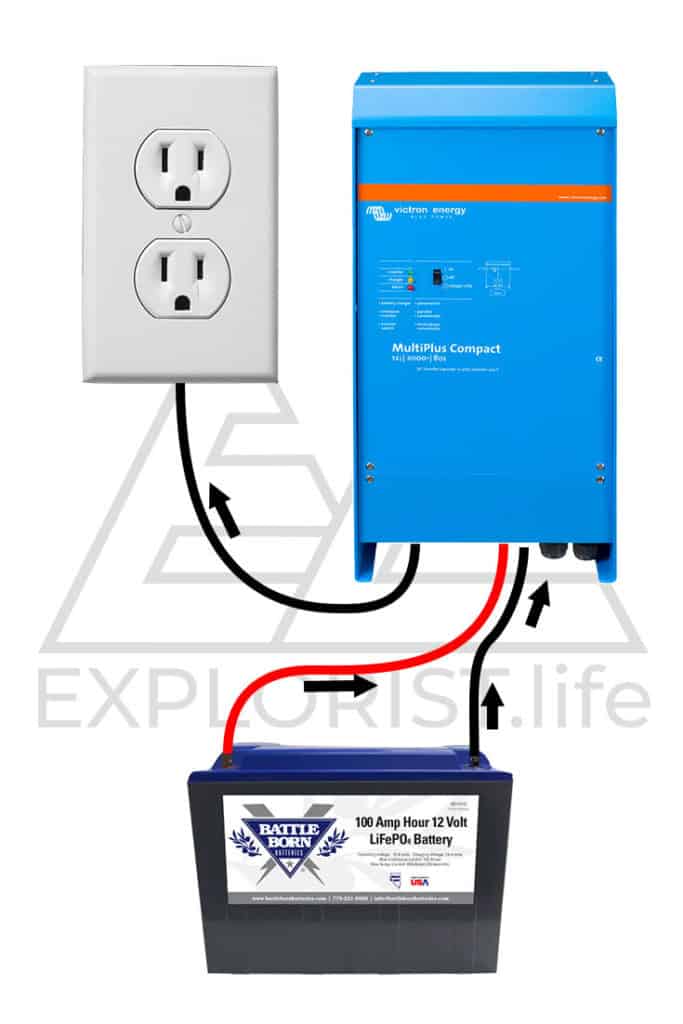
As technology trends in the RV world shift toward lithium-ion battery banks and solar energy, many owners are moving toward “Inverter-Charger” combos. These all-in-one gadgets do more than just convert power; they act as the “brain” of your electrical system.
When you are plugged into shore power at a campground, these units detect the incoming AC and automatically switch their internal circuitry to become a high-powered battery charger. This ensures your batteries remain topped off while you enjoy the luxuries of a full hookup site. When you unplug and drive away, the unit seamlessly switches back to inverter mode.
By understanding the technical nuances of your inverter—from the wave quality to the sizing and safety requirements—you transition from a passive passenger to an empowered boondocker. With the right setup, you can take the digital conveniences of your home office or your modern kitchen anywhere the road leads, backed by a robust and reliable power system.
aViewFromTheCave is a participant in the Amazon Services LLC Associates Program, an affiliate advertising program designed to provide a means for sites to earn advertising fees by advertising and linking to Amazon.com. Amazon, the Amazon logo, AmazonSupply, and the AmazonSupply logo are trademarks of Amazon.com, Inc. or its affiliates. As an Amazon Associate we earn affiliate commissions from qualifying purchases.