
The Emerald Ash Borer (EAB), Agrilus planipennis, is an invasive insect that has wreaked havoc on ash tree populations across North America. Its striking metallic green coloration makes it visually distinctive, but its true significance lies in the devastating impact it has on its host trees. Understanding the physical characteristics of this destructive pest is crucial for early detection, identification, and ultimately, for implementing effective management strategies. This article will delve into the visual cues that define the Emerald Ash Borer, from its adult form to its larval stage, providing a comprehensive guide for anyone seeking to identify this damaging insect.

The Adult Emerald Ash Borer: A Jewel of Destruction
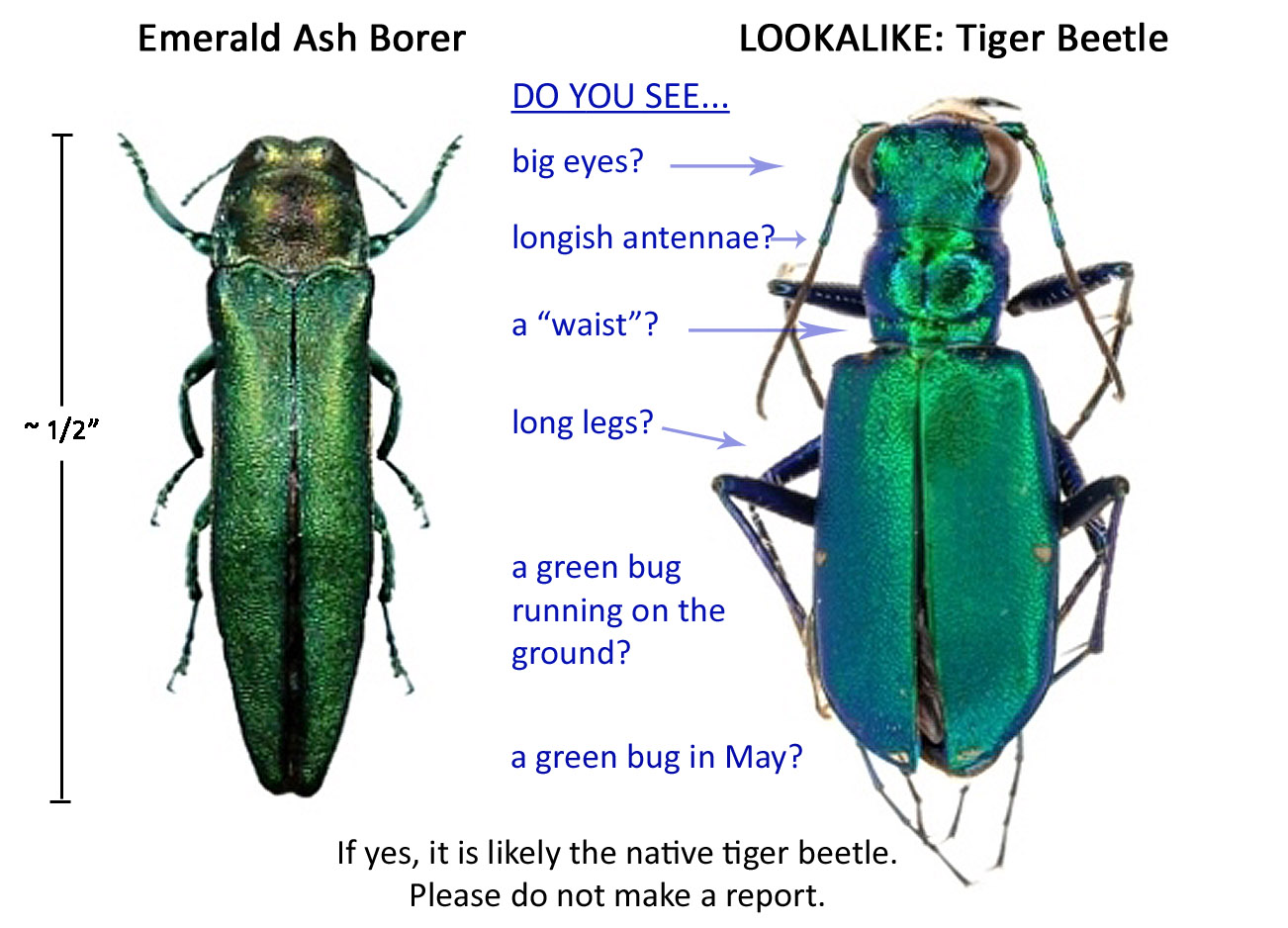
The adult Emerald Ash Borer is a small, yet visually arresting beetle, measuring approximately 0.5 inches (1.3 cm) in length and 0.125 inches (0.3 cm) in width. Its most defining feature is its iridescent, emerald-green exoskeleton, which gives it its name. This brilliant coloration is a result of specialized cuticle structures that reflect light, creating a shimmering, metallic sheen. This vibrant hue serves as a key identifier, distinguishing it from many native beetle species. However, it’s important to note that the intensity of the green can vary slightly depending on light conditions and the individual beetle.
Coloration and Markings
Beyond the dominant emerald green, the adult EAB possesses other notable colorations. The underside of the beetle is a coppery-red or purplish hue. Its wing covers, known as elytra, are also emerald green, often with a slightly darker, almost bronze tint along the edges. The head and thorax are typically a darker metallic green, sometimes appearing almost black in certain lighting.
A crucial distinguishing mark on the elytra are two small, reddish-brown spots or stripes. These markings are not always prominent and can be subtle, especially on younger beetles or those that have undergone some wear. However, their presence, when visible, is a strong indicator of EAB. The legs of the adult beetle are also typically dark and slender.
Body Shape and Appendages
The body of the adult Emerald Ash Borer is elongated and somewhat flattened. It possesses the characteristic features of a beetle: a distinct head, thorax, and abdomen. The head bears a pair of segmented antennae, which are relatively short and often held forward. These antennae are important sensory organs, used for detecting pheromones and navigating their environment.
The thorax, the middle section of the body, supports the legs and wings. The EAB has six legs, all of which are slender and adapted for clinging to bark. The wings are hidden beneath the hardened elytra when the beetle is at rest. When in flight, the elytra lift to reveal the membranous hindwings, which are used for aerial locomotion. Their flight is generally erratic and short-ranged, primarily occurring between nearby ash trees.
Size and Sexual Dimorphism
While the general size range for adult EABs is consistent, there can be slight variations. Males are typically a bit smaller than females. However, differentiating between the sexes based solely on size can be challenging without close examination. There is no significant visual dimorphism in terms of color or general body shape that would easily distinguish males from females to the casual observer.
The Larval Stage: Hidden Architects of Decline
While the adult beetle is the most visually striking stage of the Emerald Ash Borer, its destructive power is largely enacted by its larval form. The larvae are the primary agents responsible for the damage that ultimately kills ash trees. Identifying the signs of larval activity is often more practical for homeowners and forest managers than spotting the adult beetles themselves.
Appearance of EAB Larvae
Emerald Ash Borer larvae are creamy white, legless grubs. They have a segmented appearance, resembling small, flattened worms. Their bodies are slightly flattened dorsoventrally, meaning they are wider than they are tall. A distinctive feature of the EAB larva is its enlarged, bell-shaped head. This enlarged head is a key characteristic that helps distinguish them from the larvae of other wood-boring insects.
The larvae also possess a pair of small, dark, chewing mouthparts. Their bodies are generally smooth, although microscopic hairs may be present. As they grow, they molt several times, with each instar (developmental stage) increasing in size. Mature larvae can reach up to 1.25 inches (3.2 cm) in length.
Galleries: The Undeniable Evidence

The most tell-tale sign of Emerald Ash Borer infestation is the presence of their galleries. As the larvae feed, they mine S-shaped tunnels just beneath the bark of the ash tree. These galleries are a direct result of their feeding activity, where they consume the phloem and cambium layers, essential for the tree’s nutrient and water transport.
The S-shaped galleries are typically 1/8 to 1/4 inch (0.3 to 0.6 cm) wide and can extend for several inches. They are often filled with frass, a mixture of larval excrement and wood dust, which is fine and powdery. The winding, serpentine path of these galleries is a hallmark of EAB infestation and is a critical diagnostic feature for identification.
Distinguishing EAB from Other Pests and Beetles
Given the visual appeal of the adult EAB, it’s understandable why it might be mistaken for other beetles. However, careful observation of key characteristics can help differentiate it from similar-looking insects.
Native Ash Borers and Other Wood-Boring Insects
North America is home to several native wood-boring beetles, some of which may also attack ash trees. However, these native species generally do not cause the same level of widespread devastation as the EAB. For instance, the native bronze and flat-headed borers may be found on ash trees, but their larvae create different gallery patterns, and the adult beetles have distinct appearances.
Native flat-headed borers, for example, tend to have flatter, more elongated bodies and often lack the vibrant emerald green coloration. Their galleries are typically wider and more irregular, often flattened and filled with coarser frass. Native round-headed borers, on the other hand, have more robust, cylindrical larvae and their galleries are usually rounder and packed with finer frass.
Non-Ash Host Trees
It is also important to remember that while the Emerald Ash Borer primarily targets ash trees, other wood-boring insects can attack a wide variety of tree species. If you are observing an insect or signs of damage on a tree that is not an ash, it is unlikely to be an Emerald Ash Borer. Identifying the tree species is a fundamental step in accurately diagnosing potential pest problems.
The Significance of Accurate Identification
The ability to accurately identify the Emerald Ash Borer, both in its adult and larval stages, is paramount for effective management and mitigation efforts. Early detection can significantly slow the spread of this invasive species and minimize the economic and ecological damage it inflicts.
Early Detection and Surveillance
Spotting the distinctive emerald green of an adult beetle or recognizing the characteristic S-shaped galleries of the larvae can be the first step in identifying an infestation. This is why public awareness campaigns and educational materials often focus on these visual cues. Citizen scientists and land managers play a vital role in surveillance efforts, reporting potential sightings to relevant authorities.
Management and Control Strategies
Once an infestation is confirmed, accurate identification allows for the implementation of targeted management strategies. These can include insecticide treatments, biological control methods, or in some cases, the removal of infested trees to prevent further spread. The effectiveness of these strategies often depends on the timing of their application, which is directly linked to the life cycle of the EAB and the stage at which it is detected.
Preventing Further Spread
Understanding what an Emerald Ash Borer looks like also helps in preventing its accidental introduction to new areas. This includes being aware of regulations regarding the movement of firewood and nursery stock from infested regions. By recognizing the pest, individuals can take greater precautions to avoid unknowingly transporting it to uninfested areas, thereby protecting vulnerable ash tree populations.
In conclusion, the Emerald Ash Borer is a visually striking insect, characterized by its brilliant emerald green adult form and its destructive, legless larvae that create distinctive S-shaped galleries beneath the bark. While its beauty is undeniable, its impact on ash trees is devastating. By understanding its physical characteristics and the signs of its presence, we equip ourselves with the knowledge necessary for early detection, accurate identification, and ultimately, for the crucial task of protecting our valuable ash tree resources from this formidable invasive pest.
aViewFromTheCave is a participant in the Amazon Services LLC Associates Program, an affiliate advertising program designed to provide a means for sites to earn advertising fees by advertising and linking to Amazon.com. Amazon, the Amazon logo, AmazonSupply, and the AmazonSupply logo are trademarks of Amazon.com, Inc. or its affiliates. As an Amazon Associate we earn affiliate commissions from qualifying purchases.