
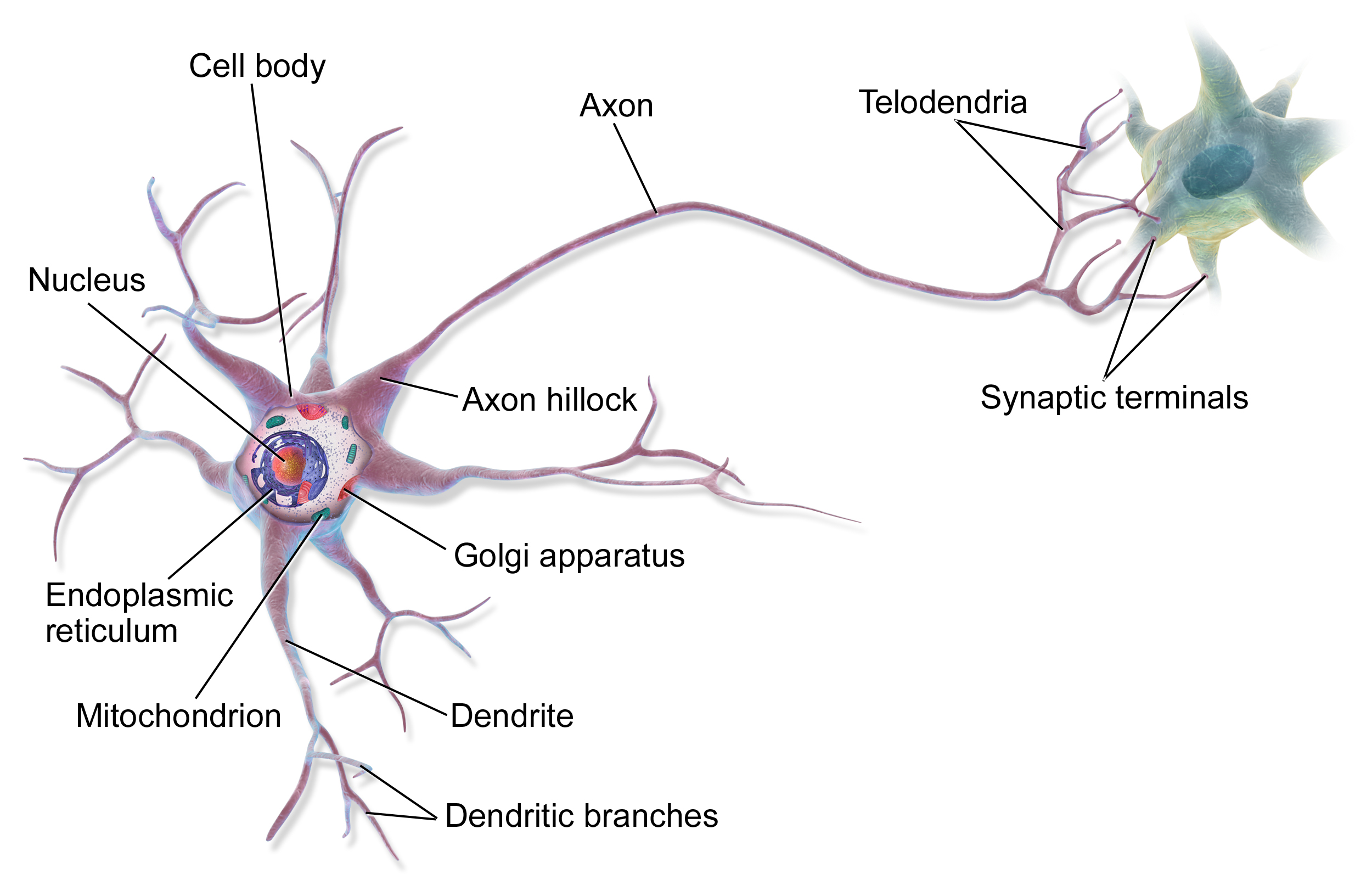
In the realm of biological neuroscience, an axon is the long, slender projection of a nerve cell that conducts electrical impulses away from the neuron’s cell body to other neurons, muscles, or glands. It is the primary transmission line of the nervous system. However, in the rapidly evolving landscape of technology, the term “axon” has been adopted as a powerful metaphor and a literal architectural blueprint. From the nodes of an Artificial Neural Network (ANN) to the sophisticated messaging pathways of distributed software systems, understanding what an “axon” does is essential for comprehending how modern technology processes, routes, and acts upon information.
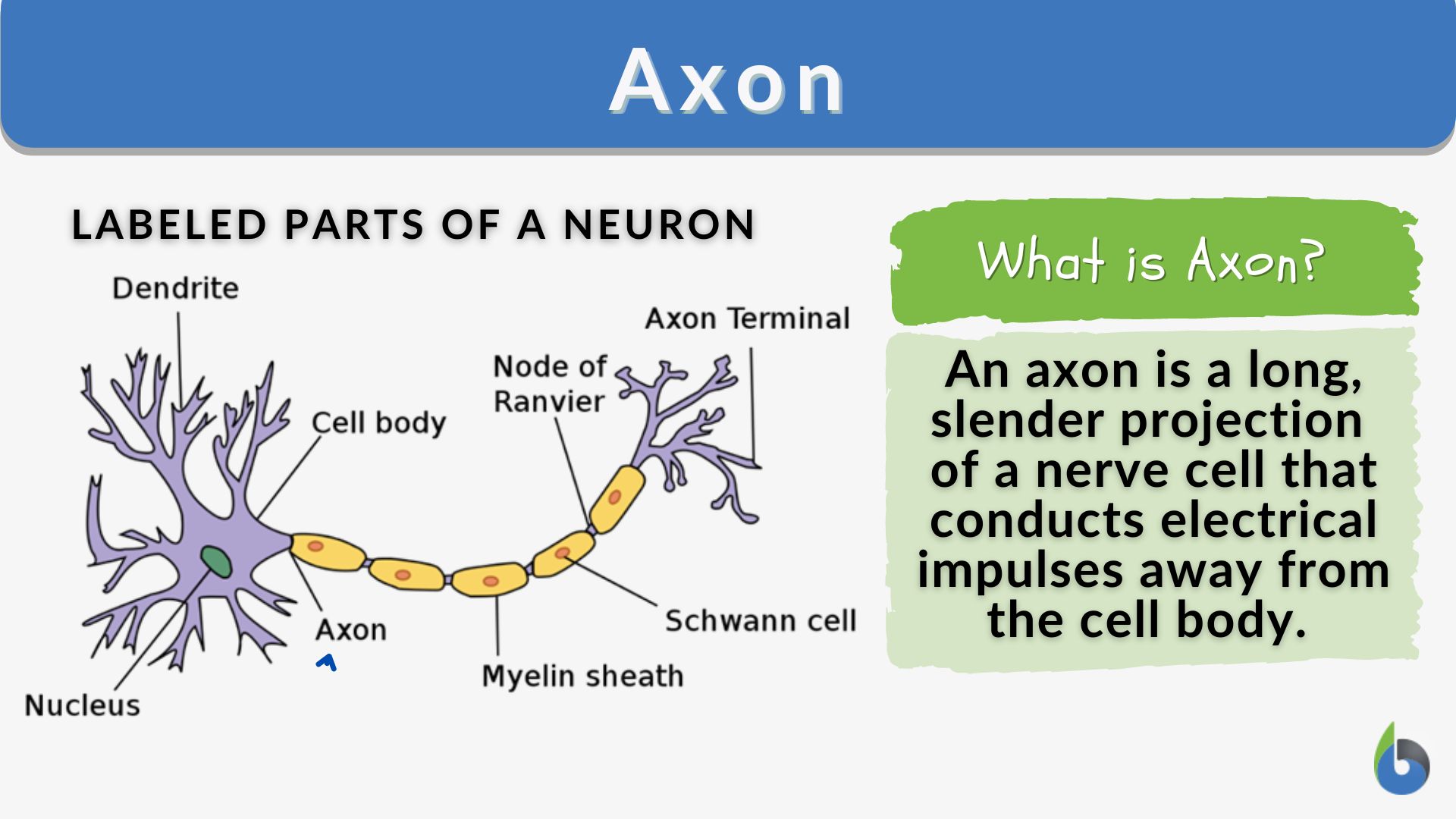
In a technological context, an axon serves as the critical conduit for data flow. Whether it is a weighted connection in a machine learning model or a command bus in a microservices architecture, the function remains the same: ensuring that a signal generated at point A successfully triggers a precise and meaningful action at point B.
The Digital Axon: Understanding the Architecture of Neural Networks
At the heart of the current AI revolution lies the artificial neuron, a mathematical model inspired by biological brains. If the “node” is the cell body, the connections between these nodes represent the digital axons. To understand what an axon does in this tech niche, one must look at how data is propagated through complex layers of software.
Signal Propagation and Weight Distribution
In an Artificial Neural Network, the “axon” is the mathematical link that carries a signal from one layer to the next. Unlike biological axons, which are physical structures, digital axons are defined by “weights.” When an input is received, the system multiplies that input by a specific weight. This weight determines the “strength” of the signal being transmitted.
If the weight is high, the axon is highly conductive, ensuring the next neuron in the chain treats that information as high priority. If the weight is near zero, the axon effectively silences the signal. This process of weighted transmission is the fundamental mechanism behind machine learning; “training” a model is essentially the process of fine-tuning these digital axons until the system can accurately predict outcomes.
The Role of Activation Functions
In biology, an axon operates on an “all-or-nothing” principle called an action potential. In technology, this is mimicked by activation functions like ReLU (Rectified Linear Unit) or Sigmoid. The digital axon doesn’t just pass data blindly; it works in tandem with these functions to decide whether the information is “significant” enough to be passed forward. This prevents the system from being overwhelmed by noise, ensuring that only relevant data—the signals that contribute to a correct classification or a logical response—reaches the final output layer.
Backpropagation: The Two-Way Street
While biological axons are generally unidirectional, technological “axons” facilitate a process known as backpropagation. During the training phase of an AI tool, errors are sent backward through the network. The system looks at the discrepancy between the desired output and the actual output, then travels back along the “axons” to adjust the weights. This feedback loop is what allows AI to learn from its mistakes, making the axon the primary tool for optimization in deep learning.
Information Highways: How Axons Facilitate Data Transmission in Distributed Systems
Moving away from AI and into the broader world of software engineering and cloud computing, the concept of the axon shifts from a mathematical weight to a structural component of distributed systems. In this niche, an axon represents the sophisticated messaging infrastructure that allows disparate software components to communicate.
The Axon Framework and Microservices
One of the most prominent uses of the term in tech is the “Axon Framework,” an open-source Java framework used for building powerful, scalable applications. In this context, what an axon does is manage the complexity of CQRS (Command Query Responsibility Segregation) and Event Sourcing.
In a traditional monolithic application, components talk to each other directly, often leading to a “spaghetti” of code that is hard to maintain. An axon-based architecture acts as a specialized nervous system. It separates the “commands” (the intent to change data) from the “queries” (the request to read data). By using an axon-like bus to route these messages, developers can ensure that the system remains responsive even under heavy loads, as the processing of an order (a command) doesn’t interfere with the viewing of a product catalog (a query).
Event Sourcing: The Memory of the Network
In biological systems, the firing of an axon can lead to the formation of long-term memories. In tech, the Axon Framework utilizes “Event Sourcing” to achieve something similar. Every time a “signal” is sent across the system’s axon, it is recorded as an immutable event. This provides an audit log of everything that has ever happened within the application. If a system crashes, it can “replay” these events—much like a brain recalling memories—to reconstruct its state perfectly. This makes the “axon” not just a transmitter of data, but a keeper of historical truth.
Scalability and Location Transparency
In a massive cloud environment, a service might be running on a server in New York while the data it needs is in London. The tech “axon” provides what is known as “location transparency.” The component sending the message doesn’t need to know where the receiver is; it simply drops the message onto the Axon Bus. The infrastructure handles the routing, ensuring the signal reaches its destination. This decoupling is what allows apps like Netflix or Uber to scale to millions of users simultaneously.
Security and Resilience: Protecting the “Nerve Center” of Digital Infrastructure
As the “axons” of our digital world become more complex, their vulnerability increases. In this tech niche, the function of an axon also involves the protection and encryption of the data it carries. If the transmission line is compromised, the entire “organism” (the corporate network or the AI model) is at risk.
End-to-End Encryption as a Myelin Sheath
In biology, axons are often wrapped in a fatty substance called myelin, which insulates the nerve fiber and speeds up signal transmission. In digital security, encryption serves as the “myelin sheath.” When data travels across a network axon—whether via fiber-optic cables or satellite links—it must be protected from “eavesdropping.” Protocols like TLS (Transport Layer Security) ensure that the digital pulse is insulated from external interference, maintaining the integrity of the message from the moment it leaves the source until it is decrypted at the destination.
Mitigating “Signal Noise” in Cybersecurity
In tech, an axon’s performance can be degraded by “noise,” which in the world of security often manifests as Distributed Denial of Service (DDoS) attacks. Just as a biological nervous system can be overwhelmed by pain signals, a digital network can be overwhelmed by malicious traffic. Modern digital axons are equipped with “throttling” and “circuit breaker” patterns. If a specific pathway is being flooded with too much data, the system automatically “trips” the circuit, cutting off the flow to prevent the entire infrastructure from failing. This self-healing capability is a hallmark of resilient tech design.
Zero Trust Architecture and Signal Validation
The modern tech axon operates under the “Zero Trust” model. Every signal sent through the network must be authenticated and authorized. It is no longer enough for a signal to arrive; the system must verify that the “axon” that delivered it is legitimate. This involves digital signatures and identity tokens, ensuring that the commands being executed within a software ecosystem are coming from a verified source, effectively preventing “phantom signals” or unauthorized injections into the network.
The Future of Synthetic Synapses: Beyond the Standard Axon
As we look toward the future of technology, the role of the axon is evolving into even more advanced territories, particularly with the rise of neuromorphic computing and 5G/6G connectivity.
Neuromorphic Chips: Hardware Axons
Traditional computer chips (Von Neumann architecture) separate memory and processing, which creates a bottleneck. The future of tech “axons” lies in neuromorphic chips, such as Intel’s Loihi or IBM’s TrueNorth. These chips attempt to mimic the physical structure of biological axons in silicon. By integrating processing and communication in a way that mirrors the brain, these chips can process sensory data (like vision or sound) with a fraction of the power required by traditional CPUs. In this niche, the axon isn’t just a metaphor; it is a physical pathway on a microchip designed for extreme efficiency.
5G and the Edge: The Global Axon
With the rollout of 5G and the impending arrival of 6G, the entire planet is being “rewired” with high-speed axons. These technologies reduce latency—the delay between a signal being sent and received—to near-zero levels. This allows for “Edge Computing,” where the processing happens not in a distant data center, but at the very edge of the network (like in an autonomous car or a smart streetlight). The “axon” in this scenario is the wireless spectrum itself, enabling real-time responses that were previously impossible.

The Intersection of Human and Machine
Finally, the tech niche is exploring the boundary between biological axons and digital ones through Brain-Computer Interfaces (BCIs). Projects like Neuralink are essentially trying to bridge the gap, allowing biological axons to communicate directly with digital software. In this context, the question “what does an axon do” becomes the foundation for a new era of human-computer interaction, where a thought can become a digital command, transmitted through a synthetic axon to control a prosthetic limb or a computer cursor.
In conclusion, while the term originates in biology, the “axon” has become a cornerstone of modern technology. Whether it is weighting a neural network, routing commands in a distributed microservice, or insulating data with high-level encryption, the axon is the silent hero of the digital age. It is the fundamental unit of connectivity that allows our software to think, our systems to scale, and our global networks to function with the speed and complexity of the human brain.
aViewFromTheCave is a participant in the Amazon Services LLC Associates Program, an affiliate advertising program designed to provide a means for sites to earn advertising fees by advertising and linking to Amazon.com. Amazon, the Amazon logo, AmazonSupply, and the AmazonSupply logo are trademarks of Amazon.com, Inc. or its affiliates. As an Amazon Associate we earn affiliate commissions from qualifying purchases.