
Advanced Micro Devices (AMD) is a name that resonates deeply within the technology industry, synonymous with innovation in microprocessors, graphics cards, and high-performance computing. For many, AMD represents a crucial counterpoint in a highly competitive market, pushing the boundaries of silicon engineering and bringing cutting-edge technology to a broad spectrum of users, from avid gamers and creative professionals to enterprise data centers and scientific researchers. Beyond its recognizable three-letter acronym, AMD embodies a philosophy of persistent technological advancement, challenging established norms and consistently delivering architectures that redefine performance, efficiency, and value in the digital world. Understanding “what AMD means” is to grasp its profound impact on the modern technological landscape, its historical journey, its current technological prowess, and its future trajectory in a rapidly evolving digital ecosystem.

A Legacy Forged in Silicon: The Genesis and Evolution of AMD
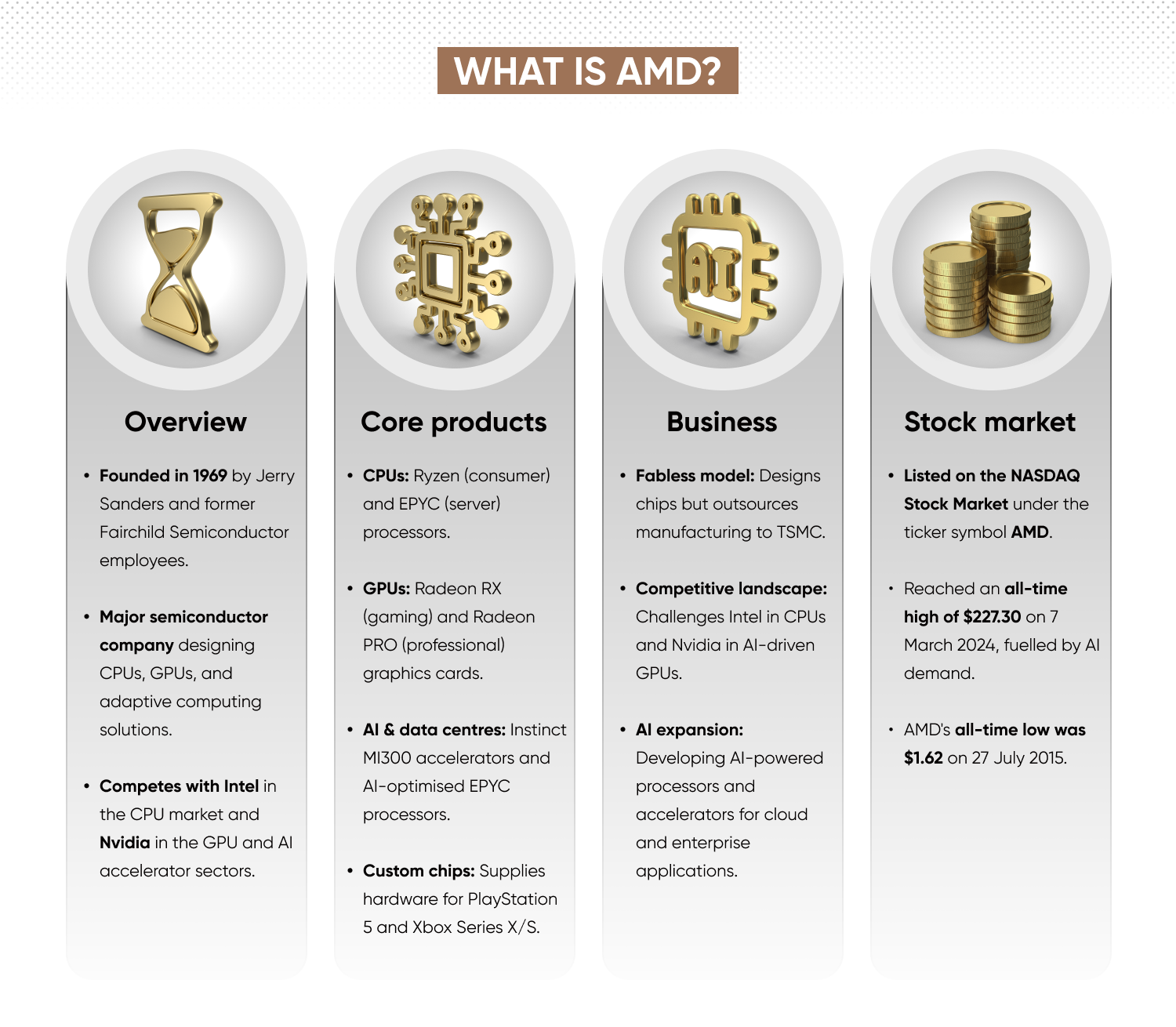
AMD’s story is one of relentless pursuit of technological excellence, marked by periods of groundbreaking innovation and fierce competition. Founded in 1969, a year before Intel, AMD began with a vision to create semiconductors that would power the burgeoning computer industry. Its journey from a small startup to a global technology giant is a testament to its engineering acumen and strategic resilience.
From Humble Beginnings to Microprocessor Powerhouse
Advanced Micro Devices was established by Jerry Sanders and a group of Fairchild Semiconductor alumni, initially focusing on manufacturing integrated circuits for electronics companies. The early decades saw AMD producing a range of components, including memory chips and logic circuits. A pivotal moment arrived in the late 1970s and early 1980s when AMD secured a second-source agreement with Intel, allowing it to manufacture licensed versions of Intel’s x86 processors. This agreement was foundational, not only providing AMD with crucial revenue and manufacturing expertise but also immersing it deeply into the architecture that would come to dominate personal computing.
This era of licensed manufacturing eventually gave way to AMD’s ambition to design its own x86-compatible processors. The drive for independent innovation was catalyzed by changes in the industry and the expiration of key licensing agreements, propelling AMD to embark on its own architectural journey. This transition marked AMD’s true emergence as a formidable competitor, no longer content with merely manufacturing existing designs but determined to forge its own path in microprocessing.
Key Milestones and Architectural Leaps
AMD’s history is dotted with critical architectural breakthroughs that challenged the status quo. The K5 and K6 processors of the mid-to-late 1990s were early attempts to compete directly with Intel’s dominant Pentium line, laying important groundwork for future successes. However, it was the introduction of the Athlon processor family in 1999 that truly established AMD as an innovative force. Athlon, particularly with its “Thunderbird” and “Palomino” cores, frequently outperformed Intel’s offerings of the era, compelling Intel to accelerate its own development cycles.
Perhaps the most revolutionary period began with the Opteron and Athlon 64 processors in 2003. These chips were the first to introduce a 64-bit x86 instruction set (x86-64 or AMD64) to the mainstream, an innovation so significant that Intel later adopted it. Furthermore, these processors pioneered the integrated memory controller and HyperTransport interconnect technology, which significantly reduced latency and improved performance by moving the memory controller directly onto the CPU die. This design philosophy was decades ahead of its time and fundamentally reshaped CPU architecture.
Another transformative event was AMD’s acquisition of ATI Technologies in 2006. This strategic move brought together two powerhouses in computing and graphics, paving the way for AMD to develop its groundbreaking Accelerated Processing Units (APUs) — processors that integrate both CPU and GPU cores onto a single die. While the initial years post-acquisition presented integration challenges, the long-term vision of heterogeneous computing proved prescient, particularly in the realm of gaming consoles and mainstream laptops.
After a period of struggle with the Bulldozer architecture, AMD’s resurgence began in earnest with the introduction of the Zen microarchitecture in 2017. Zen formed the foundation for the Ryzen desktop and mobile CPUs, and EPYC server CPUs, marking a dramatic return to performance leadership and energy efficiency. This architecture, continually refined through subsequent generations (Zen 2, Zen 3, Zen 4, and beyond), has re-established AMD as a leading innovator, forcing intense competition and benefiting consumers and enterprises alike with superior performance-per-dollar ratios across multiple segments. The recent acquisition of Xilinx further expanded AMD’s portfolio into adaptive computing, FPGAs, and high-performance networking, solidifying its position as a holistic computing solutions provider.
The Core of Innovation: AMD’s Product Portfolio and Technological Prowess
At its heart, AMD is an engineering company, and its meaning is deeply embedded in the tangible technological products it designs and brings to market. Its diverse portfolio showcases a relentless drive to innovate across various computing domains, from the most demanding data centers to the most immersive gaming experiences.
Central Processing Units (CPUs): Powering Desktops, Servers, and More
AMD’s Central Processing Units are arguably its most renowned product line, built upon its highly acclaimed Zen microarchitecture.
- Ryzen Processors: For the consumer market, the Ryzen series powers a vast array of desktops and laptops. From the entry-level Ryzen 3 to the high-performance Ryzen 9, these CPUs offer exceptional multi-threaded performance, making them ideal for content creation, intensive multitasking, and gaming. The “Zen” architecture, characterized by its chiplet design (packaging multiple CPU core complexes on a single substrate), allows for scalability, efficient manufacturing, and excellent performance scaling with core counts. Mobile Ryzen processors bring similar advantages to laptops, offering a compelling balance of performance and battery life.
- Ryzen Threadripper: Targeting the high-end desktop (HEDT) and professional workstation markets, Threadripper CPUs boast an extraordinary number of cores and PCIe lanes, making them indispensable for complex simulations, 3D rendering, video editing, and other highly parallel workloads where maximum computational throughput is required.
- EPYC Processors: In the enterprise space, AMD’s EPYC server CPUs have revolutionized data centers. Leveraging the same scalable Zen architecture, EPYC processors deliver industry-leading core counts, immense memory bandwidth, robust security features (such as SEV-SNP), and expansive PCIe connectivity. They have become a preferred choice for cloud computing providers, high-performance computing (HPC) clusters, and artificial intelligence (AI) infrastructure, challenging long-standing incumbents and driving significant cost-performance efficiencies for businesses globally.
Graphics Processing Units (GPUs): Visualizing the Future of Gaming and AI
AMD’s Graphics Processing Units, primarily under the Radeon brand, are another cornerstone of its technological identity.
- Radeon RX Series: These GPUs are designed for the consumer gaming market, offering competitive performance across various price points. Based on the RDNA (Radeon DNA) architecture, these cards support modern features like hardware-accelerated ray tracing, FidelityFX Super Resolution (FSR) for enhanced upscaling, and advanced shading techniques. Radeon GPUs are critical for delivering immersive visual experiences and driving the latest gaming titles.
- Radeon Pro and Instinct Series: For professional workstations and data centers, AMD offers specialized GPUs. Radeon Pro GPUs are tailored for tasks like CAD/CAM, professional video editing, and content creation, certified for various professional applications. The Instinct series, built on the CDNA (Compute DNA) architecture, is specifically engineered for high-performance computing, artificial intelligence, and machine learning workloads. These accelerators feature massive compute power, high-bandwidth memory (HBM), and specialized instruction sets to handle the intense parallel processing demands of modern AI training and inference.

Integrated Solutions and Adaptive Computing
AMD’s commitment to integration and holistic computing solutions extends beyond discrete CPUs and GPUs.
- Accelerated Processing Units (APUs): These innovative chips combine CPU and GPU cores onto a single silicon die. Found predominantly in mainstream laptops, mini-PCs, and notably, in all current-generation gaming consoles (PlayStation 5, Xbox Series X/S), APUs provide a powerful and efficient solution for devices where space and power efficiency are paramount without compromising graphical fidelity for their target applications.
- Xilinx Integration (FPGAs and Adaptive SoCs): The acquisition of Xilinx has expanded AMD’s reach into adaptive computing, field-programmable gate arrays (FPGAs), and adaptive System-on-Chips (SoCs). These technologies offer unparalleled flexibility and reconfigurability, allowing hardware to be optimized for specific workloads post-manufacture. This capability is crucial for applications in aerospace and defense, industrial automation, medical imaging, 5G networking, and edge AI, where custom hardware acceleration is essential. This strategic move positions AMD not just as a CPU/GPU vendor but as a comprehensive provider of versatile computing platforms.
AMD’s Enduring Impact on the Technology Landscape
Beyond its impressive product catalog, AMD’s true meaning in the tech world lies in its transformative impact. It has consistently acted as a catalyst for innovation, driving progress across the industry and shaping the competitive dynamics that ultimately benefit consumers and businesses alike.
Driving Competition and Accelerating Innovation
For decades, AMD has served as the primary competitor to Intel in the CPU market and Nvidia in the GPU market. This rivalry is not merely about market share; it’s about pushing the boundaries of what’s possible in silicon design. When AMD introduces a groundbreaking architecture or a product with a superior performance-per-dollar ratio, it compels its competitors to innovate faster, optimize their own designs, and adjust their pricing strategies. The “tick-tock” development cycles and rapid advancements seen from all major players are often a direct result of AMD’s competitive pressure.
The resurgence of AMD with its Zen architecture, for instance, significantly accelerated the introduction of more cores and threads into mainstream computing, making multi-core processing the norm rather than an exception. This has directly fueled advancements in software development, enabling applications to leverage parallel processing more effectively across various domains, from video rendering to scientific simulations. Without AMD’s consistent challenge, the pace of innovation in core computing components would likely be considerably slower, potentially leading to stagnated performance and higher costs for end-users.
Strategic Partnerships and Ecosystem Influence
AMD’s influence extends through a vast network of strategic partnerships. Its chips power all current-generation leading gaming consoles, a testament to its bespoke design capabilities and integration expertise. This console presence ensures that AMD’s architectures and graphics technologies are deeply embedded in the gaming ecosystem, influencing game development pipelines and driving adoption of its underlying technologies.
Furthermore, AMD collaborates extensively with original equipment manufacturers (OEMs) like Dell, HP, Lenovo, and Acer to integrate its CPUs and GPUs into a wide range of laptops, desktops, and workstations. In the data center, partnerships with cloud giants like Microsoft Azure, Google Cloud, and Amazon Web Services demonstrate the scalability and reliability of EPYC processors for mission-critical cloud infrastructure. AMD also plays a vital role in open standards, contributing to initiatives like FreeSync (an open standard for adaptive sync displays) and FidelityFX Super Resolution (FSR), which provides an open-source upscaling solution, further fostering an open and competitive environment within the graphics industry. By forging these alliances, AMD not only expands its market reach but also ensures its technologies are at the forefront of diverse technological advancements and accessible across various platforms.
The Road Ahead: AMD’s Vision for Future Technologies
Looking forward, “what does AMD mean” increasingly refers to its proactive stance in shaping the next generation of computing. The company is strategically positioned to capitalize on emerging trends and continue its trajectory of innovation, cementing its role as a foundational technology provider.
Pushing the Boundaries of Performance and Efficiency
AMD’s future is firmly rooted in the continuous evolution of its core architectures. Successive generations of Zen for CPUs and RDNA/CDNA for GPUs are meticulously planned to deliver incremental and sometimes revolutionary gains in performance, power efficiency, and feature sets. This involves breakthroughs in process technology, leveraging advanced manufacturing nodes to pack more transistors into smaller, more efficient dies. Further refinement of chiplet designs, advanced packaging technologies, and sophisticated interconnects will be critical to achieving scalable performance while managing thermal and power envelopes.
Beyond raw computational power, AMD is investing heavily in enhancing the intelligence and adaptability of its silicon. This includes integrating specialized accelerators for specific workloads, such as AI engines directly on the CPU die (as seen with Ryzen AI) or advanced multimedia processing units. The goal is to create increasingly heterogeneous computing platforms where different types of processing units—CPUs, GPUs, FPGAs, and dedicated accelerators—work seamlessly together to optimize performance for diverse applications. This approach is key to tackling the burgeoning demands of artificial intelligence, machine learning, and complex data analytics.
Expanding Horizons in AI, Data Centers, and Beyond
AMD’s strategic investments clearly point towards significant expansion in high-growth markets.
- Artificial Intelligence (AI): With the acquisition of Xilinx and the robust capabilities of its Instinct GPUs and EPYC CPUs, AMD is aggressively pursuing the AI market. It aims to provide end-to-end AI solutions, from training large language models in vast data centers to enabling real-time inference at the edge. The integration of adaptive computing technology from Xilinx will allow for highly customized AI acceleration, differentiating AMD from competitors who primarily offer fixed-function silicon. AMD’s open software ecosystem, including ROCm (Radeon Open Compute platform), is critical for fostering broader adoption and development within the AI community.
- Data Centers and Cloud Computing: EPYC processors have already made significant inroads, and AMD is committed to further penetrating the data center market. Future EPYC generations will continue to enhance core density, memory bandwidth, and security features, making them even more compelling for hyperscale cloud providers, enterprise IT, and high-performance computing (HPC) environments. The synergy between EPYC CPUs, Instinct GPUs, and Xilinx-derived adaptive SoCs will offer comprehensive and optimized solutions for the most demanding workloads.
- Edge Computing and Embedded Systems: The flexibility of Xilinx FPGAs and adaptive SoCs, combined with AMD’s low-power CPU/GPU designs, positions the company well for the growing edge computing market. This includes applications in industrial IoT, autonomous vehicles, smart cities, and telecommunications, where processing needs to happen closer to the data source with minimal latency and high power efficiency.
In essence, AMD’s future vision is one of pervasive high-performance and adaptive computing, ensuring its technologies are fundamental to the infrastructure and devices that power our increasingly intelligent and connected world. It means not just maintaining competition but leading in key areas, driving the technological currents that will define the next decade.
In conclusion, “what does AMD mean?” encapsulates a journey from a resilient startup to a technological titan. It represents a company that has consistently pushed the envelope in silicon design, delivered groundbreaking architectures like AMD64 and Zen, and built a comprehensive portfolio of CPUs, GPUs, and adaptive computing solutions. AMD signifies fierce competition, relentless innovation, and a commitment to advancing the core technologies that underpin modern computing. As we look to the future, AMD continues to mean a driving force in high-performance computing, artificial intelligence, and a diverse range of technological frontiers, shaping the digital landscape for years to come.
aViewFromTheCave is a participant in the Amazon Services LLC Associates Program, an affiliate advertising program designed to provide a means for sites to earn advertising fees by advertising and linking to Amazon.com. Amazon, the Amazon logo, AmazonSupply, and the AmazonSupply logo are trademarks of Amazon.com, Inc. or its affiliates. As an Amazon Associate we earn affiliate commissions from qualifying purchases.