
Amazon, once merely an online bookstore, has metamorphosed into an unparalleled technology conglomerate, redefining commerce, cloud computing, artificial intelligence, and digital entertainment. To ask “what does Amazon sell?” today is to embark on an exploration of a sprawling technological empire that touches nearly every facet of modern life. It’s a question not just about products, but about platforms, services, and the underlying innovations that empower businesses and consumers globally. This article delves into the technological breadth of Amazon’s offerings, dissecting the intricate web of products and services that solidify its position as a true tech titan.
The Foundation: Amazon’s E-commerce Technology and Marketplace
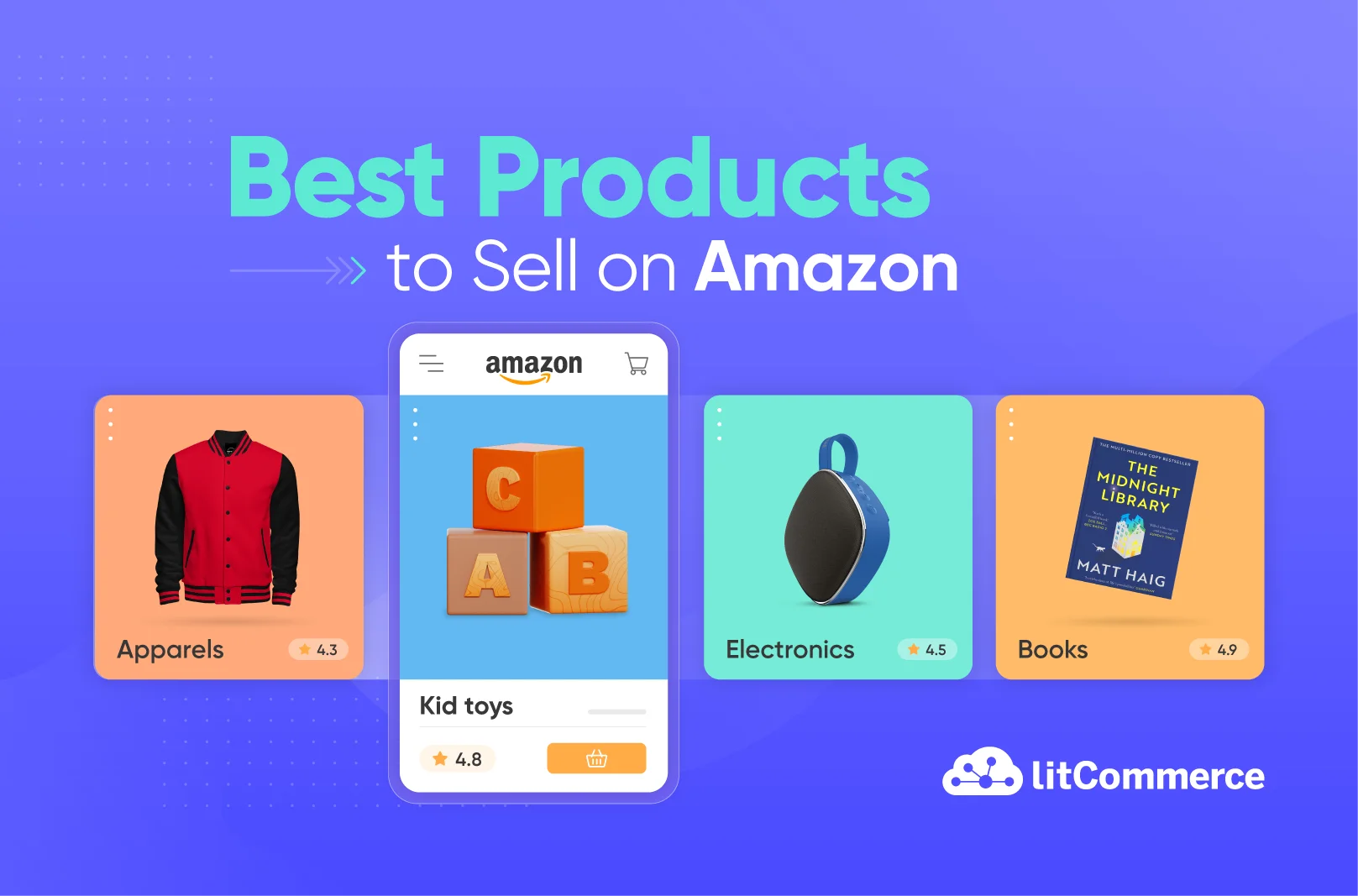
At its heart, Amazon remains the world’s largest online retailer, but the sheer scale and sophistication of its e-commerce operations are a testament to its technological prowess. It sells not just goods, but an experience powered by cutting-edge algorithms, vast logistical networks, and an increasingly personalized digital interface.
Powering Global Retail: The Tech Behind the Virtual Shelves
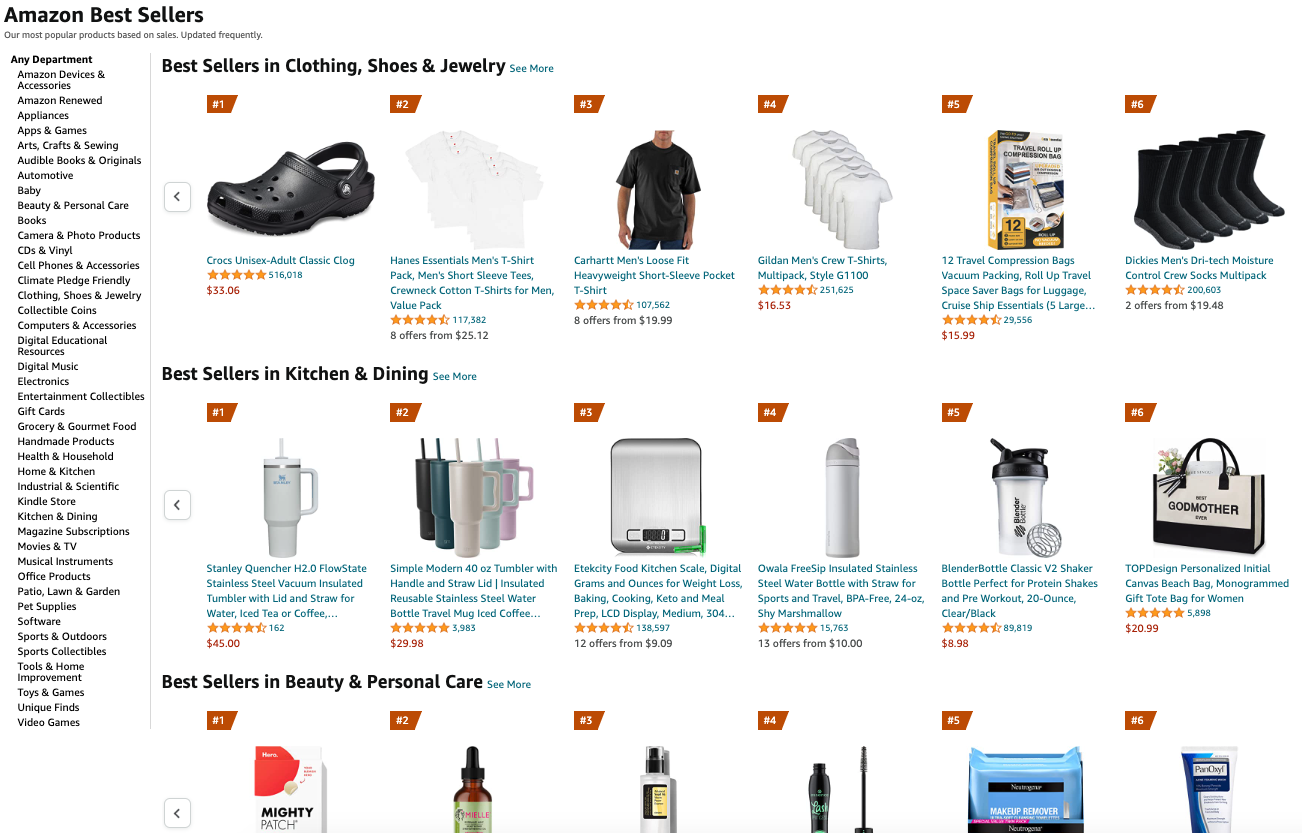
Amazon’s core retail offering, spanning millions of products from electronics to apparel, groceries to automotive parts, is far more than just a website. It’s a complex technological marvel. The platform leverages advanced data analytics and machine learning to optimize product recommendations, pricing, inventory management, and search functionality. Every click, every purchase, every search query feeds into an intelligent system designed to predict consumer behavior and streamline the shopping journey. From a technological standpoint, Amazon sells access to an unparalleled global marketplace, providing sellers with robust tools for listing, fulfillment (through FBA – Fulfillment by Amazon), and advertising, all managed through sophisticated software suites. The technological infrastructure supporting this global exchange, including vast data centers, resilient network architecture, and security protocols, is critical to its operation. Furthermore, the development and maintenance of Amazon’s mobile shopping apps, which often introduce new features and user interfaces before the web platform, highlight its continuous investment in ubiquitous access technology. The ability to manage logistics for millions of third-party sellers alongside its own inventory requires an advanced technological framework for warehousing, shipping, and last-mile delivery. This includes sophisticated routing algorithms, robotic automation in fulfillment centers, and real-time tracking systems, all aimed at delivering efficiency and speed.
Beyond Goods: Digital Content and Subscriptions
Amazon’s sales extend significantly into the digital realm, offering a vast array of media and subscription services. Prime Video sells access to a library of movies and TV shows, including original content produced by Amazon Studios, leveraging streaming technology that adapts to varying bandwidths and devices. Amazon Music offers millions of songs and podcasts, competing directly with other major music streaming platforms through personalized playlists and high-fidelity audio options. Kindle Unlimited and Audible provide access to e-books and audiobooks, respectively, showcasing Amazon’s early and continued dominance in digital publishing. These services aren’t just content libraries; they are sophisticated distribution platforms built on resilient streaming technologies, content delivery networks (CDNs), and user interface innovations designed for seamless consumption across a multitude of devices. The underlying technology for digital rights management (DRM), user account management, and cross-device synchronization ensures a consistent and secure experience for subscribers. The bundling of these services under Amazon Prime also sells convenience and value, integrating multiple digital offerings with expedited shipping into a single, comprehensive membership.
Amazon Web Services (AWS): The Cloud Computing Powerhouse
Perhaps the most significant and transformative thing Amazon sells isn’t a physical product at all, but rather the underlying technological infrastructure that powers a vast portion of the internet. Amazon Web Services (AWS) is the world’s leading cloud computing platform, providing on-demand computing power, storage, databases, and a plethora of other IT services to millions of businesses, from startups to global enterprises and government agencies. AWS represents Amazon’s most direct sale of pure technology.
Infrastructure as a Service (IaaS): Servers, Storage, and Networking
AWS primarily sells access to virtualized computing infrastructure. This includes Elastic Compute Cloud (EC2), which provides scalable virtual servers, allowing companies to rent computing capacity without investing in physical hardware. Simple Storage Service (S3) offers highly durable and scalable object storage for data of all types, from website files to massive data lakes. Virtual Private Cloud (VPC) provides isolated sections of the AWS cloud, giving customers full control over their virtual networking environment. These services are foundational, allowing businesses to build, deploy, and scale applications and websites with unprecedented agility and cost-effectiveness. The technology behind AWS’s global network of data centers, robust security protocols, and high availability zones is what companies are effectively “buying” when they subscribe to these services. This shifts the capital expenditure (CapEx) of IT infrastructure to operational expenditure (OpEx), fundamentally changing how businesses acquire and manage their computing resources.
Platform as a Service (PaaS): Databases, Analytics, and Developer Tools
Beyond raw infrastructure, AWS sells managed services that abstract away much of the underlying server management. Relational Database Service (RDS) offers managed relational databases like MySQL and PostgreSQL, while DynamoDB provides a fully managed NoSQL database service, allowing developers to focus on application logic rather than database administration. Data analytics services like Amazon Redshift (data warehousing) and Amazon Kinesis (real-time data streaming) enable businesses to derive insights from vast datasets. Furthermore, AWS offers a comprehensive suite of developer tools, including CodePipeline for continuous integration/continuous delivery (CI/CD), CodeBuild for compiling code, and Lambda for serverless computing, where developers can run code without provisioning or managing servers. These services empower developers to build and deploy applications faster and more efficiently, essentially selling enhanced productivity and reduced operational overhead.
Software as a Service (SaaS) and Specialized Offerings: AI/ML, IoT, and Serverless
AWS also sells a growing number of higher-level, ready-to-use software services. This includes a vast portfolio of Artificial Intelligence and Machine Learning services like Amazon SageMaker for building and deploying ML models, Rekognition for image and video analysis, Polly for text-to-speech, and Lex for building conversational interfaces. For the Internet of Things (IoT), AWS IoT Core provides connectivity and management for billions of devices. Its serverless compute offering, AWS Lambda, allows customers to run code without provisioning or managing servers, paying only for the compute time consumed. These specialized services represent Amazon selling advanced capabilities and complex technologies as accessible, on-demand tools, democratizing access to cutting-edge tech that would otherwise require significant in-house expertise and investment.
Innovative Hardware: Amazon’s Device Ecosystem
Amazon doesn’t just sell technology to businesses; it also sells a wide range of consumer-facing technological devices, seamlessly integrating hardware, software, and services into a cohesive ecosystem designed to extend the Amazon experience into daily life.
Smart Home Dominance: Echo, Alexa, and Ring
Amazon’s most recognizable hardware offerings are its smart home devices, primarily centered around the Echo line of smart speakers and displays, powered by the Alexa voice AI. Amazon sells these devices as gateways to hands-free computing, information retrieval, media playback, and smart home control. The underlying technology involves sophisticated natural language processing (NLP), speech recognition, and cloud-based AI to understand and respond to user commands. Complementing this, Amazon sells Ring smart doorbells and security cameras, providing home surveillance and access control solutions. The acquisition of Ring and Eero (mesh Wi-Fi systems) solidified Amazon’s position in the smart home market, allowing it to sell an integrated suite of devices that enhance security, connectivity, and convenience, all managed through a unified app experience and often controlled by voice.
E-readers and Tablets: Kindle and Fire Devices
Amazon began its hardware journey with the Kindle e-reader, fundamentally changing how people consume books. It sells Kindles as dedicated devices optimized for reading, featuring e-ink displays that mimic paper and offer extended battery life. This technology aims to reduce eye strain and provide a distraction-free reading experience, linking seamlessly to Amazon’s vast digital bookstore. Later, Amazon expanded into tablets with its Fire series, offering affordable devices designed for media consumption, web browsing, and app usage, tightly integrated with Prime Video, Amazon Music, and the Amazon Appstore. These devices represent Amazon’s strategy of selling hardware as a conduit to its digital content and services, often at competitive price points to encourage ecosystem adoption.
Streaming and Entertainment: Fire TV and Gaming Initiatives
The Fire TV line, including streaming sticks, cubes, and smart TVs, sells access to a universe of streaming content. These devices leverage advanced video processing, intuitive user interfaces, and Alexa integration to deliver a seamless entertainment experience. By selling these devices, Amazon aims to be the central hub for home entertainment, providing a platform for its own Prime Video content as well as competitors’ services. While its gaming initiatives (like the Luna cloud gaming service) are still evolving, they demonstrate Amazon’s ambition to sell cutting-edge interactive entertainment, leveraging its cloud infrastructure (AWS) and content libraries.
Pioneering AI and Advanced Technologies
Artificial intelligence and machine learning are not just features within Amazon’s products; they are foundational elements that Amazon “sells” indirectly through enhanced experiences and directly through developer services. Amazon is at the forefront of applying AI to real-world problems at scale.
The Intelligence Behind the Experience: Personalization and Recommendations
Every interaction with Amazon’s e-commerce platform is guided by sophisticated AI. Amazon sells hyper-personalized shopping experiences through its recommendation engines, which analyze vast amounts of user data (browsing history, purchase patterns, reviews) to suggest products, content, and services. This AI-driven personalization extends across Prime Video, Amazon Music, and even targeted advertising, significantly improving user engagement and conversion rates. The underlying machine learning algorithms are constantly learning and adapting, making the shopping and content discovery process uniquely tailored to each individual, effectively selling efficiency and serendipity.
Alexa: AI in Everyday Life
Alexa is Amazon’s most public manifestation of its AI capabilities. Beyond being a voice assistant in Echo devices, Amazon sells Alexa as an integral part of its operating system for various devices and as a platform for third-party developers through the Alexa Skills Kit. Developers can build “skills” (voice apps) that extend Alexa’s functionality, ranging from smart home control to interactive games and informational services. This open approach means Amazon sells not just its own AI, but also the potential for others to innovate on top of it, driving broader adoption and embedding its AI deeper into the fabric of daily life.
Robotics and Automation: Optimizing Operations and Logistics
Behind the scenes, Amazon sells efficiency and speed through its extensive use of robotics and automation in its fulfillment centers. Its fleet of Kiva robots (now Amazon Robotics) moves shelves of products to human pickers, vastly reducing processing times and increasing storage density. Drone delivery (Prime Air) and autonomous ground vehicles are advanced technological endeavors aimed at further optimizing last-mile delivery, promising to “sell” unprecedented delivery speeds and convenience in the future. These innovations are not directly sold to consumers but are critical components that enable Amazon to sell products with unmatched speed and reliability, effectively selling the outcome of advanced robotic and automation tech.
Future Horizons: Emerging Tech and Strategic Bets
Amazon continues to invest heavily in nascent and emerging technologies, signaling its intent to sell solutions in new sectors and solidify its long-term technological leadership.
Healthcare Tech: Amazon Pharmacy and Halo
Amazon has made significant inroads into healthcare, leveraging its technological strengths in logistics, data analytics, and customer experience. Amazon Pharmacy sells prescription medications directly to consumers, utilizing a technologically advanced fulfillment and delivery system. Amazon Halo, a wearable device and subscription service, sells insights into personal health and wellness, using sensor technology and AI to track physical activity, sleep patterns, and even body composition. These initiatives represent Amazon selling accessible, tech-driven healthcare and wellness solutions, aiming to disrupt traditional models through efficiency and customer focus.
Satellite Internet: Project Kuiper
Project Kuiper is Amazon’s ambitious initiative to build a constellation of low Earth orbit (LEO) satellites to provide broadband internet access to unserved and underserved communities worldwide. This endeavor represents a massive technological undertaking, involving rocket development (through Blue Origin), advanced satellite design, and global ground infrastructure. While still in development, Project Kuiper aims to eventually “sell” high-speed internet connectivity, bridging the digital divide and creating a new revenue stream in the global telecommunications market, leveraging its expertise in large-scale infrastructure deployment.
Autonomous Systems: Zoox and Delivery Drones
Amazon’s acquisition of Zoox, a company developing autonomous ride-hailing vehicles, signals its commitment to selling advanced mobility solutions in the future. Zoox is building a complete ecosystem for autonomous transport, from purpose-built electric vehicles to a robust software stack. Alongside drone delivery, these ventures highlight Amazon’s long-term vision of selling autonomous transportation as a service, not just for goods but potentially for people, pushing the boundaries of robotics and AI in complex real-world environments.
In conclusion, “what Amazon sells” is a perpetually expanding and evolving portfolio, driven by relentless technological innovation. From the foundational e-commerce platform that revolutionized retail to the global reach of AWS, the pervasive influence of Alexa, and its ambitious forays into healthcare, space, and autonomous systems, Amazon consistently sells cutting-edge technology—whether directly as a service or product, or indirectly through the enhanced experiences and efficiencies it creates. It is a company that has redefined what it means to be a technology provider, shaping the digital landscape and continually pushing the boundaries of what is possible.
aViewFromTheCave is a participant in the Amazon Services LLC Associates Program, an affiliate advertising program designed to provide a means for sites to earn advertising fees by advertising and linking to Amazon.com. Amazon, the Amazon logo, AmazonSupply, and the AmazonSupply logo are trademarks of Amazon.com, Inc. or its affiliates. As an Amazon Associate we earn affiliate commissions from qualifying purchases.