
Amazon Prime has evolved far beyond its origins as a simple expedited shipping program. Today, it represents one of the most sophisticated digital ecosystems in the world, functioning as a multi-layered technology stack that integrates cloud computing, high-fidelity streaming, artificial intelligence, and a massive array of software utilities. For the modern consumer, a Prime subscription is a gateway to an interconnected web of hardware and software designed to streamline digital life. To understand what Amazon Prime truly provides, one must look past the cardboard boxes and examine the technological infrastructure that powers its digital services.

The Streaming Frontier: Prime Video and High-Definition Content Delivery
At the heart of the Prime tech suite is Prime Video, a streaming platform that rivals dedicated industry leaders through sheer technological scale. Unlike basic video-on-demand services, Prime Video utilizes Amazon Web Services (AWS) to ensure low-latency delivery across thousands of device types, from high-end 4K smart TVs to low-bandwidth mobile devices in developing markets.
Advanced Metadata and the X-Ray Feature
One of the most distinctive technological offerings within Prime Video is the X-Ray feature. Powered by IMDb (an Amazon subsidiary), X-Ray uses machine learning and deep metadata integration to provide real-time information about actors, music, and trivia during playback. This is not merely a static overlay; it is a dynamic data layer synchronized with the video’s timecodes, allowing users to identify cast members in a specific scene or jump to a particular song instantly. This level of granular data integration showcases Amazon’s ability to leverage its massive databases to enhance the user experience through software.
Optimization and Compression Standards
Prime Video supports a wide array of high-end visual and audio standards, including 4K Ultra HD, High Dynamic Range (HDR10+), and Dolby Atmos. The platform employs sophisticated adaptive bitrate streaming technology. By analyzing a user’s connection speed in real-time, the software adjusts the video quality frame-by-frame to prevent buffering, utilizing advanced codecs like HEVC (High-Efficiency Video Coding) to deliver superior picture quality at lower data rates. This tech-heavy approach ensures that the “provision” of entertainment is as seamless as possible, regardless of the user’s hardware limitations.
Digital Media and Software Utilities: Beyond the Browser
Amazon Prime provides an extensive library of software-based services that cater to bibliophiles, photographers, and music enthusiasts. These services are integrated into a single identity management system, allowing for a frictionless transition between devices.
The Kindle Ecosystem and Whispersync
For many, the Kindle Lending Library and Prime Reading are the primary draws of the subscription. However, the true value lies in the “Whispersync” technology. This proprietary software synchronizes the user’s reading progress, bookmarks, and annotations across all devices. Whether reading on a dedicated Kindle E-reader, an iPad, or a smartphone, the cloud-based backend ensures the experience is continuous. This synchronization is a testament to Amazon’s robust cloud architecture, which manages billions of data points to keep a user’s library consistent in real-time.
Amazon Photos: Cloud Storage and Image Recognition
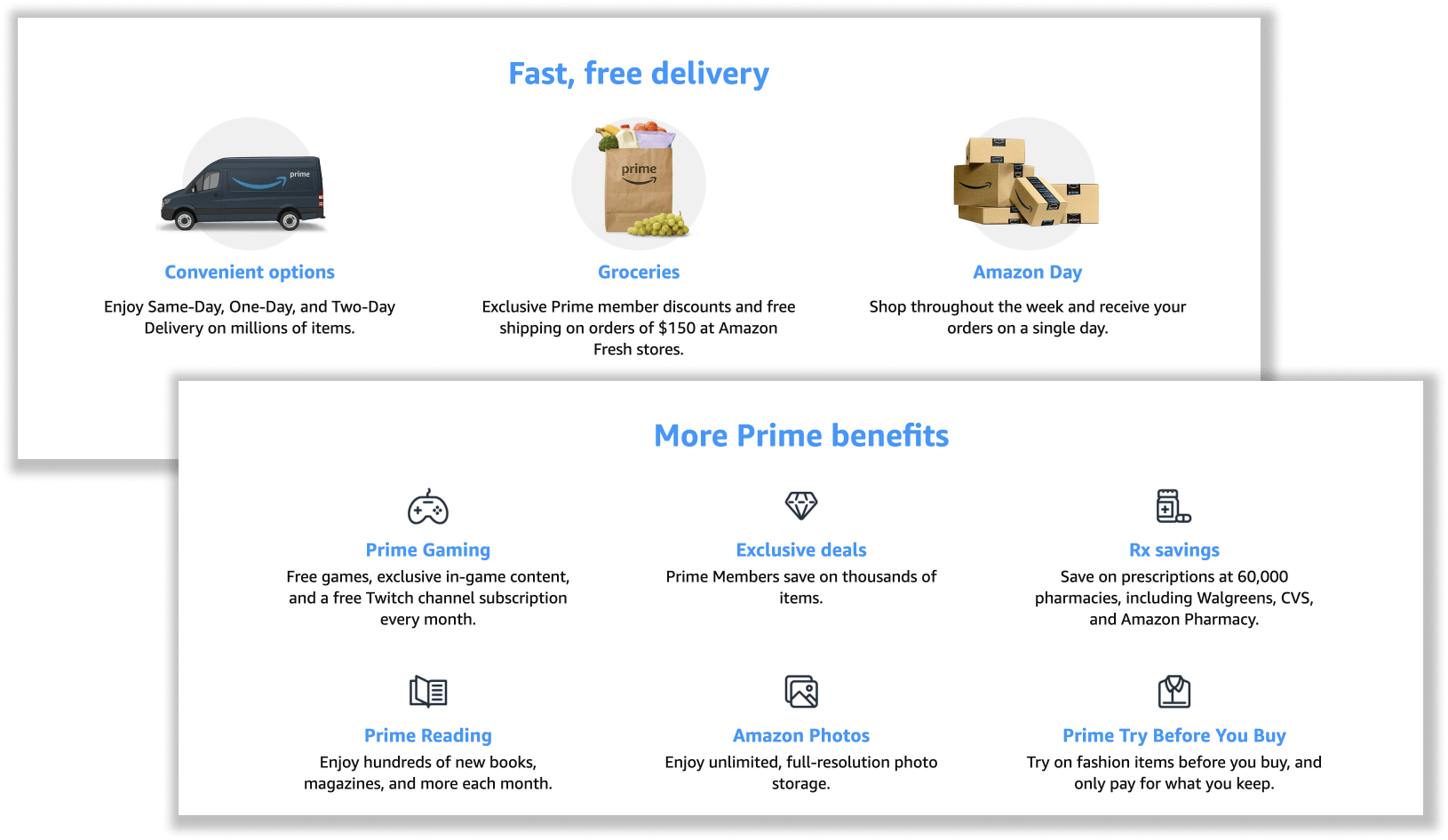
Amazon Prime provides unlimited full-resolution photo storage, a feature that distinguishes it from many competitors that compress images or charge for extra gigabytes. From a tech perspective, Amazon Photos is more than just a digital locker. It utilizes sophisticated image recognition AI to categorize photos automatically. Users can search for “dog,” “beach,” or “sunset,” and the software’s computer vision algorithms will surface the relevant images. This provides a professional-grade asset management tool to the average consumer, backed by the same infrastructure that powers enterprise-level cloud storage.
Prime Music and Audio Architecture
While Amazon offers a premium “Unlimited” tier, the standard Prime Music service provides a massive library of ad-free tracks and podcasts. The technology here focuses on seamless integration with the Alexa Voice Service. The backend utilizes voice-recognition software to interpret complex requests—such as “Alexa, play 90s grunge”—and matches them against a vast metadata catalog to deliver instant audio streams.
Integration with Emerging Tech: Alexa, IoT, and Smart Home Synergy

Amazon Prime is the “connective tissue” for the modern smart home. By owning a Prime subscription, users unlock enhanced capabilities within the Alexa ecosystem, transforming a simple smart speaker into a central hub for automated living.
Proactive Logistics and Voice Commerce
Prime members gain access to advanced “voice commerce” features. Using Natural Language Processing (NLP), Alexa can track packages in real-time, notify users of delivery status via light-ring indicators, and facilitate reordering through simple voice commands. The technology behind this involves complex interactions between the user’s Prime account, real-time inventory management systems, and the Alexa Skills Kit.
Prime-Exclusive Device Integration
Amazon frequently uses its Prime membership to subsidize and integrate with its own hardware, including Ring security systems, Eero mesh Wi-Fi routers, and Fire TV devices. For Prime members, these devices often come with “Frustration-Free Setup” technology. This allows a new device to automatically connect to the user’s Wi-Fi network by retrieving encrypted credentials stored in the user’s Prime-linked cloud. This reduces the technical barrier to entry for building a sophisticated Internet of Things (IoT) environment, making the smart home more accessible to the non-technical user.
Gaming and Community: The Twitch Integration and Prime Gaming
In 2014, Amazon acquired Twitch, the world’s leading live-streaming platform for gamers. Since then, Prime has become an essential tool for the gaming community through its “Prime Gaming” (formerly Twitch Prime) initiative.
Exclusive Software Assets and In-Game Content
Prime Gaming provides a monthly rotation of free PC games and exclusive in-game content (skins, currency, boosts) for popular titles like League of Legends and Call of Duty. This requires deep API integrations between Amazon and third-party game developers. The provision here isn’t just “free stuff”; it is a sophisticated digital distribution system that manages licenses across multiple platforms (Ubisoft Connect, EA Play, etc.) through a single Prime login.
Enhancing the Streaming Experience
On Twitch itself, Prime provides a monthly “Channel Sub,” allowing users to support their favorite creators at no extra cost. Technically, this represents a bridge between a traditional retail subscription and a digital creator economy. It also provides “Prime-only” chat badges and emotes, which are managed through Twitch’s high-concurrency chat architecture, capable of handling millions of simultaneous users without latency.
Security, Privacy, and the Future of the Prime Tech Stack
As Amazon Prime expands its reach, the technology governing security and data privacy becomes a critical part of what the service provides. Prime is not just a collection of features; it is a secure digital identity.
Multi-Factor Authentication and Secure Identity
Amazon Prime utilizes advanced security protocols to protect user data, including biometric authentication for mobile apps and robust Multi-Factor Authentication (MFA). Because a Prime account often contains credit card information, addresses, and personal photos, the underlying security architecture is built to enterprise standards. This “Identity-as-a-Service” allows users to log into various Amazon-owned apps and even third-party sites using “Login with Amazon,” a secure OAuth 2.0 implementation that protects user credentials.
AI-Driven Personalization
Perhaps the most ubiquitous technology provided by Prime is its recommendation engine. Using deep learning models, Amazon analyzes vast amounts of data—viewing habits on Prime Video, purchase history, and even music preferences—to create a hyper-personalized dashboard for every user. This AI doesn’t just suggest products; it anticipates needs, optimizing the user interface to show the most relevant digital content first. This level of predictive software engineering is what makes the Prime experience feel intuitive rather than overwhelming.
The Road Ahead: Ambient Computing
Looking forward, what Amazon Prime provides is a shift toward “ambient computing.” This is a tech trend where the computer disappears into the background, and services are available whenever and wherever they are needed. Through the integration of Prime services into cars (via Alexa Auto), wearables, and smart appliances, Amazon is building a future where the subscription isn’t something you “use” at a desk, but a digital layer that follows you through the physical world.
In summary, when asking what Amazon Prime provides, the answer is a comprehensive tech ecosystem. It provides high-end streaming infrastructure, sophisticated cloud storage, AI-driven personal assistance, and a secure gateway to the world of IoT and gaming. It is a masterclass in how a single subscription can leverage diverse software and hardware technologies to create a cohesive, indispensable digital lifestyle.
aViewFromTheCave is a participant in the Amazon Services LLC Associates Program, an affiliate advertising program designed to provide a means for sites to earn advertising fees by advertising and linking to Amazon.com. Amazon, the Amazon logo, AmazonSupply, and the AmazonSupply logo are trademarks of Amazon.com, Inc. or its affiliates. As an Amazon Associate we earn affiliate commissions from qualifying purchases.