
In the landscape of modern communications technology, few innovations have been as foundational as the radio. While we live in an era dominated by high-speed fiber optics, 5G networks, and satellite streaming, the humble radio remains a cornerstone of global information exchange. When tuning a dial or selecting a band on a digital receiver, users are often presented with two primary choices: AM and FM. But what does AM stand for on the radio, and how does the underlying technology function to bring sound into our homes and vehicles?
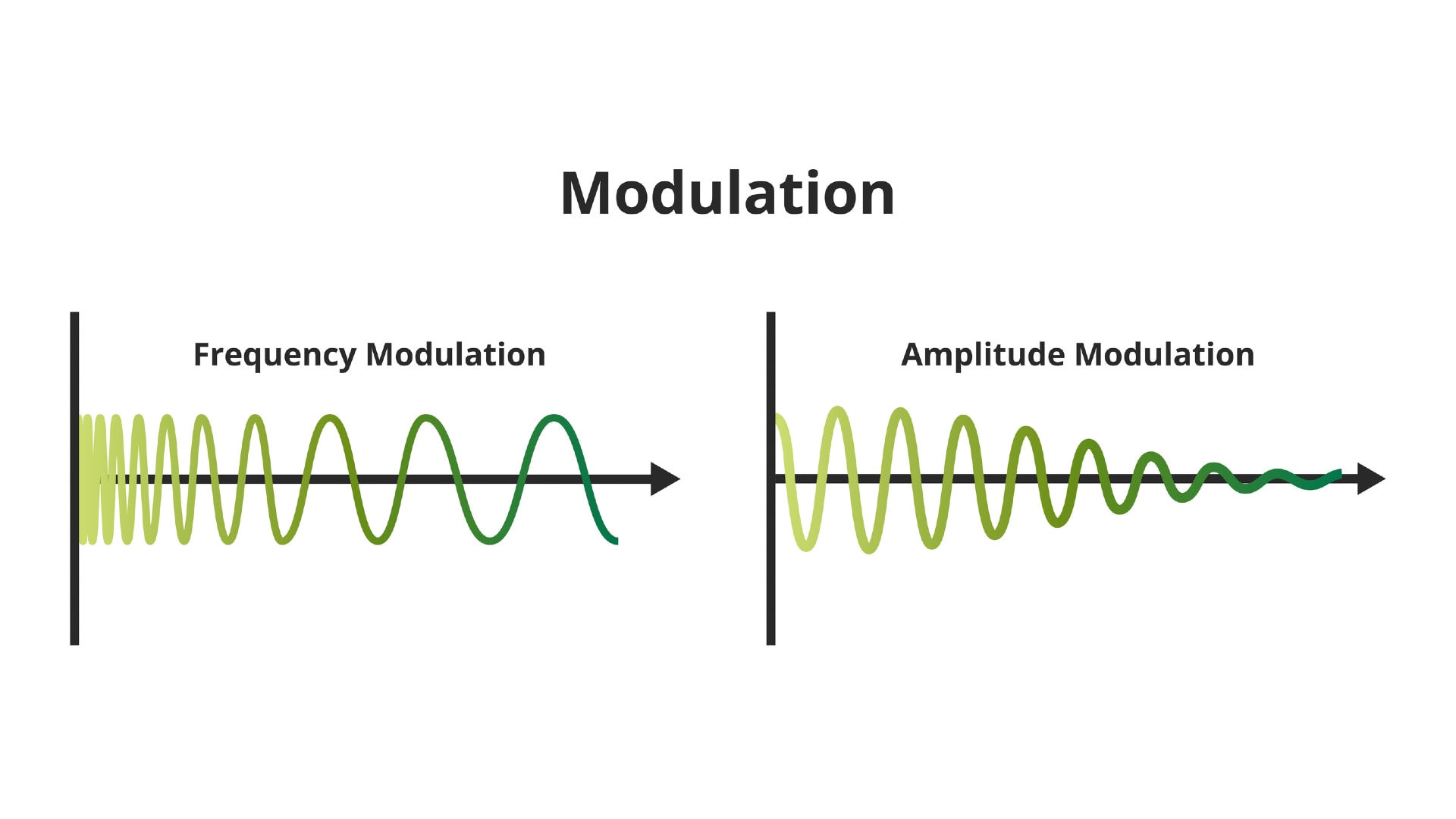
AM stands for Amplitude Modulation. It is a technique used in electronic communication, most commonly for transmitting information via a radio carrier wave. To understand AM is to understand the very birth of electronic broadcasting and the physics of how we manipulate the electromagnetic spectrum to bridge vast distances.
The Engineering Behind the Signal: How Amplitude Modulation Works
At its core, all radio communication involves the transmission of electromagnetic waves through space. To send a “message”—whether it is a person’s voice, a musical note, or a burst of data—engineers must find a way to encode that information onto a “carrier wave.” In the niche of analog technology, Amplitude Modulation was the first successful method used to achieve this for audio.
The Carrier Wave and Signal Processing
Every radio station is assigned a specific frequency, measured in kilohertz (kHz). This is the station’s “carrier wave,” a steady, unchanging sinusoidal wave that travels through the atmosphere. On its own, the carrier wave contains no information; it is simply a vehicle.
To transmit sound, the tech involves a process called modulation. In a radio studio, sound waves are converted into electrical signals by a microphone. These electrical signals are then used to vary the strength—or the amplitude—of the carrier wave. When the audio signal is “loud” or at a high peak, the amplitude of the carrier wave increases. When the audio signal is “quiet,” the amplitude decreases. The frequency of the carrier wave remains constant, but its height fluctuates in direct proportion to the audio input.
The Receiver’s Role in Demodulation
The technology on the consumer’s end—the radio receiver—performs the inverse operation, known as demodulation. The antenna picks up the modulated electromagnetic wave, and the internal circuitry filters out the high-frequency carrier wave.
Through a process of “envelope detection,” the receiver tracks the peaks and valleys of the wave’s amplitude. By stripping away the carrier, the device extracts the original electrical audio signal, which is then amplified and sent to a speaker. This elegant conversion from physical sound to electromagnetic amplitude and back to physical sound is the hallmark of AM technology.
Power and Efficiency in AM Transmission
From a technical standpoint, AM is highly efficient in terms of the equipment required for reception. Because the demodulation process is relatively simple, AM receivers can be built with very few components. This is why, historically, crystal radios (which require no external power source) were able to pick up AM signals. However, from a transmission perspective, AM is less efficient than modern digital methods because a significant portion of the power is concentrated in the carrier wave itself, which carries no actual data.
Comparing AM and FM: A Technical Deep Dive
In the tech world, the debate between AM (Amplitude Modulation) and FM (Frequency Modulation) is often framed in terms of audio quality versus range. While FM is the standard for high-fidelity music, AM remains the king of long-distance communication and talk-based broadcasting due to its unique physical properties.
Bandwidth and Frequency Range
AM radio operates in the Medium Frequency (MF) band, typically ranging from 535 to 1705 kHz. Each station is usually allocated 10 kHz of bandwidth. Compared to FM, which operates in the Very High Frequency (VHF) range (88 to 108 MHz) with 200 kHz of bandwidth per station, AM is much narrower.
This narrow bandwidth is a technical limitation that affects audio fidelity. Because the frequency response is capped, AM cannot reproduce the high-frequency “treble” notes or the complex stereo imaging found in FM or digital streams. This makes AM less ideal for symphonic music but perfectly adequate for the human voice, which occupies a much narrower frequency range.
Signal Resilience and Interference
One of the primary technical drawbacks of AM technology is its vulnerability to Radio Frequency Interference (RFI). Because information is stored in the amplitude (the height) of the wave, any external electrical noise that affects the wave’s height will be interpreted by the receiver as audio.
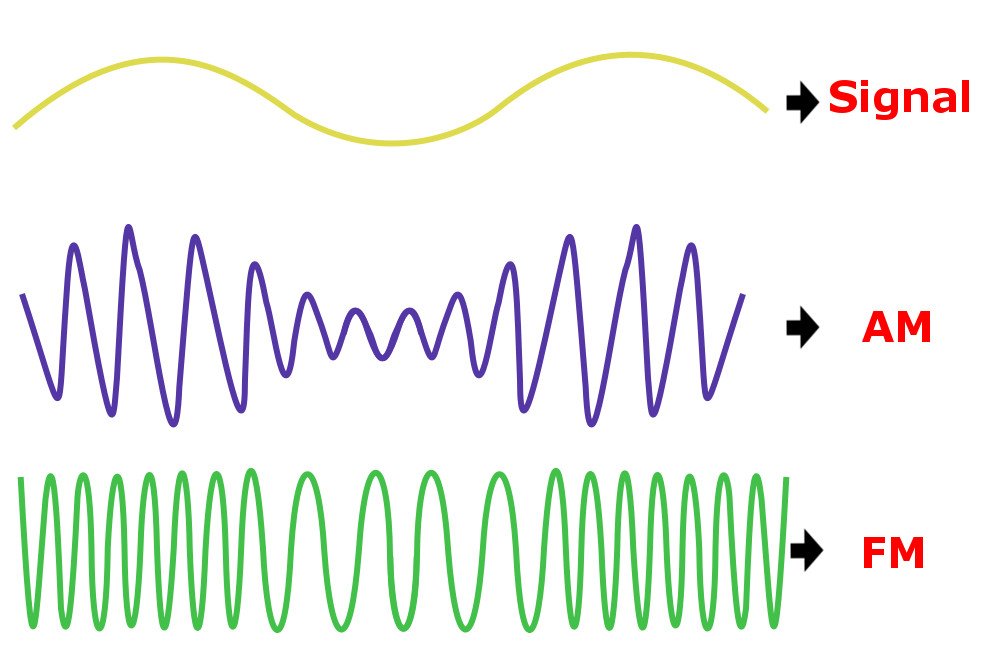
Lightning, power lines, fluorescent lights, and even modern computer processors emit electromagnetic “noise” that can spike the amplitude of a passing radio wave. This results in the “static” or “crackle” commonly heard on AM stations. FM technology circumvents this by keeping the amplitude constant and varying the frequency; since most natural and man-made noise affects amplitude, FM signals remain much clearer.
Propagation: Ground Waves vs. Sky Waves
The true technical advantage of AM lies in how its waves travel. AM signals utilize two primary types of propagation:
- Ground Waves: At the lower frequencies used by AM, the signal can hug the curvature of the earth. This allows AM stations to cover much larger geographic areas than FM stations, which are generally limited to “line-of-sight” transmission.
- Sky Waves (Skip): This is where AM technology becomes truly fascinating. At night, the ionosphere (a layer of the Earth’s atmosphere) changes its electrical properties. AM signals can bounce—or “skip”—off the ionosphere and return to Earth hundreds or even thousands of miles away. This phenomenon allows “clear channel” AM stations to be heard across entire continents under the right atmospheric conditions.
The Infrastructure of AM Broadcasting
Building and maintaining an AM broadcast facility requires specialized engineering that differs significantly from FM or cellular infrastructure. The physical scale of AM tech is often much larger, necessitating massive antenna arrays and high-voltage power systems.
Antenna Design and Grounding Systems
Unlike FM antennas, which are relatively small and often mounted on top of towers, the AM tower is the antenna. The entire steel structure is energized with the radio signal. Because the wavelengths of the AM band are quite long (hundreds of meters), the towers must be correspondingly tall to achieve resonance.
Furthermore, AM stations require an extensive “ground screen.” This is a radial pattern of copper wires buried in the earth around the tower, often extending out as far as the tower is tall. This ground system acts as a reflective surface for the radio waves, ensuring the maximum amount of energy is radiated outward rather than being absorbed by the soil.
Transmitter Technology: From Vacuum Tubes to Solid State
For decades, AM transmitters relied on massive vacuum tubes to generate the high-power signals needed for broadcasting. These tubes required immense cooling systems and were prone to failure.
Modern AM infrastructure has shifted toward solid-state technology. Modern transmitters use banks of high-power transistors and “Pulse Width Modulation” (PWM) to achieve higher efficiency and better reliability. These digital-to-analog hybrid systems allow stations to maintain a consistent signal with lower electricity costs, which is vital for the sustainability of the medium.
Regulatory Standards and the “All-Digital” Shift
Technological standards for AM are governed by international bodies like the ITU (International Telecommunication Union) and local agencies like the FCC (Federal Communications Commission) in the United States. Recently, a major tech shift has occurred: the authorization of all-digital AM broadcasting.
By using HD Radio technology (specifically the IBOC or In-Band On-Channel standard), AM stations can now transmit a digital signal that eliminates static and provides FM-like audio quality. This represents a significant pivot in the niche, as it attempts to bring 1920s-era spectrum usage into the 21st-century digital ecosystem.
Modern Innovations and the Future of Analog Signals
As we look toward the future, many wonder if AM technology is becoming obsolete. However, the niche is currently undergoing a technical renaissance, driven by software-defined radio (SDR) and global emergency protocols.
Digital Radio Mondiale (DRM)
In many parts of the world, particularly Europe and Asia, the transition to Digital Radio Mondiale (DRM) is transforming the AM bands. DRM is a digital radio standard designed to work over the existing AM frequency allocations. It offers the best of both worlds: the massive range and “skip” capabilities of AM with the crystal-clear audio and data-carrying capacity of digital streams. This technology is crucial for providing information to remote regions where internet infrastructure is non-existent.
The Integration of AM in Software-Defined Radio (SDR)
For tech enthusiasts and hobbyists, the rise of Software-Defined Radio (SDR) has revitalized interest in AM. Traditionally, picking up distant AM signals required expensive, specialized hardware. Today, a simple USB dongle and a computer can act as a powerful receiver. Through sophisticated software algorithms, SDRs can “clean up” AM signals, removing noise and interference in real-time. This has turned the AM band into a playground for data scientists and amateur radio operators who experiment with signal processing and long-distance propagation.
Why AM Persists in the Digital Age
The persistence of AM technology is not merely due to nostalgia; it is due to physics. In the event of a national emergency or a catastrophic failure of the internet and cellular networks, AM radio remains the most resilient form of communication. Its ability to travel hundreds of miles from a single transmitter with a signal that can be picked up by a device as simple as a battery-powered transistor makes it an essential component of global tech resilience.
While the “AM” on your radio dial stands for a century-old method of modulation, the technology continues to evolve. From its roots in basic physics to its future in digital signal processing, Amplitude Modulation remains a testament to the enduring power of radio engineering. Whether through the “skip” of a nighttime signal or the precision of a modern digital transmitter, AM continues to prove that even in a world of bytes and pixels, the wave still matters.
aViewFromTheCave is a participant in the Amazon Services LLC Associates Program, an affiliate advertising program designed to provide a means for sites to earn advertising fees by advertising and linking to Amazon.com. Amazon, the Amazon logo, AmazonSupply, and the AmazonSupply logo are trademarks of Amazon.com, Inc. or its affiliates. As an Amazon Associate we earn affiliate commissions from qualifying purchases.