
In the high-stakes environment of a professional kitchen, communication is not merely a matter of courtesy; it is the fundamental mechanism of financial control. Among the various shorthand phrases shouted across the pass, “all day” is arguably the most critical for maintaining the fiscal health of a restaurant. While a casual observer might assume it refers to a daily special or a shift duration, in the context of professional culinary operations, “all day” refers to the total number of a specific dish currently active on the kitchen’s order rail.
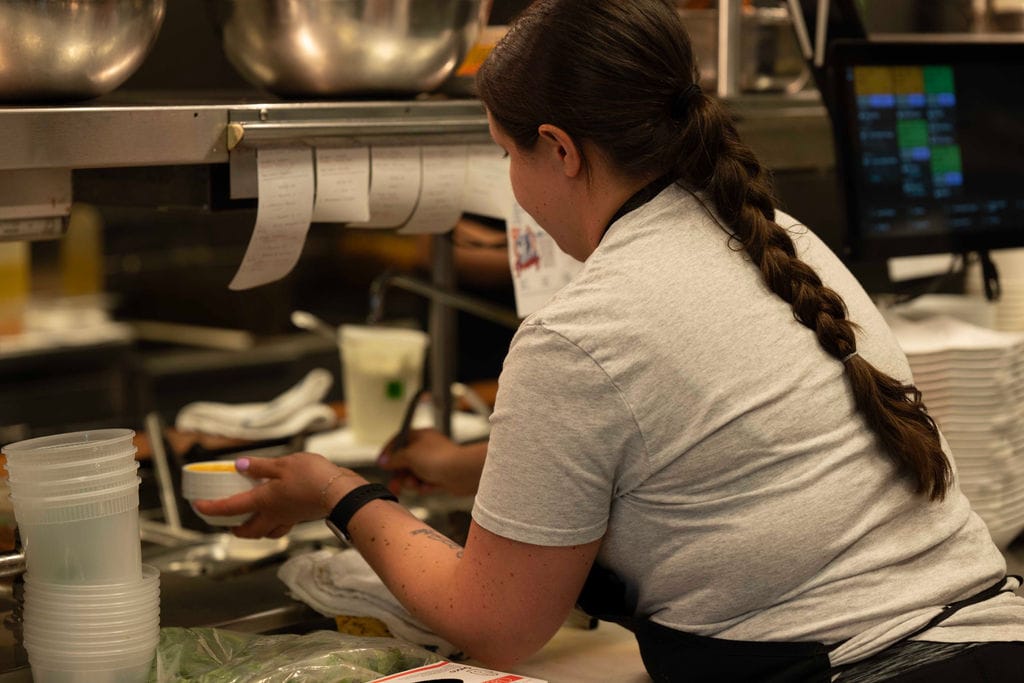
For a restaurant owner or a financial manager, the “all day” count is the real-time pulse of the business’s inventory-to-revenue pipeline. Understanding this term requires looking beyond the heat of the line and into the metrics of business finance, waste management, and labor optimization. When an expeditor calls out, “I need four salmon all day,” they are summarizing the kitchen’s immediate liability and production requirement, ensuring that the operation remains lean, efficient, and profitable.
The Financial Mechanics of the “All Day” Count
At its core, the “all day” count is a real-time inventory management tool. In any other manufacturing sector, knowing exactly how many units are in production at a given moment is essential for managing overhead. The restaurant industry is no different. Every dish represented in an “all day” call involves raw material costs (Cost of Goods Sold), labor costs, and utility overhead.
Real-Time Inventory Tracking and COGS
The Cost of Goods Sold (COGS) is the primary variable expense in a restaurant’s profit and loss statement. When the kitchen operates without a clear “all day” understanding, the risk of over-production skyrockets. Over-production leads to “dead food”—dishes prepared but not served—which is essentially burning cash.
By utilizing the “all day” method, the expeditor ensures that the kitchen staff is perfectly synced with the Point of Sale (POS) system. If five tickets each ask for one order of frites, but the fry cook loses track and prepares seven, those two extra portions represent a total loss of margin. In high-volume environments, these minor discrepancies can aggregate into thousands of dollars in lost revenue over a fiscal quarter.
Reducing Shrinkage and Waste
Shrinkage, or the loss of inventory due to error or waste, is a silent killer of restaurant margins. Professional kitchens operate on razor-thin profit margins, often between 3% and 6%. In such a landscape, accuracy is the difference between a profitable month and a deficit.
The “all day” call serves as a constant audit. It forces every station—sauté, grill, pantry—to reconcile their physical output with the digital orders. This financial rigor prevents the accumulation of “orphaned” dishes that occur when communication breaks down. By maintaining a precise “all day,” the management ensures that every gram of protein and every ounce of produce is accounted for and tied to a revenue-generating transaction.
Operational Efficiency and Labor Cost Optimization
Beyond inventory, the “all day” count is a vital metric for labor productivity. Labor is often the highest expense in a restaurant’s budget, frequently rivaling or exceeding food costs. Maximizing the “throughput”—the rate at which a kitchen can turn raw ingredients into paid meals—is essential for optimizing these labor dollars.
Throughput and Table Turnover
In the business of hospitality, time is a finite resource. The faster a kitchen can accurately fulfill orders, the faster a table can be cleared and “turned” for the next party. This concept, known as table turnover, is a key driver of RevPASH (Revenue Per Available Seat Hour).
The “all day” count allows the kitchen to batch-process tasks without losing track of the total volume. If the grill cook knows they have “twelve ribeyes all day,” they can manage the heat zones on the grill more efficiently than if they were reacting to twelve individual tickets one by one. This streamlined workflow reduces the “ticket time” (the duration from order to service), which directly correlates with higher customer satisfaction and increased total daily revenue.
Labor Productivity and Burnout Prevention
Inefficient communication leads to “re-fires”—dishes that must be cooked again because the first attempt was incorrect or timed poorly. Re-fires are a double financial hit: they waste ingredients and they double the labor cost for that specific plate.
When a kitchen staff is clear on the “all day,” the cognitive load is reduced. This allows for a more focused labor force. From a business management perspective, a kitchen that communicates effectively using standardized terms like “all day” requires fewer man-hours to handle high volumes, allowing the owner to schedule more leanly and reduce the overall labor percentage on the balance sheet.
Data-Driven Menu Engineering and Profit Margins
While the “all day” call happens in the moment, the data it generates is foundational for long-term financial strategy. Modern Kitchen Display Systems (KDS) track these “all day” counts digitally, providing a wealth of data for menu engineering and demand forecasting.
Identifying “Stars” and “Dogs”
In menu engineering, dishes are often categorized based on their popularity and profitability. “Stars” are high-margin, high-popularity items, while “Dogs” are low-margin, low-popularity items. By analyzing which items frequently dominate the “all day” calls during peak hours, management can identify their most valuable assets.
If a specific appetizer consistently shows up in high “all day” counts, it suggests a high velocity. Financial managers can then look for ways to further optimize the supply chain for that item—perhaps by buying in larger bulk to lower the unit cost—thereby increasing the total profit margin for the restaurant’s most popular item.
Demand Forecasting and Procurement
Accurate financial planning requires predictable procurement. By understanding the average “all day” counts for various time slots (e.g., Friday night service vs. Tuesday lunch), a business can move toward “Just-In-Time” (JIT) inventory management.
JIT inventory reduces the amount of capital tied up in sitting stock and minimizes the risk of spoilage. If the historical data shows that the “all day” count for Chilean Sea Bass rarely exceeds twenty units on a weekday, the procurement officer can adjust the daily order to reflect that reality. This precision ensures that the business’s cash flow is not trapped in a walk-in cooler, but is instead available for reinvestment or debt service.
The Role of “All Day” in Scaling and Multi-Unit Growth
For a single-unit independent restaurant, “all day” is a survival tool. For a multi-unit brand or a growing franchise, it is a prerequisite for scalability. Institutionalizing these communication standards is a form of brand strategy that ensures financial consistency across various locations.
Standardization of Unit Economics
Investors and venture capitalists looking at the restaurant space prioritize “unit economics”—the direct revenues and costs associated with an individual business model expressed on a per-unit basis. A brand that utilizes standardized communication like “all day” is a brand that has a repeatable, scalable operational system.
Standardization reduces the “training tail”—the period during which a new employee is a net cost to the business rather than a net asset. When every kitchen in a corporate group uses the same verbal and digital “all day” cues, staff can be moved between locations with minimal loss in efficiency. This fluidity is essential for maintaining consistent profit margins as a brand expands into new markets.
Tech Integration for Financial Reporting
The future of restaurant finance lies in the integration of the kitchen’s verbal shorthand with sophisticated AI-driven analytics. Today’s high-end POS systems can “call” the all-day counts on a screen, removing the risk of human error in a loud kitchen.
These systems feed directly into financial reporting software. By comparing the “all day” counts against the actual inventory depletions at the end of a shift, management can identify “variance.” Variance is the difference between what should have been used and what was actually used. High variance indicates theft, waste, or poor training—all of which are financial leaks that must be plugged to ensure the long-term viability of the business.
Conclusion: The Bottom Line on Kitchen Shorthand
The phrase “all day” is far more than a kitchen colloquialism. It is a fundamental unit of measurement in the business finance of hospitality. It represents the intersection of real-time production, inventory control, and labor efficiency.
For the professional chef, the “all day” is a way to stay sane during a rush. For the restaurant owner and financial stakeholder, it is a crucial metric that ensures every dollar spent on ingredients and labor is working toward a profitable outcome. In an industry where the margins for error are as thin as a paring knife, mastering the “all day” is not just about good cooking—it is about smart business. By maintaining a rigorous focus on this total count, a restaurant can minimize waste, maximize throughput, and secure its financial future in an increasingly competitive marketplace.
aViewFromTheCave is a participant in the Amazon Services LLC Associates Program, an affiliate advertising program designed to provide a means for sites to earn advertising fees by advertising and linking to Amazon.com. Amazon, the Amazon logo, AmazonSupply, and the AmazonSupply logo are trademarks of Amazon.com, Inc. or its affiliates. As an Amazon Associate we earn affiliate commissions from qualifying purchases.