
In the contemporary automotive landscape, the vehicle is no longer merely a mechanical assembly of gears and pistons; it has evolved into a sophisticated mobile computer. As we push toward higher levels of automation and safety, the technology embedded within our cars becomes increasingly complex. One acronym that frequently appears on the dashboards of modern luxury and high-tech vehicles is AFS. But what exactly does AFS mean in a car, and how does it represent a leap forward in automotive engineering?
AFS stands for Adaptive Front-lighting System. At its core, this technology is designed to optimize the distribution of light from the vehicle’s headlights according to driving conditions. Unlike traditional “static” headlights that point in a fixed direction, AFS is a dynamic, sensor-driven system that adjusts the direction and intensity of the light beams to enhance visibility and safety.

The Evolution of Automotive Illumination: From Static to Dynamic
To appreciate the technological significance of AFS, one must understand the limitations of traditional lighting. For nearly a century, car headlights were fixed. They pointed straight ahead, illuminating a predetermined path regardless of where the driver was actually steering.
Defining Adaptive Front-lighting Systems
An Adaptive Front-lighting System is a proactive safety feature that uses data from the vehicle’s electronic sensors to “preview” the road. When you turn the steering wheel to navigate a curve, the headlights swivel in the direction of the turn. This ensures that the light follows the driver’s line of sight rather than pointing uselessly into the bushes on the side of the road.
The Transition from Static to Dynamic Lighting
The shift from static to dynamic lighting represents a move from passive components to active, intelligent systems. Static beams create a “blind spot” on the inner side of a curve. AFS eliminates this by shifting the luminous flux. This transition was made possible by the integration of micro-servos and high-speed data processing, allowing the car to respond to environmental changes in real-time.
How the Tech Works: Sensors, Software, and Actuators
The brilliance of AFS lies not in the bulbs themselves, but in the sophisticated network of hardware and software that controls them. It is a perfect example of a “closed-loop” control system where inputs lead to immediate, precise mechanical outputs.
Steering Angle Sensors and Speed Calculation
The system begins with data collection. AFS relies heavily on the Steering Angle Sensor (SAS). As the driver rotates the steering wheel, the SAS sends digital signals to the car’s computer. Simultaneously, wheel speed sensors provide data on how fast the car is moving. This is crucial because the system behaves differently at 15 mph than it does at 70 mph. At higher speeds, the swivel angle is often more gradual to maintain stability, while at lower speeds, the system may prioritize a wider cast of light for tight urban turns.
The Role of the Electronic Control Unit (ECU)
The “brain” of the operation is the Electronic Control Unit (ECU). The ECU runs complex algorithms that process inputs from the steering sensor, speed sensors, and even yaw rate sensors (which measure the vehicle’s rotation). The software calculates the optimal angle for the headlight projectors and sends a command to the actuators. This processing happens in milliseconds—faster than a human can perceive—ensuring that the light moves in perfect synchronization with the vehicle’s trajectory.
Swiveling Actuators and Leveling Control
The “muscles” of the AFS are the electric motors or actuators located within the headlight housing. These precision motors can swivel the projector lenses up to 15 degrees in either direction. Additionally, most AFS setups include an “auto-leveling” feature. By utilizing sensors that monitor the vehicle’s pitch (tilt), the system can adjust the beams vertically. This prevents the headlights from blinding oncoming drivers when the car is cresting a hill or carrying a heavy load in the trunk that tilts the front end upward.
The Safety Dividend: Why AFS is a Game-Changer

In the world of automotive technology, every innovation is ultimately measured by its impact on human safety. AFS is not just a luxury “gadget”; it is a critical tool for reducing nighttime accidents, which statistically account for a disproportionate number of road fatalities.
Enhancing Visibility on Curved Roads
The primary benefit of AFS is the dramatic expansion of the driver’s field of vision during cornering. On a standard dark road, a fixed beam might only illuminate 20 or 30 feet of the actual lane ahead during a sharp turn. With AFS, that distance can be doubled or tripled. By illuminating the “apex” of a corner, the technology gives the driver precious extra seconds to react to obstacles, pedestrians, or animals that would otherwise be hidden in the shadows.
Reducing Glare for Oncoming Traffic
Safety isn’t just about what the driver sees; it’s about what others see. One of the technological triumphs of AFS—particularly when paired with modern LED matrices—is the ability to manage glare. Because the system is constantly leveling itself and adjusting its horizontal aim, it reduces the “blinding” effect experienced by oncoming traffic. Advanced versions of this tech can even detect the headlights of an approaching car and “shape” the light beam to create a shadow around that vehicle while keeping the rest of the road brightly lit.
Real-World Impact on Accident Prevention
Studies by organizations like the Insurance Institute for Highway Safety (IIHS) have shown that vehicles equipped with highly rated adaptive lighting systems have lower insurance claim rates for certain types of crashes. By providing better visual information to the driver, AFS reduces cognitive load, allowing for smoother, more confident driving during inclement weather or on unfamiliar rural roads.
Maintenance and Troubleshooting of Advanced Lighting Tech
Because AFS is a complex fusion of software and hardware, it requires a different approach to maintenance than traditional lighting. When a system is this integrated, a simple “bulb swap” is often only the beginning of the story.
Common Signs of AFS Failure
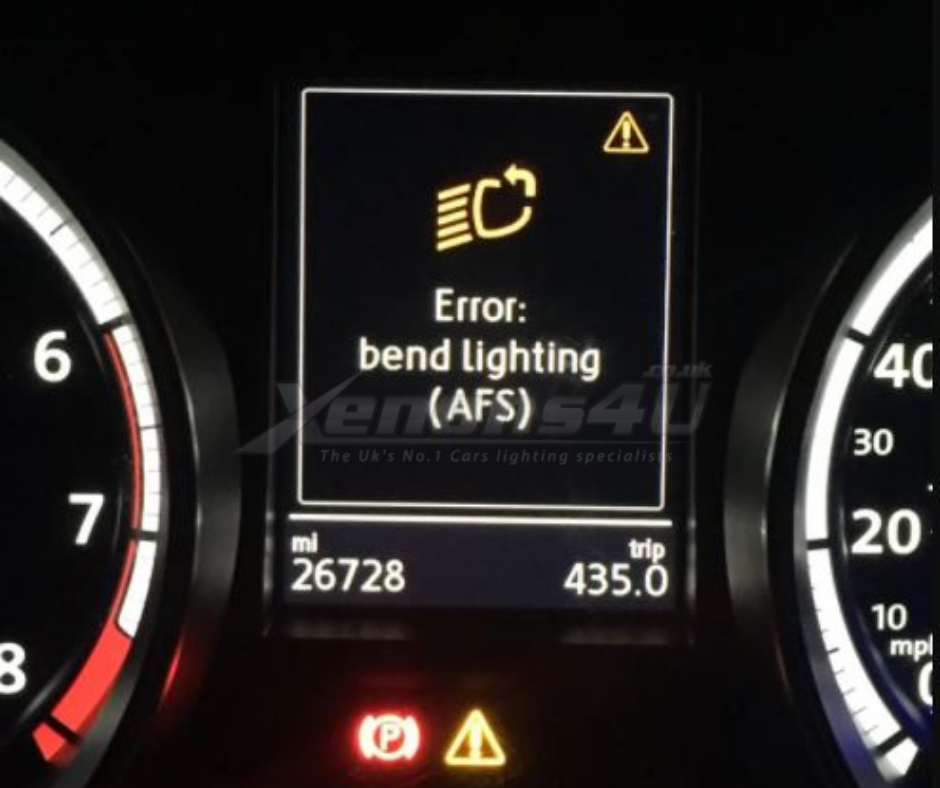
The most obvious indicator of an AFS issue is a warning light on the dashboard—usually an icon of a headlight with arrows pointing sideways. Physical symptoms include headlights that seem “lazy” (not moving with the steering wheel) or beams that point excessively low or high. In some cases, a failure in the communication bus (the “nerves” of the car) can cause the system to default to a “home” position, where the lights remain fixed in a straight-ahead orientation to ensure basic functionality is maintained.
Calibrating Sophisticated Sensor Arrays
Unlike older cars, where you could adjust headlights with a screwdriver against a garage wall, AFS often requires digital calibration. If the car has been in a minor collision, or if the suspension has been modified, the sensors may need to be “re-zeroed” using an OBD-II diagnostic tool. This ensures the software accurately understands the vehicle’s “level” state. This technical requirement highlights the shift toward cars becoming software-defined products that require specialized digital tools for repair.
The Future of Automotive Illumination
As we look toward the future of automotive technology, AFS is merely the foundation for even more impressive innovations. We are entering an era where lighting is used for communication and augmented reality.
Matrix LED and Digital Light Projection
The next evolution beyond swiveling projectors is Matrix LED technology. Instead of moving a single lens, these systems use hundreds of individual LEDs that can be turned on or off independently. This allows the car to “carve” the light beam into complex shapes. Some ultra-high-end systems now utilize “Digital Light,” which uses millions of micro-mirrors to project high-definition symbols directly onto the road—such as navigation arrows or warnings about road construction—effectively turning the pavement into a secondary display screen.
Integration with AI and ADAS Systems
The future of AFS is inextricably linked with Artificial Intelligence (AI) and Advanced Driver Assistance Systems (ADAS). By integrating lighting with GPS data, a car can “know” a curve is coming before the driver even turns the wheel, adjusting the lights in anticipation. Furthermore, as cars become more autonomous, the AFS will work in tandem with LiDAR and cameras to ensure that the vehicle’s “vision” system has optimal illumination at all times, regardless of weather or terrain.
In conclusion, AFS (Adaptive Front-lighting System) represents a pinnacle of modern automotive tech. It is a system where physics, software, and mechanical engineering converge to solve a century-old problem: how to see what’s around the corner. As we move deeper into the 21st century, these “intelligent” systems will continue to redefine our relationship with our vehicles, transforming them from passive tools into active partners in our safety and mobility.
aViewFromTheCave is a participant in the Amazon Services LLC Associates Program, an affiliate advertising program designed to provide a means for sites to earn advertising fees by advertising and linking to Amazon.com. Amazon, the Amazon logo, AmazonSupply, and the AmazonSupply logo are trademarks of Amazon.com, Inc. or its affiliates. As an Amazon Associate we earn affiliate commissions from qualifying purchases.