
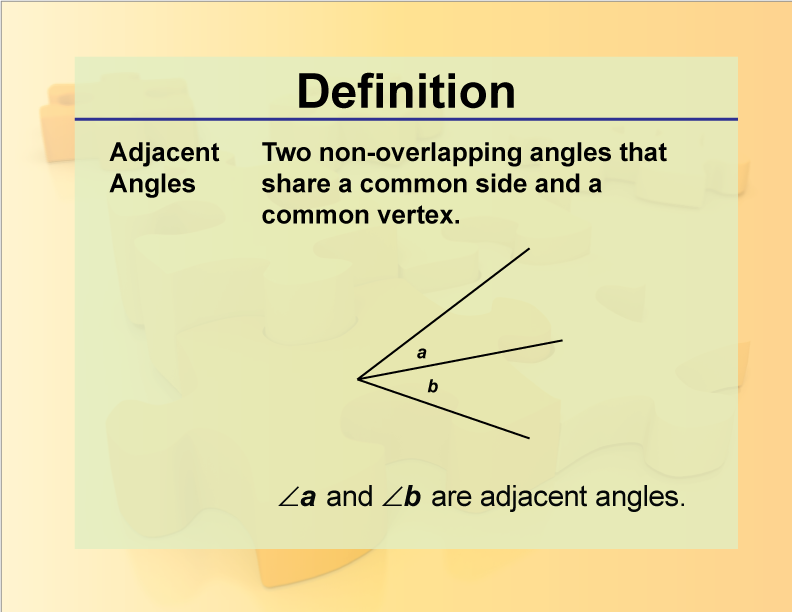
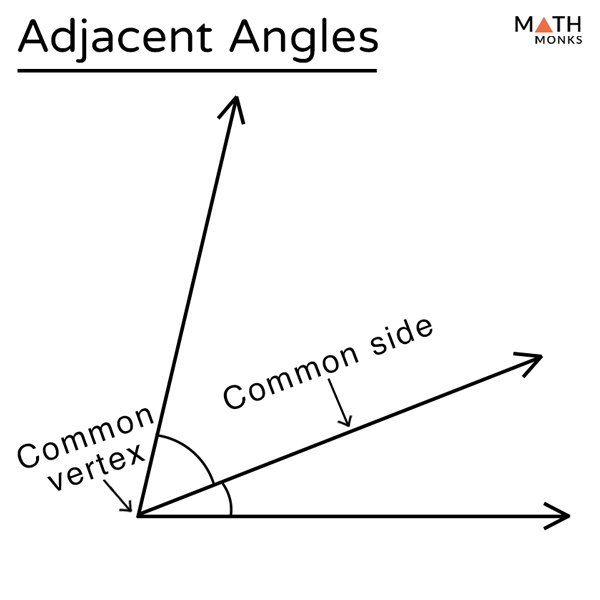
In the classical sense, the term “adjacent” refers to two things lying near, close, or contiguous to one another. In geometry, specifically, it describes angles that share a common vertex and side but do not overlap, or sides that meet at a single point. However, as we transition from the physical drafting boards of the past to the high-compute environments of today, the geometric concept of adjacency has become a foundational pillar of software engineering, data science, and digital design.
Understanding what “adjacent” means in a tech-centric context requires us to look beyond simple shapes. It involves examining how data points interact, how pixels are rendered on a screen, and how artificial intelligence maps relationships between complex variables. In the digital realm, adjacency is the logic of proximity, and it dictates everything from the layout of a mobile app to the routing protocols of the global internet.
The Fundamentals of Adjacency in Digital Frameworks
At the heart of every software application lies a data structure that dictates how information is stored and retrieved. When developers discuss adjacency, they are often referring to “Graph Theory,” a branch of mathematics that is essential for building social networks, recommendation engines, and GPS navigation systems.
Defining Geometric Adjacency for Algorithms
In programming, a “graph” is a collection of nodes (vertices) connected by lines (edges). Two nodes are considered adjacent if there is a direct edge connecting them. This is the digital equivalent of geometric adjacency. For example, in a social media algorithm, if User A follows User B, those two “points” are adjacent in the database. This proximity allows the software to calculate “suggested friends” or “trending content” by scanning the nearest neighbors in the network. Without the geometric logic of adjacency, software would have no efficient way to map the trillions of connections that define our modern digital lives.
Adjacency Lists vs. Adjacency Matrices in Software Engineering
To handle these connections, engineers use two primary methods: Adjacency Lists and Adjacency Matrices.
- An Adjacency Matrix is a 2D array (a grid) where the rows and columns represent nodes. A “1” or “0” indicates whether a connection exists. This is highly geometric in nature, mirroring a coordinate plane.
- An Adjacency List is a collection of unordered lists used to represent a finite graph. Each list describes the set of neighbors of a particular vertex.
Choosing between these depends on the “sparsity” of the data—a concept deeply rooted in geometric density. Tech professionals must master these “adjacent” relationships to optimize memory usage and processing speed in large-scale applications.
Adjacency in UI/UX Design and CSS Architecture
Moving from the backend logic to the frontend user experience, adjacency plays a critical role in how we perceive and interact with digital interfaces. In web development, the “geometry” of a page is governed by rules that determine how elements sit next to one another.
The Box Model and Spatial Relationships
Every element on a webpage—be it a button, an image, or a block of text—is treated as a rectangular box. This is known as the CSS Box Model. Adjacency in this context refers to how these boxes are positioned in the document flow. Designers use geometric logic to ensure that “Adjacent Siblings” (elements that share the same parent and follow one another) maintain the correct visual hierarchy. For instance, the vertical margin between two adjacent paragraphs is not just a stylistic choice; it is a calculated geometric distance that affects readability and user engagement.
Flexbox and Grid: Managing Adjacent Elements
Modern web layout tools like Flexbox and CSS Grid are essentially geometric engines. They allow developers to define how adjacent items behave when a screen size changes.
- Flexbox deals with adjacency in a linear fashion (rows or columns), ensuring that elements stay “adjacent” even when they wrap to a new line.
- CSS Grid introduces a two-dimensional system, allowing for complex geometric alignments where adjacency can be defined both horizontally and vertically.
For a tech professional, mastering these tools means understanding the “geometry of the fold”—knowing exactly how adjacent pixels will react to different hardware constraints, from a 30-inch monitor to a 6-inch smartphone.

Advanced Applications: 3D Rendering and Computer-Aided Design (CAD)
Perhaps the most direct application of “adjacent geometry” in tech is found in the world of 3D modeling, video game development, and architectural software. When a graphic designer creates a 3D character, they are essentially manipulating a “polygon mesh.”
Vertex Adjacency in Polygon Meshes
A 3D model is composed of thousands of small geometric shapes, usually triangles or quads. The software must constantly calculate “vertex adjacency” to ensure the model moves realistically. If a character bends its arm, the software calculates how the adjacent vertices in the elbow area should stretch or compress. If the adjacency data is corrupted, the model results in “tearing” or “clipping”—common bugs in early-stage software development. This technical application of geometry is what allows modern cinema and gaming to achieve photorealism.
Topology Optimization through Geometric Proximity
In CAD (Computer-Aided Design) software used by engineers to design hardware, “adjacency” is used for topology optimization. This is a method that optimizes material layout within a given design space for a given set of loads. The software analyzes adjacent cells in a simulated environment to determine where material can be removed without sacrificing structural integrity. By leveraging the geometric definition of adjacency, tech firms can design lighter, stronger components for everything from electric vehicles to aerospace satellites.
The Future of Tech-Adjacency: AI and Neural Networks
As we look toward the future, the concept of adjacency is moving beyond static shapes and into the realm of multidimensional data. Artificial Intelligence, specifically machine learning, relies on “spatial” concepts to understand human language and behavior.
Spatial Computing and the Metaverse
With the rise of Spatial Computing (as seen in devices like the Apple Vision Pro), the geometry of adjacency is becoming physical. In these environments, software must track the adjacency of digital objects to real-world furniture. If you “place” a virtual screen on your physical desk, the device uses LiDAR (Light Detection and Ranging) to establish a geometric adjacency between a digital asset and a physical coordinate. This merging of real and virtual geometry is the next frontier of the tech industry, requiring a deep understanding of spatial mapping.
Graph Neural Networks (GNNs) and Relationship Mapping
One of the most exciting trends in AI is the development of Graph Neural Networks. Unlike traditional AI that looks at data in isolated chunks, GNNs look at data in terms of its “neighborhoods.” By analyzing the “adjacent” nodes in a data graph, these AI models can predict complex outcomes, such as how a new drug molecule will interact with human cells or how a financial fraud scheme might spread through a banking network. In this high-tech application, “adjacent” doesn’t just mean “next to”—it means “influential upon.”
Conclusion: The Ubiquity of Geometric Logic
While the question “what does adjacent mean in geometry” might seem like a middle-school math prompt, for the technology professional, it is an invitation to explore the very structure of the digital universe. From the way a database organizes your social connections to the way a 3D engine renders a sunset in a video game, the logic of adjacency is the invisible thread that holds our software together.
In tech, adjacency is more than a position; it is a relationship. It is the fundamental principle that allows us to organize information, design intuitive interfaces, and build intelligent systems that can navigate the complexities of the modern world. As we continue to push the boundaries of AI, spatial computing, and high-performance engineering, the simple geometric concept of being “adjacent” will remain at the core of every major technological breakthrough. Understanding this logic is not just for mathematicians—it is a prerequisite for anyone looking to master the digital landscape of the 21st century.
aViewFromTheCave is a participant in the Amazon Services LLC Associates Program, an affiliate advertising program designed to provide a means for sites to earn advertising fees by advertising and linking to Amazon.com. Amazon, the Amazon logo, AmazonSupply, and the AmazonSupply logo are trademarks of Amazon.com, Inc. or its affiliates. As an Amazon Associate we earn affiliate commissions from qualifying purchases.