
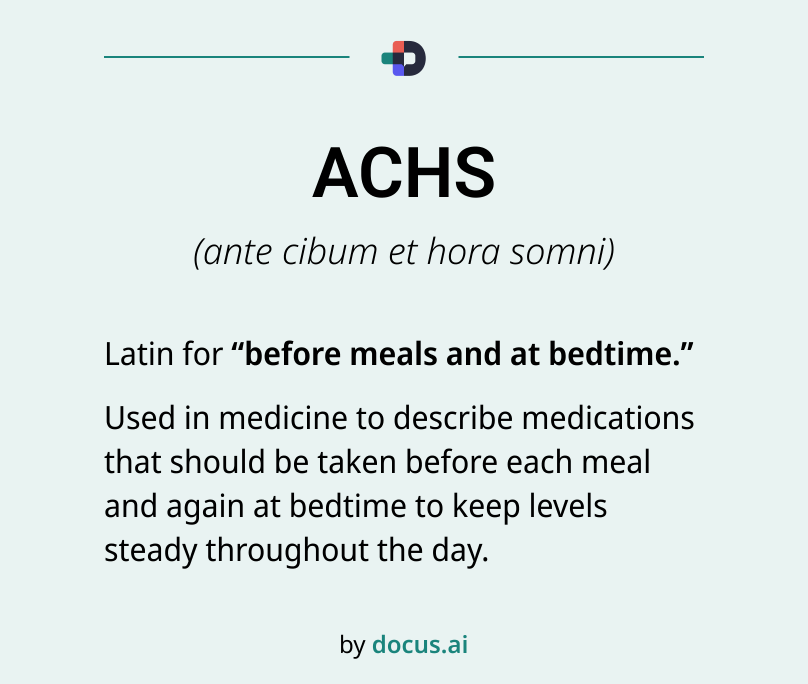
In the fast-paced ecosystem of modern medicine, communication is the vital pulse that keeps patient care moving. For decades, this communication relied on a cryptic shorthand derived from Latin—phrases like “AC HS” (Ante Cibum and Hora Somni) served as the universal language for prescribing medication “before meals and at bedtime.” However, as the healthcare sector undergoes a massive digital overhaul, these traditional abbreviations are being reimagined through the lens of technology.
Today, understanding “what does AC HS mean” is no longer just a requirement for a nursing student or a pharmacist; it is a fundamental data point for software engineers, AI developers, and health-tech innovators. As we transition from paper charts to sophisticated Electronic Health Records (EHR) and AI-driven clinical tools, the interpretation of these medical terms has become a cornerstone of digital health security and operational efficiency.
The Interface of Jargon and Software: Decoding AC HS in Electronic Health Records
The leap from handwritten prescriptions to Electronic Health Records (EHR) represents one of the most significant technological shifts in human history. In the analog era, a physician’s scrawl of “AC HS” on a prescription pad was a common source of medical error. In the digital era, software acts as the critical filter that translates these abbreviations into actionable, error-proof data.
The Transition from Latin Shorthand to Digital Data Points
In software development for healthcare, an abbreviation like AC HS is treated as a “structured data element.” When a clinician selects a dosing schedule in a system like Epic or Cerner, the backend code translates “AC HS” into specific timestamps based on a facility’s standard meal times (e.g., 07:30, 11:30, 17:30, and 21:00). This technological translation eliminates the ambiguity of human interpretation. By standardizing these terms within a database, technology ensures that “before meals” is a consistent metric that can be tracked, audited, and optimized for patient outcomes.
How Modern EHRs Automate Medication Administration Records (MAR)
The integration of AC HS into digital Medication Administration Records (MAR) has revolutionized nursing workflows. Through automated scheduling algorithms, the software triggers alerts for bedside nurses exactly when a medication is due. These systems are designed with “soft” and “hard” stops—technological safeguards that prevent the administration of a drug if the timing doesn’t align with the AC HS parameters. This automation transforms a simple Latin phrase into a sophisticated logic gate within a hospital’s digital infrastructure.
Improving Patient Safety through Intelligent Prescription Systems
Medical technology’s primary goal is the reduction of “preventable adverse drug events” (ADEs). Abbreviations have historically been a leading cause of these events. Consequently, the tech industry has developed Intelligent Prescription Systems (IPS) and Computerized Physician Order Entry (CPOE) systems to bridge the gap between medical terminology and patient safety.
AI and Natural Language Processing (NLP) in Interpreting Medical Shorthand
Artificial Intelligence, specifically Natural Language Processing (NLP), is now being used to scan historical medical records to extract meaningful data. Many legacy systems still contain millions of pages of unstructured text where “AC HS” is mentioned. Advanced NLP models are trained to recognize these patterns, ensuring that when a patient’s history is migrated to a new cloud-based system, the dosing instructions remain intact. This technology allows for a seamless “translation” layer between old-school medical shorthand and modern, patient-friendly language.
Reducing Diagnostic Errors with Automated Alert Systems
The “Tech” behind AC HS also involves Clinical Decision Support Systems (CDSS). When a doctor enters an order for a medication that should be taken AC HS, the software checks for potential drug-food interactions. For example, if a specific drug requires an empty stomach to be absorbed, the system’s logic engine cross-references the AC (before meals) instruction with the hospital’s dietary software. If there is a conflict or if the medication is contraindicated for a specific time of day, the system generates a real-time alert. This level of cross-functional communication was impossible before the advent of integrated health-tech stacks.

Wearable Tech and Personal Health Monitoring: Bringing AC HS to the Consumer
The democratization of health technology means that medical terms like AC HS are moving out of the hospital and into the pockets of consumers. Smartwatches, health apps, and wearable biosensors are now the primary interfaces through which patients interact with their prescriptions.
The Integration of Medical Schedules into Smartwatches and Apps
For a patient managing a chronic condition like diabetes, the instruction to take insulin “AC HS” is critical. Modern health apps have transformed this instruction into push notifications and haptic feedback on wearable devices. Developers are focusing on User Experience (UX) design to ensure that when a “before meal” notification appears, it is contextually aware. Using GPS and motion sensors, some advanced apps can detect when a user is at a restaurant or preparing a meal, triggering the AC HS reminder at the most relevant moment.
Real-Time Glucose Monitoring and Synchronized Insulin Alerts
The most profound tech application of the AC HS protocol is seen in Continuous Glucose Monitors (CGM) and “artificial pancreas” systems. These devices use sophisticated algorithms to monitor blood sugar levels in real-time. Because the “HS” (bedtime) period is a high-risk time for hypoglycemia, the software is programmed to prioritize safety during these hours. The technology essentially automates the medical logic behind the AC HS shorthand, making micro-adjustments to insulin delivery without the user needing to manually calculate their dosage before every meal.
The Future of Clinical Decision Support Systems (CDSS)
As we look toward the future, the role of medical terminology in technology will continue to evolve from simple “translation” to “predictive intervention.” The next generation of Clinical Decision Support Systems will leverage big data to refine what “before meals and at bedtime” actually means for individual patients.
Cloud-Based Interoperability and Standardized Terminology
One of the biggest hurdles in health tech is interoperability—the ability of different systems to talk to each other. Frameworks like FHIR (Fast Healthcare Interoperability Resources) are being used to standardize how terms like AC HS are coded across different platforms. This ensures that whether a patient is at a primary care clinic, an emergency room, or using a home-monitoring kit, the “AC HS” data remains consistent. This cloud-based synchronization is vital for maintaining a “single source of truth” in a patient’s medical journey.
Predictive Analytics for Medication Compliance
By analyzing data from thousands of patients, tech companies are developing predictive models to identify who is most likely to skip their “HS” (bedtime) dose. Machine learning algorithms can identify patterns—such as a user’s phone activity or sleep cycles—to determine the best time to send a reminder. This shifts the focus from a static instruction (AC HS) to a dynamic, tech-enabled intervention strategy.
In this context, AC HS is no longer just a notation in a chart; it is a variable in a complex equation aimed at maximizing human longevity. The tech industry has taken a centuries-old medical convention and turned it into a cornerstone of the modern, data-driven healthcare experience.
Conclusion: The Synergy of Language and Logic
The question of “what does AC HS mean in medical terms” reveals a fascinating intersection between ancient language and cutting-edge technology. While its literal definition—before meals and at bedtime—remains unchanged, its functional role has been entirely transformed by the tech revolution.
From the backend databases of EHR systems to the sleek interfaces of wearable health monitors, technology has provided the structure, safety, and scalability that manual medical shorthand never could. As we move further into the era of AI and personalized medicine, the digital interpretation of these terms will continue to play a vital role in reducing errors, empowering patients, and streamlining the global healthcare infrastructure. In the world of health-tech, AC HS is more than just an instruction; it is a digital commitment to better, safer, and more intelligent care.
aViewFromTheCave is a participant in the Amazon Services LLC Associates Program, an affiliate advertising program designed to provide a means for sites to earn advertising fees by advertising and linking to Amazon.com. Amazon, the Amazon logo, AmazonSupply, and the AmazonSupply logo are trademarks of Amazon.com, Inc. or its affiliates. As an Amazon Associate we earn affiliate commissions from qualifying purchases.