
In the rapidly evolving landscape of digital entertainment, the term “AAA” (pronounced “Triple-A”) has become a ubiquitous descriptor for the industry’s most prominent releases. Yet, for many outside the specialized circles of software development and high-end computing, the term remains somewhat nebulous. At its core, a AAA game represents the intersection of massive financial investment, cutting-edge technical innovation, and expansive software architecture. These are the “blockbusters” of the tech world—titles that push the boundaries of what current hardware can achieve and set the benchmark for graphical fidelity, artificial intelligence, and interactive complexity.
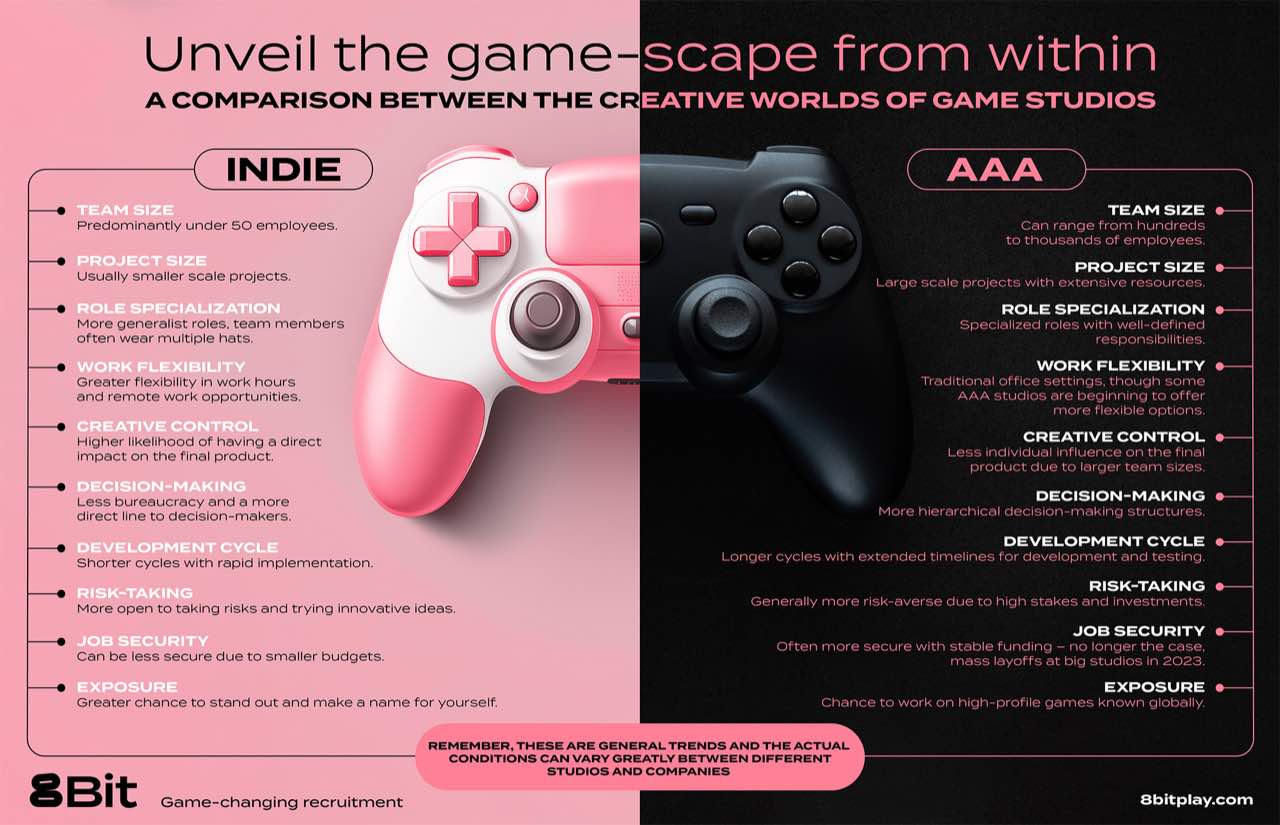
To understand what a AAA game truly is, one must look beyond the marketing hype and examine the technological infrastructure, the engineering prowess, and the sophisticated software pipelines required to bring these digital worlds to life.
The Origin and Definition of the AAA Label
The term “AAA” did not emerge from a formal regulatory body but was instead borrowed from the financial sector. Much like a AAA bond rating signifies a high-grade investment with low risk and high quality, the gaming industry adopted the moniker in the late 1990s to describe projects with the highest development budgets and most ambitious technical scopes.
From Bond Ratings to Big Budgets
Initially, the label was used internally by development studios and publishers to categorize projects during quarterly earnings reports. As hardware shifted from 2D sprites to 3D polygons, the cost of asset creation and engine development skyrocketed. A “AAA” project became synonymous with a title that had a “top-tier” budget, often reaching into the hundreds of millions of dollars. This budget isn’t just spent on marketing; it is primarily funneled into the thousands of hours of specialized labor required from software engineers, technical artists, and systems architects.
The Core Pillars: Scope, Scale, and Quality
A AAA game is defined by three primary technical pillars. First is Scope: the sheer size of the game world and the depth of its mechanics. Second is Scale: the number of concurrent systems running—from physics engines to complex NPC behaviors. Third is Quality: the level of polish, characterized by high-resolution textures, fluid animations, and a lack of critical software bugs. When a game is labeled AAA, the consumer expectation is that it will leverage the full power of modern GPUs and CPUs to provide an experience that smaller “Indie” (Independent) or “AA” (Mid-market) studios simply lack the resources to produce.
The Technical Architecture of AAA Gaming
At the heart of every AAA title lies a complex technological framework. Unlike smaller games that might rely on off-the-shelf tools with minimal modification, AAA development often involves pushing existing software to its breaking point or engineering entirely new proprietary solutions.
Cutting-Edge Graphics and Rendering Pipelines
The most visible hallmark of a AAA game is its graphical fidelity. This is achieved through sophisticated rendering pipelines that utilize technologies like Real-Time Ray Tracing and Path Tracing. These techniques simulate the physical behavior of light, allowing for realistic reflections, shadows, and global illumination that were once the exclusive domain of pre-rendered cinematic films.
Furthermore, AAA developers utilize advanced upscaling technologies such as NVIDIA’s DLSS (Deep Learning Super Sampling) or AMD’s FSR (FidelityFX Super Resolution). These are AI-driven software tools that use neural networks to reconstruct lower-resolution images into high-definition outputs, allowing games to run at high frame rates even when the graphical load is immense. The engineering required to integrate these AI models into a game engine is a testament to the high-level technical expertise found in AAA studios.
Artificial Intelligence and Procedural Generation
As game worlds grow larger, manually designing every square inch becomes an impossible task. AAA titles frequently employ Procedural Content Generation (PCG). This involves writing complex algorithms that can generate vast landscapes, intricate dungeons, or realistic vegetation based on a set of predefined rules.

Beyond world-building, the AI within a AAA game governs “Emergent Gameplay.” This refers to systems where non-player characters (NPCs) possess complex decision-making trees. Instead of following a simple script, these NPCs react dynamically to the player’s actions, environmental changes, and even other NPCs. This requires a significant amount of CPU overhead and sophisticated multithreading to ensure the game remains responsive.
Game Engines: The Bedrock of High-End Development
The choice of engine is perhaps the most critical technical decision in AAA production. Many major studios, such as Epic Games, provide the Unreal Engine, a powerhouse of software that includes features like “Nanite” (for virtualized geometry) and “Lumen” (for dynamic lighting). Other studios, such as Rockstar Games or Ubisoft, develop their own proprietary engines (like RAGE or Anvil). These custom engines are tailored specifically to the needs of their titles, optimized to squeeze every ounce of performance out of specific hardware architectures, whether it be the high-speed NVMe SSDs in modern consoles or the multi-core processors in high-end PCs.
Software Engineering Challenges in AAA Production
Building a AAA game is one of the most complex software engineering feats in the world. It involves managing millions of lines of code while ensuring that dozens of disparate systems—audio, physics, networking, and rendering—all work in perfect synchronization.
Managing Massive Codebases and Technical Debt
A typical AAA game might involve hundreds of developers working on the same codebase simultaneously. This necessitates rigorous version control systems and modular software design. The challenge of Technical Debt is also a major factor; as a project spans five or six years of development, the early code may become obsolete as hardware evolves. AAA engineers must constantly refactor and optimize their code to ensure that the final product remains stable and performant on the latest drivers and operating systems.
Optimization Across Diverse Hardware Ecosystems
One of the most difficult technical hurdles is optimization. A AAA game must run across a variety of hardware configurations. This includes the fixed hardware of consoles like the PlayStation 5 and Xbox Series X, as well as the infinite variations of PC components. Engineers must implement “Scalable Architecture,” allowing the game to downgrade certain visual features on older hardware while fully utilizing the capabilities of flagship components. This process involves deep-level hardware abstraction and memory management to ensure the game doesn’t crash under the weight of its own assets.
The Evolution of AAA Technology: Looking Toward the Future
The definition of AAA is not static; it moves in tandem with technological progress. As we look toward the future, new technologies are set to redefine what a “top-tier” game looks like and how it is built.
The Integration of Generative AI and Automation
We are currently entering an era where Generative AI is being integrated into the AAA workflow. This isn’t just about writing dialogue; it’s about using AI to automate the creation of high-fidelity 3D assets and textures. By training models on vast libraries of real-world data, developers can generate hyper-realistic environments in a fraction of the time it previously took. This allows AAA studios to maintain their massive scale without the development cycle stretching into decades.
Cloud Computing and the Death of Local Limitations
The next frontier for AAA games lies in the cloud. Traditionally, the complexity of a AAA game was limited by the hardware sitting under the user’s television or on their desk. However, with the rise of cloud gaming and server-side processing, some technical calculations—such as complex physics or massive-scale multiplayer synchronization—can be offloaded to remote data centers. This “Cloud-Native” approach could allow for games that are infinitely larger and more complex than anything currently possible on local consumer hardware.

Conclusion: The Technological Significance of the AAA Standard
To ask “what does a AAA game mean” is to ask where the current ceiling of software development resides. While the term is often associated with high prices and massive marketing campaigns, its true meaning is found in the technical ambition of the project. A AAA game is a showcase of what is possible when human creativity is backed by the most advanced computing power available.
As technology continues to advance, the barrier for what qualifies as AAA will continue to rise. What we consider groundbreaking today—photorealistic lighting, seamless open worlds, and complex AI—will eventually become the baseline for the industry. However, the spirit of the AAA designation will remain the same: it is the relentless pursuit of the “state of the art,” pushing the boundaries of digital reality and defining the future of human-computer interaction. For the tech enthusiast, a AAA game is more than just entertainment; it is a masterclass in modern software engineering and a glimpse into the future of digital innovation.
aViewFromTheCave is a participant in the Amazon Services LLC Associates Program, an affiliate advertising program designed to provide a means for sites to earn advertising fees by advertising and linking to Amazon.com. Amazon, the Amazon logo, AmazonSupply, and the AmazonSupply logo are trademarks of Amazon.com, Inc. or its affiliates. As an Amazon Associate we earn affiliate commissions from qualifying purchases.