
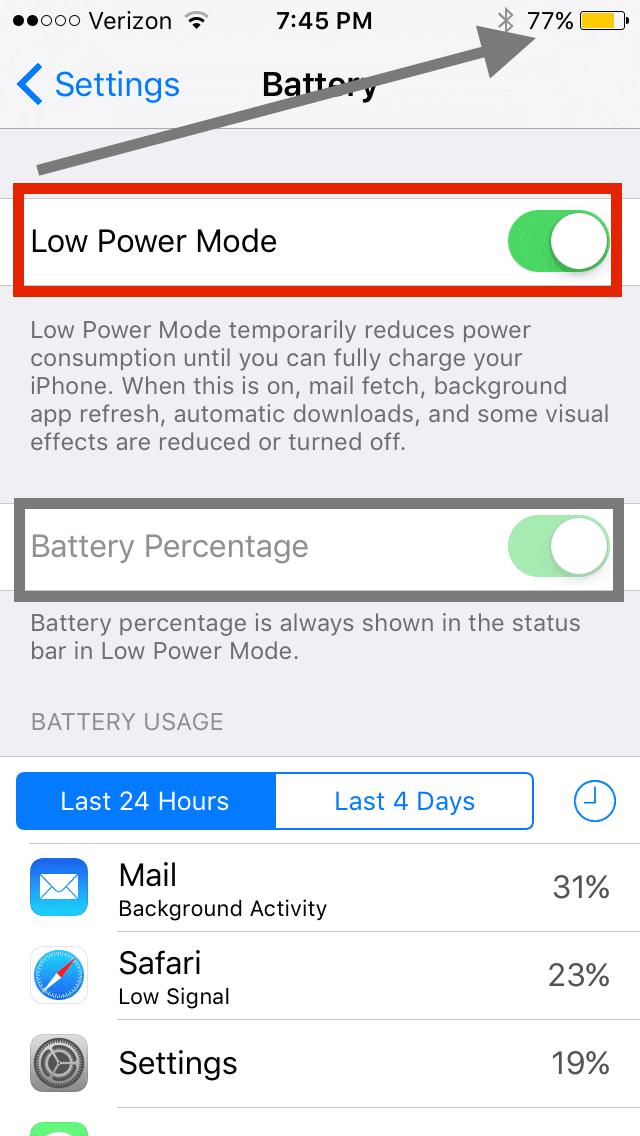
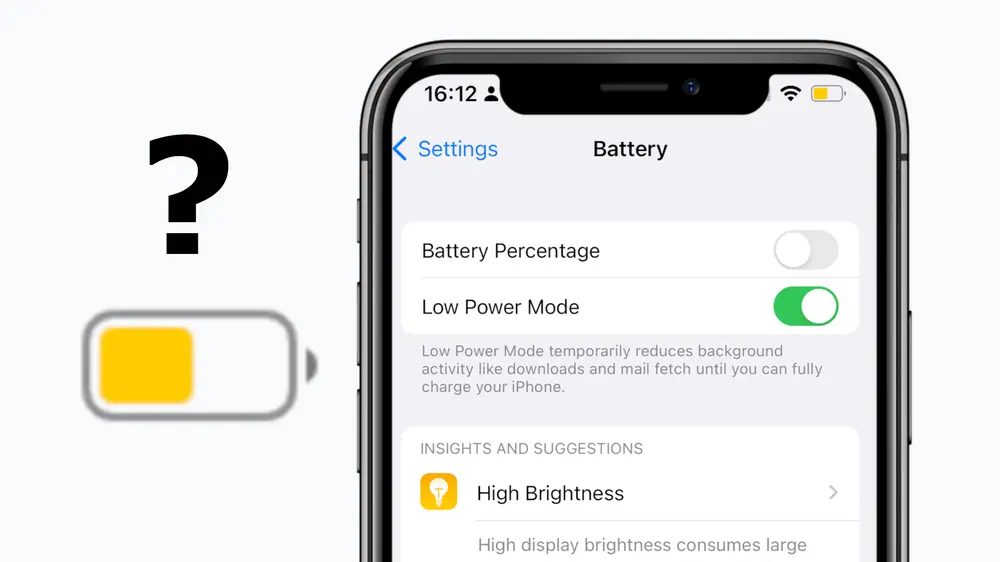
The visual cues on our smartphones are designed to convey information quickly and efficiently. Among these, the battery icon is a constant companion, signaling our device’s power level. While typically displayed in white or red when critically low, encountering a yellow battery icon on an iPhone can be a moment of mild confusion for many users. This seemingly small graphical change serves a specific purpose, rooted in the technological underpinnings of your iPhone and its battery health management. Understanding what this yellow hue signifies is crucial for optimizing your device’s performance and longevity, delving directly into the realm of Tech.
Understanding iPhone Battery Indicators: Beyond the Yellow
The yellow battery icon is not an isolated phenomenon but part of a system of visual cues that Apple employs to communicate important information about your iPhone’s power status and battery health. These indicators are more than just aesthetic choices; they are functional elements designed to provide users with actionable insights into their device’s performance and potential issues. To truly grasp the significance of the yellow battery, it’s important to contextualize it within the broader spectrum of how iPhones communicate power-related information.
The Standard Battery Icons and Their Meanings
Before delving into the specifics of the yellow icon, it’s essential to revisit the familiar. The standard battery icon, usually presented in white against a dark interface or black against a light interface, simply represents the remaining charge as a percentage. As the charge depletes, the white or black fill within the battery outline shrinks, mirroring the power level. This is the most common and straightforward indicator, offering a direct representation of how much time you have left before needing to recharge.
When the battery level drops to a critical point, typically around 20% and then again at 10%, the battery icon turns red. This is a universal signal across many electronic devices, indicating an urgent need for power. The red alert is designed to be unmissable, prompting immediate action to avoid the device shutting down unexpectedly. It’s a clear, universal alarm that resonates with users across different technological platforms.
The Evolution of Battery Health Indicators
The introduction of more sophisticated battery health management features in iOS has led to the implementation of nuanced visual indicators. Historically, battery icons were solely about charge level. However, with advancements in battery technology and the increasing reliance on our devices, Apple has incorporated features that monitor the chemical aging of the battery and its ability to deliver peak performance. This evolution is where the yellow battery icon finds its primary significance.
The yellow battery icon is not a regular occurrence for all users and doesn’t represent a low charge in the traditional sense. Instead, it’s a sophisticated notification that points towards a specific aspect of your iPhone’s battery health, often related to performance throttling. This shift from simple charge indication to comprehensive health monitoring reflects Apple’s commitment to providing users with a deeper understanding of their device’s internal workings.
The Yellow Battery Icon: Performance Throttling Explained
The most common and significant reason for an iPhone to display a yellow battery icon is directly linked to its Performance Management feature, specifically when the battery’s ability to deliver peak power is diminished. This is a crucial aspect of battery health that impacts how smoothly your iPhone operates. Apple’s operating system, iOS, is designed to automatically manage peak performance when a battery’s chemical age or condition is no longer sufficient to support normal operations.
What is Peak Performance Capability?
Every rechargeable battery degrades over time. This degradation, known as chemical aging, reduces the battery’s capacity to hold a charge and its ability to supply peak power. For an iPhone, peak power is essential for demanding tasks such as launching apps, processing intensive graphics, or using features like the camera’s flash. When a battery can no longer reliably supply this peak power, iOS intervenes to prevent unexpected shutdowns.
This intervention is called Performance Management. When iOS detects that the battery’s chemical aging is affecting its ability to provide peak power, it will gradually throttle the performance of the iPhone. This means the processor might run at a slightly lower speed, and certain background activities might be limited. The goal is to ensure the device remains stable and avoids sudden power losses that could lead to a shutdown, especially during peak demand.
The Yellow Icon as a Notification
The yellow battery icon is the visual cue that iOS uses to inform you that Performance Management has been enabled. It appears when the battery’s health has degraded to a point where it can no longer consistently support your iPhone’s normal peak performance. This is not an immediate cause for panic, but rather an informative alert. It signifies that while your iPhone is still functional, it might be operating at a reduced performance level to maintain stability.
When you see the yellow battery icon, it’s a clear indication that the battery’s condition has reached a threshold where proactive measures are being taken by the software. This is distinct from a low battery warning (red icon) or a critically low battery warning (red icon with very little fill). The yellow icon is specifically about the quality of power delivery, not just the quantity of charge remaining.
How to Identify the Specific Cause
To confirm that the yellow battery icon is indeed due to Performance Management, you can navigate to the Battery Health section within your iPhone’s Settings app.
- Navigate to Settings: Open the “Settings” app on your iPhone.
- Tap on Battery: Scroll down and select “Battery.”
- Tap on Battery Health: At the top of the Battery screen, you’ll find “Battery Health.” Tap on it.
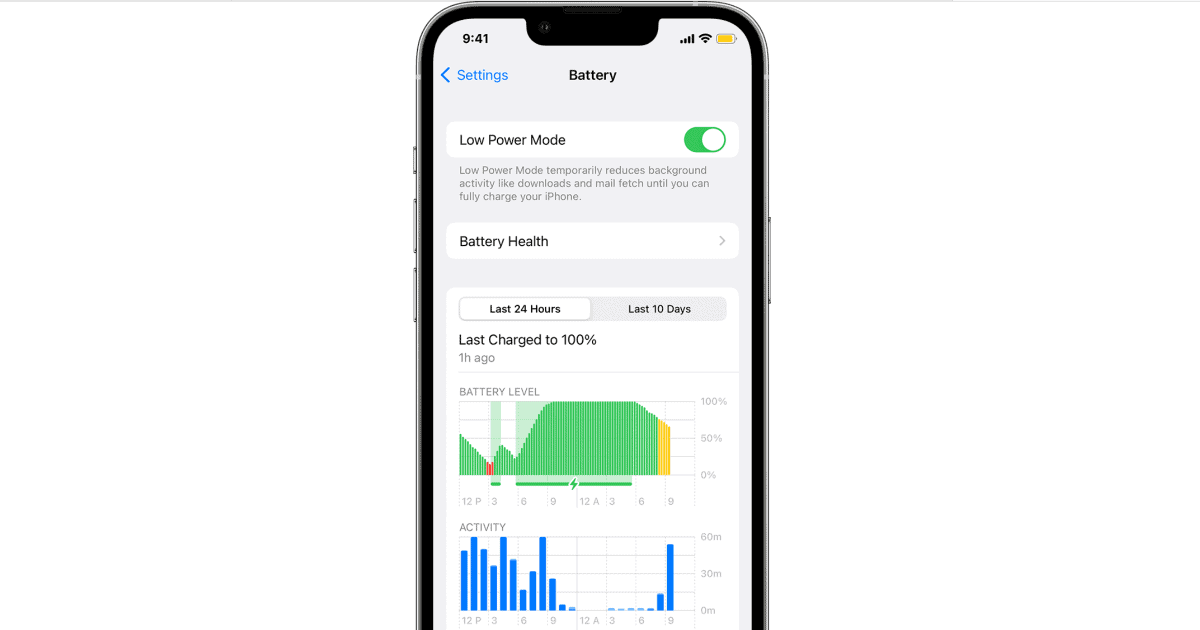
Within the Battery Health screen, you will see the “Maximum Capacity” of your battery, which is a measure of its current capacity relative to when it was new. Below this, you will find information about Peak Performance Capability. If Performance Management is enabled, you will see a message stating something like: “Your battery’s health is degraded and may impact peak performance. Performance management has been applied to reduce further degradation.” This message often accompanies or is directly related to the yellow battery icon appearing.
In some cases, you might also see an option to “Disable Performance Management.” However, Apple strongly advises against disabling it unless you understand the potential consequences, which include the risk of unexpected shutdowns.
Diagnosing Battery Health: Understanding Maximum Capacity and Performance Management
Delving deeper into the Battery Health screen reveals the core metrics that dictate your iPhone’s battery performance and the reasons behind a yellow battery icon. The “Maximum Capacity” and the status of “Peak Performance Capability” are the primary indicators you should examine.
Maximum Capacity: A Measure of Battery Aging
The “Maximum Capacity” percentage displayed in the Battery Health section is a critical indicator of your battery’s current health. It represents the battery’s capacity relative to when it was new. For example, a Maximum Capacity of 85% means that the battery can currently hold 85% of the charge it could when it was brand new.
As batteries age, their Maximum Capacity naturally decreases. This is an irreversible process driven by chemical aging. A significant drop in Maximum Capacity directly correlates with a reduced ability to hold a charge for as long as it used to and, more importantly, a reduced ability to deliver the sustained power required for demanding tasks. Apple designs iOS to monitor this degradation. When the Maximum Capacity falls below a certain threshold (often around 80% is cited as a significant point, though specific thresholds can vary slightly with iOS updates and iPhone models), the system becomes more likely to enable Performance Management.
The Interplay Between Maximum Capacity and Performance Management
The yellow battery icon is a direct consequence of the interaction between the battery’s Maximum Capacity and the system’s Performance Management. When the Maximum Capacity dips to a level where the battery can no longer reliably supply the peak power needed for normal iPhone operations, iOS intervenes. This intervention is the enablement of Performance Management.
If you encounter the yellow battery icon, it means that your iPhone’s software has detected that the battery’s chemical aging (reflected in its Maximum Capacity) is now at a point where it could lead to instability or unexpected shutdowns. To prevent this, the system intelligently reduces the device’s peak performance. This ensures that the battery is not asked to deliver more power than it safely can, thereby stabilizing the user experience and preventing abrupt power losses.
When Performance Management is NOT Enabled
It’s important to note that a degraded battery (low Maximum Capacity) does not always result in the yellow battery icon. iOS is designed to be smart. If the battery’s capacity has degraded, but it can still consistently meet the power demands of your iPhone without risking unexpected shutdowns, Performance Management might not be enabled. In such cases, you might see a lower Maximum Capacity percentage but still have a normally colored battery icon. The yellow icon specifically signals that the degradation has reached a point where the system has intervened.
When to Consider Battery Replacement
The presence of a yellow battery icon and the associated Performance Management are clear signals that your iPhone’s battery is showing signs of significant aging. While Performance Management is a helpful feature that keeps your device running, it does come at the cost of potentially reduced speed and responsiveness. This leads to the crucial question: when should you consider replacing the battery?
Signs That Point Towards Battery Replacement
Beyond the yellow battery icon, several other indicators can suggest that a battery replacement is due:
- Significantly Reduced Battery Life: If you find yourself constantly searching for a charger, even after a full night’s charge, and the battery drains much faster than it used to, it’s a strong sign of degradation. This is directly linked to the reduced Maximum Capacity.
- Unexpected Shutdowns: If your iPhone shuts down unexpectedly, even when the battery percentage appears to be reasonably high (e.g., 30% or 40%), it’s a classic symptom of a battery that can no longer supply the required peak power. This is precisely what Performance Management aims to prevent, so if you are still experiencing these, it might mean the degradation is very advanced.
- Sluggish Performance: While Performance Management intentionally throttles performance, you might also notice general sluggishness even when the yellow icon isn’t displayed, especially when opening apps or multitasking. This is the direct outcome of the software’s intervention to protect against shutdowns.
- Physical Swelling: In rare but serious cases, a degraded battery can start to swell. If you notice any bulging of the iPhone’s casing, particularly around the screen or back panel, this is a critical issue and requires immediate attention, as swollen batteries can be a safety hazard.
The Benefits of a New Battery
Replacing an aging battery in your iPhone offers several significant benefits:
- Restored Peak Performance: With a new battery, your iPhone will regain its ability to deliver peak performance. Apps will launch faster, animations will be smoother, and demanding tasks will run more efficiently.
- Extended Battery Life: A new battery has its full original capacity, meaning it will hold a charge for much longer, allowing you to use your device throughout the day without constant recharging.
- Elimination of Performance Throttling: Once a new battery is installed, iOS will detect its optimal performance capability, and Performance Management will be disabled. The yellow battery icon will disappear, and your iPhone will operate at its intended speed.
- Improved Device Longevity: By replacing the battery, you are effectively giving your iPhone a new lease on life. You can continue to use your device for longer without feeling the need to upgrade solely due to battery limitations.
Apple offers battery replacement services for iPhones, typically for models that are a few years old. The cost of replacement is usually a fraction of the price of a new iPhone, making it a cost-effective solution for extending the life of your current device. It’s a testament to the Tech industry’s focus on sustainability and user-centric design that such repair options are readily available.
aViewFromTheCave is a participant in the Amazon Services LLC Associates Program, an affiliate advertising program designed to provide a means for sites to earn advertising fees by advertising and linking to Amazon.com. Amazon, the Amazon logo, AmazonSupply, and the AmazonSupply logo are trademarks of Amazon.com, Inc. or its affiliates. As an Amazon Associate we earn affiliate commissions from qualifying purchases.