
In the rapidly evolving world of technology, hardware specifications often become a labyrinth of acronyms and numerical values. While most consumers focus on gigahertz, terabytes, and pixels, there is a fundamental metric that dictates the reliability, safety, and performance of almost every electronic device we own: AWG.
AWG stands for American Wire Gauge. It is a standardized wire gauge system used primarily in North America since 1857 for the diameters of round, solid, nonferrous, electrically conducting wire. While it may seem like an archaic remnant of the industrial revolution, AWG is more relevant today than ever. From the internal circuitry of high-end gaming PCs to the Power over Ethernet (PoE) cables driving smart offices, understanding AWG is crucial for anyone navigating the modern tech landscape.
The Technical Foundation: How the American Wire Gauge System Works
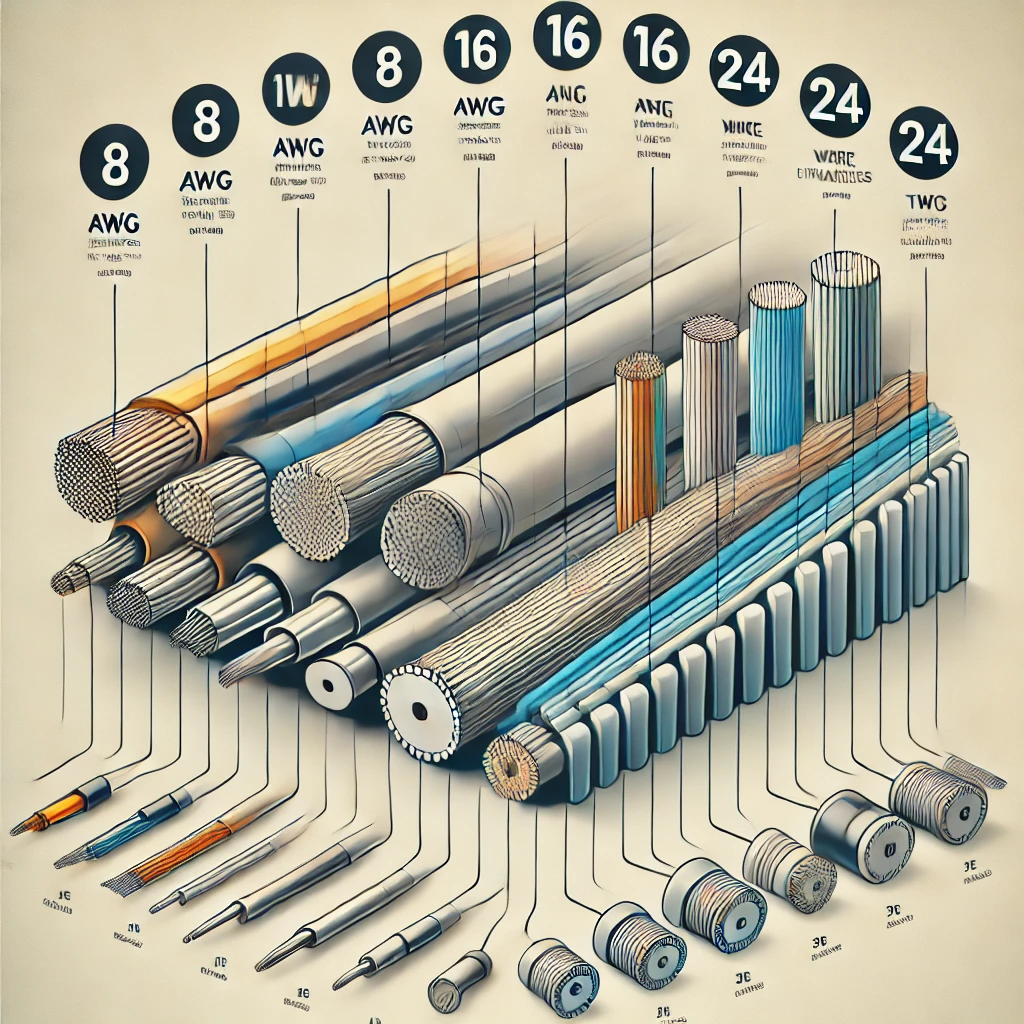
To understand AWG, one must first wrap their head around its most counterintuitive characteristic: the inverse relationship between the gauge number and the wire’s thickness. In the AWG system, a higher number represents a thinner wire, while a lower number represents a thicker wire.
The Mathematics of the Gauge
The AWG scale is not arbitrary; it is rooted in the historical process of wire drawing. Originally, the gauge number represented the number of times a wire had to be drawn through a series of dies to reach its final diameter. A 24 AWG wire was pulled through dies twenty-four times, making it significantly thinner than a 10 AWG wire, which only underwent the process ten times.
Mathematically, the ratio of the diameters of two successive gauge sizes is the 39th root of 92 (approximately 1.1229). This geometric progression means that for every six-gauge decrease, the wire diameter approximately doubles, and for every three-gauge decrease, the cross-sectional area doubles. This area is critical because it directly dictates the wire’s current-carrying capacity, or ampacity.
Solid vs. Stranded Wire
In the tech sector, we frequently encounter both solid and stranded wires. Solid wire consists of a single metal core, while stranded wire consists of several smaller-gauge wires twisted together. When a stranded wire is labeled as “24 AWG,” it means the total cross-sectional area of all the small strands combined equals that of a solid 24 AWG wire. This distinction is vital in hardware design; solid wires are preferred for permanent infrastructure like in-wall Ethernet, while stranded wires are used for patch cables and peripherals due to their superior flexibility and resistance to fatigue.
AWG in PC Hardware and Power Delivery
For PC enthusiasts and system builders, AWG is a specification that can mean the difference between a stable system and a catastrophic hardware failure. As components like GPUs and CPUs demand more power, the physical characteristics of the cables delivering that power become paramount.
Power Supply Units (PSU) and PCIe Cables
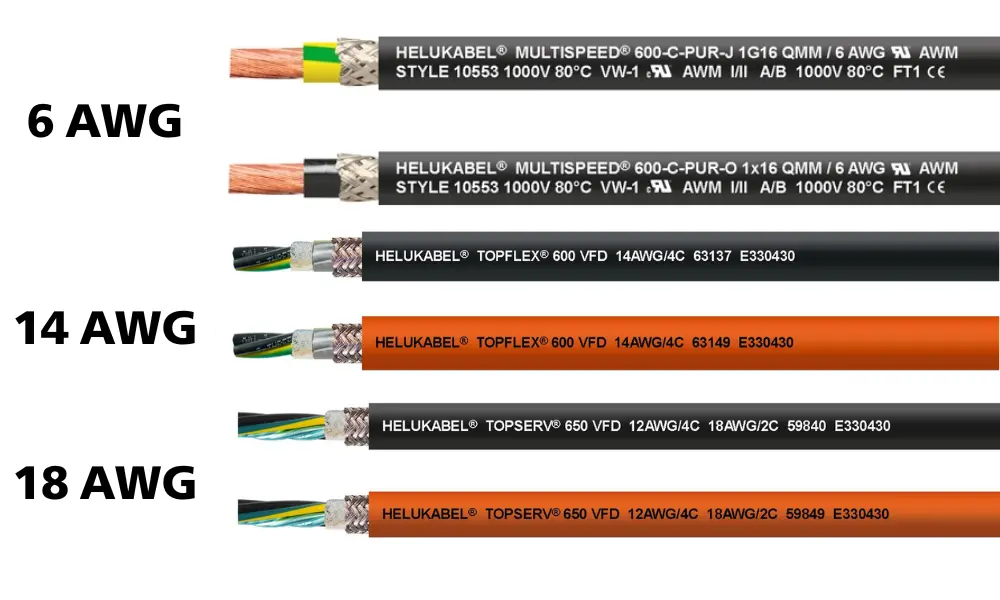
Modern high-performance graphics cards can draw upwards of 450 to 600 watts. To deliver this energy safely, PSUs utilize specific wire gauges. Most standard consumer power supplies use 18 AWG wiring for their main connectors. However, premium units designed for overclocking or high-end workstations often move to 16 AWG.
The move from 18 to 16 AWG might seem minor, but because of the geometric nature of the scale, 16 AWG wire is significantly thicker. Thicker wire has lower electrical resistance, which reduces the amount of energy lost as heat. In a system drawing massive amounts of current, using a wire that is too thin (higher AWG) can lead to the insulation melting, voltage drops that cause system instability, or even electrical fires.
Custom Sleeving and Modding
The aesthetics of PC building have brought AWG into the spotlight. Modders who create custom-sleeved cables must balance the visual appeal of the wire with its gauge. Using 22 AWG wire might make for a thinner, more flexible cable that is easier to “train” for photo-ready builds, but it may not be capable of sustaining the current required by a flagship RTX-series GPU. Professional modders strictly adhere to 18 AWG or 16 AWG standards to ensure that the “tech” is as functional as it is beautiful.
Networking and Data Transmission: The Role of AWG in Connectivity
When we discuss networking, we often talk about categories like Cat5e, Cat6, or Cat7. However, the hidden variable in these standards is the AWG of the copper pairs inside the jacket.

Ethernet Standards and Signal Integrity
In standard Ethernet cabling, the most common sizes are 23 AWG and 24 AWG.
- Cat5e: Typically utilizes 24 AWG.
- Cat6: Often utilizes 23 AWG, which helps in meeting the stricter crosstalk and system noise specifications required for Gigabit and 10-Gigabit speeds.
The thicker 23 AWG wire in Cat6 cables allows for less signal attenuation (loss) over long distances. This becomes particularly important in professional IT environments where cables are run through ceilings and walls over the maximum rated distance of 100 meters. A thinner wire would result in more resistance, leading to data packets being lost or the connection dropping to lower speeds to compensate for the poor signal quality.
Power over Ethernet (PoE)
The rise of IoT (Internet of Things) has made AWG a critical factor in networking. Power over Ethernet allows a single cable to provide both a data connection and electrical power to devices like IP cameras, VoIP phones, and Wireless Access Points (WAPs).
Because PoE involves sending DC power over thin copper strands, heat buildup is a major concern. Thinner cables (higher AWG) generate more heat when carrying power. In large bundles of Ethernet cables, this heat can accumulate, degrading the cable’s data transmission capabilities and even creating a fire hazard. Consequently, the TIA (Telecommunications Industry Association) often recommends 23 AWG or thicker for modern PoE++ installations.
The Science of Resistance: Why Gauge Affects Performance
To appreciate why AWG matters in digital security, server maintenance, and gadget longevity, we must look at the physics of electrical resistance.
Resistance and Voltage Drop
Every wire has a specific amount of resistance per foot. The thinner the wire (higher AWG), the higher the resistance. According to Ohm’s Law, as resistance increases, the voltage drop across the cable increases.
In the world of USB charging and mobile tech, this is why “cheap” charging cables often fail to fast-charge your devices. A low-quality USB cable might use 28 AWG wire for the power lines. Over a six-foot distance, the resistance in that 28 AWG wire can cause the voltage to drop from 5V at the wall adapter to 4.5V at the smartphone. The smartphone’s internal charging circuit detects this drop and slows down the charging speed to prevent damage, resulting in an “Incompatible Accessory” error or an agonizingly slow charge time. High-quality “Fast Charge” cables typically use 24 AWG or even 20 AWG for the power lines to minimize this drop.
Heat Dissipation and Longevity
In enterprise technology—specifically data centers—AWG is a factor in thermal management. Thicker wires operate cooler under the same load. Since heat is the enemy of electronic longevity, choosing the correct AWG for power distribution units (PDUs) and server racks reduces the ambient heat load on the cooling system. This leads to higher energy efficiency and a lower probability of hardware failure due to thermal stress.
Practical Applications: Selecting the Right Gauge for Modern Gadgets
Understanding AWG allows consumers and IT professionals to make informed purchasing decisions that impact both performance and safety.
Choosing Cables for Smart Homes and AV
When setting up a high-end home theater or a smart home ecosystem, the AWG of your speaker wire and low-voltage power lines is paramount. For long runs of speaker wire (over 50 feet), 12 AWG or 14 AWG is recommended to maintain audio fidelity. For shorter runs, 16 AWG is usually sufficient. In smart home setups involving LED strip lighting, using the wrong AWG can result in “color fade” at the end of the strip because the voltage has dropped too low to power the blue and green diodes effectively.
The Future of AWG in a Wireless World
As we move toward a more “wireless” future, the irony is that our reliance on high-quality wired infrastructure is increasing. Wireless Access Points require more power (PoE) to deliver Wi-Fi 6 and Wi-Fi 7 speeds, which in turn requires lower AWG cabling. Electric vehicles (EVs) and smart charging stations require massive 0 to 4 AWG cables to handle the intense current required for rapid charging.
Even in the realm of miniaturized gadgets, AWG plays a role. Internally, the ribbons and traces in smartphones utilize gauges so small they are often measured in microns, yet they still follow the principles of the AWG standard to ensure that the delicate logic boards do not overheat during intensive tasks like 4K video rendering or AI processing.
Conclusion: Why AWG Is a Tech Essential
What does AWG stand for? On the surface, it is a simple measurement of wire diameter. In practice, however, it is the backbone of hardware reliability. Whether you are building a PC, wiring a smart office, or simply buying a reliable USB-C cable for your laptop, the American Wire Gauge is the silent regulator of your digital experience. By paying attention to this often-overlooked specification, you ensure that your technology operates at peak efficiency, stays cool under pressure, and—most importantly—functions safely in an increasingly power-hungry world.
aViewFromTheCave is a participant in the Amazon Services LLC Associates Program, an affiliate advertising program designed to provide a means for sites to earn advertising fees by advertising and linking to Amazon.com. Amazon, the Amazon logo, AmazonSupply, and the AmazonSupply logo are trademarks of Amazon.com, Inc. or its affiliates. As an Amazon Associate we earn affiliate commissions from qualifying purchases.