
In the intersection of material science, mechanical engineering, and medical technology lies a device that is as simple in concept as it is complex in execution: the ureteral stent. While many perceive medical devices through a clinical lens, the ureteral stent is, at its core, a masterpiece of micro-engineering. To understand what a ureteral stent looks like is to understand the evolution of bio-compatible polymers and the physics of fluid dynamics within the human body.
In this deep dive into MedTech hardware, we analyze the physical characteristics, structural design, and technological advancements that define the modern ureteral stent.
1. Material Science and the Evolution of Bio-Compatible Polymers
When we ask what a ureteral stent looks like, the answer starts with the materials used in its fabrication. The “look” and “feel” of these devices are dictated by the need for extreme flexibility combined with structural integrity.
The Shift from Metallic Structures to Advanced Thermoplastics
Historically, internal conduits were rigid and prone to failure. Today, most stents are crafted from advanced thermoplastics such as polyurethane or silicone. These materials give the stent its characteristic translucent, milky-white, or high-visibility blue appearance.
Polyurethane is favored for its high tensile strength, allowing for thinner walls and a larger internal diameter (lumen), which facilitates better fluid flow. From a tech perspective, these polymers are engineered to be “thermo-labile,” meaning they are firm at room temperature for easy insertion but become softer and more pliable at body temperature to minimize tissue irritation.
Hydrophilic Coatings and Friction Reduction
If you were to touch a modern stent, it might feel remarkably slippery. This is due to the application of hydrophilic coatings—a major breakthrough in medical surface technology. These polymer coatings attract water molecules, creating a low-friction “hydro-gel” layer on the device’s surface. This technology not only makes the stent look glossy but serves the critical function of reducing the “coefficient of friction,” allowing the device to glide through narrow anatomical passages without causing trauma.
2. Visualizing the Structural Architecture of Stent Design
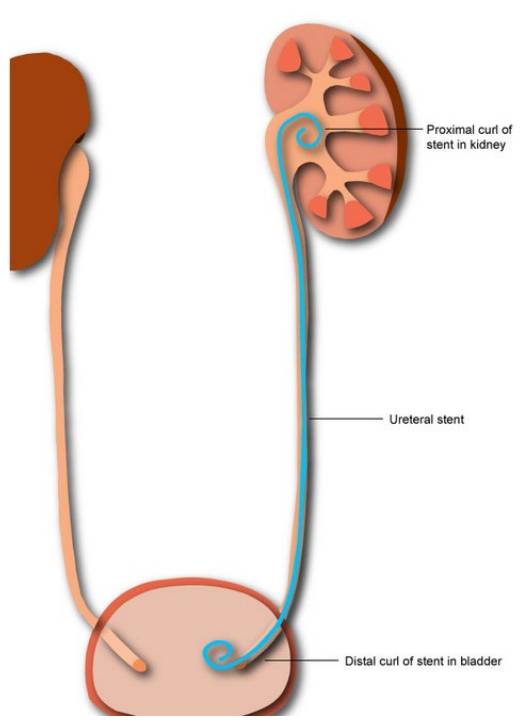
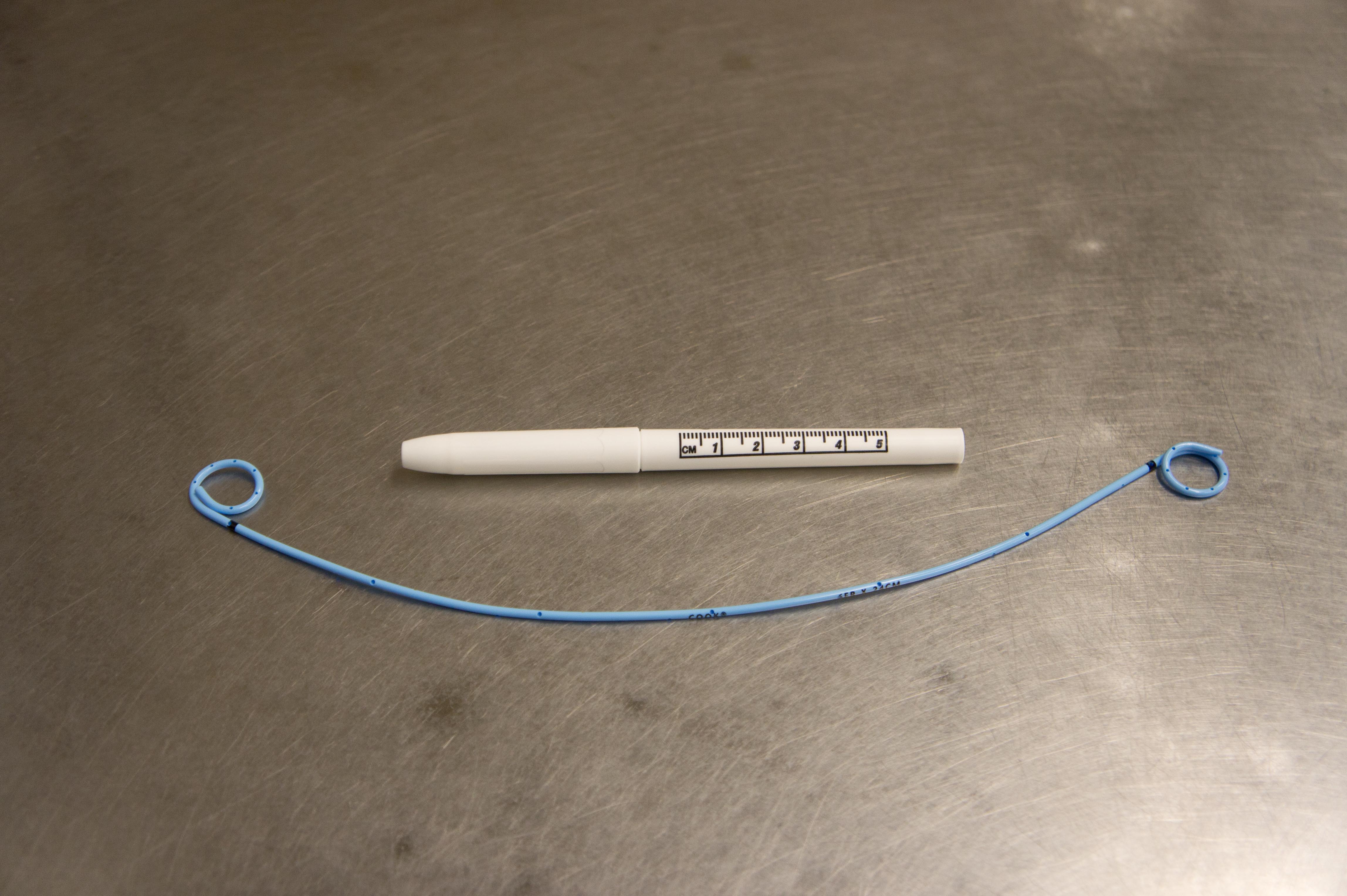
The visual profile of a ureteral stent is unmistakable, characterized by a long, thin body with distinctive curls at both ends. This geometry is not aesthetic; it is a functional requirement of mechanical anchoring.
The Double-J Curl: A Feat of Shape Memory Engineering
The most prominent feature of a stent’s appearance is the “Double-J” or “Pigtail” shape. Each end of the thin tube is coiled into a circular loop. This is achieved through shape-memory engineering, where the plastic is “programmed” to return to a coiled shape once it is released from its deployment wire.
The top coil anchors the device within the kidney’s collecting system, while the bottom coil sits within the bladder. This design prevents the device from migrating upward or downward. When looking at the stent outside the body, it resembles a thin, flexible plastic straw with two curly ends—a design that has become the industry standard for internal drainage technology.
Diameter, Length, and Multi-Luminal Configurations
A stent’s dimensions are measured in “French” units (3 Fr to 7 Fr), which refers to its external diameter. Visually, a standard stent is roughly the thickness of a strand of cooked spaghetti. However, the internal architecture can vary. Some high-tech stents feature “multi-luminal” designs or grooved external surfaces. These grooves are engineered to allow fluid to flow not just through the center of the tube, but also around the outside of it, ensuring that even if the central passage becomes obstructed, the “tech” of the design prevents a total system failure.
3. The Future of MedTech: Smart Stents and IoT Integration
As we move further into the decade, the question of “what does a stent look like” is being redefined by the integration of digital sensors and smart materials. We are transitioning from “passive” hardware to “active” digital tools.
Bio-Sensors and Real-Time Pressure Monitoring
The next generation of ureteral stents is incorporating micro-electromechanical systems (MEMS). These “smart stents” look similar to traditional models but contain embedded micro-sensors. These sensors can measure internal pressure, pH levels, and temperature, transmitting the data wirelessly to an external receiver or a smartphone app.
From a tech trend perspective, this represents the “Internet of Medical Things” (IoMT). By monitoring the “look” of the data coming from the stent, engineers can predict when a device is beginning to encrust or fail long before the patient feels symptoms. This predictive maintenance—similar to what we see in industrial machinery—is now being applied to human biology.
Biodegradable Electronics: The “Vanishing” Stent Tech
One of the biggest hurdles in medical hardware is the “secondary procedure” required to remove the device. Tech innovators are currently developing bio-resorbable stents. These devices are engineered from specialized polymers that maintain their structural integrity for a pre-set duration (e.g., 30 days) and then safely dissolve into the bloodstream.
What do these look like? Initially, they look identical to standard stents, but their molecular “code” is programmed for self-destruction. This eliminates the need for removal and represents the pinnacle of sustainable MedTech design.
4. Digital Imaging and 3D Modeling in Stent Placement
A ureteral stent is rarely seen by the naked eye once it is in use. Instead, its “visual” presence is defined by how it interacts with digital imaging technology.
Fluoroscopic Visualization and Radiopacity
To a technician or an AI-driven imaging software, a stent looks like a bright, glowing line on a screen. This is because the polymers are impregnated with radiopaque agents like barium sulfate or tungsten. These additives ensure that the stent is visible under X-ray and fluoroscopy.
Engineers also add “graduated markers” along the length of the stent. These look like small black dashes or rings. These markers act as a visual ruler, allowing the surgeon to use digital interfaces to ensure the device is perfectly positioned. The tech behind these markers must be precise to the millimeter, as an improperly sized stent can lead to mechanical failure.
AI-Driven Precision Sizing and 3D Printing
The future of stent “looks” may be entirely bespoke. Using CT scan data and AI algorithms, software can now map the unique 3D architecture of a patient’s internal anatomy. This data can then be sent to a 3D printer to create a custom-fitted stent.
A 3D-printed stent might look different from the “off-the-shelf” models; it may have variable thicknesses or specialized curves tailored to a specific individual’s geometry. This move toward “Personalized MedTech” is a major trend, shifting the industry away from “one-size-fits-all” hardware toward software-driven, custom-manufactured solutions.
Conclusion: The Convergence of Hardware and Software
When we examine what a ureteral stent looks like, we see more than just a plastic tube. We see a sophisticated piece of technology that reflects decades of progress in polymer science, fluid dynamics, and digital integration.
From the shape-memory “Double-J” design to the potential for IoT-enabled bio-sensors, the ureteral stent is a prime example of how tech is becoming more invisible yet more capable. As material science continues to advance—bringing us bio-resorbable materials and AI-optimized geometries—the “look” of these devices will continue to evolve, moving closer to a future where medical hardware is as smart and adaptable as the digital world we navigate every day.
In the world of MedTech, the stent is no longer just a physical tool; it is a data-driven component of a larger interconnected health ecosystem. Whether it is the glossy sheen of a hydrophilic coating or the digital signature on a fluoroscope, the technology of the ureteral stent is a testament to human ingenuity in engineering life-saving solutions at the microscopic level.
aViewFromTheCave is a participant in the Amazon Services LLC Associates Program, an affiliate advertising program designed to provide a means for sites to earn advertising fees by advertising and linking to Amazon.com. Amazon, the Amazon logo, AmazonSupply, and the AmazonSupply logo are trademarks of Amazon.com, Inc. or its affiliates. As an Amazon Associate we earn affiliate commissions from qualifying purchases.