
In the natural world, a tree is a biological powerhouse—a lung for the planet, a structural marvel, and a cornerstone of the ecosystem. However, in the realm of technology, the “tree” is perhaps the most significant conceptual metaphor ever devised. From the file systems on your laptop to the complex algorithms driving Silicon Valley’s latest Artificial Intelligence, the tree is the invisible scaffolding upon which our digital world is built.
To ask “what does a tree do” in a technical context is to explore the very essence of how information is organized, processed, and secured. In computer science, a tree is a non-linear data structure that simulates a hierarchical system with a root value and subtrees of children with a parent node. This article explores the multifaceted roles of the “tree” in modern technology, examining how this ancient structural concept enables the speed, security, and intelligence of the 21st century.
The Foundation of Organization: How Hierarchical Trees Structure Data
At its most fundamental level, a tree in technology is an organizational tool. Unlike a list or an array, which stores data linearly, a tree allows for a nested, hierarchical relationship between data points. This mirrors the way humans naturally categorize information—moving from the general to the specific.
Navigating File Systems and Directories
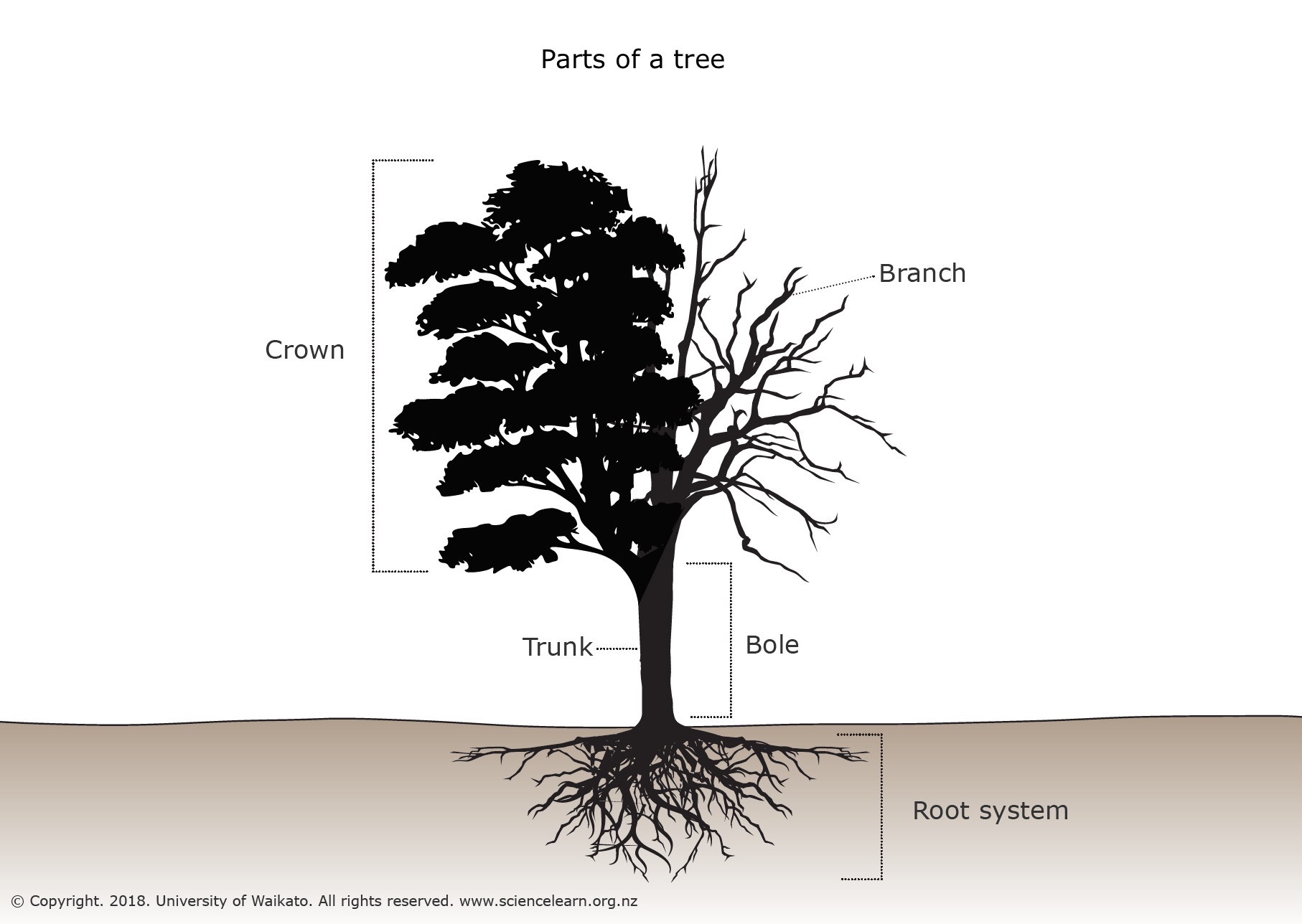
Every time you open “Finder” on a Mac or “File Explorer” on Windows, you are interacting with a tree. The “Root” directory (often represented as C: or /) acts as the trunk. Every folder you create is a “branch,” and every individual file is a “leaf.”
What the tree does here is provide a logical pathing system. Without this hierarchical structure, a computer would have to scan every single file on a hard drive sequentially to find a specific document—a process that would take minutes rather than milliseconds. By using a tree structure, the operating system can discard entire branches of data that do not contain the target file, drastically reducing search time and computational overhead.
The DOM Tree: Rendering the Modern Web
If you are reading this article in a web browser, you are witnessing a “Document Object Model” (DOM) tree in action. When a browser loads a website, it translates the HTML code into a tree structure. The <html> tag is the root; the <head> and <body> tags are the primary branches; and every paragraph, image, and link is a leaf.
The DOM tree allows developers to use programming languages like JavaScript to “climb” the tree, find a specific node (such as a “Buy Now” button), and change its color or function instantly. Without the tree architecture, web pages would be static documents rather than the interactive applications we use today.
Intelligence in Branching: The Role of Decision Trees in Machine Learning
As we move from data storage to data processing, the “tree” takes on a more active, cognitive role. In the world of Artificial Intelligence and Machine Learning, the “Decision Tree” is one of the most powerful and interpretable models available.
From Logic Gates to Predictive Analytics
A decision tree is a flowchart-like structure where each internal node represents a “test” on an attribute (e.g., “Is the user over 18?”), each branch represents the outcome of the test, and each leaf node represents a class label or a final decision.
What a decision tree does for AI is provide a transparent path to a conclusion. Unlike “black box” neural networks, which can be difficult to audit, a decision tree allows engineers to see exactly why an algorithm approved a loan or flagged a transaction as fraudulent. It mimics human logic—splitting complex problems into a series of binary choices—enabling machines to categorize vast amounts of data with remarkable accuracy.
Random Forests and the Power of Ensembles
One tree is powerful, but in tech, an entire “forest” is often better. This leads us to the “Random Forest” algorithm. This technique uses a multitude of decision trees at training time and outputs the class that is the mode of the classes or the mean prediction of the individual trees.
By aggregating the “wisdom” of hundreds of different trees, Random Forests correct for the habit of individual trees to “overfit” (meaning they learn the training data too well but fail to predict new data). This is the technology behind everything from recommendation engines on streaming platforms to sophisticated medical diagnostic tools. In this context, what a tree does is provide a granular perspective that, when combined with others, creates a robust and reliable intelligence.
Securing the Digital Root: Merkle Trees and Blockchain Integrity
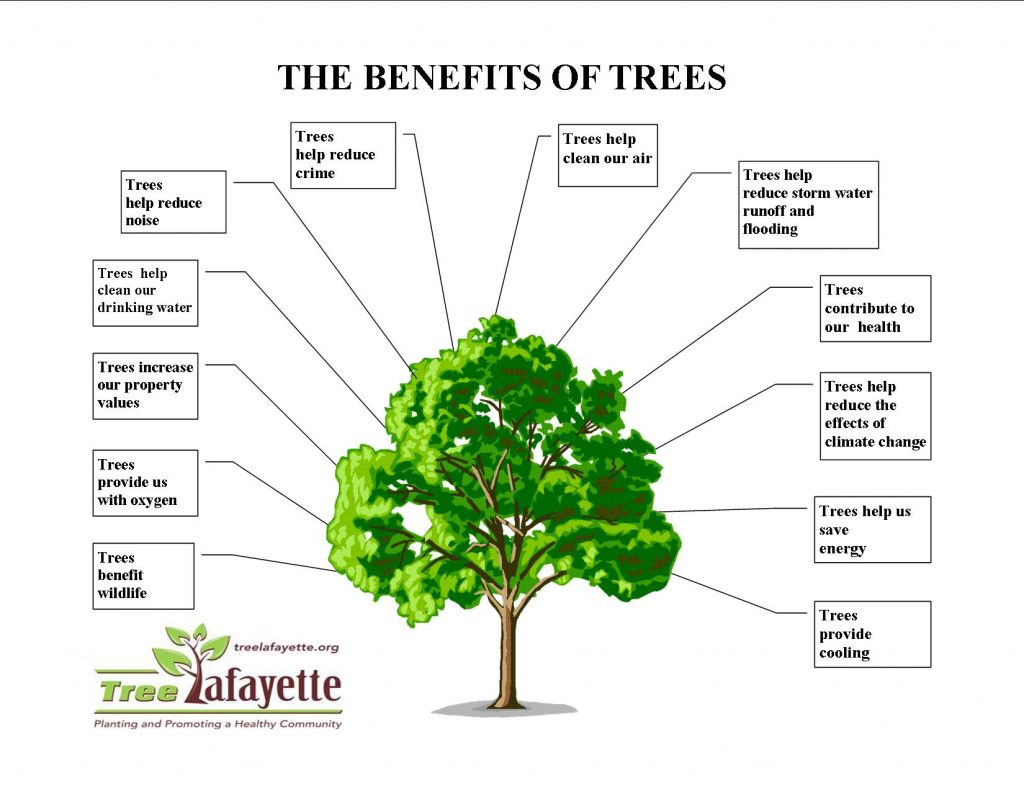
In the era of cybersecurity and decentralized finance, the “tree” has taken on a new role as a guardian of integrity. Specifically, the “Merkle Tree” (or hash tree) is the structural backbone of blockchain technology, including Bitcoin and Ethereum.
Cryptographic Hashing and Data Verification
A Merkle Tree is a tree in which every leaf node is labeled with the cryptographic hash of a data block, and every non-leaf node is labeled with the cryptographic hash of the labels of its child nodes.
What this does is allow for efficient and secure verification of large bodies of data. In a blockchain, a Merkle Tree allows a computer to verify that a specific transaction exists within a block without having to download the entire multi-gigabyte blockchain. By simply checking the “Merkle Root” (the top-most hash), a system can prove that no data within the tree has been tampered with. If a single bit of data changes in a “leaf” at the bottom, the hash changes, which changes the hash of the branch above it, and eventually the root itself. This “cascading” effect makes the tree an immutable record of truth.
Scalability and Efficiency in Distributed Ledgers
Beyond security, Merkle Trees enable scalability. In peer-to-peer networks, they allow nodes to share only the “branches” of data they need, rather than the whole “trunk.” This is what enables “light clients”—mobile wallets that can verify transactions securely without needing the storage capacity of a massive server. In the tech niche, the Merkle Tree is the ultimate tool for trust-less verification.
Optimizing the Flow: Search Trees and Algorithmic Efficiency
Speed is the currency of modern technology. Whether it is a search engine returning results in 0.2 seconds or a database retrieving a customer record, the efficiency of these operations is almost always a result of specialized tree structures.
Binary Search Trees (BST) and High-Speed Retrieval
A Binary Search Tree is a specific type of tree where each node has at most two children, and for every node, the left child contains a value less than the parent, and the right child contains a value greater.
What a BST does is transform a “needle in a haystack” problem into a simple game of “higher or lower.” When searching for a piece of data, the algorithm discards half of the remaining possibilities with every single step. This turns a search that might take 1,000,000 steps in a linear list into one that takes only 20 steps. It is the fundamental reason why our modern digital experiences feel instantaneous.
B-Trees and the Backbone of Modern Databases
While BSTs are great for memory, “B-Trees” are the workhorses of disk storage and databases like MySQL, PostgreSQL, and Oracle. Unlike binary trees, B-Trees can have dozens or hundreds of children per node.
In this capacity, what the tree does is minimize “disk I/O”—the slow process of the computer reading data from a physical drive. By organizing data into a B-Tree, databases can store massive amounts of information while keeping the “height” of the tree very short. This ensures that even in a database with billions of rows, any specific piece of information is only a few “jumps” away from the root.
The Future of Growth: Emerging Tree Architectures in AI
As we look toward the future, the “tree” continues to evolve. In the latest breakthroughs in Large Language Models (LLMs) and Generative AI, researchers are moving beyond simple linear processing to something called “Tree of Thoughts” (ToT) prompting.
In this paradigm, an AI doesn’t just generate a single sentence; it generates a tree of potential ideas. It explores multiple “branches” of reasoning simultaneously, evaluates which branch is most likely to lead to a correct solution, and “prunes” the branches that lead to dead ends. This mimics the human creative process—brainstorming multiple paths before committing to one.
What a tree does in this cutting-edge context is provide a framework for deliberate reasoning. It moves AI from “stochastic parroting” (simply guessing the next word) toward a more structured form of problem-solving.
Conclusion: The Ubiquity of the Digital Tree
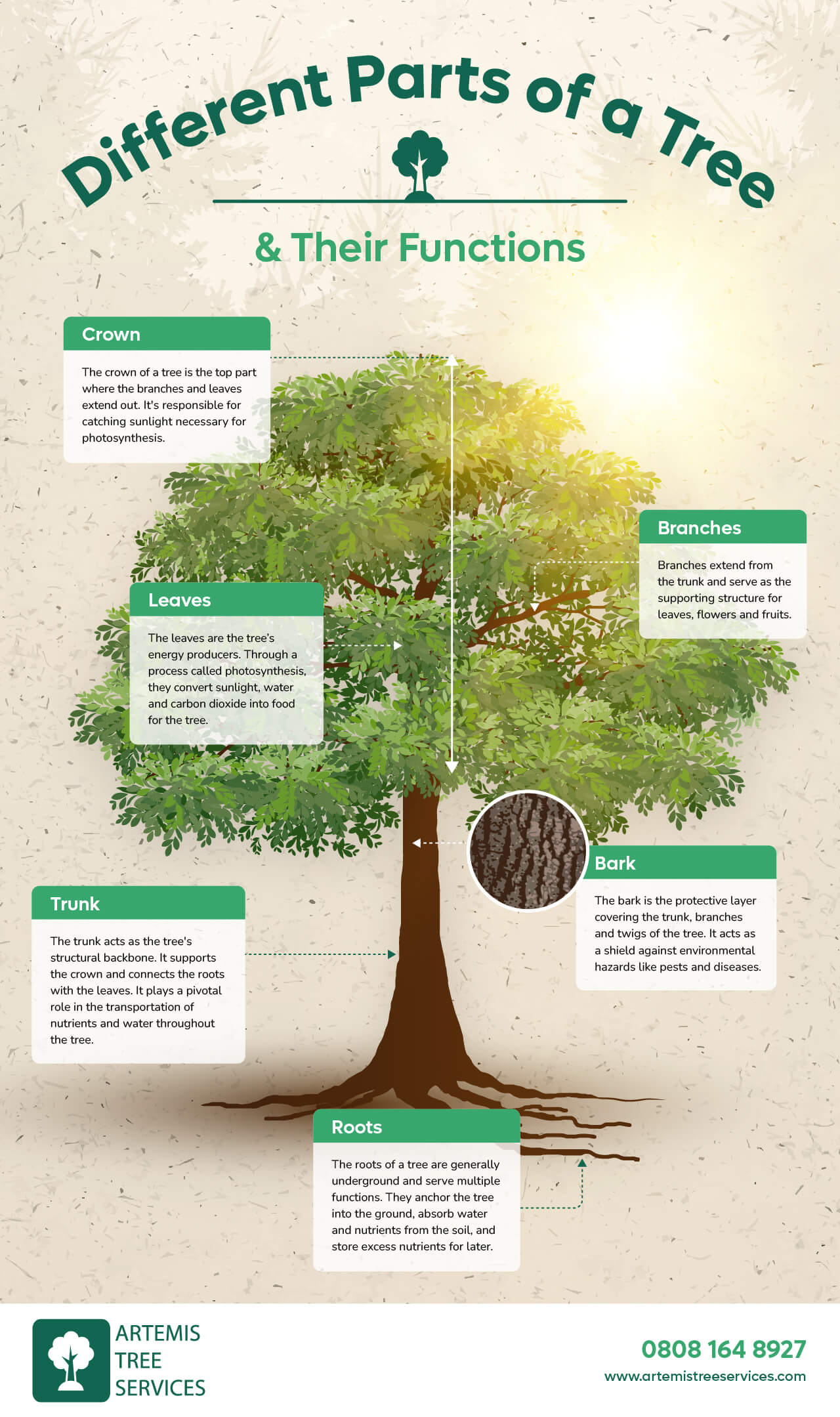
The biological tree survives by being deeply rooted and efficiently branching toward the light. The digital tree operates on the same principles. It provides the roots (Merkle Roots) for security, the trunk (File Systems) for stability, and the branches (Decision Trees and B-Trees) for growth and intelligence.
Understanding “what a tree does” in technology is essential for anyone navigating the digital landscape. It is more than just a way to store data; it is a mathematical philosophy that allows us to manage complexity. In an era where data is expanding at an exponential rate, the tree remains our most effective tool for turning chaos into order, ensuring that our digital world remains fast, secure, and increasingly intelligent. As we continue to innovate, one thing is certain: we will always be building on the branches of the tree.
aViewFromTheCave is a participant in the Amazon Services LLC Associates Program, an affiliate advertising program designed to provide a means for sites to earn advertising fees by advertising and linking to Amazon.com. Amazon, the Amazon logo, AmazonSupply, and the AmazonSupply logo are trademarks of Amazon.com, Inc. or its affiliates. As an Amazon Associate we earn affiliate commissions from qualifying purchases.