
The evolution of automotive technology has transformed the way we interact with our vehicles. Beyond the dashboard screens and autonomous driving aids lies a sophisticated ecosystem of hardware designed for security, logistics, and data analysis. At the heart of this ecosystem is the GPS tracker. To the uninitiated, the question “what does a tracking device for a car look like?” might seem simple, but in the modern tech landscape, these devices vary wildly in form and function.
From sleek, consumer-grade gadgets to rugged, industrial-strength telematics units, car trackers are designed to be either unobtrusive or entirely invisible. Understanding their physical characteristics and technical specifications is essential for anyone interested in digital security, fleet management, or personal vehicle safety.
The Diverse Form Factors of Vehicle Trackers
The physical appearance of a car tracking device is dictated primarily by its power source and its intended use case. Generally, these devices fall into three distinct physical categories: plug-and-play modules, hardwired units, and portable battery-powered devices.
Plug-and-Play: The OBD-II Interface
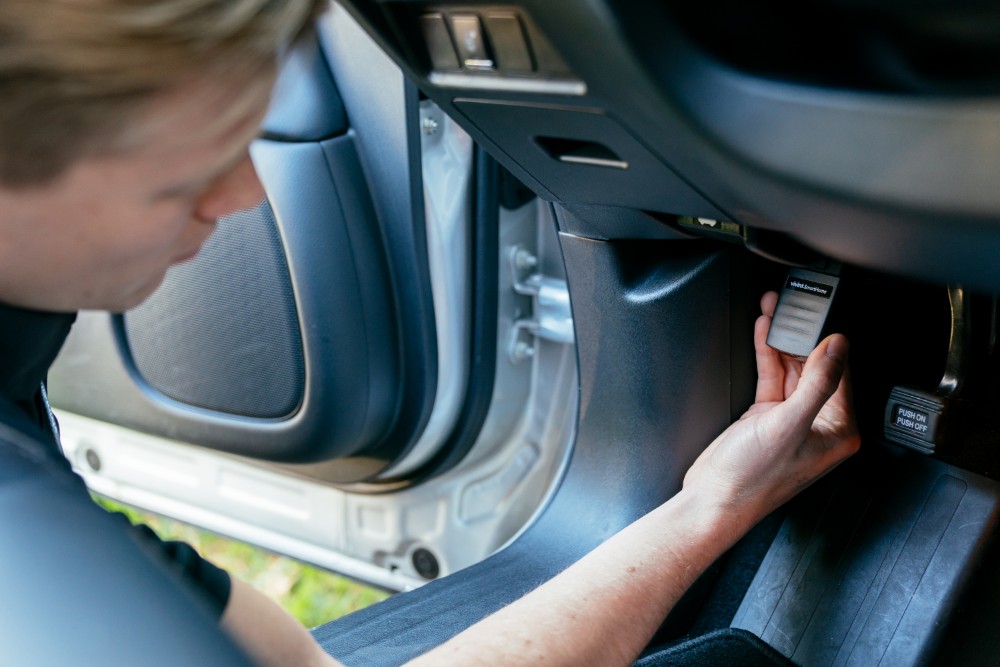
The most common consumer-facing tracking device is the OBD-II tracker. These devices are remarkably compact, usually no larger than a pack of gum or a small matchbox. They are designed to plug directly into the On-Board Diagnostics (OBD-II) port, which is standard in most vehicles manufactured after 1996.
Visually, an OBD-II tracker features a multi-pin connector on one end and a plastic housing—usually black or charcoal grey—on the other. Because they draw power directly from the vehicle’s electrical system, they do not require large internal batteries, allowing for a slim profile. Many modern versions, such as those used for usage-based insurance or family safety, include LED indicator lights to show GPS signal strength and cellular connectivity.
Hardwired Telematics Units
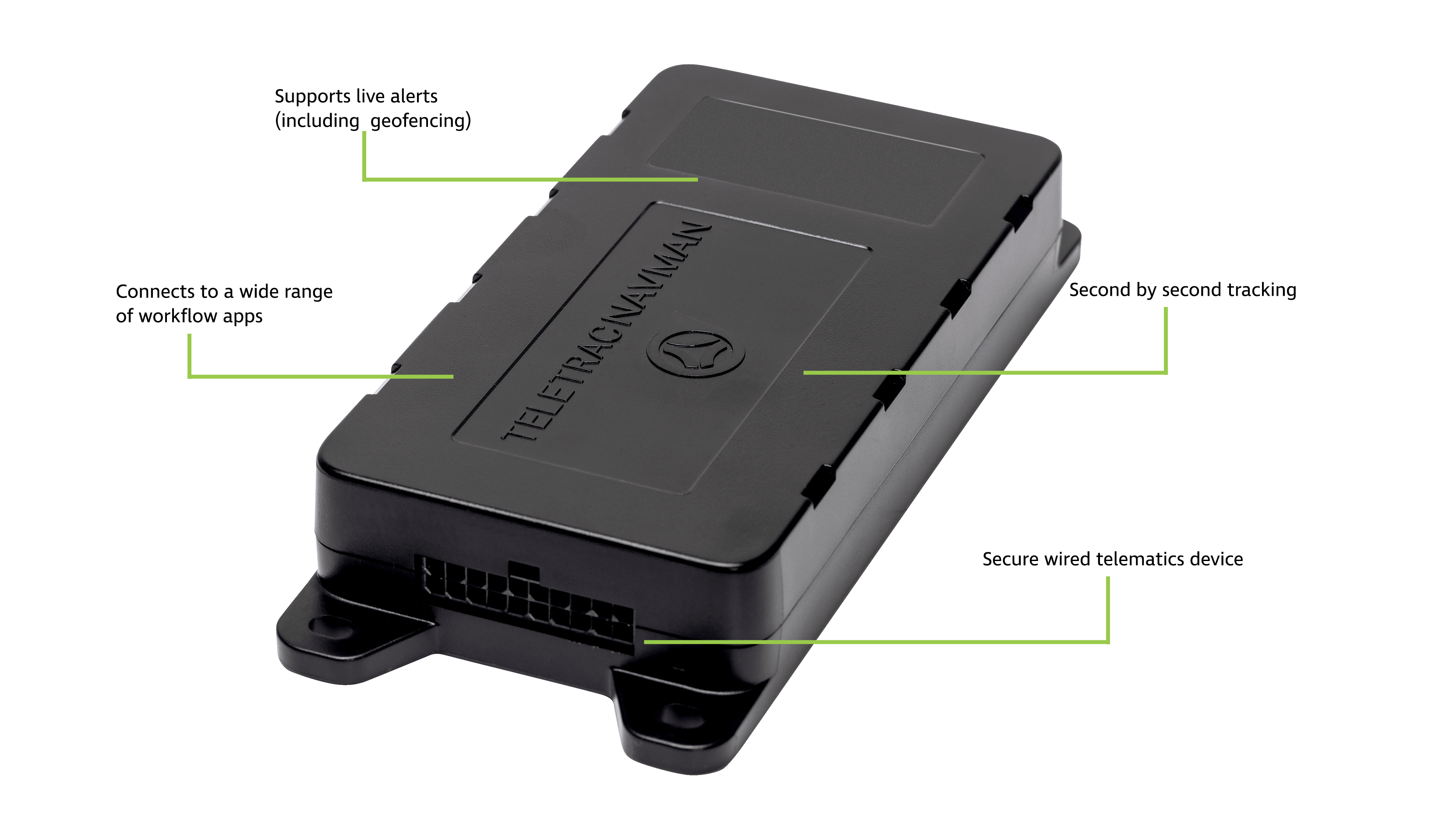
Hardwired trackers are the standard for professional fleet management and high-end theft recovery. These devices look like small, nondescript black boxes, often about the size of a smartphone but thicker. Unlike the OBD-II versions, they do not have a visible plug; instead, they feature a wire harness protruding from one side.
These units are designed to be hidden behind the dashboard or tucked away in the engine bay. Their “stealth” appearance is intentional—they lack branding or bright lights to ensure that if a vehicle is stolen, the device remains undetected by the thief. The casing is typically made of high-impact ABS plastic or, in industrial cases, aluminum to withstand the heat and vibration of a vehicle’s interior components.
Portable and Magnetic “Slab” Trackers
The third category is the standalone portable tracker. These are often used for temporary tracking or for assets that do not have their own power source (like trailers). Physically, these are the largest and heaviest of the three. They look like ruggedized “bricks” or slabs.
The defining characteristic of these devices is a powerful internal battery and, frequently, a high-strength magnet integrated into the base. The magnet allows the device to be snapped onto the metal frame of a car’s undercarriage. Because they must house a battery that can last weeks or months, they are significantly bulkier than plug-and-play models, often measuring several inches in length and width.
Internal Engineering: What’s Inside the Box?
While the exterior of a tracking device might look like a simple plastic box, the internal architecture is a marvel of modern miniaturization. To understand what these devices truly are, one must look at the “silicon soul” beneath the casing.
The GNSS and GPS Modules
The core component of any tracker is the GNSS (Global Navigation Satellite System) module. In the past, these were large components with external “puck” antennas. Today, the antenna is usually a ceramic patch antenna soldered directly onto the circuit board. These antennas are designed to be extremely sensitive, capable of picking up satellite signals even when the device is hidden under seats or behind metal panels.
Cellular Connectivity: The SIM and Modem
A tracking device is useless if it cannot transmit its data to the user. Inside the housing, you will find a cellular modem (typically 4G LTE, with newer models supporting 5G or NB-IoT). Most devices contain a slot for a Nano-SIM card, though high-end “Tech-first” models now utilize eSIM (embedded SIM) technology. This allows the device to be smaller and more resistant to tampering, as there is no physical card to remove.
The Sensor Suite: Accelerometers and Gyroscopes
Modern vehicle trackers are more than just location beacons; they are full-scale data collectors. Most units now include a 3-axis accelerometer. This tiny chip detects motion, allowing the device to “wake up” when the car moves and go into “sleep mode” when parked to save power. This sensor also detects harsh braking, rapid acceleration, and even collisions, providing a digital reconstruction of a vehicle’s movement patterns.
The Evolution of Stealth: Miniaturization and Digital Security
As technology trends lean toward the “Internet of Things” (IoT), the design of car trackers has shifted toward extreme miniaturization and digital hardening. The tech industry is currently seeing a “race to the bottom” regarding size, which has significant implications for both utility and security.
Micro-Trackers and Integration
We are moving toward an era where tracking hardware is being integrated directly into other vehicle components. Some modern “hidden” trackers are designed to look like standard automotive relays or fuses. To a casual observer or even a mechanic, the device looks like a functional part of the car’s fuse box. This level of physical disguise is a direct response to the increasing sophistication of vehicle thieves who know how to look for traditional GPS units.
Digital Security and Data Encryption
What a tracker “looks like” in the digital sense is just as important as its physical form. Modern tech-focused trackers utilize end-to-end encryption. When the hardware sends a packet of data—containing latitude, longitude, speed, and heading—that data is scrambled before it leaves the cellular modem.
In the Tech niche, “digital security” is a primary selling point. Advanced devices now feature “anti-jamming” technology. If a criminal uses a frequency jammer to block the GPS or cellular signal, the device recognizes the interference and can trigger a local alarm or immobilize the vehicle’s starter motor before the signal is completely lost.
Software Integration: The Virtual Face of the Hardware
In the current tech landscape, a hardware device is only as good as the software ecosystem supporting it. For many users, what a tracking device “looks like” is actually the user interface (UI) on their smartphone or desktop.
Real-Time Telematics Dashboards
The transition from raw data to actionable insight happens in the cloud. Modern trackers sync with sophisticated apps that provide a “digital twin” of the vehicle. These interfaces offer features like geofencing—where a user draws a virtual border on a map, and the hardware sends a push notification the moment the vehicle crosses that line.
The Role of Artificial Intelligence
Artificial Intelligence is now being integrated into the backend of tracking technology. Tech companies are using machine learning to analyze the data coming from these small black boxes to predict maintenance needs. For example, if the tracker’s accelerometer detects subtle, recurring vibrations that match the profile of a failing ball joint or misaligned wheels, the app can alert the owner before a breakdown occurs. This shifts the device from a mere “locator” to a proactive diagnostic tool.
The Future of Tracking Technology
As we look toward the future of automotive technology, the traditional “GPS box” may eventually disappear entirely. We are seeing a shift toward “connected car” architectures where the tracking hardware is built into the vehicle’s primary computer system at the factory.
5G and the V2X Revolution
With the rollout of 5G, tracking devices are becoming part of the V2X (Vehicle-to-Everything) communication network. Future devices will not just look like passive receivers; they will be active nodes in a smart city grid, communicating with traffic lights, other cars, and even pedestrian devices to improve safety and traffic flow.

Conclusion: More Than Meets the Eye
What a tracking device for a car looks like depends entirely on your perspective. Physically, it may be a small plastic plug or a ruggedized metal box. Technologically, however, it is a sophisticated combination of satellite navigation, cellular communication, and sensor fusion.
As these devices continue to shrink in size and grow in computational power, they remain one of the most vital tools in the modern tech arsenal for protecting assets and optimizing the way we move through the world. Whether it’s for securing a personal vehicle or managing a global logistics fleet, the humble car tracker is a prime example of how hardware and software converge to provide peace of mind in the digital age.
aViewFromTheCave is a participant in the Amazon Services LLC Associates Program, an affiliate advertising program designed to provide a means for sites to earn advertising fees by advertising and linking to Amazon.com. Amazon, the Amazon logo, AmazonSupply, and the AmazonSupply logo are trademarks of Amazon.com, Inc. or its affiliates. As an Amazon Associate we earn affiliate commissions from qualifying purchases.