
In the world of property development, home flipping, and large-scale landscaping, the smallest units of measurement often dictate the largest financial outcomes. Whether you are a professional contractor managing a commercial site or a homeowner looking to increase property value through a DIY renovation, understanding the physical and financial dimensions of raw materials is essential. One of the most common questions that arises during the planning phase of a project is: “What does a ton of gravel look like?”
While the question seems simple, the answer is a cornerstone of project budgeting and material management. Failing to visualize and calculate the volume of a ton of gravel can lead to significant financial “leaks,” including over-ordering, under-ordering (which leads to double delivery fees), and inefficient labor allocation. This guide explores the intersection of physical materials and financial strategy, helping you master the logistics of gravel procurement to maximize your return on investment.
Understanding the Financial Weight: Why Quantity Matters in Project Budgeting
In business finance and construction management, “a ton” is more than just a unit of weight; it is a variable that dictates the cost of logistics and the efficiency of capital. When we talk about a ton of gravel in the United States, we are typically referring to a “short ton,” which equals 2,000 pounds. However, the financial complexity lies in the fact that gravel is sold by weight but used by volume.
The Density Factor and Price Volatility
Not all gravel is created equal. The density of the stone—whether it is pea gravel, crushed limestone, or river rock—determines how much space that ton will occupy. From a financial perspective, this means your “dollar per square foot” coverage fluctuates based on the material type. For instance, a ton of dense, crushed granite will cover less surface area than a ton of porous volcanic rock. When budgeting, a failure to account for these density variations can lead to a 10-15% margin of error in your financial projections.
Volume vs. Weight: Avoiding the “Delivery Fee Trap”
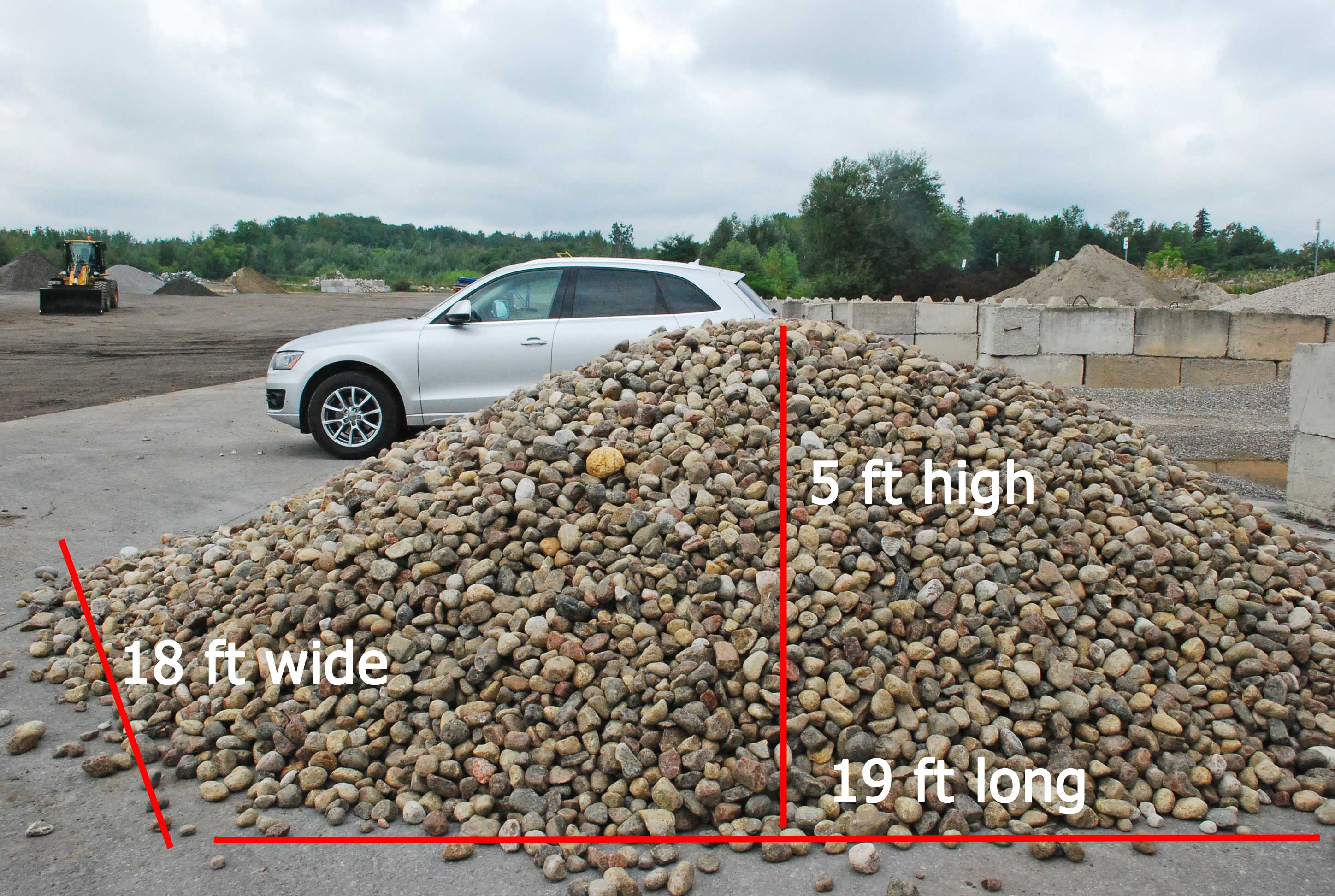
One of the most common mistakes in small-scale real estate development is failing to optimize delivery logistics. Most suppliers charge a flat delivery fee regardless of whether the truck is half-full or at maximum capacity. By understanding that a ton of gravel typically occupies about 14 to 20 cubic feet (roughly the size of a small office desk), you can calculate exactly how many tons fit into a single delivery truck. Optimizing your orders to fill a truck’s maximum weight capacity reduces the per-ton cost of transportation, directly improving your project’s bottom line.
Visualizing the Investment: Calculating the “Footprint” of Your Capital
To manage money effectively in property improvement, you must be able to translate raw numbers into physical space. If you are staring at a budget line item for “10 tons of gravel,” you need to know exactly how much of your property that investment will cover.
Standard Coverage Estimates for Financial Planning
A common rule of thumb for financial estimators is that one ton of standard 1-inch gravel will cover approximately 100 square feet at a depth of 2 inches. If your project requires a 4-inch depth for a driveway to ensure durability and long-term asset protection, that same ton will only cover 50 square feet.
Understanding this visualization is crucial for “Side Hustle” landscapers or real estate investors. If you underestimate the coverage, you face an immediate cash flow issue: the need to pause labor (which still costs money) while waiting for a secondary shipment that includes another delivery fee.
Depth vs. Expense: The Mathematics of Durability
In personal finance and property management, it is often tempting to “thin out” material to save money. However, using a ton of gravel to cover 150 square feet at a 1-inch depth is a poor financial decision in the long run. Thinly spread gravel shifts easily, leads to weed growth, and requires more frequent replenishment. To protect your investment, it is financially wiser to calculate a “settled depth” of at least 2 to 3 inches, ensuring the material performs its function of drainage and stabilization for years to come.

Strategic Procurement: Saving Money on Bulk Orders
The way you purchase your gravel can be the difference between a high-margin project and a break-even one. In the “Money” niche, we look for ways to optimize the supply chain.
Bulk Sourcing vs. Bagged Retail
For small “handyman” side hustles, buying bags of gravel from a big-box retailer might seem convenient. However, the math tells a different story. A 0.5 cubic foot bag of gravel often costs between $5 and $8. Since a ton of gravel is approximately 18 cubic feet, buying it in bags would cost you between $180 and $280. In contrast, buying a ton of gravel in bulk from a local quarry or landscape supply yard typically costs between $30 and $60 (plus delivery).
By pivoting from retail to bulk procurement, you can reduce your material costs by over 70%. This is a classic example of how understanding “what a ton looks like” allows you to leverage scale to increase profit margins.
Direct-from-Quarry Logistics
If you are managing a large-scale business finance operation or a major development, sourcing directly from the quarry is the gold standard. When you skip the middleman (the retail yard), you save on the “markup” they apply for storing and re-distributing the stone. However, this requires a clear understanding of your site’s capacity. A quarry-direct truck might carry 20 tons at once. If you haven’t visualized what 20 tons looks like (roughly a massive mound 10 feet wide and 5 feet high), you might find your investment blocking a public road or a neighbor’s driveway, leading to fines and increased labor costs to move it.
The ROI of Curb Appeal: How Gravel Investments Impact Property Value
In the context of real estate and personal finance, gravel is often the most cost-effective way to boost a property’s “Curb Appeal,” which has a direct correlation with appraisal value and time-on-market.
Low-Maintenance Landscaping as a Financial Asset
Modern homebuyers are increasingly looking for “xeriscaping” or low-maintenance yards. By investing in several tons of decorative gravel, a property owner can eliminate the recurring costs of water, fertilizer, and professional mowing. Over a five-year period, the savings on yard maintenance can fully recoup the initial investment in gravel, making it a high-yield asset for your property.
Cost-Effective Drainage Solutions
Water damage is one of the most significant threats to property value. Using gravel for French drains or perimeter drainage is a “defensive” financial move. A few hundred dollars spent on a ton of gravel and perforated pipe can prevent tens of thousands of dollars in foundation repair costs. When evaluating the “look” of a ton of gravel, don’t just see stones; see a protective barrier for your most valuable financial asset—your home.
Final Calculations: Turning Data into Dollars
Visualizing “what a ton of gravel looks like” is a vital skill for anyone involved in the financial side of property and project management. It is about understanding that a 2,000-pound pile of rock represents a specific volume of space, a specific cost of delivery, and a specific increase in property utility.
To recap the financial logistics:
- Estimate by Volume, Buy by Weight: Always convert your square footage into cubic yards or tons using a 1.4x multiplier for safety.
- Optimize Delivery: Never order a partial truckload if you can use the extra material elsewhere; the delivery fee is your highest “hidden” cost.
- Choose Bulk for Margin: Avoid the “convenience tax” of bagged gravel if your project exceeds 500 pounds.
- Protect the Asset: Use gravel strategically to prevent water damage and reduce maintenance overhead.
By mastering these concepts, you ensure that every “ton” you buy is a calculated step toward a more profitable and well-managed project. Whether you are building a side hustle in landscaping or managing a portfolio of rental properties, the ability to visualize and value your raw materials is what separates the amateur from the professional financier.
aViewFromTheCave is a participant in the Amazon Services LLC Associates Program, an affiliate advertising program designed to provide a means for sites to earn advertising fees by advertising and linking to Amazon.com. Amazon, the Amazon logo, AmazonSupply, and the AmazonSupply logo are trademarks of Amazon.com, Inc. or its affiliates. As an Amazon Associate we earn affiliate commissions from qualifying purchases.