
Theoretical physicists are the architects of our understanding of the universe, delving into the fundamental laws that govern everything from the smallest subatomic particles to the vast expanse of cosmic structures. They don’t wield oscilloscopes or build experimental apparatus; instead, their laboratory is the realm of abstract thought, mathematics, and computational modeling. Their work is the bedrock upon which experimental physics builds, providing the frameworks and predictions that guide scientific inquiry. While the term “theoretical physicist” might conjure images of solitary minds contemplating abstract concepts, their role is deeply intertwined with the advancement of technology, often laying the groundwork for innovations that shape our modern world.
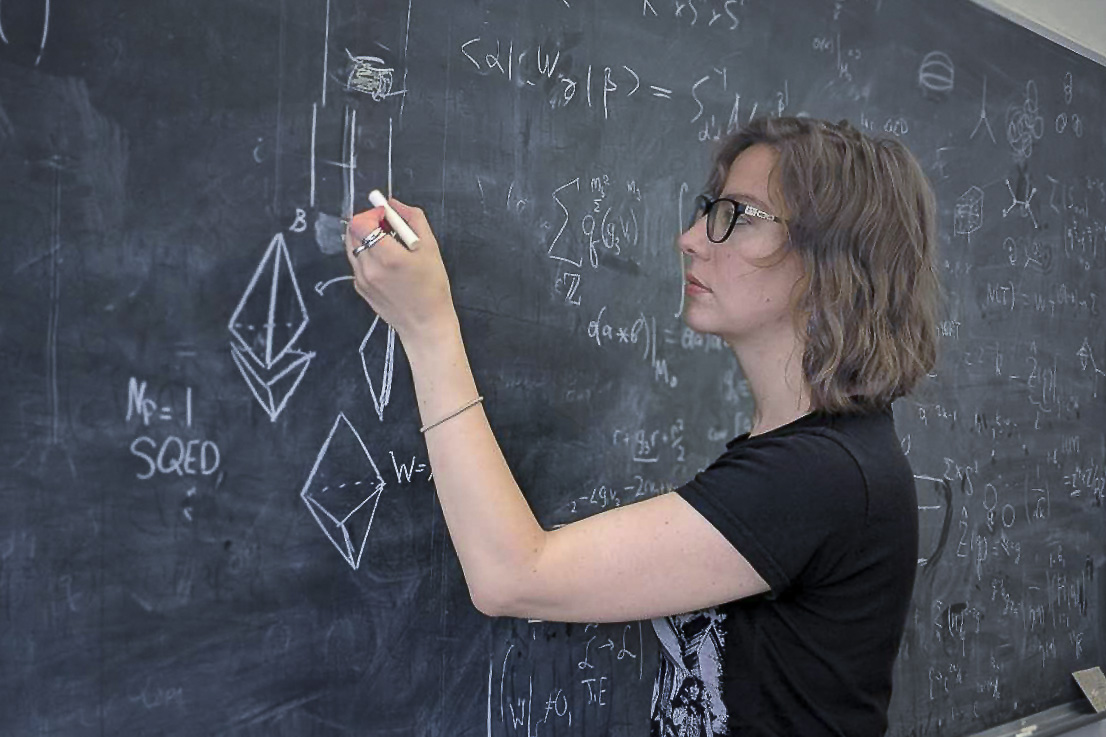
The Pillars of Theoretical Physics: Building Blocks of Reality
At its core, theoretical physics seeks to explain and predict the behavior of the physical universe through mathematical models. This involves identifying fundamental principles, formulating hypotheses, and testing their logical consistency and predictive power. The field is broadly divided into several key areas, each focusing on different scales and phenomena.
Unraveling the Quantum Realm: The World of the Infinitesimally Small
Quantum mechanics, a cornerstone of modern physics, describes the behavior of matter and energy at the atomic and subatomic levels. Theoretical physicists working in this domain grapple with phenomena that defy classical intuition, such as superposition, entanglement, and quantum tunneling. They develop mathematical formalisms to describe these behaviors, aiming to understand the fundamental constituents of matter and the forces that bind them.
- Quantum Field Theory: This is the language used to describe elementary particles and their interactions. Theoretical physicists develop and refine these theories to explain phenomena like the creation and annihilation of particles, and the nature of fundamental forces such as electromagnetism and the strong and weak nuclear forces. The Standard Model of particle physics, a highly successful quantum field theory, is a testament to this work.
- Quantum Gravity: One of the most significant challenges in theoretical physics is reconciling quantum mechanics with Einstein’s theory of general relativity, which describes gravity. Theories like string theory and loop quantum gravity are attempts to create a unified framework that can describe gravity at the quantum level, opening doors to understanding phenomena like black holes and the very early universe.
Exploring the Cosmos: The Vastness of Space and Time
Theoretical physicists also turn their attention to the grandest scales, seeking to understand the universe as a whole. This involves studying the origins, evolution, and ultimate fate of the cosmos, as well as the nature of extreme astrophysical objects.
- General Relativity and Cosmology: Einstein’s theory of general relativity provides the framework for understanding gravity as the curvature of spacetime. Theoretical cosmologists use this theory to model the universe’s expansion, the formation of large-scale structures, and phenomena like dark matter and dark energy, which constitute the vast majority of the universe’s mass-energy content.
- Black Holes and Gravitational Waves: Theoretical physicists rigorously explore the properties of black holes, enigmatic objects with immense gravitational pull, and the theoretical predictions of their behavior. The detection of gravitational waves, ripples in spacetime predicted by general relativity, has opened a new observational window into the universe, and theoretical work continues to interpret these signals and their implications.
The Tools of the Trade: Mathematics, Computation, and Imagination
Unlike experimental physicists who rely on laboratory equipment, theoretical physicists employ a different set of tools to probe the universe’s secrets. Their primary instruments are abstract, yet incredibly powerful.
The Language of the Universe: Mathematics as the Foundation
Mathematics is the indispensable language of theoretical physics. Complex equations, elegant proofs, and sophisticated mathematical structures are the bedrock upon which theories are built. Theoretical physicists must possess a deep understanding of various mathematical disciplines, including calculus, linear algebra, differential geometry, group theory, and abstract algebra, to formulate and manipulate their models.
- Developing New Mathematical Frameworks: Often, existing mathematical tools are insufficient to describe new physical phenomena. In such cases, theoretical physicists may need to develop entirely new mathematical concepts and techniques to capture the nuances of reality. This collaborative process between mathematics and physics is a hallmark of scientific progress.
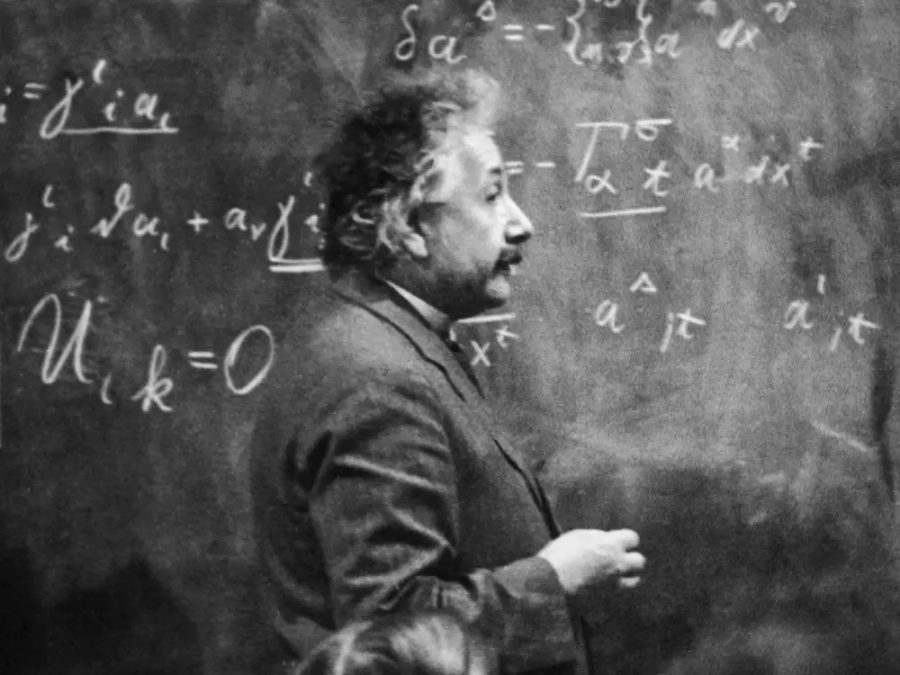
The Power of Simulation: Computational Physics
While theoretical physics is rooted in abstract thought, modern theoretical physics heavily relies on computational power. Complex systems and intricate mathematical models are often too difficult, or impossible, to solve analytically. Computational physics uses numerical methods and algorithms to simulate physical phenomena, allowing theorists to test their hypotheses and explore the consequences of their models.
- Numerical Simulations: Researchers use high-performance computing clusters to run sophisticated simulations of everything from the behavior of quarks and gluons in particle collisions to the evolution of galaxies. These simulations provide valuable insights and allow for comparisons with experimental data.
- Data Analysis and Interpretation: Even though theoretical physicists don’t directly collect data, they play a crucial role in analyzing and interpreting the vast amounts of data generated by experiments. They use their theoretical models to make predictions that can be verified or refuted by observations.
The Engine of Discovery: Imagination and Intuition
Beyond mathematics and computation, the imagination and intuition of a theoretical physicist are paramount. They must be able to conceive of new possibilities, visualize abstract concepts, and connect seemingly disparate phenomena. This creative aspect of their work allows them to push the boundaries of human knowledge.
- Thought Experiments: Einstein’s famous thought experiments, such as imagining riding alongside a beam of light, were instrumental in developing his theories of relativity. Theoretical physicists continue to employ these imaginative exercises to explore the implications of their ideas.
- Pattern Recognition: The ability to discern underlying patterns and symmetries in complex data sets and theoretical frameworks is a critical skill. This intuition guides them towards fundamental truths that might otherwise remain hidden.
Impact and Applications: From Abstract Concepts to Real-World Innovations
The work of theoretical physicists, though often abstract, has profound and far-reaching implications, directly and indirectly driving technological advancement and shaping our understanding of the world.
The Genesis of Modern Technology
Many technologies we take for granted today have their roots in the fundamental research conducted by theoretical physicists decades, or even centuries, ago. Their quest to understand the universe has inadvertently provided the blueprints for revolutionary inventions.
- Semiconductors and the Digital Revolution: The development of quantum mechanics in the early 20th century, driven by theoretical physicists, laid the groundwork for understanding the behavior of electrons in materials. This understanding was crucial for the invention of transistors and semiconductors, the building blocks of all modern electronic devices, from smartphones to supercomputers.
- Lasers and Advanced Imaging: The theoretical understanding of light-matter interactions and stimulated emission, pioneered by physicists like Albert Einstein, led to the invention of the laser. Lasers are now ubiquitous in applications ranging from barcode scanners and optical communication to medical surgery and scientific research.
- Nuclear Energy and Medicine: Theoretical work on nuclear physics, including the understanding of atomic structure and nuclear reactions, paved the way for nuclear power generation and a host of medical applications, such as X-rays, radiation therapy for cancer, and medical imaging techniques like PET scans.
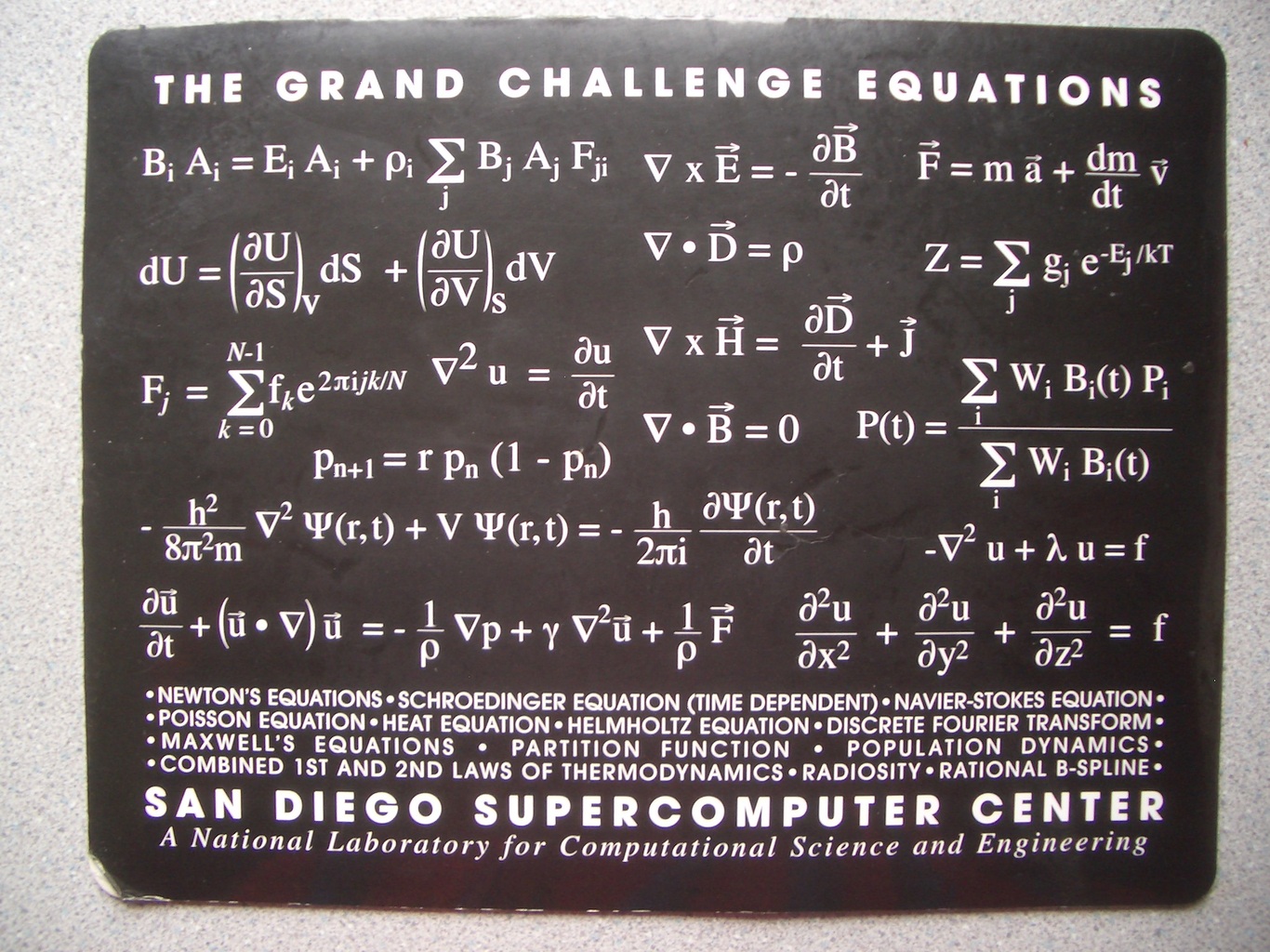
Shaping Our Future: Unanswered Questions and Emerging Fields
Theoretical physics is a continuously evolving field, grappling with fundamental questions that promise to unlock even greater technological potential.
- The Quest for a Unified Theory: The pursuit of a “theory of everything” that unifies all fundamental forces and particles remains a major driving force in theoretical physics. Such a theory could revolutionize our understanding of the universe and potentially lead to technologies we can currently only dream of, such as new forms of energy generation or advanced propulsion systems.
- Quantum Computing: The principles of quantum mechanics, meticulously explored by theoretical physicists, are now being harnessed to develop quantum computers. These machines have the potential to solve complex problems that are intractable for even the most powerful classical computers, with implications for drug discovery, materials science, cryptography, and artificial intelligence.
- Understanding Dark Matter and Dark Energy: The mysteries of dark matter and dark energy, which dominate the universe’s composition, represent vast frontiers for theoretical exploration. Unraveling their nature could lead to a paradigm shift in our understanding of gravity and the cosmos, potentially opening up entirely new avenues for scientific and technological development.
In essence, theoretical physicists are the vanguard of scientific discovery. They are the dreamers and the mathematicians who build the intellectual scaffolding for our understanding of the universe. Their work, often conducted in the abstract realm of thought, is the fertile ground from which much of our technological progress springs, a testament to the profound impact of fundamental inquiry on the human experience.
aViewFromTheCave is a participant in the Amazon Services LLC Associates Program, an affiliate advertising program designed to provide a means for sites to earn advertising fees by advertising and linking to Amazon.com. Amazon, the Amazon logo, AmazonSupply, and the AmazonSupply logo are trademarks of Amazon.com, Inc. or its affiliates. As an Amazon Associate we earn affiliate commissions from qualifying purchases.