
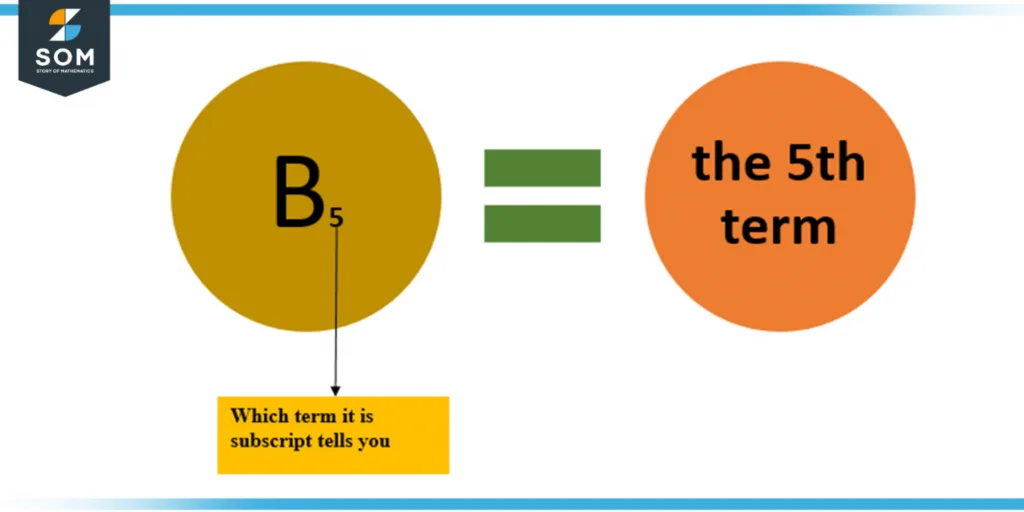
In the ever-evolving landscape of technology, the subtle nuances of how information is presented can often hold significant meaning. Among these visual cues, the subscript – a small character positioned slightly below the baseline of normal text – plays a surprisingly crucial role in conveying specific information, particularly within the tech domain. While it might seem like a mere typographic embellishment, a subscript is a powerful tool that communicates precision, hierarchy, and specialized meaning, especially in fields like programming, scientific notation within software, and data representation. Understanding what a subscript tells you is not just about appreciating typographical aesthetics; it’s about unlocking deeper comprehension of digital information, from the code that powers our devices to the data that informs our decisions.
The utility of a subscript transcends mere visual distinction. It serves as a fundamental element in conveying a wealth of technical information that would otherwise require cumbersome notation or be prone to ambiguity. Whether it’s indicating the atomic number of an element in a chemistry application, signifying the index of an array in programming, or denoting a specific version or variant of a technology, the subscript is an indispensable part of the technical lexicon. This article will delve into the multifaceted ways a subscript functions within the tech sphere, exploring its significance in various contexts and how it contributes to clarity, accuracy, and efficiency in digital communication and operation.
Subscripts in Programming: Denoting Indices and Elements
In the intricate world of software development and computer science, subscripts are not just a stylistic choice; they are fundamental building blocks for accessing and manipulating data structures. Their primary function is to pinpoint specific elements within ordered collections, making code more readable, efficient, and less error-prone. Without the clarity that subscripts provide, managing arrays, lists, and other sequential data would be a significantly more complex and challenging endeavor.
Understanding Array Indexing
At the heart of programming, arrays are contiguous blocks of memory that store a collection of elements of the same data type. To access or modify a particular element within an array, programmers rely on its index. The index is a numerical identifier that specifies the position of an element, and it is almost universally represented using a subscript. For instance, in many programming languages, an array named myArray might be declared, and its elements accessed as myArray[0], myArray[1], myArray[2], and so on. The numbers 0, 1, and 2 in these expressions are subscripts.
-
Zero-Based vs. One-Based Indexing: A crucial aspect of subscripting in programming is the convention of indexing. Most modern programming languages, including C, C++, Java, Python, and JavaScript, employ zero-based indexing. This means that the first element of an array is at index 0, the second at index 1, and so forth. This convention, while sometimes counterintuitive to those unfamiliar with it, offers advantages in terms of memory management and computational efficiency. Some languages, like Lua or MATLAB, might use one-based indexing, where the first element is at index 1. The subscript explicitly tells the programmer which convention is being followed when accessing array elements.
-
Accessing and Modifying Elements: The subscript is the gateway to an array’s content. By specifying
myArray[i], a programmer can retrieve the value stored at the i-th position or assign a new value to it. This direct access is vital for algorithms that iterate through data, perform calculations on specific elements, or update information dynamically. For example, a loop might be structured to process each element of an array:for i in range(len(myArray)): # Access the element at index 'i' using myArray[i] print(myArray[i])Here,
iacts as the subscript, systematically referencing each element.
Beyond Simple Arrays: Multidimensional Structures and Data Representation
The concept of subscripts extends beyond one-dimensional arrays to encompass more complex data structures, significantly enhancing their utility in various technical applications.
-
Multidimensional Arrays: In fields like data science, machine learning, and image processing, it’s common to work with data organized in two or more dimensions. Think of a spreadsheet or a digital image. These are often represented as multidimensional arrays. For example, a 2D array, representing a matrix, can be accessed using two subscripts:
matrix[row][column]. The first subscript indicates the row number, and the second subscript indicates the column number, effectively pinpointing a specific cell within the matrix. This allows for precise manipulation of tabular data or pixel values in an image. -
Specialized Data Structures: Subscripts also appear in the notation for other specialized data structures. For instance, in some contexts, a vector might be represented as
v_i, whereiis a subscript indicating the i-th component of the vector. This notation is prevalent in mathematics and physics, and its implementation in programming libraries for numerical computation relies heavily on subscripted access. -
Clarity in Complex Data: When dealing with large and intricate datasets, using subscripts to reference specific data points or parameters within a structured format significantly improves code readability and reduces the cognitive load on developers. It provides a clear and unambiguous way to identify precisely which piece of data is being referenced, preventing confusion and potential errors.
Subscripts in Scientific and Technical Notation: Precision in Data and Formulas
Beyond the realm of programming, subscripts play an equally vital role in scientific, chemical, and mathematical notations, especially as they are integrated into digital interfaces, software applications, and technical documentation. They provide essential context, denote quantities, and define specific properties that are critical for accurate interpretation and computation.
Chemical Formulas and Molecular Representation
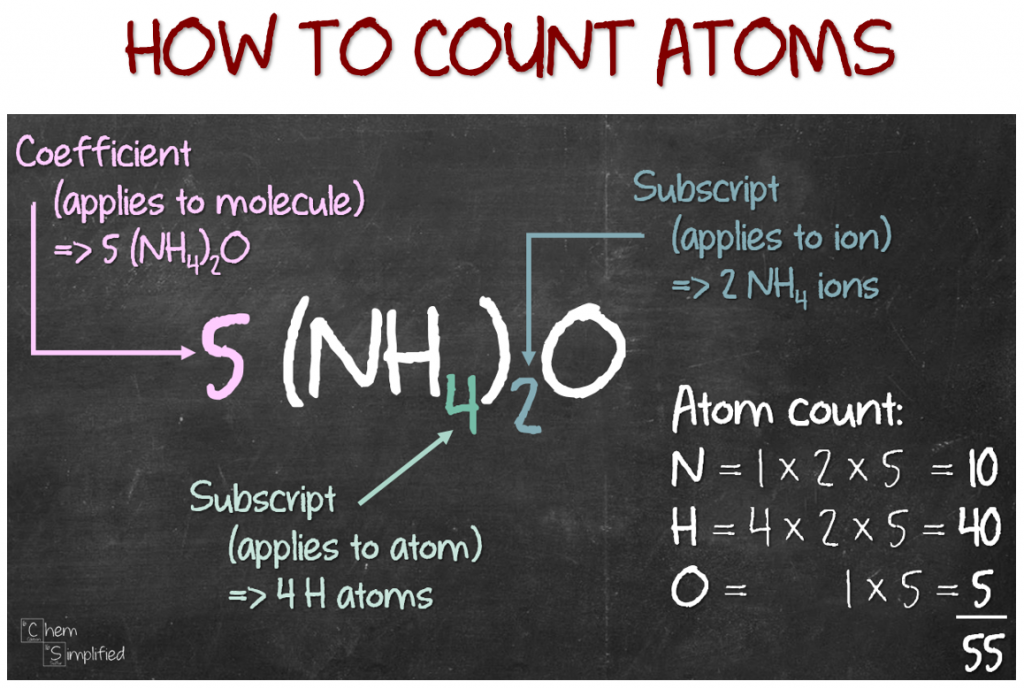
One of the most common and instantly recognizable uses of subscripts is in chemical formulas. Here, a subscript appended to an element symbol indicates the number of atoms of that element present in a molecule. This seemingly simple notation is fundamental to understanding the composition and structure of chemical compounds.
- Stoichiometry and Composition: Consider the formula for water, H₂O. The subscript ‘2’ after ‘H’ clearly tells us that a molecule of water contains two hydrogen atoms. Similarly, in sulfuric acid, H₂SO₄, the subscripts ‘2’ and ‘4’ indicate two hydrogen atoms and four oxygen atoms, respectively, while the absence of a subscript after ‘S’ implies a single sulfur atom. This is crucial for chemists, engineers, and researchers working with chemical processes, reaction yields, and material properties. Software used for chemical analysis, molecular modeling, or educational purposes will extensively use this subscript notation to accurately represent chemical entities.
- Ionic Compounds and Charge Representation: Subscripts can also be used in conjunction with superscripts to denote ionic compounds and their charges. For example, a sulfate ion is represented as SO₄²⁻. While the ‘4’ is a subscript indicating four oxygen atoms, the ‘2-‘ is a superscript denoting the overall charge of the ion. However, within certain computational chemistry tools or databases, you might encounter notations where subscripts are used to differentiate between isomers or specific forms of a compound.
Mathematical and Physical Constants and Variables
In mathematics and physics, subscripts are indispensable for distinguishing between different variables, constants, or components that share a common base symbol. This allows for a more organized and precise representation of complex equations and theories within digital environments like mathematical software, simulators, and scientific journals.
-
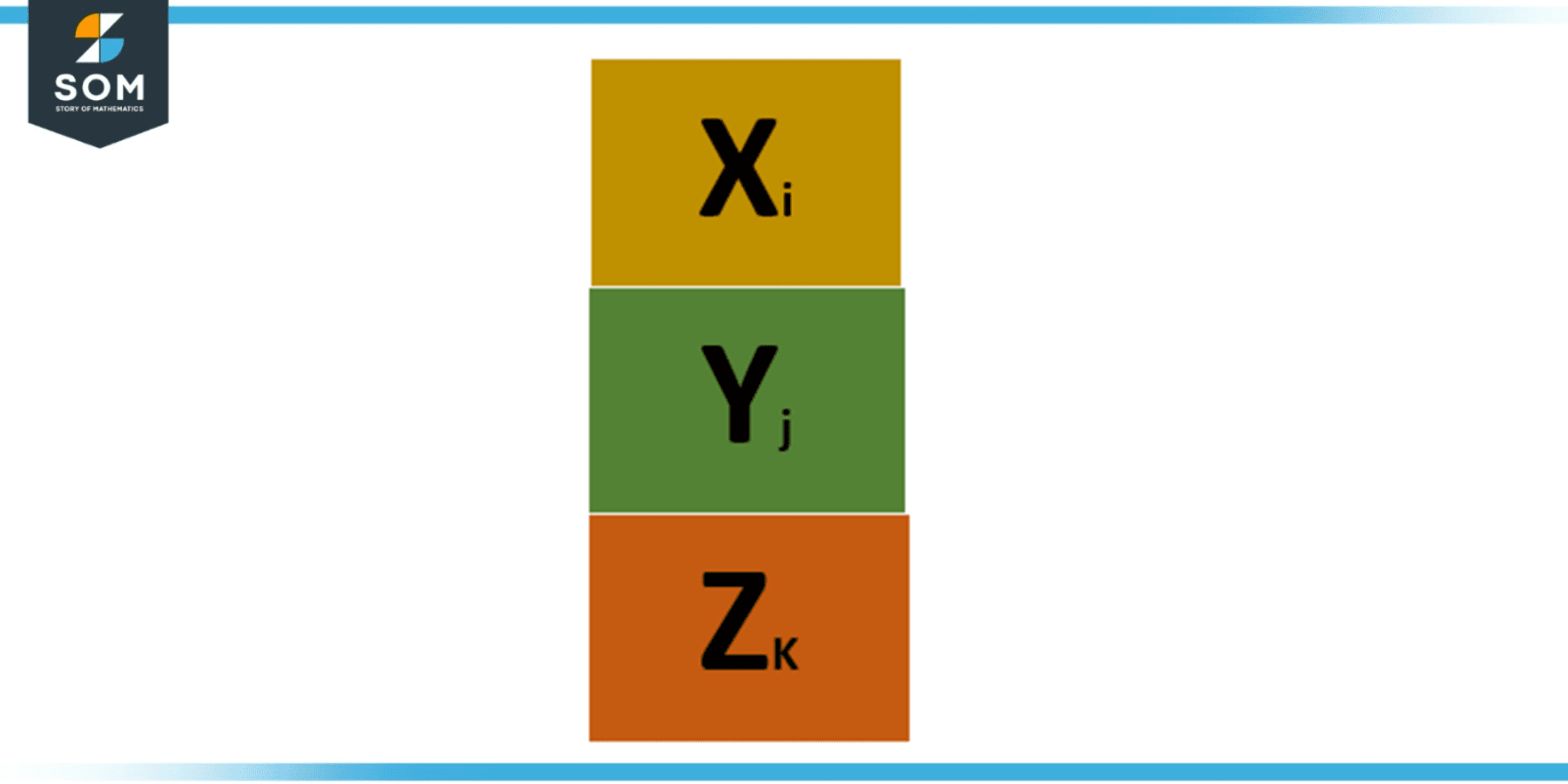
Distinguishing Variables: Imagine a problem involving multiple forces acting on an object. We might represent these forces as F₁, F₂, F₃, and so on. The subscript ‘1’, ‘2’, or ‘3’ clearly differentiates each force. In physics, you might encounter notations like
v_ifor initial velocity andv_ffor final velocity, orm₁andm₂for the masses of two different objects. This systematic labeling is vital for setting up and solving equations correctly. -
Indexing of Coefficients and Parameters: In linear algebra and calculus, subscripts are frequently used to denote coefficients of polynomials, components of vectors or matrices, or parameters in a model. For instance, a polynomial might be written as a₀ + a₁x + a₂x² + … + aₙxⁿ, where the subscripts on the ‘a’ coefficients clearly define their position and role in the polynomial’s structure. Scientific visualization software will render these subscripted notations accurately to represent mathematical models.
-
Units and Prefixes: While less common for standard units, subscripts can sometimes be used in specialized scientific contexts to denote specific variants or conditions of a measurement. For example, in thermodynamics, one might see notations like
T_critfor critical temperature, where the subscript denotes a specific state.
Subscripts in Versioning and Identification: Tracking Digital Assets and Software
In the fast-paced world of technology, staying organized and identifying specific versions of software, hardware components, or data sets is paramount. Subscripts offer a concise and effective way to achieve this, providing clarity and facilitating efficient management of digital assets.
Software Versioning and Updates
Software development is an iterative process, with frequent updates, patches, and new releases. Subscripts can be employed to denote specific versions or build numbers, particularly in internal documentation, configuration files, or less user-facing aspects of software management.
-
Build Numbers and Revisions: While commonly users interact with major version numbers (e.g., 2.0, 3.5), internal development teams might use more granular notation for tracking progress. A system might have a base version like
App_1and then track minor revisions or builds with subscripts, such asApp_1_build_5orApp_1.2_rev_10. While the standard dot notation is more prevalent for public releases, subscripts offer a structured way to manage these internal identifiers within code or configuration scripts. -
Component Identification: Within larger software systems, individual modules or components might have their own versioning. A library, for instance, could be referred to as
Library_v2wherev2signifies version two. If specific experimental or beta versions are being tracked, subscripts might be used to denote these, such asLibrary_v2_beta_3. This helps developers ensure they are using the correct dependencies and prevents compatibility issues.
Hardware and Component Identification
The principle of using subscripts for identification extends to hardware components and their specifications. This is particularly relevant in technical documentation, inventory management systems, and design specifications.
-
Product Variants and Configurations: Manufacturers often produce multiple variations of a product to cater to different needs or price points. While marketing might use distinct product names, internal technical documentation or schematics might use subscripts to differentiate these. For example, a processor model might be
CPU_X1for a standard configuration andCPU_X1_highperforCPU_X1_ecoto denote specialized variants. -
Serial Numbers and Batch Tracking: In some specialized industrial or scientific equipment, serial numbers or batch identifiers might incorporate subscripted elements to denote specific manufacturing runs, quality control batches, or regional variations. This is crucial for traceability, warranty management, and regulatory compliance.
Data Sets and Experimental Runs
In data-intensive fields like machine learning, scientific research, and analytics, clear identification of data sets and experimental runs is critical for reproducibility and comparison.
-
Distinguishing Datasets: When working with multiple versions or subsets of a dataset, subscripts can be used for differentiation. For example,
Dataset_A_trainandDataset_A_testclearly indicate training and testing splits of Dataset A. In research, experimental data might be labeled asExperiment_Run_1,Experiment_Run_2, etc., allowing researchers to precisely reference the conditions and results of each trial. -
Parameter Configurations: When running simulations or experiments with varying parameters, subscripts can be used to denote different configurations. For instance,
Simulation_ParamSet_1andSimulation_ParamSet_2clearly distinguish between runs with different parameter values, aiding in the analysis of results and the optimization of models.
In conclusion, the subscript, though a small typographical element, carries significant weight in the technological domain. It acts as a precise identifier, a clarifier of complex structures, and an indicator of specific properties. From the fundamental indexing of arrays in programming to the nuanced representation of chemical compounds and the meticulous versioning of digital assets, understanding what a subscript tells you is key to navigating and comprehending the intricate world of technology. Its consistent and deliberate use ensures accuracy, enhances readability, and ultimately, contributes to the robust development and application of digital tools and knowledge.
aViewFromTheCave is a participant in the Amazon Services LLC Associates Program, an affiliate advertising program designed to provide a means for sites to earn advertising fees by advertising and linking to Amazon.com. Amazon, the Amazon logo, AmazonSupply, and the AmazonSupply logo are trademarks of Amazon.com, Inc. or its affiliates. As an Amazon Associate we earn affiliate commissions from qualifying purchases.