
In the modern corporate landscape, human capital is often a company’s most significant expense and its most valuable asset. When a business leader asks, “What does a staffing agency do?” they are often looking for more than a simple definition of recruitment. From a financial and business operations perspective, a staffing agency acts as a strategic fiscal partner. They are intermediaries that bridge the gap between talent supply and corporate demand, but their true value lies in their ability to optimize a company’s bottom line, manage financial risk, and streamline the costs associated with labor acquisition and retention.
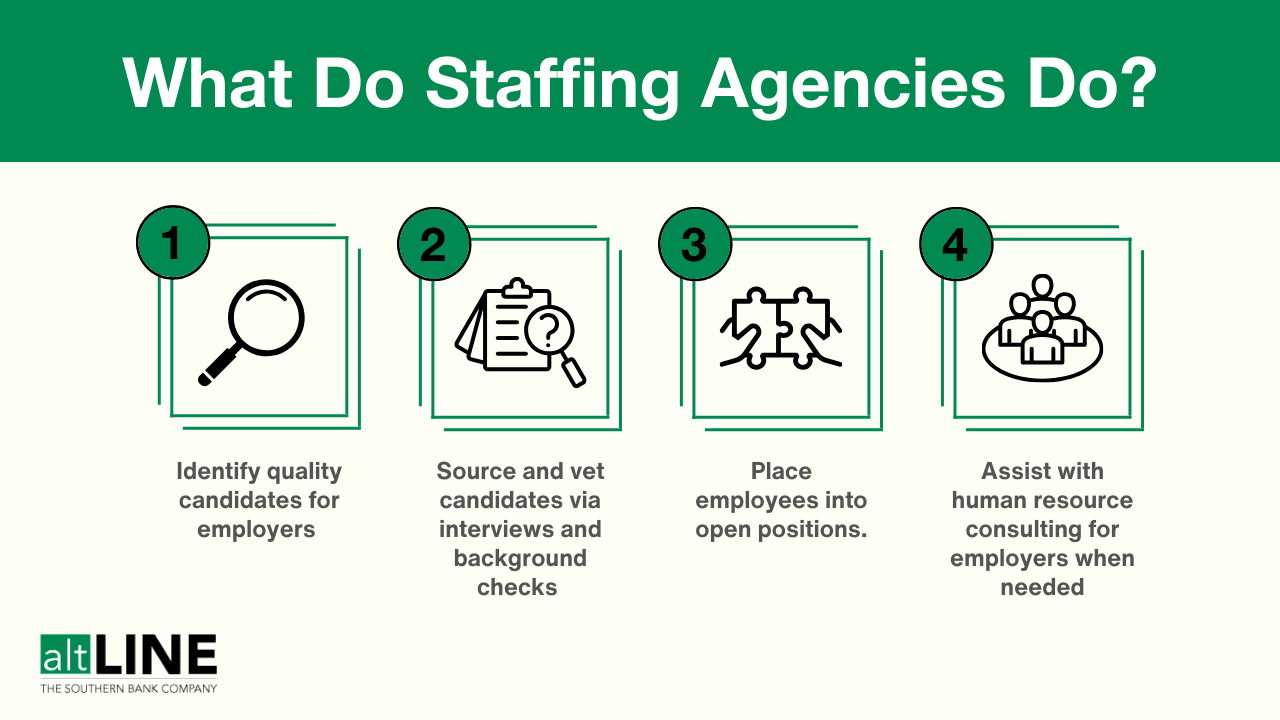
By outsourcing the search for talent, organizations can transform their recruitment process from a reactive, high-cost burden into a proactive, high-return investment strategy. This article explores the specific financial mechanisms through which staffing agencies operate and how they serve as a tool for business finance and wealth management.
The Economic Value Proposition of Staffing Agencies
To understand what a staffing agency does, one must first look at the economics of the “empty chair.” Every day a critical role remains unfilled, a company loses potential revenue and incurs the opportunity cost of stalled projects. Staffing agencies mitigate these losses by specializing in the rapid deployment of qualified individuals.
Reducing Cost-Per-Hire and Internal Overhead
The total cost of hiring an employee extends far beyond their base salary. It includes the cost of job board postings, the software used for applicant tracking (ATS), the hours spent by HR personnel screening resumes, and the lost productivity of managers conducting interviews. A staffing agency absorbs these upfront operational costs.
For many businesses, maintaining a full-scale internal recruitment department is financially inefficient. By leveraging a staffing agency, a firm shifts these fixed overhead costs to a variable expense model. You pay for the service only when you need it, which is a far more efficient allocation of capital, especially for small to mid-sized enterprises (SMEs) looking to maintain lean operations.
Mitigating the Financial Risk of Bad Hires
One of the most significant financial threats to a business’s health is a “bad hire.” Industry studies suggest that the cost of a bad hire can be as high as 30% of the individual’s first-year earnings. This includes the wasted salary, the cost of training, and the subsequent cost of offboarding and re-hiring.
Staffing agencies provide a financial safety net through “replacement guarantees.” If a candidate does not meet performance standards or leaves within a certain timeframe (usually 60 to 90 days), the agency will replace them at no additional cost. This contractual protection ensures that a company’s investment in talent is secured against the volatility of human performance.
How Staffing Agencies Operate as Financial Leverage Tools
Beyond the act of recruiting, staffing agencies function as sophisticated tools for managing a company’s Profit and Loss (P&L) statement. They offer flexibility that allows a business to scale its workforce in alignment with its financial cycles.
Managing Variable Labor Costs and Scalability
In industries with high seasonality or project-based revenue—such as construction, retail, or tech development—maintaining a massive permanent workforce can lead to financial ruin during downtime. Staffing agencies allow firms to move toward a “just-in-time” labor model.
By using temporary or contract staffing, a business can scale up its workforce during peak revenue-generating periods and scale down during leaner months without the legal and financial complications of layoffs. This ability to convert fixed labor costs into variable costs is a cornerstone of agile financial management. It ensures that payroll expenses stay proportional to revenue, protecting the company’s profit margins.

The Impact on Payroll Taxes and Benefits Administration
When a company uses a staffing agency for temporary or contract roles, the agency often serves as the “Employer of Record” (EOR). This has significant financial implications. The agency takes on the responsibility for:
- Payroll Taxes: FICA, FUTA, and SUTA are handled by the agency.
- Workers’ Compensation: The agency carries the insurance risk and manages any claims.
- Benefits Administration: The agency provides healthcare, 401(k) options, and other perks to the contractors.
By offloading these administrative burdens, a business reduces its “back-office” costs. From a financial reporting perspective, the fees paid to the agency are often categorized as professional services or external labor rather than permanent payroll, which can be advantageous for certain corporate tax strategies and budget allocations.
Understanding the Fee Structures: An Investment Analysis
To evaluate whether a staffing agency is a sound financial choice, a business owner must understand how these agencies make money and how those fees translate into long-term ROI. Staffing fees should not be viewed as a sunk cost, but rather as an acquisition cost for a high-yield asset: talent.
Permanent Placement vs. Contract-to-Hire Models
There are generally two primary ways staffing agencies charge for their services:
- Contingent Search (Permanent Placement): The agency charges a percentage of the candidate’s first-year annual salary (typically 15% to 25%). This is only paid if the candidate is hired. For a business, this is a “success-only” fee, meaning the financial risk is entirely on the agency until the value (the employee) is delivered.
- Markup on Hourly Rates (Contracting): For temporary roles, the agency charges an hourly rate that includes the candidate’s pay plus a “markup” to cover the agency’s costs and profit.
Evaluating the Net Present Value (NPV) of Outsourced Sourcing
When performing a financial analysis of staffing costs, one must consider the “Speed to Productivity.” A staffing agency with a deep database of pre-vetted candidates can often fill a role in two weeks, whereas an internal search might take three months.
If a new sales executive generates $50,000 in monthly revenue, hiring them 10 weeks earlier via an agency results in $125,000 in additional top-line growth. Even after paying a $20,000 agency fee, the company is still $105,000 ahead. This logic applies across all revenue-generating or cost-saving roles, making the use of an agency a high-NPV (Net Present Value) decision.
Strategic Scaling: Driving Revenue Through Efficient Talent Acquisition
The ultimate goal of any financial strategy is to drive growth and increase shareholder value. Staffing agencies contribute to this by ensuring that a company is never “talent-constrained.” A business can have the best strategy and the most capital, but without the right people to execute, it will fail to reach its financial targets.
Speed-to-Market and Productivity Gains
In the competitive global market, the first to market often wins the lion’s share of the profit. Whether it’s launching a new software product or opening a new manufacturing plant, the ability to mobilize a workforce quickly is a competitive advantage. Staffing agencies provide the “human infrastructure” necessary for rapid expansion.
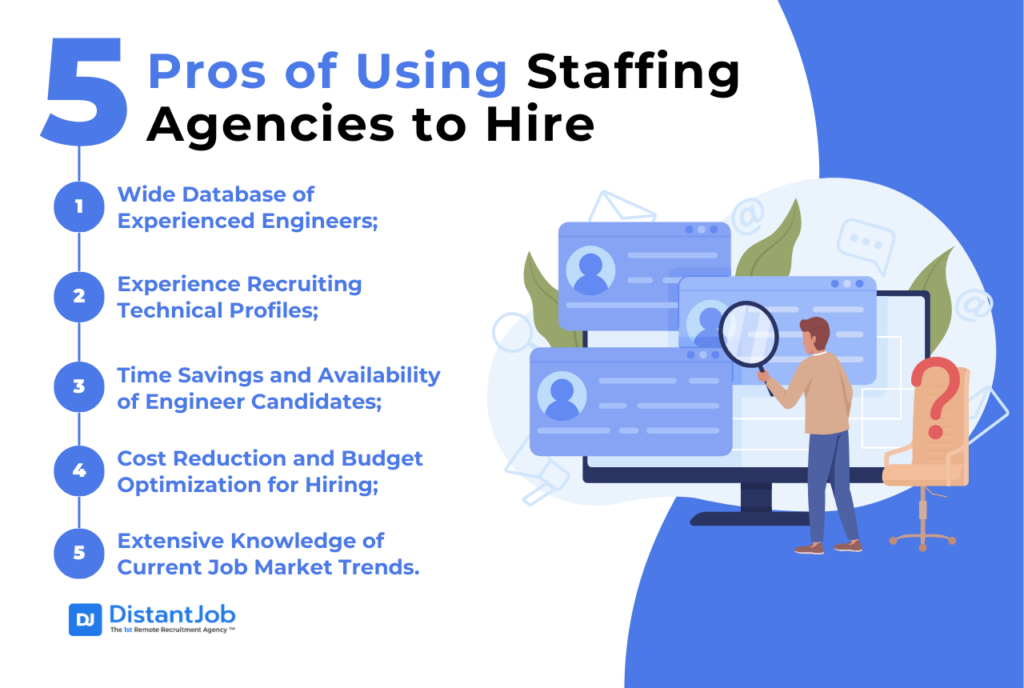
Furthermore, by handling the initial screening and technical testing, agencies ensure that only the top 5% of talent reaches the hiring manager’s desk. This increases the overall “talent density” of the organization. High-talent density leads to higher innovation rates and lower management overhead, both of which are direct drivers of long-term profitability.
Long-term Wealth Creation through High-Quality Human Capital
From an investment perspective, the quality of a company’s leadership and staff is a leading indicator of its future stock price or valuation. Staffing agencies specialized in “Executive Search” or niche technical fields act as talent brokers who help companies acquire the “alpha-generating” individuals who can pivot a company toward new markets or optimize existing operations.
In conclusion, what a staffing agency does is facilitate the efficient movement of human capital into the areas of the economy where it can generate the most value. For the business leader, they are not just a vendor for “finding people”; they are a financial instrument used to minimize waste, manage risk, and maximize the return on one of the most significant investments a company will ever make: its people. By integrating staffing agency services into a broader financial strategy, businesses can ensure they remain lean, agile, and positioned for sustainable growth.
aViewFromTheCave is a participant in the Amazon Services LLC Associates Program, an affiliate advertising program designed to provide a means for sites to earn advertising fees by advertising and linking to Amazon.com. Amazon, the Amazon logo, AmazonSupply, and the AmazonSupply logo are trademarks of Amazon.com, Inc. or its affiliates. As an Amazon Associate we earn affiliate commissions from qualifying purchases.