
In the modern financial landscape, the intersection of data science, personal finance, and alternative investing has birthed a new era of market participation. One of the most common terms encountered by those looking into sports markets—often treated as high-frequency, high-variance financial vehicles—is the “point spread.” Specifically, the question “what does a spread of -3 mean” is a gateway into understanding market equilibrium, risk management, and the mechanics of “the juice” or transaction costs.
To a casual observer, a -3 spread is merely a number on a screen. To a disciplined financial mind, it is a handicap designed to create a 50/50 proposition, a hurdle rate that an asset (the team) must clear to provide a return on investment (ROI). Understanding this concept is vital for anyone treating sports wagering or market speculation as a serious arm of their personal finance strategy.

The Fundamentals of Point Spreads in Alternative Finance
At its core, a point spread is a margin of victory set by market makers to level the playing field between two unequal entities. In the context of a -3 spread, the negative sign is the most critical symbol. It denotes the “favorite.”
Defining the Spread: A Tool for Balance
In any financial market, liquidity is driven by the balance of buyers and sellers. In sports markets, if every participant only backed the team most likely to win, the market would collapse. To prevent this, bookmakers (acting as market makers) introduce the spread. When you see a team listed at -3, the market is essentially saying that this team is three points better than their opponent on a neutral field (or after accounting for home-field advantage).
To “cover the spread,” the favorite must win by more than three points. If you “invest” in a team at -3, and they win by four or more, your position is profitable. If they win by only one or two points, or if they lose the game outright, you lose your principal investment.
Why the -3 Figure is a Benchmark in Risk Assessment
In the realm of American football—the primary driver of the -3 spread—the number three is considered a “key number.” This is because a significant percentage of games are decided by exactly three points (the value of a field goal). From a financial planning perspective, -3 represents a high-probability landing spot.
When a market settles on -3, it is often a sign of high confidence from the market makers. Unlike a spread of -2.5 or -3.5, which forces a binary win/loss outcome, a spread of exactly -3 allows for the possibility of a “push” or a refund of the principal. This acts as a form of capital preservation, which we will explore further in the context of risk management.
Calculating Value: How a -3 Spread Impacts Your Bottom Line
When treating any activity as a side hustle or a business finance endeavor, the math must move beyond the surface level. A -3 spread is not just about the final score; it is about the “implied probability” and the cost of the transaction.
The Mathematics of the Favorite
When you back a favorite at -3, you are essentially taking on a “handicap” in exchange for a specific payout structure. Typically, these positions are priced at -110. In financial terms, this means you must risk $110 to win $100. This $10 difference is known as the “vigorish” or “vig,” and it is functionally identical to a broker’s commission or a bid-ask spread in the stock market.
To remain profitable over the long term, a participant must win their -3 spread positions at a rate higher than 52.38%. Understanding the -3 spread allows you to calculate your “break-even” point. If your data analysis suggests a team has a 60% chance of winning by more than three, the “value” is the difference between your projected probability and the market’s implied probability.
The Concept of “Pushing” and Capital Preservation
One of the unique aspects of a whole-number spread like -3 is the “push.” If the favorite wins by exactly three points, the result is a tie against the spread. In this scenario, the bettor receives their original stake back.
For a conservative investor, the -3 spread is more attractive than a -3.5 spread. While the -3.5 spread offers a higher potential payout if the team wins by four, it turns a three-point victory into a total loss of principal. In a professional money management framework, the -3 provides a safety net that protects the bankroll from a “dead loss” in the event of a common scoring margin.
Strategic Investing: Treating Spreads as Market Data
Successful wealth building requires looking at spreads not as “bets,” but as data points reflecting market sentiment. The movement of a spread from -2.5 to -3, or from -3 to -3.5, provides deep insight into where the “smart money” is flowing.
Line Movement and Market Sentiment
In the financial world, we watch the candlestick charts of stocks to see where institutional buying occurs. In the world of spreads, we watch “line movement.” If a team opens at -2 and moves to -3, it indicates that a massive influx of capital has entered the market on that side.
As a student of personal finance, you must distinguish between “public money” (the masses) and “sharp money” (professional syndicates). Often, if a spread moves to -3 and stays there despite a high volume of public betting, it suggests the market makers are comfortable with their exposure, or they are balancing the books against professional players who see -3 as the “true” value of the asset.
Managing Risk and Diversification in High-Variance Markets
No serious investor puts their entire portfolio into a single asset. The same applies to spread-based investing. If you are analyzing a -3 spread, it should be one part of a diversified strategy.
Professional money managers in this space use the “unit” system. A unit is typically 1% to 3% of one’s total liquid bankroll. By only risking a single unit on a -3 spread, you insulate your financial health from the inherent volatility of the market. Even the most “sure-fire” -3 favorite can fail to cover due to a late-game turnover or a statistical anomaly. Diversification across multiple spreads and different sports ensures that a single bad bounce doesn’t result in a margin call on your life’s savings.
Advanced Financial Mechanics: Comparing Sports Spreads to Bid-Ask Spreads
To truly master the concept of the -3 spread, it helps to compare it to traditional financial instruments. There are striking similarities between how a point spread functions and how a bid-ask spread operates on Wall Street.
Liquidity and Transaction Costs
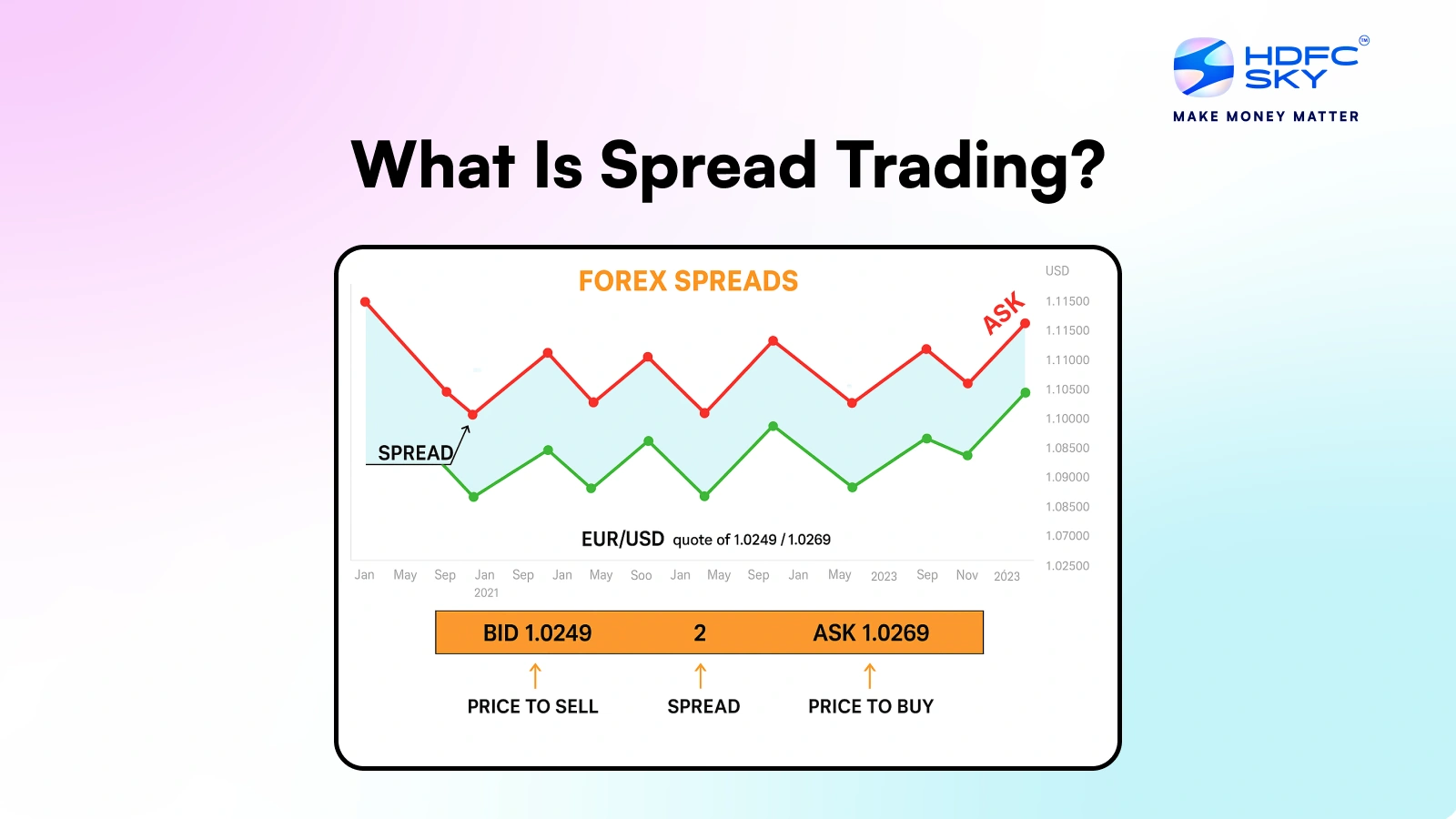
In the stock market, the bid-ask spread is the difference between the highest price a buyer is willing to pay and the lowest price a seller is willing to accept. If a stock is bid at $10.00 and asked at $10.10, the “spread” is $0.10.
In a -3 point spread scenario, the “spread” serves the same purpose: it ensures the house (the market maker) has a margin of profit regardless of the outcome, provided they have balanced action on both sides. The -3 acts as the “price” of the favorite. The more liquid the market (like the Super Bowl or a major playoff game), the “tighter” the pricing usually becomes, meaning you are less likely to find inefficiencies or “mispriced” -3 lines.
Arbitrage Opportunities in Spread Analysis
Arbitrage—the simultaneous purchase and sale of an asset to profit from a difference in the price—is a cornerstone of high-level finance. In spread markets, this is known as “middling.”
If you take an underdog at +3.5 early in the week and the market moves so that the same team becomes a -2.5 favorite later in the week, you have created a “middle” opportunity. If the game ends with the favorite winning by exactly 3, you win both sides of the transaction. Understanding the -3 benchmark is essential for identifying these rare but highly profitable financial “windows” where the risk is minimized and the reward is maximized.
Developing a Sustainable Wealth Strategy through Spread Analysis
Ultimately, knowing what a -3 spread means is just the first step. The goal for any finance-minded individual is to turn this knowledge into a sustainable income stream or a disciplined hobby that doesn’t jeopardize their financial future.
Bankroll Management and Disciplined Scaling
The greatest threat to personal finance in spread markets is not a lack of knowledge, but a lack of discipline. Chasing losses after a -3 favorite fails to cover is the quickest way to financial ruin.
A professional approach involves “flat betting,” where you stake the same amount on every -3 spread regardless of your “gut feeling.” Over a sample size of 500 to 1,000 transactions, the variance levels out, and your true edge (or lack thereof) is revealed. This is the same logic used by index fund investors: trust the long-term data over short-term fluctuations.

The Psychology of Wagering vs. Traditional Investing
Finally, we must address the psychological component. In traditional investing, we are taught to “buy and hold.” In spread markets, every “investment” has a clear expiration date (the end of the game). This creates a different psychological pressure.
A -3 spread is a test of emotional regulation. When a team is up by 10 points and “covering” easily, only to give up a late touchdown and win by only 2 (failing to cover the -3), the investor experiences “loss aversion” in its purest form. Maintaining a professional, detached perspective—viewing the -3 spread as a mathematical probability rather than a moral judgment on a team—is what separates those who lose money from those who use these markets to grow their net worth.
In conclusion, a -3 spread is a sophisticated financial boundary. It is a tool used by market makers to find equilibrium and a challenge for investors to find value. By understanding the math of the “vig,” the importance of key numbers, and the necessity of rigorous bankroll management, one can navigate these markets with the same precision and professionalism as any other area of personal finance.
aViewFromTheCave is a participant in the Amazon Services LLC Associates Program, an affiliate advertising program designed to provide a means for sites to earn advertising fees by advertising and linking to Amazon.com. Amazon, the Amazon logo, AmazonSupply, and the AmazonSupply logo are trademarks of Amazon.com, Inc. or its affiliates. As an Amazon Associate we earn affiliate commissions from qualifying purchases.