
In the landscape of modern finance, the role of a restaurant server is often undervalued as a mere entry-level position. However, when viewed through the lens of personal finance and income optimization, a server is essentially a micro-entrepreneur operating within a larger business ecosystem. Far from just “taking orders,” a professional server manages a high-velocity sales floor, executes real-time customer relationship management (CRM), and operates on a performance-based compensation model that few other roles can match without a corporate degree.
For those looking at the service industry as a side hustle, a primary income stream, or a way to build seed capital for future investments, understanding the financial mechanics of the role is crucial. This article explores the economic architecture of being a server and how to leverage this position for maximum financial gain.
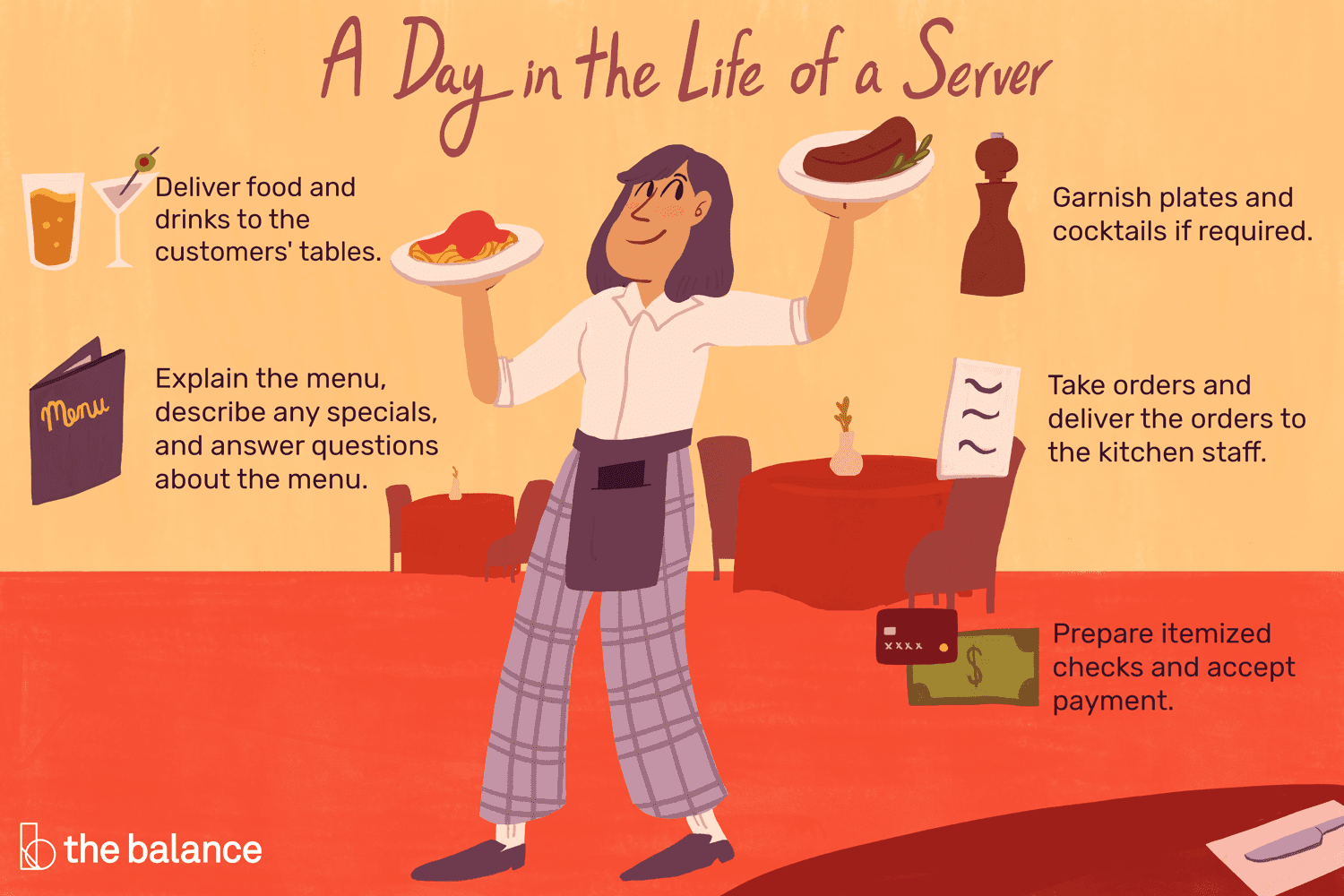
The Economic Architecture: Understanding the Tipped Income Model
To understand what a server does, one must first understand the unique “tipped minimum wage” structure that governs the industry. In many jurisdictions, servers earn a base hourly wage that is significantly lower than the standard minimum wage, with the expectation that gratuities will bridge the gap. This creates a high-stakes, commission-style environment where the server’s efficiency and salesmanship directly dictate their take-home pay.
The Dynamics of Tipped Credit and Base Pay
In the United States, the federal Fair Labor Standards Act (FLSA) allows employers to claim a “tip credit,” paying as little as $2.13 per hour in direct wages. While some states have abolished this in favor of a full minimum wage plus tips, the fundamental financial reality remains the same: the server’s primary revenue source is the customer, not the employer. This shifts the server’s focus from “putting in time” to “maximizing value.”
Revenue Generation vs. Service Execution
From a financial perspective, a server is a sales representative. Every interaction is an opportunity to increase the “Check Average.” A server who understands the profit margins of a wine list or the incremental value of an appetizer is not just serving food; they are managing a portfolio of tables to ensure the highest possible Gross Merchandise Value (GMV) for their shift.
The “Cash Flow” Advantage
One of the most significant financial perks of being a server is the immediate liquidity. Unlike traditional bi-weekly payroll cycles, servers often walk out with cash in hand. In the world of personal finance, this daily cash flow can be a powerful tool for debt snowballing or immediate reinvestment, provided it is managed with discipline.
Mastering the “Side Hustle” Mentality: Serving as a High-Yield Investment
Many individuals enter the restaurant industry as a secondary income stream—a side hustle designed to fund a specific financial goal, such as a house down payment or an investment portfolio. In this context, the server’s role is defined by its Return on Time Invested (ROTI).
High Hourly Equivalency
A top-tier server in a busy metropolitan area or a high-end steakhouse can easily earn between $40 and $80 per hour when tips are factored in. Compared to other side hustles like ride-sharing or freelance data entry, serving offers a higher ceiling for hourly earnings without the overhead of vehicle maintenance or specialized software subscriptions.
Low Barrier to Entry with High Upside
Unlike many “Money” niche careers that require expensive certifications or years of unpaid internships, the server role offers a “learn-as-you-earn” model. A server starts by learning the basics of the “Product” (the menu) and the “System” (the POS), and can see an immediate correlation between their skill improvement and their income growth.
Networking and Social Capital
While difficult to quantify on a balance sheet, the “Social Capital” gained while serving shouldn’t be overlooked. Servers interact with hundreds of people weekly, often including business owners, investors, and professionals. For the financially savvy server, these interactions are networking opportunities that can lead to higher-paying corporate roles or partnership opportunities in other business ventures.

Financial Management: Navigating Taxes and Wealth Building
Because a server’s income is volatile and often received in cash, professional financial management is the difference between living paycheck-to-paycheck and building genuine wealth. What a server “does” in this regard happens behind the scenes, away from the dining room floor.
The Challenge of Variable Income
A server’s income is subject to seasonal fluctuations, day-of-the-week variance, and even weather-related volatility. To manage this, a savvy server must utilize “Average Income Budgeting.” By calculating a conservative monthly average rather than budgeting based on their best Friday night, they create a financial buffer that protects them during slow periods (like the post-holiday slump in January).
Tax Compliance and Form 4070
A critical, yet often neglected, part of a server’s job is accurate financial reporting. The IRS requires servers to report all tips. While it may be tempting to under-report cash earnings to save on taxes in the short term, this can be a devastating financial mistake. Proper reporting is essential for establishing “provable income,” which is necessary when applying for mortgages, car loans, or credit lines. Using IRS Form 4070 or digital tracking apps is a non-negotiable part of the server’s financial administrative duties.
Strategic Reinvestment of Daily Cash
The danger of daily cash is the “leakage” that occurs when small amounts are spent on non-essentials. A server practicing high-level personal finance will often use a “Capital Deployment” strategy: depositing all cash tips into a dedicated high-yield savings account or brokerage account immediately after a shift. This transforms “pocket money” into a compounding asset.
Scaling the Role: From Casual Dining to Fine Dining Wealth
Just as a business seeks to move into higher-margin markets, a server can scale their income by moving up the “Value Chain” of the restaurant industry. The tasks remain similar, but the financial outcomes vary wildly based on the venue’s price point and service model.
Understanding the “Check Average” Multiplier
In a casual diner, a 20% tip on a $30 check is $6. In a fine-dining establishment, a 20% tip on a $400 check is $80. The physical effort required to serve the two tables is often comparable, but the financial return is exponentially higher in the latter. Professional servers treat their career progression like a corporate ladder, moving from high-volume “turn and burn” spots to low-volume, high-ticket luxury venues.
Specialization: The Sommelier and Cicerone Paths
To access the highest echelons of service income, servers often invest in “Product Knowledge” as a form of professional development. Earning a Level 1 or Level 2 Sommelier certification allows a server to handle high-value wine sales, which significantly inflates the total check and, consequently, the tip. In this stage, the server is acting as a specialized consultant, adding value through expertise that the customer is willing to pay a premium for.
The Pivot to Management and Ownership
Finally, many servers use their time on the floor to perform “Market Research.” By observing the operational efficiencies (or lack thereof) in their restaurant, they gain the “Business Intelligence” necessary to eventually move into restaurant management or even ownership. At this level, the server transitions from earning an active income to generating passive or semi-passive business income, leveraging the skills they learned while “just” waiting tables.

Conclusion: The Server as a Financial Strategist
In conclusion, when asking “what does a server do in a restaurant,” the answer depends entirely on the observer’s perspective. From a financial standpoint, a server is a high-performance sales agent who manages inventory, customer satisfaction, and daily revenue in a high-pressure environment.
By embracing the “Money” niche mindset—focusing on income optimization, tax strategy, and career scaling—a server can transform a service role into a powerful engine for wealth creation. Whether it is used as a springboard for other investments or developed into a lucrative long-term career in luxury hospitality, the role of a server remains one of the most flexible and financially rewarding paths available in the modern economy.
aViewFromTheCave is a participant in the Amazon Services LLC Associates Program, an affiliate advertising program designed to provide a means for sites to earn advertising fees by advertising and linking to Amazon.com. Amazon, the Amazon logo, AmazonSupply, and the AmazonSupply logo are trademarks of Amazon.com, Inc. or its affiliates. As an Amazon Associate we earn affiliate commissions from qualifying purchases.