
In the realm of pure mathematics, notation is the silent language that gives structure to abstract thought. However, as mathematics has migrated from the chalkboard to the compiler, symbols that once held niche academic meanings have become fundamental pillars of technology. The semicolon (;) is one such character. While often overlooked in basic arithmetic, its role in modern computational mathematics, software engineering, and data science is indispensable.
To understand what a semicolon means in a mathematical context today, one must look through the lens of technology. It is no longer just a punctuation mark; it is a functional operator that dictates how algorithms process data, how matrices are constructed in high-performance computing, and how parameters are separated in complex functions. This article explores the evolution of the semicolon from a separator of variables to a cornerstone of technological logic.
The Intersection of Mathematics and Programming Syntax
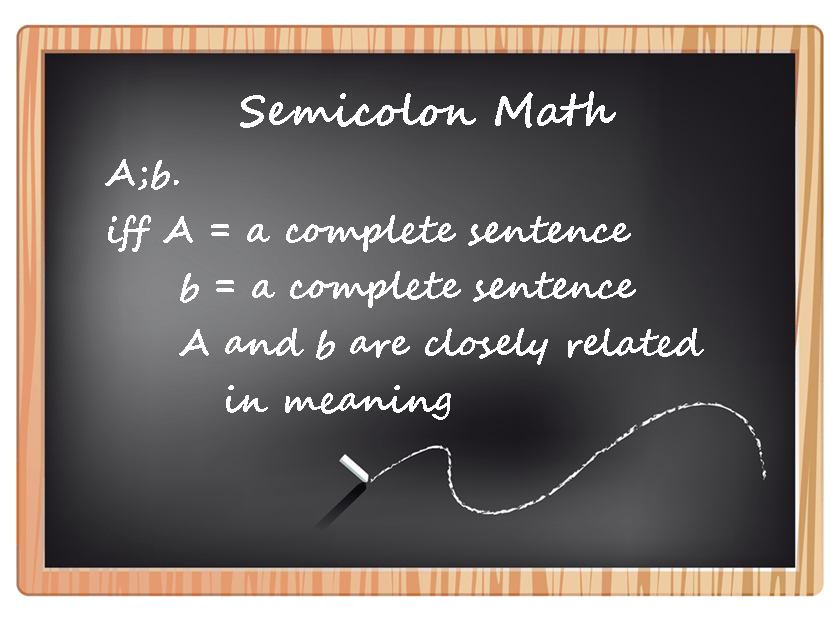
The transition from theoretical mathematics to applied computer science necessitated a more rigid way to define boundaries. In traditional math, the semicolon is frequently used to separate variables from parameters within a function, such as $f(x; theta)$. In this context, $x$ represents the input variable, while $theta$ represents the parameters that define the function’s behavior.
From Paper to Code: How Math Logic Evolved
As software development began to formalize in the mid-20th century, early language architects needed a way to translate these mathematical “pauses” into instructions a machine could execute. The semicolon was adopted as a way to signal the end of a logical thought. In languages like C, C++, and Java—which power the vast majority of our modern infrastructure—the semicolon acts as a “statement terminator.”
Just as a semicolon in math separates distinct logical components of an equation, in tech, it tells the compiler that one mathematical operation is complete and the next is ready to begin. Without this precise notation, the logic of an algorithm would collapse into an unreadable string of data, leading to the dreaded syntax error.
The Role of the Semicolon as a Delimiter
In the tech world, a “delimiter” is a character that marks the beginning or end of a unit of data. The semicolon serves as a primary delimiter in many mathematical software environments. When engineers build models for digital security or financial forecasting, they use the semicolon to distinguish between different dimensions of a data set. This mirrors its mathematical use in set notation, where it can be used to separate elements when commas are already being used for decimals or other sub-groupings.
Semicolons in Computational Mathematics and Data Science
For data scientists and software engineers working with big data, the semicolon is more than just a terminator; it is a structural tool. It is most prominently seen in tools like MATLAB and GNU Octave, which are the industry standards for numerical computing and engineering simulations.
Matrix Operations and Vector Separation
In the context of linear algebra—the math that powers everything from 3D graphics in gaming to AI neural networks—the semicolon is used to define the boundaries of matrices. When writing code to represent a matrix, a comma or space usually separates elements in a row, while a semicolon is used to signify the end of a row.
For example, a command like A = [1, 2; 3, 4] creates a 2×2 square. Here, the semicolon is the mathematical “carriage return.” This specific tech application allows computers to visualize and manipulate multidimensional space, enabling the complex rendering we see in modern software applications and CAD (Computer-Aided Design) tools.
Function Parameters and Multivariable Calculus in R
In statistical programming languages like R, which is the backbone of modern data analytics and biotech research, the semicolon allows for the execution of multiple mathematical expressions on a single line. This is particularly useful when performing multivariable calculus or iterative loops where speed and brevity are required.
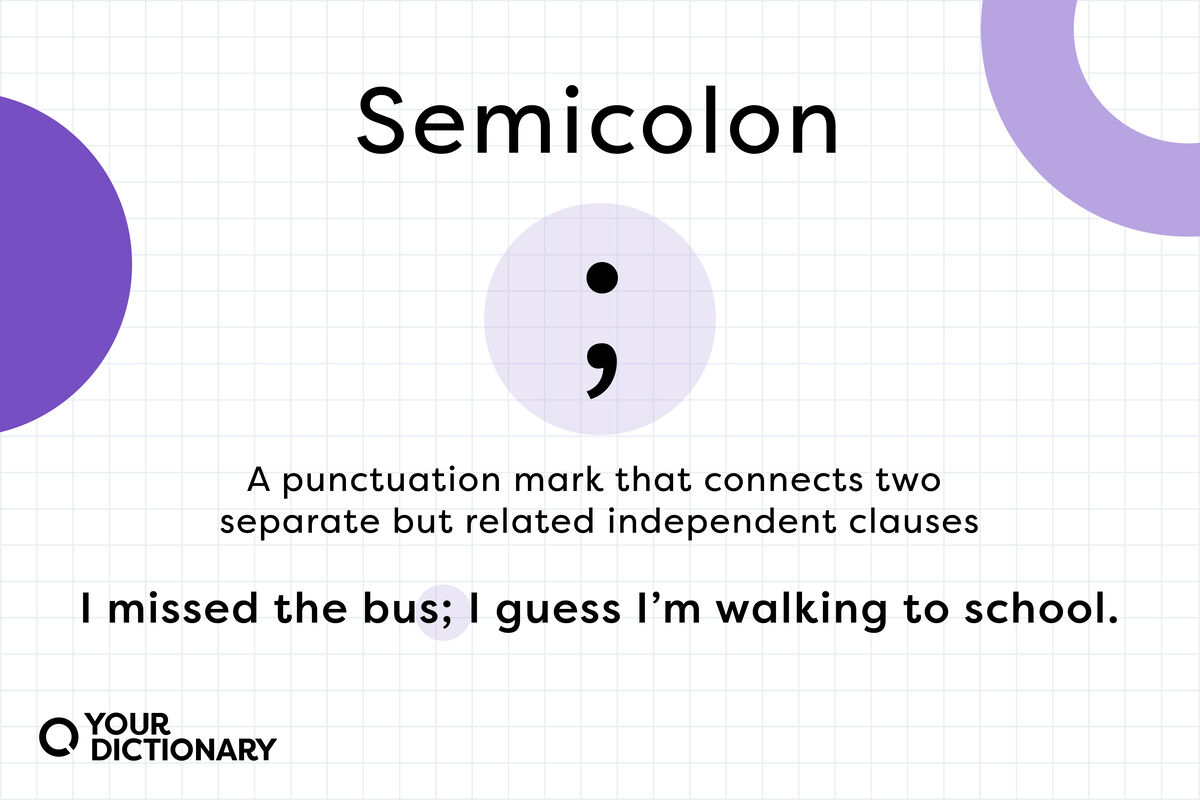
By using the semicolon to chain mathematical statements, tech professionals can create more compact and efficient codebases. This “shorthand” is vital in environments where memory management and processing power are at a premium, such as in edge computing or IoT (Internet of Things) devices.
The Semicolon in Algorithm Design and Logical Flow
Beyond the immediate calculation, the semicolon plays a role in the “meta-math” of algorithm design. Algorithms are essentially long-form mathematical proofs executed by a processor. The semicolon ensures that the flow of these proofs remains logical and sequential.
Statement Termination and Execution Blocks
In many programming paradigms, the semicolon is what separates “declarative” math from “imperative” math. When a developer writes a formula to calculate the encryption key for a digital security protocol, the semicolon ensures that the variable is assigned before the next transformation occurs.
In “Tech” terms, this is known as managing state. If a semicolon is misplaced in a mathematical script, the software might attempt to execute two operations simultaneously that were meant to be sequential, leading to “race conditions” or logic flaws that could be exploited by hackers. Thus, the semicolon serves as a guardrail for mathematical integrity in software.
Enhancing Code Readability for Mathematical Models
Modern software development emphasizes “clean code.” When mathematicians and developers collaborate on complex projects—such as climate modeling or aerospace trajectories—the semicolon helps organize the logic into digestible blocks.
In some languages like Python, the semicolon is optional and often discouraged in favor of whitespace. However, in the broader tech ecosystem, its presence remains a signifier of explicit intent. It tells the reader (and the machine), “This mathematical thought is complete.” This clarity is essential when debugging high-stakes software where a single misplaced decimal or operation could result in significant financial or physical loss.
Why Precision in Notation Matters for Modern AI and Software
As we move deeper into the era of Artificial Intelligence (AI) and Machine Learning (ML), the precision of mathematical notation in code has never been more critical. AI models are essentially massive compositions of functions, and the way these functions are delimited can impact the efficiency of a model’s training phase.
Preventing Syntax Errors in Financial Algorithms
In the world of FinTech, algorithms execute millions of trades per second based on stochastic calculus and probability theory. These scripts rely on the semicolon to parse massive streams of incoming data. A missing semicolon in a mathematical script wouldn’t just be a typo; it could cause a system-wide “hang,” where the processor is unable to determine where one calculation ends and the other begins. This highlights the semicolon’s role not just as a symbol, but as a vital component of digital infrastructure.

The Future of Formal Mathematical Languages
As technology evolves, we are seeing the rise of formal verification languages like Coq or Lean. These are tools used to “prove” that the math inside a piece of software is 100% correct. In these environments, the semicolon often returns to its roots in formal logic, acting as a bridge between different parts of a proof.
As we look toward the future of quantum computing and advanced AI, the semicolon will likely remain a staple. Its ability to act as a separator, a row-definier, and a statement terminator makes it one of the most versatile symbols in the tech professional’s toolkit. While its meaning in a standard 101-level math class might be limited, its meaning in the world of technology is vast: it is the symbol of order, the guardian of logic, and the silent architect of the digital age.
By understanding the semicolon’s role in math-driven technology, developers and tech enthusiasts can better appreciate the nuances of the tools they use every day. Whether you are building a simple app or a complex neural network, that tiny dot-and-comma is doing the heavy lifting of keeping your mathematical logic sound and your code functional.
aViewFromTheCave is a participant in the Amazon Services LLC Associates Program, an affiliate advertising program designed to provide a means for sites to earn advertising fees by advertising and linking to Amazon.com. Amazon, the Amazon logo, AmazonSupply, and the AmazonSupply logo are trademarks of Amazon.com, Inc. or its affiliates. As an Amazon Associate we earn affiliate commissions from qualifying purchases.