
In the realm of high-precision instrumentation, few devices are as critical to our understanding of the physical world as the seismometer. While the layman might view it simply as a tool for detecting earthquakes, in the world of technology and engineering, a seismometer is a sophisticated data-collection gadget that serves as the gold standard for measuring inertial motion. From monitoring tectonic shifts to ensuring the structural integrity of smart cities, the technology behind these sensors has evolved from primitive mechanical weights to advanced digital arrays integrated with Artificial Intelligence.
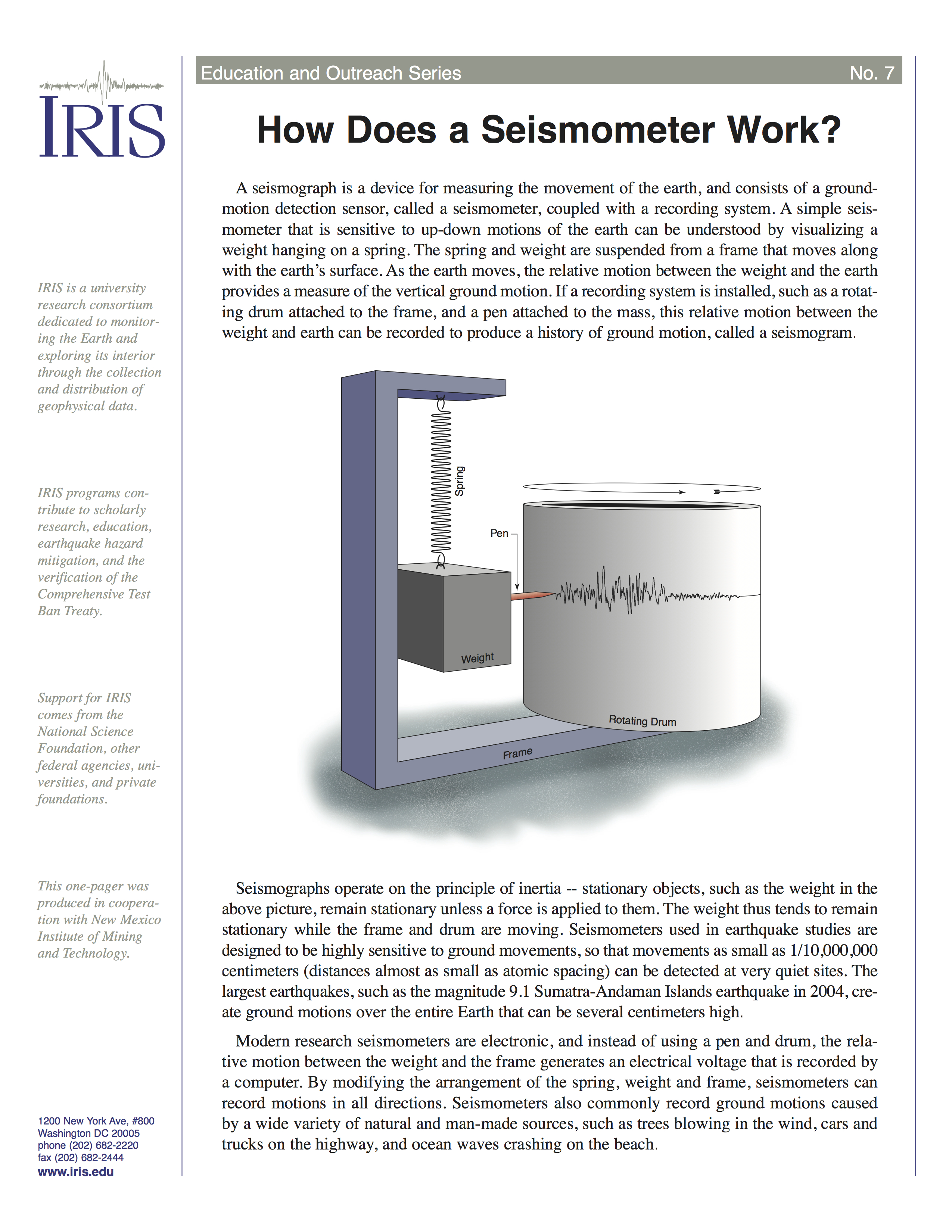
To understand what a seismometer measures, we must look beyond the simple “shaking” and examine the digital signals, software algorithms, and hardware components that translate physical energy into actionable technical data.
1. The Core Technology: Quantifying Kinetic Energy and Ground Displacement
At its most fundamental level, a seismometer measures the motion of the ground relative to a fixed reference point. However, in modern technology, this is not merely a “wiggle” on a piece of paper. It is the precise recording of displacement, velocity, and acceleration across three-dimensional space.
The Physics of Inertial Sensors
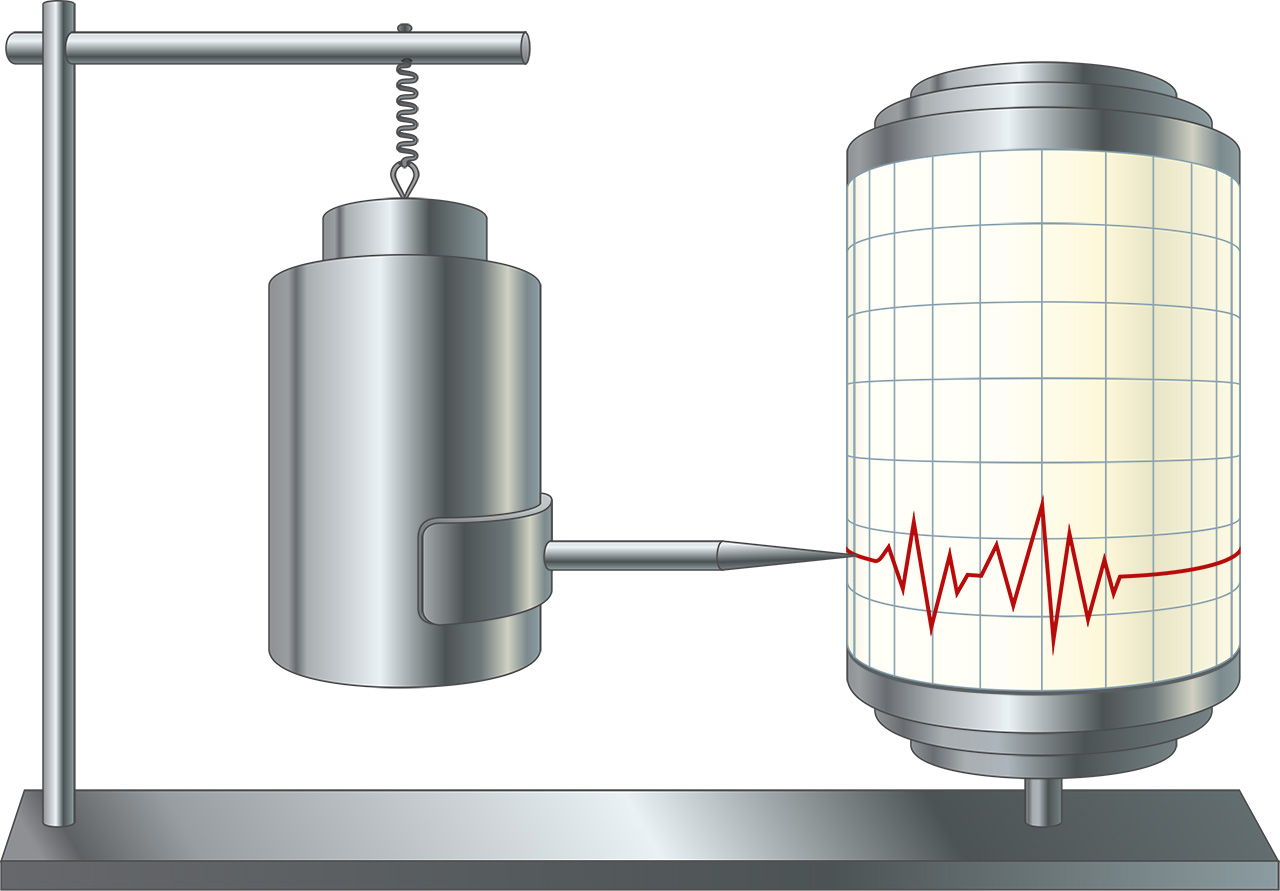
Modern seismometers rely on the principle of inertia. A mass is suspended within a frame; when the frame moves due to external vibrations, the mass tends to remain stationary. The technology measures the distance between the moving frame and the stationary mass. In high-tech digital seismometers, this measurement is performed using electromagnetic force-balance systems, where an electrical current is used to keep the mass centered, and the amount of current required becomes the data point.
Broadband vs. Short-Period Hardware
Technical applications vary based on frequency. Broadband seismometers are the “high-end gadgets” of the geophysics world, capable of measuring a vast range of frequencies—from the rapid vibrations of a nearby construction site to the slow, low-frequency oscillations caused by tides or distant tectonic movements. Short-period sensors, conversely, are optimized for high-frequency events, often used in localized industrial monitoring and digital security systems.
Triaxial Measurement Systems
Modern tech-driven seismometers are almost exclusively “triaxial.” This means they house three separate sensors oriented on the X, Y, and Z axes. This allows the device to capture the full vector of motion, providing a complete 3D digital reconstruction of how a wave moves through a medium.
2. Digital Signal Processing: Turning Vibrations into Data
What a seismometer measures is ultimately useless without the software architecture required to process it. Once the hardware detects motion, the analog signal must be converted into digital packets that can be analyzed by software tools and shared across global networks.
Analog-to-Digital Conversion (ADC)
The heartbeat of a modern seismometer is its ADC. To maintain high fidelity, these gadgets use 24-bit or even 32-bit digitizers. This high resolution ensures that even the smallest micro-vibrations—those invisible to human touch—are captured as discrete digital values. This data is the foundation of “Big Data” in the geophysics sector.
Software Ecosystems and APIs
Seismologists and tech engineers use specialized software suites like ObsPy (a Python-based library) or SAC (Seismic Analysis Code) to process measurements. These tools allow for:
- Filtering: Removing “cultural noise” (traffic, footsteps, wind) from the signal.
- Spectral Analysis: Breaking the motion down into its component frequencies to understand the source of the vibration.
- Deconvolution: Correcting the data for the specific technical limitations of the sensor hardware itself.
Real-Time Data Streaming
In the age of the Internet of Things (IoT), seismometers are no longer isolated units. They are nodes in a global network. Using protocols like SeedLink, these devices stream real-time data to centralized servers. This tech infrastructure is what allows for “Early Warning Systems,” where software can detect a seismic wave and send an automated digital alert to millions of smartphones before the heavy shaking arrives.
3. Miniaturization and the Rise of MEMS Technology
Perhaps the most significant trend in seismometer technology is miniaturization. We have moved from room-sized instruments to Micro-Electro-Mechanical Systems (MEMS) that can fit on a silicon chip.

MEMS Accelerometers in Consumer Gadgets
You likely have a seismometer in your pocket right now. Smartphones use MEMS accelerometers to detect orientation and motion. While these aren’t as sensitive as scientific-grade broadband sensors, when networked together, they create a “crowdsourced” seismometer. Apps like Google’s Android Earthquake Alerts System use these tiny tech components to measure ground motion globally, effectively turning the world’s smartphone population into a massive, distributed sensor array.
Industrial Applications and Structural Health
In the “Smart City” niche, small-scale seismometers are embedded into the foundations of skyscrapers, bridges, and nuclear power plants. Here, they measure “structural resonance.” Engineers use this data to monitor if a building’s vibration frequency changes over time, which could indicate software-detected structural fatigue or damage long before it’s visible to the naked eye.
Edge Computing in Seismic Hardware
The latest generation of seismic gadgets includes “Edge Computing” capabilities. Instead of sending raw data to a cloud server, the device itself has an onboard processor (like an ARM-based chip) that runs AI models to determine if a vibration is an earthquake or just a heavy truck passing by. This reduces latency and saves bandwidth in remote digital security installations.
4. AI and Machine Learning: Predicting the Unpredictable
The measurement of seismic waves has entered the era of Artificial Intelligence. While a seismometer measures physical motion, AI tools are now used to interpret what those measurements mean for the future.
Pattern Recognition and Noise Reduction
One of the greatest challenges in seismic tech is “signal-to-noise ratio.” In an urban environment, a seismometer measures everything. AI algorithms, specifically Deep Learning models like Convolutional Neural Networks (CNNs), are trained to filter out the “digital noise” of city life. This allows the sensor to “measure” a micro-earthquake even in the middle of a bustling metropolis.
Predictive Analytics and Software Modeling
By feeding decades of seismic measurements into machine learning models, researchers are attempting to move from detection to prediction. While we cannot yet predict the exact time of an earthquake, AI software can analyze real-time measurements to predict which areas will experience the most intense shaking based on soil composition and wave trajectory.
Automated Digital Security Responses
In high-tech industrial environments, seismometers serve as “digital kill switches.” If a sensor measures a vibration exceeding a specific threshold, AI-driven software can automatically shut down high-speed rail networks, stop elevators at the nearest floor, and close valves on natural gas pipelines—all within milliseconds of the initial measurement.
5. The Future of Seismometry: Fiber Optics and Beyond
The definition of a “gadget” for measuring seismicity is expanding. The next frontier in this tech niche isn’t a standalone box, but the very infrastructure of our digital world.
Distributed Acoustic Sensing (DAS)
DAS is a revolutionary technology that turns existing fiber-optic telecommunications cables into a series of thousands of seismometers. By sending laser pulses through the cable and measuring the “backscatter” (the light that reflects back), tech systems can detect minute stretches in the fiber caused by ground motion. This allows for thousands of miles of “seismic measurement” without deploying a single traditional sensor.
Space-Based Seismology
The tech for measuring vibrations isn’t limited to Earth. Seismometers on the Mars InSight lander and the Apollo lunar missions have provided data on “Marsquakes” and “Moonquakes.” These specialized space-grade gadgets are designed to withstand extreme temperatures and radiation while maintaining the sensitivity to measure vibrations through the core of another planet.
The Democratization of Seismic Tech
As the hardware becomes cheaper and the software more user-friendly, we are seeing a “DIY” movement in seismic monitoring. Open-source hardware projects and low-cost digital sensors allow hobbyists and small tech firms to set up their own monitoring stations, contributing to a global, decentralized database of Earth’s movements.
Conclusion
What does a seismometer measure? It measures the pulse of our planet through the lens of advanced technology. It is a bridge between the physical world of kinetic energy and the digital world of data analytics. From the complex force-balance hardware of a broadband sensor to the AI algorithms that interpret seismic noise, the seismometer is a testament to human ingenuity.
As we continue to integrate these sensors into our smartphones, our buildings, and our global digital networks, the seismometer is evolving. It is no longer just an instrument for scientists; it is a vital component of our technological infrastructure, a digital guardian that uses high-speed data and sophisticated software to keep our modern world safe from the shifting forces beneath our feet. In the intersection of hardware, software, and AI, the seismometer remains one of the most essential gadgets in the modern tech toolkit.
aViewFromTheCave is a participant in the Amazon Services LLC Associates Program, an affiliate advertising program designed to provide a means for sites to earn advertising fees by advertising and linking to Amazon.com. Amazon, the Amazon logo, AmazonSupply, and the AmazonSupply logo are trademarks of Amazon.com, Inc. or its affiliates. As an Amazon Associate we earn affiliate commissions from qualifying purchases.