
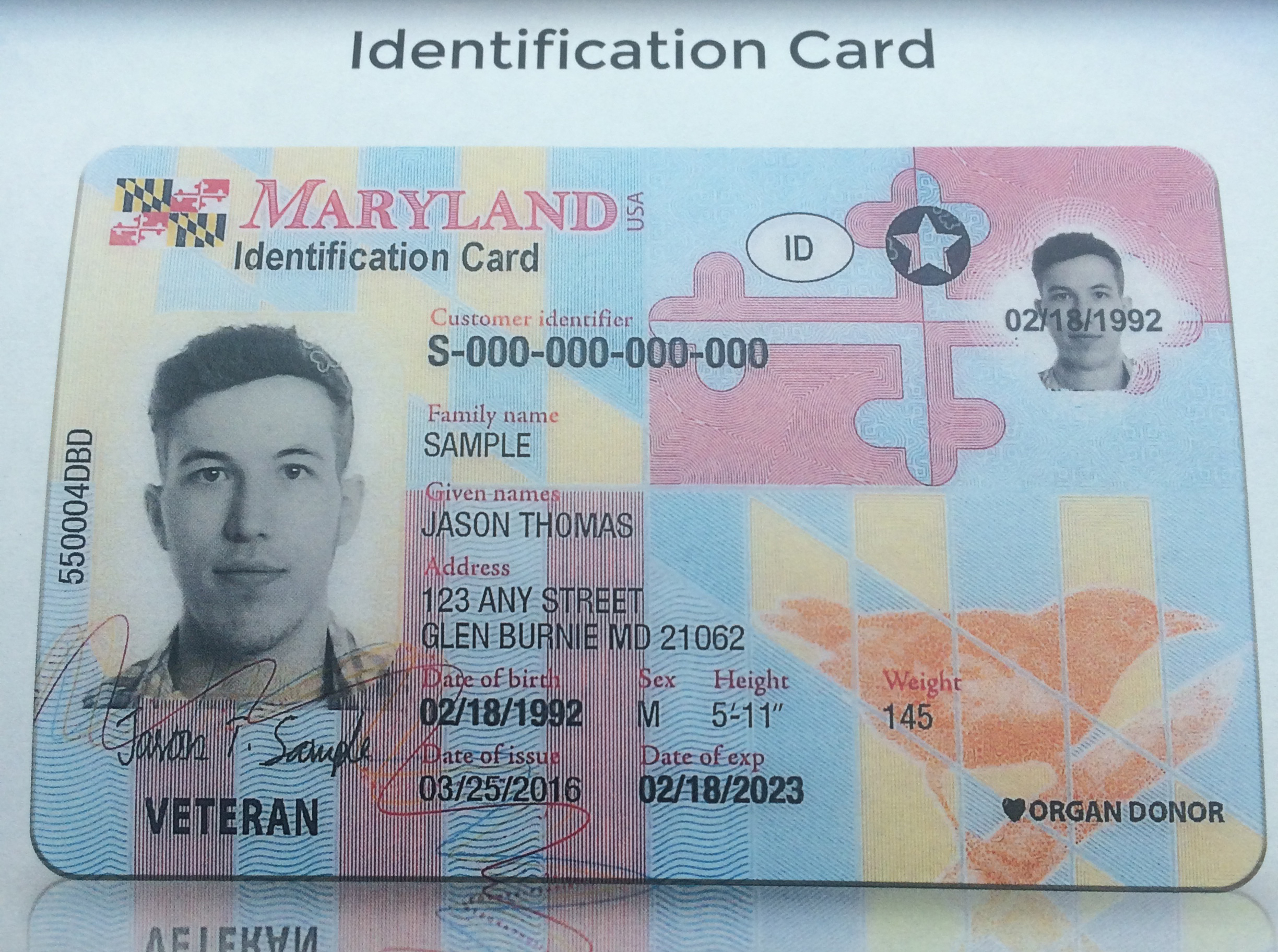
In an era where digital security and physical verification intersect more frequently than ever, the Maryland Department of Transportation Motor Vehicle Administration (MDOT MVA) has undergone a significant technological transformation. The “REAL ID” is not merely a driver’s license with a new design; it is a sophisticated piece of security technology designed to meet federal standards established by the REAL ID Act of 2005. For Maryland residents, understanding what a REAL ID looks like involves peering beneath the surface of the plastic to examine the high-tech features that protect personal data and prevent identity theft.

The Anatomy of Maryland’s REAL ID: Visual and Physical Security Tech
When you first look at a Maryland REAL ID, the most prominent feature is the small gold star located in the upper right-hand corner. However, from a technology perspective, this star is the tip of the iceberg. The physical card is a marvel of materials science and optical engineering, designed to be nearly impossible to replicate using consumer-grade hardware.
The Star Icon: More Than Just a Graphic
The gold star signifies that the cardholder has provided the necessary documentation to meet federal security standards. While it looks like a simple printed graphic, in Maryland’s latest iterations, it is integrated into the card’s laminate or printed using specialized inks that are difficult to scan and reproduce. This serves as the first “visual authentication” layer for TSA agents and federal officials.
Multi-Layered Security: Overlapping Visual Features
Maryland’s REAL ID utilizes a “layered” security approach. If you tilt the card under a light source, you will notice ghost images and holograms—technically known as Optically Variable Devices (OVDs). These features are not printed on top of the card but are embedded within the layers of the substrate. This ensures that if a malicious actor attempts to “split” the card to alter the data, the holographic elements are destroyed, making the tampering immediately evident.
Polycarbonate Substrates and Laser Engraving
One of the most significant technological shifts in Maryland’s ID production is the move toward polycarbonate card bodies. Unlike traditional PVC cards, polycarbonate is a high-strength thermoplastic. Instead of using standard ink-jet printing for the cardholder’s information, Maryland employs laser engraving. The laser actually carbonizes the plastic fibers within the card, meaning the text and the black-and-white portrait are part of the card structure itself. You can feel the tactile relief of the engraving, which adds a physical layer of “haptic” security that digital scanners and human inspectors use to verify authenticity.
Behind the Scenes: The Digital Infrastructure of REAL ID
The physical card is only half of the equation. What truly defines a REAL ID in Maryland is the digital ecosystem that supports it. To issue a REAL ID, the Maryland MVA must maintain a backend infrastructure that communicates with federal databases and ensures the integrity of the data being printed.
Standardizing Data: The AAMVA Framework
Maryland follows the technical standards set by the American Association of Motor Vehicle Administrators (AAMVA). This ensures that the data stored on the card—and the way it is formatted—is interoperable across all 50 states. When a Maryland REAL ID is scanned in California or New York, the technology reading it understands exactly how to parse the data fields because of these rigorous software standards.
Interoperability and Federal Database Integration
The process of obtaining a REAL ID involves a high-stakes digital handshake. When a resident submits their Social Security number and birth certificate, Maryland’s systems use secure APIs to verify this information against the Social Security Administration (SSA) and the Systematic Alien Verification for Entitlements (SAVE) program. This real-time data verification is the digital “backbone” that ensures the physical card is backed by a verified, singular identity.
Cybersecurity and Data Protection Protocols
Given that the MVA stores sensitive biometric and biographical data, the technological defenses surrounding Maryland’s ID databases are robust. This involves end-to-end encryption for data in transit and “at-rest” encryption for stored records. Maryland’s commitment to REAL ID compliance includes regular audits of their IT infrastructure to prevent the kind of large-scale data breaches that could compromise the identity of millions of citizens.
The Evolution of Verification: Software and Scanners

A REAL ID is only effective if the technology used to read it is as advanced as the card itself. Maryland has invested in modernizing the scanning hardware used by law enforcement and state agencies to ensure that they can fully utilize the card’s security features.
Machine-Readable Zones (MRZ) and 2D Barcodes
On the back of a Maryland REAL ID, you will find a large, complex 2D barcode (typically a PDF417 format). This barcode contains all the biographical data found on the front of the card. When scanned at a TSA checkpoint, the software instantly compares the data encoded in the barcode with the information printed on the front. Any discrepancy triggers an immediate fraud alert. This machine-readable technology eliminates human error and speeds up the verification process in high-traffic environments like BWI Marshall Airport.
Biometric Integration and Facial Recognition
While Maryland does not currently store fingerprints on the REAL ID card itself, the high-resolution digital photograph taken at the MVA is optimized for facial recognition software. The photo must meet specific technical requirements—such as uniform lighting and specific pixel density—to ensure that it can be cross-referenced against digital galleries. This prevents “identity “stacking,” where one individual attempts to obtain multiple IDs under different names.
Fraud Detection Algorithms in Modern MVA Systems
The software used by Maryland MVA clerks during the application process includes AI-driven document authentication tools. When a user presents a passport or birth certificate, high-speed scanners analyze the “micro-printing” and ultraviolet (UV) features of those documents. The software can detect microscopic inconsistencies that the human eye would miss, ensuring that the “source” documents used to create a REAL ID are themselves authentic.
Maryland’s Move to Digital: The Mobile Driver’s License (mDL)
Maryland has established itself as a pioneer in the next frontier of ID technology: the Mobile Driver’s License (mDL). For Marylanders, a REAL ID no longer just looks like a plastic card; it can also live inside a smartphone.
ISO 18013-5 Standards and Cryptography
The Maryland Mobile ID is built on the ISO 18013-5 standard, which is the global technical benchmark for mobile identification. Unlike a simple photo of a license, a Maryland mDL uses asymmetric cryptography. When you present your digital ID, your phone generates a unique, one-time digital token that the verifier’s device decrypts. This ensures that the ID cannot be intercepted or spoofed.
Maryland Mobile ID and Apple Wallet Integration
Maryland was one of the first states to partner with Apple to integrate REAL ID-compliant identification into the Apple Wallet. This utilizes the “Secure Element” chip within the iPhone—the same hardware-level security that protects Apple Pay and FaceID data. What it “looks like” on a screen is a simplified, elegant version of your license, but the tech under the hood is a complex exchange of encrypted keys via Near Field Communication (NFC) or QR codes.
Privacy-Preserving Technology: Selective Disclosure
One of the most impressive tech features of Maryland’s digital REAL ID is “selective disclosure.” In a traditional scenario, if you show your physical ID to enter a venue, the checker sees your address, height, and weight. With Maryland’s mobile ID technology, the user can choose to share only “Age Over 21” without revealing their name or home address. This is a massive leap forward in privacy-centric tech design.
The Future of Identity Tech: Beyond the Physical Card
As we look toward the future, the Maryland REAL ID serves as a bridge between the analog past and a decentralized digital future. The technology continues to evolve to meet emerging threats and leverage new capabilities.
Decentralized Identity and Blockchain
There is growing discussion within the tech community about moving state-issued IDs toward a decentralized identity (DID) model. While not yet implemented, the groundwork laid by Maryland’s REAL ID infrastructure—specifically the digitization of records—makes it a prime candidate for future blockchain-based verification systems. This would allow for a “trustless” verification process where the MVA acts as the issuer of a credential that the user truly owns and controls.
The Impact of AI on ID Synthesis and Defense
As generative AI makes it easier for bad actors to create “deepfake” documents, the Maryland MVA is forced to stay ahead of the curve. This involves the implementation of “spectral imaging” and other advanced scanning techniques that can distinguish between a laser-engraved polycarbonate card and a sophisticated AI-generated forgery. The look of the REAL ID will likely continue to change as new physical materials and digital watermarking techniques are developed to counter AI-driven fraud.
In conclusion, a Maryland REAL ID is much more than a government-issued card; it is a sophisticated technological tool. From the laser-carbonized polycarbonate substrate to the encrypted ISO-standard mobile integrations, every element of the REAL ID is designed with one goal: to create a secure, verifiable, and tamper-proof link between an individual and their digital identity. As technology continues to advance, the Maryland REAL ID will remain at the forefront, evolving to protect the citizens of the Old Line State in both the physical and digital worlds.
aViewFromTheCave is a participant in the Amazon Services LLC Associates Program, an affiliate advertising program designed to provide a means for sites to earn advertising fees by advertising and linking to Amazon.com. Amazon, the Amazon logo, AmazonSupply, and the AmazonSupply logo are trademarks of Amazon.com, Inc. or its affiliates. As an Amazon Associate we earn affiliate commissions from qualifying purchases.