
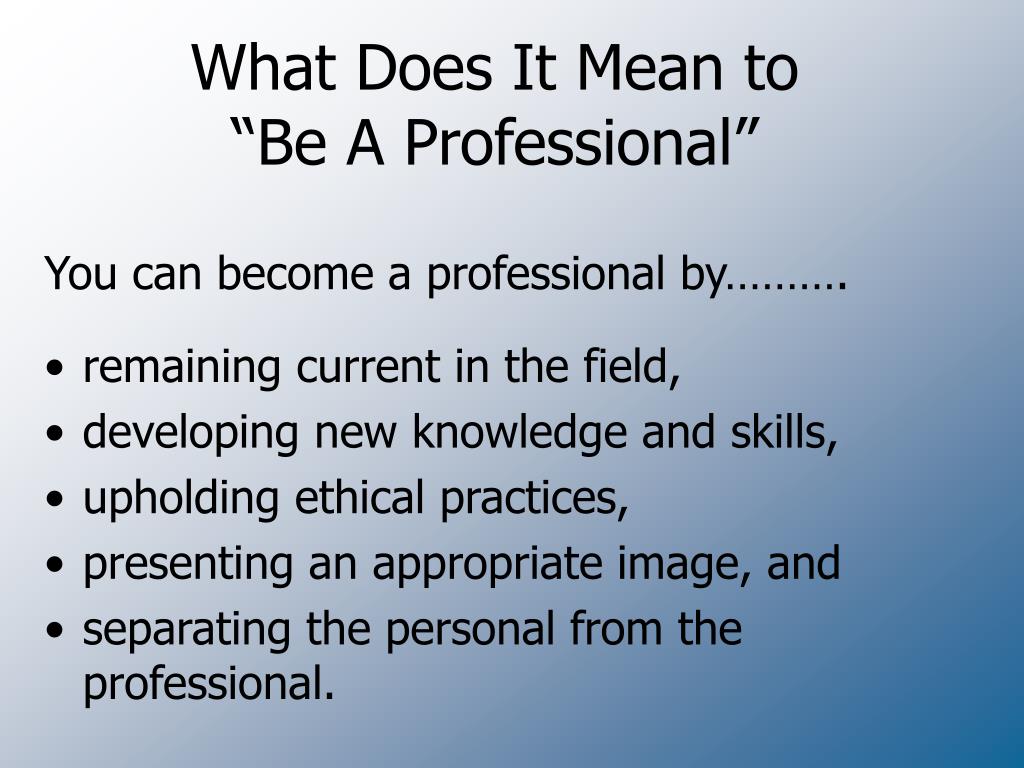
The term “professional” is ubiquitous, yet its precise definition can feel elusive. We use it to describe individuals in certain fields, to characterize a demeanor, and to set a standard of conduct. But what truly separates a professional from an amateur, or simply someone going through the motions? In the digital age, where lines blur and new industries emerge at breakneck speed, understanding the core tenets of professionalism is more critical than ever. This exploration delves into what it means to be a professional, focusing specifically on the Tech industry, a domain where rapid innovation and constant adaptation demand a particularly refined sense of expertise and ethical practice.

The Foundation of Expertise: Beyond Technical Prowess
At its heart, professionalism in tech is inextricably linked to a deep and continually evolving understanding of the subject matter. This isn’t merely about knowing how to write code or operate a specific software; it’s about possessing a comprehensive grasp of principles, methodologies, and the broader ecosystem.
Continuous Learning and Adaptability
The tech landscape is characterized by relentless change. New programming languages, frameworks, and paradigms emerge with astonishing regularity. A true professional in this space doesn’t just keep up; they actively seek out new knowledge. This involves dedicated time for learning, whether through online courses, industry conferences, personal projects, or by engaging with the vast resources available within the developer community.
- Embracing Lifelong Learning: The notion of a “finished” education is obsolete. Professionals understand that their skills have a shelf life if not consistently updated. This might mean dedicating a few hours each week to studying a new technology, subscribing to relevant newsletters, or actively participating in online forums to glean insights from peers. The commitment to lifelong learning isn’t a chore; it’s a fundamental prerequisite for sustained relevance and effectiveness.
- Skill Versatility and Cross-Disciplinary Understanding: While specialization is often praised, true professionals in tech often possess a degree of versatility. They understand how different technologies interact, the principles of user experience (UX) even if they aren’t designers, and the importance of secure coding practices even if they aren’t cybersecurity experts. This cross-disciplinary understanding allows them to contribute more holistically to projects, identify potential issues before they arise, and communicate effectively with specialists from other domains. It fosters a more agile and resilient approach to problem-solving.
- The Mastery of Foundational Concepts: Amidst the churn of new tools, understanding the underlying principles remains paramount. Whether it’s data structures, algorithms, network protocols, or software design patterns, a firm grounding in these fundamentals enables professionals to adapt to new technologies more readily and to build robust, scalable, and maintainable solutions. It’s the difference between knowing how to use a specific hammer and understanding the physics of carpentry.
Rigorous Problem-Solving and Critical Thinking
Technology is fundamentally about solving problems. A professional approaches these challenges with a structured, analytical mindset, rather than resorting to trial and error.
- Deconstructing Complex Issues: Professionals are adept at breaking down large, seemingly insurmountable problems into smaller, manageable components. This involves careful analysis of requirements, identification of root causes, and the development of logical, step-by-step solutions. They don’t jump to conclusions; they investigate, hypothesize, and test.
- Data-Driven Decision Making: In tech, intuition is valuable, but it’s best augmented by data. Professionals rely on metrics, logs, and user feedback to inform their decisions. They understand the importance of defining clear objectives and measuring progress against them. This ensures that solutions are not only technically sound but also meet the desired outcomes and provide tangible value.
- Proactive Identification of Potential Pitfalls: A seasoned professional doesn’t just solve the problem at hand; they anticipate future challenges. This includes considering scalability, security vulnerabilities, maintainability, and potential integration issues down the line. This foresight saves significant time, resources, and potential headaches for the team and the end-users.
The Pillars of Professional Conduct: Integrity and Accountability
Beyond technical acumen, the hallmark of a professional lies in their conduct. In the collaborative and often high-stakes world of tech, integrity, accountability, and ethical behavior are non-negotiable.
Upholding Ethical Standards and Trust
Trust is the bedrock of any professional relationship, and in tech, where sensitive data and critical systems are involved, it’s even more crucial. Professionals operate with a strong moral compass, ensuring their actions align with ethical principles.
- Data Privacy and Security: Professionals in tech have a profound responsibility to protect user data and maintain the security of systems. This means adhering to privacy regulations (like GDPR or CCPA), implementing robust security measures, and being transparent about data handling practices. A breach of trust in this area can have devastating consequences, both for individuals and for the organizations they represent.
- Intellectual Honesty and Transparency: Professionals are honest about their capabilities and limitations. They don’t overpromise or misrepresent their work. When mistakes happen (as they inevitably do in complex projects), they own up to them, learn from them, and communicate them openly. This transparency builds trust and fosters a culture of continuous improvement.
- Avoiding Conflicts of Interest: Professionals are mindful of situations that could compromise their objectivity or create an unfair advantage. This might involve disclosing relationships with vendors, avoiding biased recommendations, or recusing themselves from decisions where a personal stake exists. Maintaining impartiality is key to delivering fair and effective solutions.
Embracing Accountability and Ownership
Professionals don’t shy away from responsibility. They take ownership of their tasks, their contributions, and the outcomes of their work.

- Delivering on Commitments: This is perhaps the most tangible aspect of accountability. Professionals set realistic expectations and strive to meet them. If unforeseen obstacles arise, they communicate them proactively and work towards mitigating the impact, rather than making excuses. Consistency in delivery builds a reputation for reliability.
- Taking Responsibility for Mistakes: No one is perfect. The difference between a novice and a professional is how they handle errors. A professional doesn’t point fingers; they analyze what went wrong, what could have been done differently, and what lessons can be learned to prevent recurrence. This self-awareness and commitment to improvement are hallmarks of maturity.
- Seeking and Providing Constructive Feedback: Accountability also extends to contributing to the growth of others. Professionals are open to receiving feedback on their own work and are adept at providing constructive criticism to their colleagues. This isn’t about tearing others down, but about fostering a collective drive towards excellence and shared learning.
The Art of Collaboration: Effective Communication and Teamwork
In tech, very few significant projects are completed in isolation. Professionalism is deeply intertwined with the ability to collaborate effectively with others, contributing to a positive and productive team environment.
Mastering Communication Channels
Clear, concise, and timely communication is essential for the smooth execution of any tech project. Professionals understand the nuances of different communication methods and tailor their approach accordingly.
- Clarity and Conciseness in Technical Explanations: Professionals can explain complex technical concepts in a way that is understandable to both technical and non-technical audiences. This involves avoiding jargon where unnecessary, structuring information logically, and confirming comprehension. Whether writing documentation, presenting to stakeholders, or discussing an issue with a colleague, clarity is paramount.
- Active Listening and Empathy: Effective communication is a two-way street. Professionals practice active listening, paying close attention to what others are saying, asking clarifying questions, and demonstrating empathy for their perspectives. This fosters mutual understanding and helps in identifying underlying needs and concerns.
- Appropriate Use of Communication Tools: From instant messaging and email to project management software and video conferencing, professionals are adept at leveraging various communication tools to their fullest potential. They understand when to use synchronous communication for urgent matters and when asynchronous communication is more appropriate for detailed discussions or documentation.
Contributing to a Positive Team Dynamic
The success of a tech team often hinges on its collaborative spirit. Professionals contribute to this by fostering a supportive and respectful environment.
- Respect for Diverse Perspectives: The tech industry thrives on innovation, which often comes from diverse viewpoints. Professionals value and respect the contributions of all team members, regardless of their role, experience level, or background. They create an inclusive environment where everyone feels empowered to share their ideas.
- Proactive Collaboration and Support: Professionals don’t wait to be asked for help. They actively seek opportunities to collaborate with their colleagues, offer support, and share their knowledge. This sense of shared purpose strengthens the team and accelerates progress.
- Constructive Conflict Resolution: Disagreements are inevitable in any collaborative setting. Professionals approach conflict with a goal of finding solutions, rather than assigning blame. They focus on the issues at hand, remain respectful, and work towards a resolution that benefits the project and the team.
The Mark of Professionalism: Continuous Improvement and Impact
Ultimately, what distinguishes a professional in the tech industry is their unwavering commitment to improvement and their drive to make a meaningful impact. It’s a journey, not a destination, marked by a relentless pursuit of excellence.
Striving for Excellence and Innovation
Professionals are not content with mediocrity. They constantly seek ways to improve their skills, their processes, and the quality of their output.
- Setting High Standards: Professionals set ambitious goals for themselves and for their projects. They understand that true innovation often requires pushing boundaries and challenging the status quo. This drive for excellence is not about perfectionism, but about a commitment to delivering the best possible outcome.
- Embracing Innovation: The tech industry is fueled by innovation. Professionals are not afraid to experiment with new approaches, tools, and methodologies. They see challenges as opportunities to innovate and to find more efficient, effective, or elegant solutions. This curiosity and willingness to explore are vital for staying at the forefront of the field.
- Measuring and Analyzing Outcomes: To improve, one must understand the impact of their work. Professionals take the time to measure the results of their efforts, analyze the data, and identify areas for refinement. This feedback loop is crucial for iterative improvement and for demonstrating the value of their contributions.
Driving Tangible Value and Positive Impact
The ultimate measure of professionalism in tech is the tangible value and positive impact created. This goes beyond simply completing tasks; it’s about contributing to something larger and more meaningful.
- Delivering Solutions that Matter: Professionals aim to build solutions that not only function correctly but also address real-world problems, improve user experiences, or drive business growth. They are focused on the outcomes and the benefits their work provides.
- Contributing to the Wider Tech Community: Many professionals in tech contribute to open-source projects, share their knowledge through blogging or speaking, or mentor aspiring developers. This commitment to giving back strengthens the entire tech ecosystem and fosters a more vibrant and collaborative industry.
- Long-Term Vision and Sustainability: A true professional considers the long-term implications of their work. This includes building systems that are sustainable, scalable, and maintainable, as well as contributing to ethical and responsible technological development. Their focus extends beyond immediate deliverables to the enduring legacy of their efforts.
In conclusion, being a professional in the tech industry is a multifaceted concept. It’s a dynamic blend of deep technical expertise, unwavering integrity, exceptional communication skills, and a relentless pursuit of improvement. It’s about being a reliable, ethical, and impactful contributor to a field that is constantly shaping our future.
aViewFromTheCave is a participant in the Amazon Services LLC Associates Program, an affiliate advertising program designed to provide a means for sites to earn advertising fees by advertising and linking to Amazon.com. Amazon, the Amazon logo, AmazonSupply, and the AmazonSupply logo are trademarks of Amazon.com, Inc. or its affiliates. As an Amazon Associate we earn affiliate commissions from qualifying purchases.