
In the ever-evolving landscape of social media, where algorithms dictate our feeds and complex metrics define engagement, there exists a curious, almost anachronistic feature on Facebook: the “poke.” For those unfamiliar, or for long-time users who’ve rarely touched it, the poke can seem like a relic from a bygone era of internet interaction—simple, yet profoundly ambiguous. What began as a seemingly trivial function on a fledgling platform has endured through countless updates, design overhauls, and shifts in digital culture. But what, precisely, does a poke on Facebook signify today? Is it a casual greeting, a flirtatious gesture, a subtle reminder, or perhaps something else entirely?
To truly understand the multifaceted nature of the poke, we must peel back its layers, examining it not just as a standalone feature, but through the lenses of technology, personal and corporate branding, and even, tangentially, its place within the broader digital economy. As a platform that influences how we connect, project ourselves, and even conduct business, Facebook’s every feature carries implications that extend beyond its immediate function.
The Core Mechanics: A Technological Dive
At its heart, the Facebook poke is a remarkably simple digital interaction. Yet, its very simplicity hides a fascinating design philosophy and raises questions about how legacy features persist in a rapidly advancing tech environment. Understanding the poke fundamentally involves dissecting its technical implementation and its journey through Facebook’s development.
How Poking Works: The Button & Notification
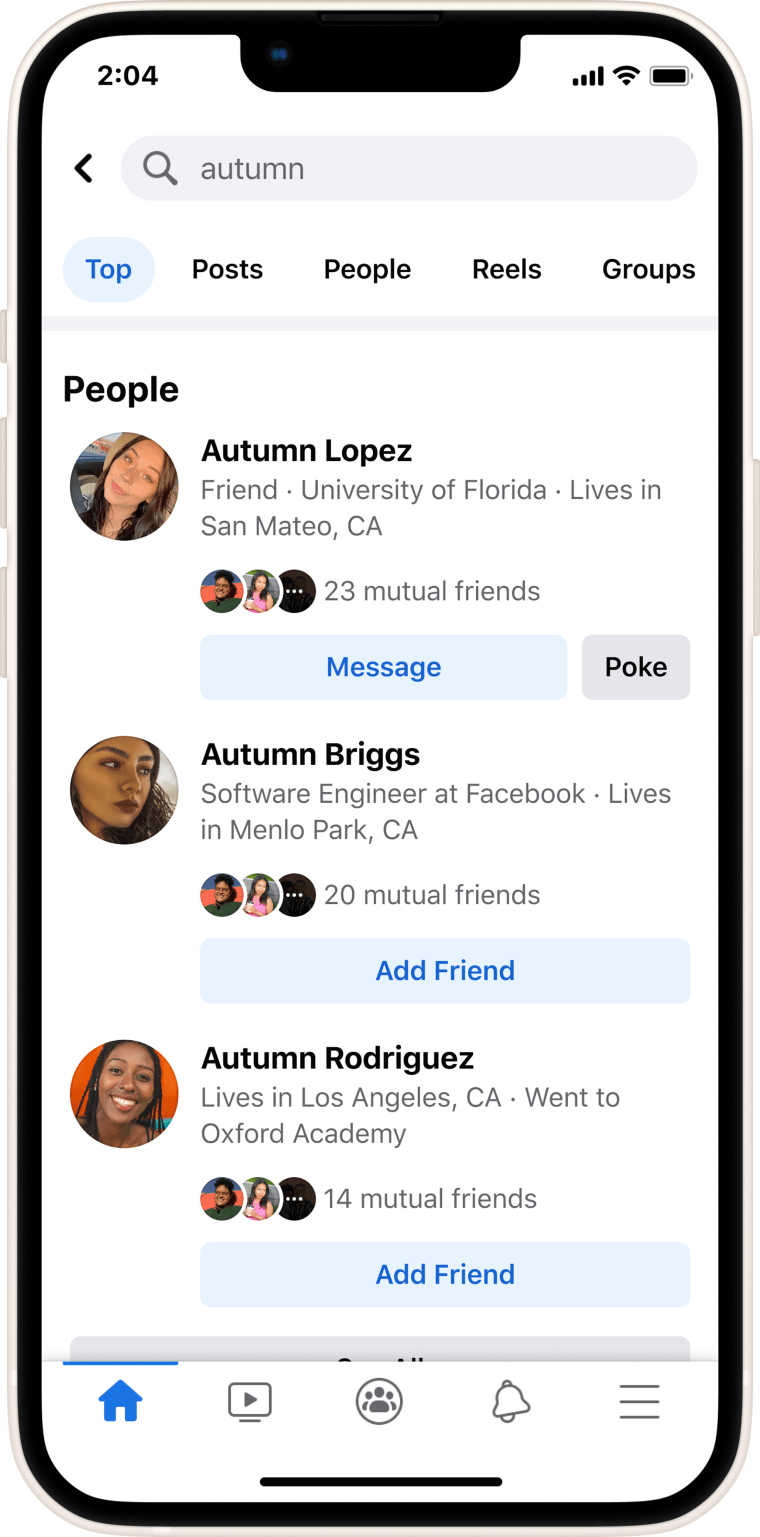
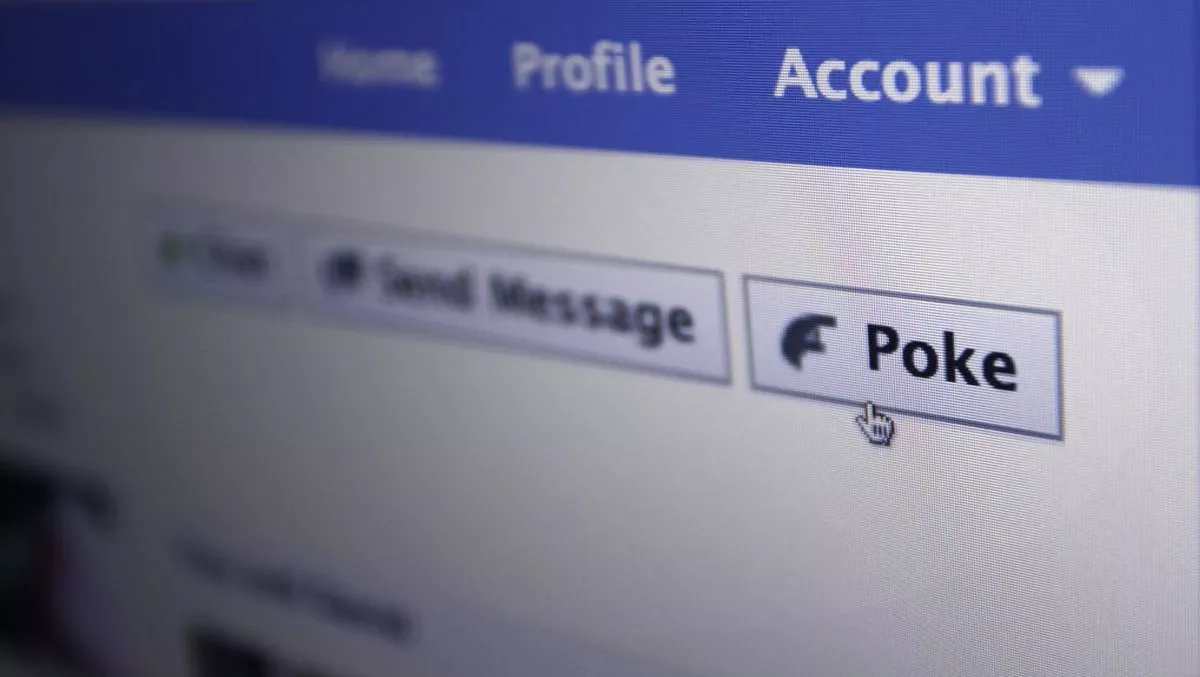
From a user experience perspective, initiating a poke is straightforward. On a friend’s profile, usually tucked away within the “…” menu or sometimes directly visible on older interfaces, there’s a “Poke” button. Clicking it instantly sends a notification to that friend. This notification, typically appearing in their standard Facebook notifications feed or sometimes as a separate pop-up, informs them that they’ve been poked by you. The recipient then has two options: “Poke Back” or “Remove Poke.” There’s no accompanying message, no emoji, no GIF—just the bare notification.
This minimalist design is key to the poke’s enduring enigma. Unlike a private message, a wall post, or a reaction to content, a poke lacks any inherent textual or visual context. It’s a raw, unadorned digital signal. From a technical standpoint, it’s an incredibly lightweight operation, requiring minimal data transfer and processing power. It’s a direct, peer-to-peer notification system that bypasses the complexities of content moderation, comment threads, or algorithmic filtering, acting as a pure, unfiltered ping between users.
Evolution of the Poke Feature
When Facebook first launched in 2004, the poke was a prominent feature, almost emblematic of the platform’s early, playful ethos. In those nascent days of social networking, the internet was a wilder, less formal space. The poke fit perfectly into a culture of digital experimentation and casual interaction. It was one of the limited ways users could engage with each other directly, alongside wall posts and private messages.
Over the years, as Facebook matured into a global behemoth, the poke’s prominence waned. It was moved to less visible parts of profiles, and new, richer interaction methods—likes, comments, reactions, shares, event invites, Messenger—eclipsed its simplistic charm. For a period, it even seemed to disappear from many user interfaces, leading to speculation that Facebook might quietly retire it. However, the poke has consistently reappeared, often in subtly different locations, suggesting that Facebook recognizes its historical significance and perhaps a niche utility, even if it’s not a primary engagement driver.
This evolution reflects broader tech trends. Early social media favored simple, even quirky features. As platforms grew, the focus shifted towards robust communication tools, sophisticated content sharing, and monetization strategies. The poke, in its stubborn refusal to evolve significantly, serves as a digital fossil, a reminder of simpler times before the full weight of user data, sophisticated analytics, and advertising revenue became central to the social media experience. Its survival against more feature-rich alternatives speaks to its unique, if understated, place in Facebook’s architecture.
Technical Limitations and Design Choices
The fundamental technical limitation of the poke is its lack of inherent meaning. This isn’t an oversight; it’s a deliberate design choice. By offering no text field, no attachment options, and no pre-defined emotional context, Facebook effectively outsourced the interpretation of the poke to its users. This ambiguity is both its greatest strength and its primary weakness.
From a software engineering perspective, this design is elegant in its simplicity. It requires minimal development and maintenance. There are no complex algorithms needed to process the content of a poke, no advanced UI elements to design. It simply triggers a notification. This minimalist approach stands in stark contrast to the development of features like Facebook Marketplace, Reels, or even advanced privacy controls, which demand significant engineering resources. The poke, therefore, exists as a testament to efficient, if not entirely intuitive, software design—a feature that does one thing and does it consistently.
However, this design also presents challenges. In an era where digital communication strives for clarity and efficiency, the poke introduces an element of deliberate vagueness. It asks the user to infer intent, relying on pre-existing social cues and relationships. This can be frustrating for those accustomed to more direct forms of communication. Yet, for others, this very ambiguity is part of its charm, allowing for nuanced, unspoken messages that might be lost in more explicit interactions.
Privacy and Security Considerations
From a digital security standpoint, the poke is relatively benign. Unlike clicking on a suspicious link or sharing personal information, poking someone (or being poked) doesn’t inherently pose a direct security risk. It doesn’t transfer malware, reveal sensitive personal data beyond your name and profile link, or grant unsolicited access to your account.
However, the ambiguous nature of the poke means it could theoretically be leveraged in more sophisticated social engineering attacks, though this is less common than other phishing vectors. For instance, a scammer might poke a large number of unsuspecting users hoping that some will “poke back” out of curiosity or habit, establishing a superficial connection that could later be exploited through follow-up messages. While not a direct threat itself, it could be a preliminary step in building rapport for a phishing attempt or a digital confidence trick. More broadly, any interaction on a social media platform contributes to your digital footprint, and while a poke is minimal, it is still a verifiable interaction that can be logged and analyzed by Facebook itself for various purposes, including ad targeting, though its impact would be negligible compared to other forms of engagement.
The Social & Interpretive Layer: Deciphering the Message
Beyond its technological mechanics, the true complexity of a Facebook poke lies in its social implications. Lacking a fixed meaning, its interpretation is entirely dependent on context, relationship, and the unspoken rules of digital etiquette. It’s a canvas onto which users project a myriad of intentions, making it one of the most enigmatic features in social media.
A Spectrum of Meanings: From Playful to Problematic
The beauty and frustration of the poke lie in its open-endedness. There’s no universally accepted definition, leading to a wide spectrum of possible interpretations:
- A Friendly Nudge/Hello: This is perhaps the most common and benign interpretation. A poke can simply be a low-effort way to say “hi,” “thinking of you,” or “just checking in.” It’s less intrusive than a message and requires less thought than liking a post. For friends who haven’t interacted in a while, it can be a gentle reminder of presence.
- Flirtation or Romantic Interest: In certain contexts, especially between individuals who are romantically interested or exploring that possibility, a poke can be a subtle form of digital flirtation. It’s a way to signal interest without being overly forward, leaving room for plausible deniability if the interest isn’t reciprocated. It’s the digital equivalent of a light tap on the shoulder from across the room.
- Attention-Seeking/Reminder: Sometimes, a poke is a plea for attention. “Remember me?” or “You haven’t replied to my message.” It can be a passive-aggressive way to prompt a response without explicitly demanding one. It might also be a playful reminder for a friend who owes you a favor or information.
- An Inside Joke or Nostalgia: For long-time friends, particularly those who were active on Facebook in its early days, poking might be an inside joke or a nostalgic nod to simpler times. It evokes memories of when the feature was more prominent and its meaning was even more ambiguous, making the act itself part of their shared history.
- Annoyance or Trolling: Less frequently, a poke can be used to annoy. Repeatedly poking someone who doesn’t want to be poked can border on digital harassment. While Facebook has mechanisms to block or unfriend individuals, the poke itself can be a minor, persistent irritant, especially if interpreted as spamming.
The Role of Context in Interpretation
The meaning of a poke is almost entirely dictated by the context in which it occurs. Several factors contribute to this:
- Relationship Status: A poke from a close friend will be interpreted differently than one from a distant acquaintance, an ex-partner, or a complete stranger. The established history and nature of the relationship are paramount.
- Frequency: A single poke might be an innocent gesture; multiple pokes in quick succession, especially from someone you don’t know well, could be seen as annoying or even creepy.
- Past Interactions: If you and a friend have a history of playfully poking each other, then a new poke continues that established pattern. If pokes are entirely out of character for a particular individual, it might prompt more questioning.
- Timing: A poke late at night might be interpreted differently than one during working hours.
- Cultural Nuances: Even in a global platform like Facebook, cultural norms can subtly influence how such interactions are perceived. What’s a friendly gesture in one culture might be considered rude or overly forward in another.
Personal Branding and Online Etiquette
In an age where our online presence significantly shapes our personal brand, how we engage with features like the poke can subtly impact our digital reputation. For individuals meticulously cultivating a professional or sophisticated online persona, using the poke might be perceived as unprofessional or immature, particularly if they are engaging with colleagues or business contacts. It doesn’t align with the crisp, curated image often sought after in personal branding strategies.

Conversely, for those whose personal brand emphasizes playfulness, approachability, or nostalgia, a well-placed poke could reinforce these traits. It’s a question of alignment: does the action of poking reflect the image you wish to project?
Online etiquette, though largely uncodified, generally favors clarity and intentionality in communication. The poke, by its very design, violates these principles. Therefore, understanding its ambiguity and using it judiciously is crucial. Poking someone you don’t know well, or someone with whom you have a strictly professional relationship, could be seen as an intrusion or a breach of unspoken digital boundaries. Conversely, a poke between old friends who understand its nostalgic or playful undertones can be a heartwarming, low-stakes interaction.
Pokes Beyond Personal: Business, Marketing, and the Money Angle
Given the primary focus of websites on “Brand” and “Money,” it’s crucial to explore if a seemingly trivial feature like the Facebook poke holds any weight in the spheres of corporate strategy, marketing, or financial implications. While its direct utility is negligible, its existence within a profit-driven platform like Facebook offers interesting, albeit indirect, insights.
The Limited Utility for Businesses
For businesses, the Facebook poke is, for all intents and purposes, a non-starter as a marketing or communication tool. Brand strategy dictates clear messaging, measurable calls to action (CTAs), and targeted outreach. A poke provides none of these.
- Lack of Clear Message: A business poking a potential customer or follower would send an utterly ambiguous signal. What would it mean? “Buy our product?” “Check out our latest post?” “Remember we exist?” The lack of context renders it useless for conveying brand messages or promotional content.
- No Call to Action: Effective marketing relies on guiding the user to a desired action (visit website, make a purchase, sign up for a newsletter). A poke offers no such mechanism. Its only “call to action” is to “poke back,” which serves no business purpose.
- Potential for Brand Damage: A business that resorts to poking its audience might be perceived as amateurish, spammy, or even desperate. It undermines corporate identity and brand reputation, suggesting a lack of sophistication in their digital marketing efforts. Most companies strive for a polished, professional presence, which the poke actively works against.
While a few highly niche, “quirky” brands might attempt to use pokes ironically as part of an avant-garde marketing stunt, this would be an extreme exception and likely require significant accompanying context to be understood. Generally, for serious brand engagement and marketing, businesses rely on content creation, targeted advertising, community management, and direct messaging through more robust platforms.
Indirect Brand Implications
Even if a business doesn’t actively use pokes, the mere existence of such a feature on a platform like Facebook has indirect brand implications for Facebook itself. It reinforces Facebook’s identity as a platform with deep roots in its early social networking days. For a company constantly trying to evolve and shed older perceptions, retaining features like the poke speaks to a commitment to its user base’s nostalgia, or perhaps an unwillingness to disrupt historical features. This contributes to the overall perception of Facebook’s brand as a “legacy” platform, distinct from newer, sleeker apps focused solely on video or ephemeral content.
For individual personal brands, as discussed, using or receiving pokes can reflect on one’s online persona. If someone aims for a professional online identity, engaging with pokes could dilute that image. Conversely, for a brand built on relatability and humor, a playful poke might reinforce those values.
Potential for Misuse and Scams
While a poke itself is harmless, its ambiguity and the notification system it triggers could, in theory, be subtly integrated into broader digital security threats. For instance, a sophisticated scammer or phisher might use a poke as a preliminary “touchpoint” before sending a malicious link or a manipulative message. The poke could serve to pique curiosity or establish a superficial connection that makes a subsequent phishing attempt seem less random. “I poked you, remember? Now, check out this link…”
However, it’s critical to note that pokes are not a primary vector for financial scams. Most online income schemes, phishing attempts, or fraud rely on more direct and coercive tactics, such as fake investment opportunities, lottery scams, or impersonation of legitimate institutions. The passive nature of a poke makes it an inefficient tool for directly extracting money or sensitive financial information. Any financial threat associated with a poke would be highly indirect and part of a much larger, more complex social engineering attack.
Financial Tools & Digital Communication
Connecting pokes to “Money” is challenging, but we can draw a speculative line regarding digital communication and its role in an economy where attention and engagement are monetized. Facebook’s business model is built on user engagement. Every interaction, from a like to a comment to a share, provides data that fuels its advertising engine. While a poke might not directly generate revenue in the way a clicked ad does, it is an interaction. It contributes, however minimally, to the overall “stickiness” of the platform.
In a broader sense, digital interactions like pokes are part of the vast ecosystem of how people connect, and companies like Facebook monetize these connections through various means, primarily advertising. Even if the poke itself doesn’t offer a direct financial transaction or tool, it exists within the digital space that does facilitate such tools (e.g., Facebook Pay, Marketplace transactions). Could a poke be a subtle, non-verbal reminder to a friend about a shared expense or a loan? “Hey, remember that money you owe me?” While certainly not a formal financial tool, in an informal social context, its ambiguity might even extend to such unspoken reminders, leveraging established social bonds rather than explicit financial requests. This is, admittedly, a stretch, but it highlights how the ambiguity of the poke can be appropriated for various, often unintended, social functions that intersect with aspects of personal finance.
The Enduring Enigma: Why Does It Persist?
After examining the poke’s technical simplicity, its social complexities, and its minimal relevance to modern brand and money strategies, one question remains: why does it still exist? In an era where tech companies are ruthless about removing unused or inefficient features, the poke stands as an almost defiant testament to Facebook’s original vision.
Nostalgia and Legacy
The most compelling reason for the poke’s persistence is nostalgia. It’s a foundational element of Facebook’s history, predating many of the sophisticated features we take for granted today. For early adopters, the poke is a warm memory, a quaint reminder of a simpler internet. Removing it entirely might alienate a segment of long-time users who appreciate its quirky presence, even if they rarely use it. It’s a digital landmark, a small piece of internet history that Facebook has chosen to preserve.
Simplicity in a Complex World
In a digital environment saturated with information overload, complex algorithms, and an endless stream of content, the poke offers a refreshing antidote: pure, unadorned simplicity. Its very ambiguity is its strength for those who appreciate nuanced, low-pressure interactions. It allows for a digital “hello” that doesn’t demand an immediate conversation, a public comment, or a lengthy message. It’s a silent signal, a whisper in the digital noise. For some, its lack of definitive meaning is precisely what makes it useful, allowing users to imbue it with whatever intent they deem appropriate for the context.
Facebook’s Design Philosophy
Facebook, despite its constant evolution, often maintains legacy features. This can be attributed to several factors:
- Backward Compatibility: Ensuring that older features continue to function, even if updated, is part of maintaining a stable platform.
- User Preference: Even if a feature is used by a small percentage, if those users are deeply attached, removing it can cause disproportionate backlash.
- Historical Continuity: As mentioned, features like the poke contribute to the platform’s historical narrative and identity.
Its continued existence speaks volumes about Facebook’s approach to its vast and diverse user base, balancing innovation with tradition. It’s a small, almost hidden corner of the platform that allows for a different kind of digital interaction, one that relies on human interpretation rather than technological precision.
Conclusion
The Facebook poke, a seemingly insignificant feature, reveals itself upon closer inspection to be a surprisingly rich subject. Technologically, it is a testament to minimalist design, an efficient and simple digital signal that has endured through two decades of rapid social media evolution. From a social perspective, its meaning is a fascinating exercise in contextual interpretation, a fluid gesture that can signify anything from a friendly greeting to a subtle flirtation, a gentle reminder to an inside joke. Its ambiguity is both its charm and its occasional frustration, demanding that users rely on established relationships and unspoken cues to decipher its intent.
While largely irrelevant to the sophisticated brand strategies and financial tools that dominate today’s digital landscape, the poke nevertheless offers indirect insights. It highlights the vast difference between personal and corporate communication on social platforms, and its persistence reflects Facebook’s brand identity as a platform that, despite its massive scale and commercialization, still retains vestiges of its original, playful, and often ambiguous social spirit.
In a world increasingly driven by explicit data and clear calls to action, the poke remains an endearing enigma—a small, yet potent, reminder that sometimes, the simplest interactions carry the most complex and personal meanings. So, the next time you receive a poke, remember its multifaceted history and allow yourself to ponder: what, truly, does this poke mean to you?
aViewFromTheCave is a participant in the Amazon Services LLC Associates Program, an affiliate advertising program designed to provide a means for sites to earn advertising fees by advertising and linking to Amazon.com. Amazon, the Amazon logo, AmazonSupply, and the AmazonSupply logo are trademarks of Amazon.com, Inc. or its affiliates. As an Amazon Associate we earn affiliate commissions from qualifying purchases.