
The world of digital photography and videography is a fascinating interplay of light, technology, and creative intent. While cameras are equipped with increasingly sophisticated sensors and processing power, understanding and manipulating the fundamental element of exposure – light – remains crucial for achieving desired artistic outcomes. Among the arsenal of tools available to visual creators, the Neutral Density (ND) filter stands out as a remarkably versatile and often indispensable accessory. Far from being a mere optical accessory, the ND filter acts as a sophisticated light-controlling device, empowering photographers and videographers to overcome challenging lighting conditions and unlock a wider spectrum of creative possibilities. This article will delve into the core functionalities of ND filters, explore their various applications, and illuminate why they are a cornerstone in the toolkit of any serious visual storyteller.
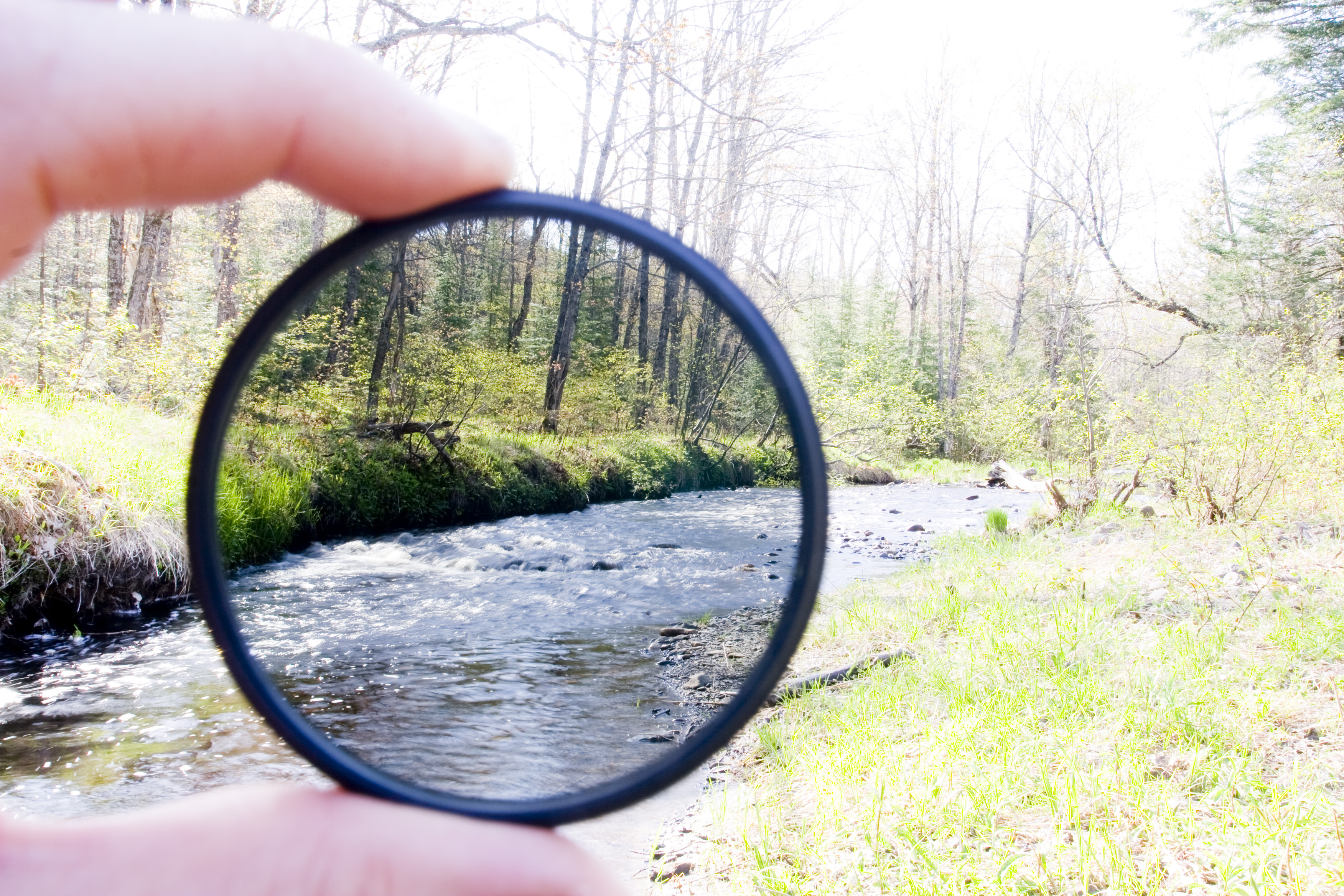
Understanding the Core Function: Taming the Light
At its heart, a Neutral Density filter is designed to reduce the amount of light that passes through the camera lens without altering the color balance of the scene. This seemingly simple function has profound implications for how we capture images. In essence, it acts like a pair of sunglasses for your lens, uniformly dimming the incoming light across the entire visible spectrum.
The Concept of Light Reduction
The primary purpose of an ND filter is to decrease the intensity of light reaching the camera’s sensor or film. This is crucial in situations where the ambient light is too bright for the desired exposure settings. For instance, shooting outdoors on a sunny day often presents a challenge: to achieve a shallow depth of field (blurring the background), a photographer needs a wide aperture (low f-number). However, a wide aperture lets in more light, which can lead to overexposure if the shutter speed is already set to its fastest limit. An ND filter effectively “neutralizes” this excess light, allowing the photographer to use that desired wide aperture while still maintaining a correct exposure.
Neutrality: The Key to Color Accuracy
The “neutral” in Neutral Density is of paramount importance. Unlike colored filters that deliberately impart a hue, ND filters are engineered to absorb light equally across all wavelengths of the visible spectrum. This means that while the overall brightness of the scene is reduced, the colors themselves remain unaltered. This consistency is vital for accurate color reproduction, preventing the need for extensive post-processing to correct color casts that cheaper or poorly manufactured filters might introduce. This is particularly critical in professional workflows where color accuracy is non-negotiable.
Measuring the Strength: Stops of Light
ND filters are quantified by their “stop” value, which indicates how much light they reduce. A “stop” refers to a doubling or halving of the amount of light. For example, an ND2 filter reduces light by one stop, meaning you need to expose for twice as long or open your aperture by one stop to achieve the same exposure as without the filter. An ND4 filter reduces light by two stops, and so on. Common strengths include ND2 (1 stop), ND4 (2 stops), ND8 (3 stops), and higher values like ND64 (6 stops) and ND1000 (10 stops). Variable ND filters offer a range of densities within a single unit, providing flexibility for changing light conditions.
Applications in Photography: Unleashing Creative Control
The ability to control light in a predictable and neutral manner opens up a wealth of creative opportunities for photographers across various genres. From landscape photography to portraiture, ND filters enable techniques that would otherwise be impossible.
Achieving Motion Blur in Bright Conditions
One of the most celebrated applications of ND filters is the ability to create intentional motion blur in bright daylight. This is particularly evident in landscape photography where capturing the silky smooth flow of water – waterfalls, rivers, or waves – is a sought-after aesthetic. Without an ND filter, to achieve a long exposure necessary for this effect, the camera would need to be stopped down to a very small aperture, resulting in an image with excessive depth of field, which may not be desirable. By using a strong ND filter, photographers can effectively “slow down” the shutter speed, allowing the camera to gather light over a longer period, thus rendering moving elements like water or clouds into ethereal streaks of color. This technique transforms static scenes into dynamic and visually captivating compositions.
Controlling Depth of Field in Bright Sunlight
As previously mentioned, ND filters are indispensable for achieving a shallow depth of field in bright light. When shooting portraits outdoors on a sunny day, a photographer might want to isolate their subject from a busy background by using a wide aperture like f/1.8 or f/2.8. However, the abundance of light can force the shutter speed to its maximum (e.g., 1/4000th or 1/8000th of a second), which might still not be fast enough to prevent overexposure. An ND filter acts as a light-balancing tool, allowing the photographer to maintain that desired wide aperture and shallow depth of field, thereby creating a pleasing bokeh effect and drawing the viewer’s eye directly to the subject.
Enhancing Dynamic Range in High-Contrast Scenes
In scenes with a significant difference between the brightest and darkest areas (high dynamic range), such as a landscape with a bright sky and a shaded foreground, achieving a balanced exposure can be challenging. While graduated ND filters (which have a darker top half and a clear bottom half) are often used for this specific purpose, standard ND filters can also contribute to managing dynamic range. By reducing the overall light entering the lens, photographers can achieve a more balanced exposure for both highlights and shadows. This can be particularly useful when working with cameras that have a more limited dynamic range or when trying to avoid blowing out the highlights entirely.
Applications in Videography: Cinematic Storytelling
In the realm of videography, ND filters are not just beneficial; they are often considered essential tools for achieving a professional and cinematic look. The principles of light control translate directly, but the implications for motion rendering are even more pronounced.
The Importance of Shutter Speed for Motion Blur
In film and video, the standard shutter speed is dictated by the frame rate. The “180-degree rule” is a common guideline, suggesting that the shutter speed should be set to half the frame rate (e.g., 1/48th of a second for 24 frames per second, or 1/50th of a second for 25 frames per second). This specific shutter speed is crucial for rendering natural-looking motion blur, often referred to as “cinematic motion blur.” When the shutter speed is too fast, motion appears choppy and unnatural, akin to a stop-motion animation. Conversely, when it’s too slow, motion can become overly blurred and indistinct.

Overcoming Bright Light for Cinematic Shutter Speeds
The challenge arises when shooting video outdoors on a bright day. To adhere to the 180-degree rule and achieve that cinematic motion blur, a videographer would ideally want to use a relatively slow shutter speed. However, the bright ambient light would force the camera to either overexpose the footage or require the videographer to stop down the aperture to an extreme degree. Stopping down the aperture significantly increases the depth of field, which can be undesirable if the intention is to isolate the subject or create a shallow depth of field. This is where ND filters become indispensable. By attaching an ND filter, a videographer can reduce the amount of light entering the lens, allowing them to maintain the desired shutter speed for natural motion blur while still achieving a proper exposure. This effectively decouples aperture from shutter speed in bright conditions, giving the videographer creative freedom.
Achieving Shallow Depth of Field in Video
Just as in photography, ND filters are crucial for videographers who want to achieve a shallow depth of field in bright shooting conditions. This is particularly important for cinematic storytelling, where isolating the subject with a blurred background helps to emphasize the subject and create a sense of depth and professionalism. Without an ND filter, the videographer would be forced to use a smaller aperture to control exposure, resulting in a much larger depth of field where more of the scene is in focus. With an ND filter, the aperture can be opened up, allowing for that beautiful background blur that is characteristic of many film productions.
Smoothing Out Fast-Moving Subjects
In some situations, even with the correct shutter speed, very fast-moving subjects can still appear slightly jerky if the frame rate is not high enough. While increasing the frame rate is one solution, it can also alter the overall aesthetic of the footage. In certain instances, a mild ND filter can subtly help to smooth out the perceived motion of fast-moving elements without significantly impacting the overall image quality or depth of field. This is a more nuanced application but can be useful in specific scenarios.
Types of ND Filters: Choosing the Right Tool for the Job
The market offers a diverse range of ND filters, each with its own advantages and disadvantages, catering to different shooting styles and preferences. Understanding these variations is key to making an informed decision.
Screw-On Filters
Screw-on ND filters are the most common and often the most affordable type. They attach directly to the front of the lens, much like a polarizing filter. They are available in a wide range of sizes to fit different lens diameters.
- Advantages: Cost-effective, easy to use, readily available in various strengths.
- Disadvantages: Can only use one filter at a time per lens; requires purchasing multiple sizes for different lenses; can sometimes lead to vignetting on wide-angle lenses, especially when stacking filters.
Square/Rectangular Filter Systems (e.g., Lee, Haida, Kase)
These systems involve a holder that clips onto the front of the lens, into which rectangular or square filters are slid. This offers greater flexibility and is often preferred by landscape and professional photographers.
- Advantages: Allows for stacking multiple filters; offers greater control over placement (especially with graduated NDs); often of higher optical quality; can be used across multiple lenses with the same adapter ring.
- Disadvantages: More expensive than screw-on filters; can be bulkier to carry; requires a separate holder and adapter rings.
Variable ND Filters
Variable ND filters are a single unit that allows the user to adjust the level of light reduction by twisting a ring. They are essentially two polarizing filters stacked on top of each other.
- Advantages: Highly versatile, offering a range of densities in one filter; convenient for quickly adapting to changing light conditions.
- Disadvantages: Can sometimes introduce color casts, especially at their strongest settings; can exhibit an “X” pattern (cross-polarization) at certain settings; generally not as optically pure as fixed ND filters.
Built-in ND Filters (Internal ND)
Many higher-end video cameras and some mirrorless cameras feature built-in ND filters that can be engaged electronically. These are located within the camera body.
- Advantages: Extremely convenient, no external accessories needed; reduces the risk of vignetting; always present and ready to use.
- Disadvantages: Limited to the strengths offered by the camera; cannot be easily swapped or upgraded; can add to the overall cost of the camera.

Conclusion: An Essential Tool for Visual Mastery
In the ever-evolving landscape of digital imaging, the Neutral Density filter remains a fundamental tool that empowers creators to transcend the limitations of ambient light. Whether the goal is to achieve silky smooth water in a breathtaking landscape, isolate a subject with a dreamy bokeh, or capture fluid, cinematic motion in video, the ND filter provides the necessary control. Its ability to uniformly reduce light without compromising color accuracy makes it an indispensable accessory for photographers and videographers alike. From the budget-conscious beginner with a simple screw-on filter to the seasoned professional utilizing advanced filter systems or the videographer leveraging internal NDs, the principle remains the same: mastering light is mastering the craft. Understanding what a Neutral Density filter does is not just about understanding a piece of equipment; it’s about unlocking a deeper level of creative expression and achieving a higher standard of visual storytelling.
aViewFromTheCave is a participant in the Amazon Services LLC Associates Program, an affiliate advertising program designed to provide a means for sites to earn advertising fees by advertising and linking to Amazon.com. Amazon, the Amazon logo, AmazonSupply, and the AmazonSupply logo are trademarks of Amazon.com, Inc. or its affiliates. As an Amazon Associate we earn affiliate commissions from qualifying purchases.