
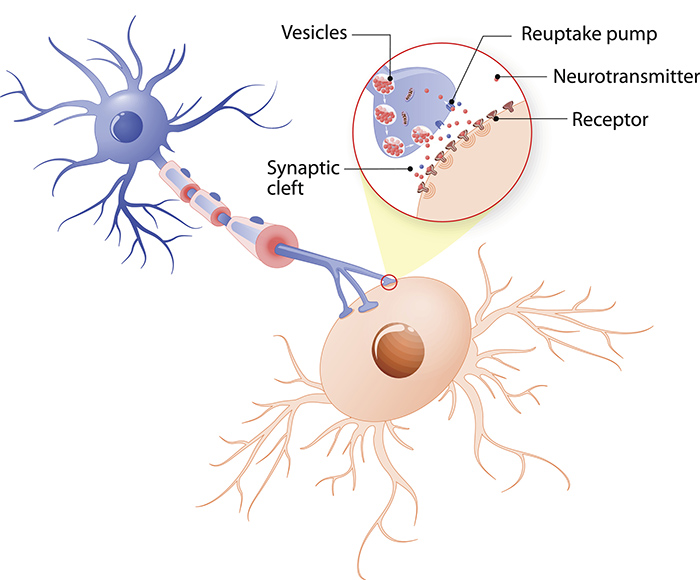
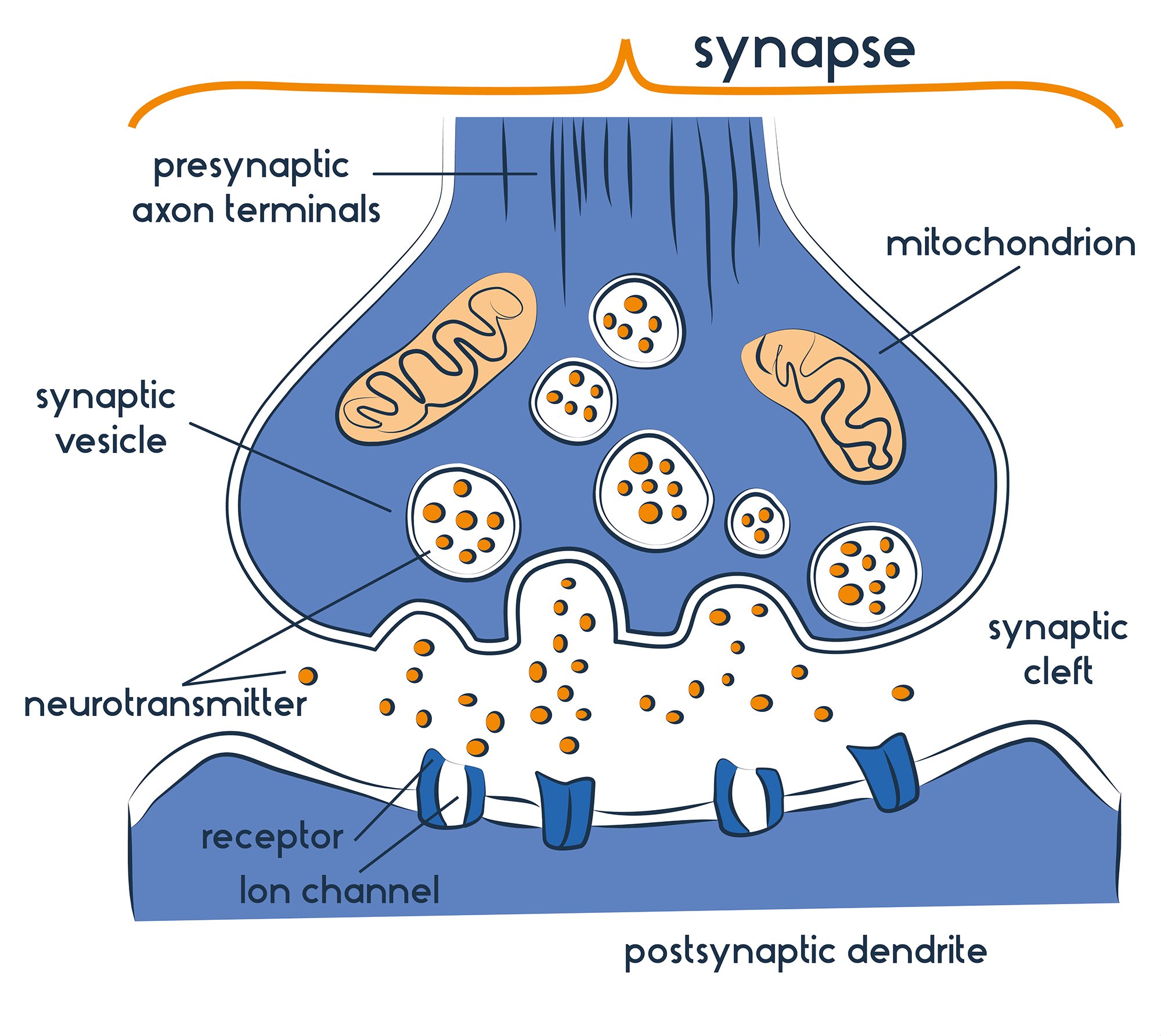
At the very core of our being, orchestrating every thought, emotion, and action, lies an intricate electrochemical symphony. The maestros of this complex orchestra are tiny, yet immensely powerful, chemical messengers known as neurotransmitters. These remarkable molecules are the language of the brain, enabling billions of neurons to communicate with each other across microscopic gaps called synapses. Without them, our nervous system would fall silent, and the sophisticated machinery of our minds would cease to function.
In essence, a neurotransmitter’s primary job is to transmit signals from one neuron to another, or from a neuron to a target cell (like a muscle cell or gland cell). They achieve this by binding to specific receptors on the receiving cell, which can either excite or inhibit that cell, thereby propagating or dampening electrical impulses. This seemingly simple action is the bedrock upon which all neural activity – from conscious thought to involuntary reflexes – is built. As we delve deeper into their function, we uncover not just biological marvels but also the fundamental blueprints inspiring the next generation of technological innovation, from artificial intelligence to groundbreaking digital health solutions.
The Biological Blueprint for Digital Innovation
The human brain, with its estimated 86 billion neurons and quadrillions of synaptic connections, represents the ultimate complex system. Its efficiency, adaptability, and processing power far surpass any artificial system yet created. This unparalleled performance is largely attributed to the sophisticated dance of neurotransmitters. For technologists and researchers, understanding “what a neurotransmitter does” isn’t merely an academic exercise; it’s a quest for the foundational principles that can unlock unprecedented advancements in computing, robotics, and human-machine interaction.
Neurotransmitters as the Basis for Neural Networks and AI
The very architecture of artificial intelligence, particularly deep learning and artificial neural networks (ANNs), draws direct inspiration from biological neural networks. While ANNs are vastly simplified models of the brain, the core concept of interconnected processing units (neurons) that communicate via weighted connections is a direct parallel to the synaptic communication facilitated by neurotransmitters.
In an ANN, data flows through layers of artificial neurons, with each connection having a “weight” that determines the strength and influence of the signal, much like the varying efficacy of neurotransmitter release and receptor binding in biological synapses. Activation functions in ANNs mimic the threshold-dependent firing of neurons, which is influenced by the cumulative excitatory and inhibitory signals from neurotransmitters. Understanding the intricate balance and dynamic modulation provided by neurotransmitters—like the precise timing of glutamate and GABA release, or the diffuse modulatory effects of dopamine and serotonin—provides ongoing inspiration for developing more sophisticated, adaptive, and energy-efficient AI algorithms. Researchers are exploring neuromorphic computing, hardware designed to mimic the brain’s structure and function, aiming to overcome the limitations of traditional silicon-based architectures by integrating principles of neurotransmitter-like communication at the chip level.
Advancing Brain-Computer Interfaces (BCIs)
Brain-Computer Interfaces (BCIs) represent perhaps the most direct technological endeavor to bridge the gap between human thought and digital action. These technologies aim to decode brain signals and translate them into commands for external devices, or even to feed sensory information back into the brain. The success of BCIs hinges critically on our understanding of how neural activity, driven by neurotransmitter dynamics, manifests as detectable electrical signals.
For instance, motor intent, which allows a user to control a prosthetic limb or a cursor on a screen, is encoded in the firing patterns of neurons in the motor cortex. These firing patterns are fundamentally shaped by the precise release and reception of neurotransmitters. Technologies like electrocorticography (ECoG) or multi-electrode arrays directly measure the electrical activity resulting from neurotransmitter-mediated synaptic potentials. Advancements in BCI technology require not only better signal acquisition but also more sophisticated algorithms capable of interpreting the nuanced “language” of the brain, which is ultimately orchestrated by neurotransmitter activity. Future BCIs may even involve direct modulation of neurotransmitter systems to enhance brain plasticity or facilitate more seamless integration between the brain and artificial components, blurring the lines between biology and technology.
Tech-Driven Insights into Neurotransmitter Function
While technology draws inspiration from biological neurotransmission, the relationship is reciprocal. Cutting-edge technological tools are simultaneously revolutionizing our ability to study, understand, and even manipulate neurotransmitters with unprecedented precision. These tools are not just helping us answer “what does a neurotransmitter do?” but also “how does it do it?” and “what happens when it doesn’t?”
Digital Tools for Neuroscience Research
The complexity of the nervous system necessitates advanced computational tools for analysis and modeling. Digital platforms and software suites are indispensable for neuroscientists:
- Computational Modeling and Simulation: Researchers use sophisticated software to create virtual models of individual neurons, neural circuits, and entire brain regions. These models can simulate the release, diffusion, and receptor binding of various neurotransmitters, allowing scientists to predict outcomes of specific interventions or disease states without invasive procedures. This provides a sandbox for testing hypotheses about complex interactions that would be impossible to observe in vivo.
- Big Data Analytics and Machine Learning: Modern neuroscience generates colossal datasets from brain imaging (fMRI, PET scans), electrophysiology (EEG, multi-unit recordings), and omics technologies (genomics, proteomics related to neurotransmitter synthesis and receptors). Machine learning algorithms are crucial for sifting through this “big data” to identify patterns, correlations, and causal relationships that shed light on neurotransmitter roles in health and disease. For example, AI can help identify biomarkers for neurological disorders by analyzing how neurotransmitter-related gene expression correlates with disease progression.
- Virtual Reality (VR) and Augmented Reality (AR) in Training: VR and AR are beginning to be used to visualize complex neural structures and neurotransmitter pathways in 3D, offering immersive educational experiences for students and researchers. Surgeons can use AR to overlay patient-specific brain imaging data during procedures involving deep brain stimulation, which often targets areas rich in specific neurotransmitter systems.
Pharmaceutical Tech and Drug Discovery

The development of drugs that target neurotransmitter systems is a cornerstone of modern medicine, particularly in psychiatry and neurology. Technology has drastically accelerated and refined this process:
- AI-Powered Drug Discovery: Artificial intelligence is transforming the pharmaceutical pipeline. AI algorithms can rapidly screen vast libraries of chemical compounds to predict their binding affinity to specific neurotransmitter receptors (e.g., dopamine D2 receptors, serotonin 5-HT1A receptors). This drastically reduces the time and cost associated with traditional high-throughput screening. Machine learning can also predict potential side effects or off-target interactions, optimizing drug candidates for safety and efficacy.
- Computational Chemistry and Molecular Docking: Advanced computational chemistry software allows researchers to model the three-dimensional structures of neurotransmitters and their receptors at an atomic level. This “molecular docking” enables scientists to design novel compounds that precisely fit into receptor sites, either to mimic (agonists) or block (antagonists) the action of endogenous neurotransmitters, leading to highly targeted therapies.
- Personalized Medicine Platforms: Leveraging genomic and proteomic data, digital platforms are being developed to tailor drug therapies based on an individual’s unique genetic profile, which can influence neurotransmitter synthesis, metabolism, and receptor sensitivity. This moves beyond a “one-size-fits-all” approach, promising more effective treatments for conditions like depression, anxiety, and Parkinson’s disease by optimizing neurotransmitter modulation for each patient.
Neurotransmitters and the Future of Digital Health
The impact of neurotransmitter research extends beyond the laboratory and into practical applications for improving human health and well-being. Digital health technologies are increasingly integrating our understanding of brain chemistry to offer innovative solutions for mental health, cognitive enhancement, and disease management.
Mental Health Apps and Biofeedback
The burgeoning field of digital mental health relies, often implicitly, on principles related to neurotransmitter function. While apps don’t directly measure or manipulate neurotransmitters, they provide tools that can indirectly influence their balance:
- Behavioral Interventions: Many apps offer cognitive behavioral therapy (CBT) exercises, mindfulness training, and stress reduction techniques. By promoting positive behavioral changes, reducing stress, and improving sleep, these apps can indirectly contribute to a healthier balance of neurotransmitters like serotonin, dopamine, and GABA, which are crucial for mood regulation and emotional stability.
- Biofeedback and Wearable Tech: Wearable devices (smartwatches, fitness trackers) can monitor physiological markers such as heart rate variability (HRV), sleep patterns, and skin conductance. These markers are downstream indicators of autonomic nervous system activity, which is intricately linked to neurotransmitter systems like norepinephrine and acetylcholine. Apps that interpret this data can provide users with insights into their stress levels and guide them towards interventions that foster a more balanced neurological state. For example, guided breathing exercises prompted by an app can activate the parasympathetic nervous system, influencing acetylcholine release and promoting relaxation.
Neuromodulation Devices and Therapies
Directly influencing neurotransmitter systems for therapeutic benefit is a rapidly evolving area, driven by technological advancements in neuromodulation:
- Transcranial Electrical and Magnetic Stimulation (tDCS/TMS): Non-invasive brain stimulation devices like transcranial direct current stimulation (tDCS) and transcranial magnetic stimulation (TMS) use electrical currents or magnetic fields to modulate neuronal excitability in specific brain regions. By altering the firing patterns of neurons, these devices can indirectly influence the release and uptake of neurotransmitters, offering therapeutic potential for conditions like depression, chronic pain, and stroke rehabilitation.
- Vagus Nerve Stimulation (VNS) and Deep Brain Stimulation (DBS): These more invasive technologies involve implanting devices that deliver electrical impulses to specific nerves (VNS) or deep brain structures (DBS). VNS, for instance, can modulate neurotransmitter systems involved in mood and seizure control, while DBS targets areas like the basal ganglia, impacting dopamine pathways for Parkinson’s disease or serotonin/norepinephrine pathways for severe depression. The precise targeting and controlled delivery of stimulation are crucial, requiring sophisticated engineering and a deep understanding of neuroanatomy and neurochemistry.
Ethical Considerations and the Digital Brain
As our technological capabilities to understand and interact with neurotransmitters grow, so too do the ethical implications. The ability to peer into and potentially manipulate the brain’s fundamental chemical processes raises profound questions about privacy, identity, and the very definition of human enhancement.
Data Privacy in Neurological Tech
The increasing sophistication of BCIs, advanced diagnostic tools, and even consumer-grade wearables that track neural correlates means more data is being collected about our brain activity. This “brain data” is incredibly sensitive, potentially revealing thoughts, emotions, and predispositions linked to neurotransmitter function. Ensuring robust data privacy and security protocols is paramount to prevent misuse, such as discrimination based on neurological profiles or unauthorized access to our most private mental states. Developers of neurological tech must prioritize user consent, anonymization, and secure data storage to build trust and protect individual autonomy.
The Future of Cognitive Augmentation
The prospect of enhancing cognitive function—improving memory, focus, creativity, or emotional resilience—through technological means that target neurotransmitter systems is a subject of intense debate. While therapies aim to restore normal function, augmentation seeks to surpass it. Pharmaceuticals already exist that modulate neurotransmitters for cognitive enhancement (e.g., stimulants for focus), but future technologies, perhaps through precise neuromodulation or advanced neurofeedback, could offer even more powerful means of directly influencing dopamine, acetylcholine, or other key neurotransmitters. This raises questions about fairness, access, and societal pressures if such enhancements become widely available. The ethical framework for “neuro-enhancement” must carefully consider the balance between individual aspirations and the potential for creating new forms of inequality or altering what it means to be human.
Conclusion
At its heart, understanding “what a neurotransmitter does” unlocks the secrets of the brain’s incredible capacity for communication, thought, and emotion. From the precise binding of acetylcholine at the neuromuscular junction to the diffuse modulatory effects of dopamine on reward pathways, these chemical messengers are indispensable. Yet, their significance transcends pure biology. They provide the fundamental blueprints that inspire cutting-edge artificial intelligence, enable groundbreaking brain-computer interfaces, and drive the development of advanced digital health solutions. As technology continues to evolve, our deepening insights into neurotransmitter function will not only illuminate the mysteries of the mind but also empower us to build smarter systems, create more effective therapies, and navigate the complex ethical landscape of enhancing the human experience in an increasingly digital world. The future of technology, it seems, is inextricably linked to the intricate chemistry within our heads.
aViewFromTheCave is a participant in the Amazon Services LLC Associates Program, an affiliate advertising program designed to provide a means for sites to earn advertising fees by advertising and linking to Amazon.com. Amazon, the Amazon logo, AmazonSupply, and the AmazonSupply logo are trademarks of Amazon.com, Inc. or its affiliates. As an Amazon Associate we earn affiliate commissions from qualifying purchases.