
Understanding the intricacies of a mortgage note is crucial for any homeowner or prospective buyer. Far from being just a piece of paper, the mortgage note is a legally binding document that outlines the borrower’s promise to repay a loan, secured by real estate. It’s the financial heart of the mortgage transaction, detailing the terms, conditions, and obligations that govern the borrower-lender relationship. This article will delve into the anatomy of a mortgage note, demystifying its various components and highlighting its significance in the realm of personal finance and real estate.
The Core Components of a Mortgage Note
At its essence, a mortgage note is a promissory note, a specialized type of debt instrument. While specific wording and formatting can vary slightly between lenders and jurisdictions, the fundamental elements remain consistent. Recognizing these components will empower you to understand your financial commitments and rights as a borrower.

Parties Involved
The mortgage note clearly identifies the key players in the loan agreement.
- The Maker (Borrower): This is you, the individual or entity taking out the loan and promising to repay it. Your full legal name and address will be listed here. It’s essential that this aligns precisely with your legal identification.
- The Payee (Lender): This is the financial institution or entity that is providing the funds for the loan. Their legal name and address will be clearly stated. This could be a bank, credit union, mortgage company, or even an individual in some private lending scenarios.
The Promise to Pay
This is the central and most critical section of the note. It’s a clear and unambiguous declaration by the borrower that they are indebted to the lender and will repay the principal amount borrowed, along with any accrued interest, according to the agreed-upon terms.
- Principal Amount: This is the total sum of money borrowed for the purchase or refinancing of the property. It’s crucial to note this amount accurately, as it forms the basis for all subsequent calculations.
- Interest Rate: This specifies the percentage of the principal that will be charged as interest over the life of the loan. It will detail whether the rate is fixed or adjustable, and if adjustable, the index and margin used for future adjustments.
- Payment Schedule: This section outlines how and when payments are to be made. It will include the amount of each periodic payment (often monthly), the due date, and the term of the loan (e.g., 15, 20, or 30 years).
Loan Terms and Conditions
Beyond the basic promise to pay, the mortgage note elaborates on the specific conditions that govern the loan.
- Loan Term: This defines the duration of the loan, specifying the number of years over which the principal and interest are to be repaid.
- Amortization Schedule: While not always explicitly detailed within the note itself (often referenced in an attached amortization schedule), the note implies an amortization plan. This schedule breaks down each payment into principal and interest components, showing how the loan balance decreases over time.
- Late Payment Penalties: This provision outlines the consequences of missing a payment or making a payment after the grace period. It will specify the amount of the late fee, often a percentage of the overdue payment or a fixed sum.
- Prepayment Penalties: Some loans may include a clause that penalizes borrowers for paying off the loan early, either in full or by making significant extra principal payments. This is less common in standard residential mortgages today but is important to check for.
- Default Provisions: This section describes what constitutes a default on the loan, which could include non-payment, failure to maintain insurance, or other violations of the loan agreement. It will also outline the lender’s rights in case of default, which typically leads to foreclosure.
- Escrow Account: Many mortgage notes will require the establishment of an escrow account. This is an account held by the lender to collect and hold funds from the borrower to pay for property taxes and homeowner’s insurance premiums. The note will specify how these funds are collected and disbursed.
Security Clause and Legal Language
Crucially, the mortgage note is inextricably linked to a security instrument, typically a mortgage or a deed of trust. While the note is the promise to pay, the security instrument grants the lender a lien on the property, giving them the right to foreclose if the borrower defaults.
- Reference to Security Instrument: The mortgage note will explicitly reference the accompanying security instrument (e.g., “This Note is secured by a Mortgage/Deed of Trust dated [Date] and executed by the Borrower to the Lender…”). This linkage is vital for the lender’s legal standing.
- Governing Law: The note will specify the state laws that govern the interpretation and enforcement of the agreement.
- Signatures: The document must be signed by the borrower(s) to be legally binding. In many cases, it will also be signed by the lender or their authorized representative. Witnesses and notarization are often required depending on local laws and lender practices.
The Mortgage Note vs. The Mortgage Deed/Deed of Trust
It is imperative to distinguish the mortgage note from the security instrument (mortgage or deed of trust). While they are fundamentally intertwined in a mortgage transaction, they serve distinct purposes.
The Promissory Note: The Promise to Repay
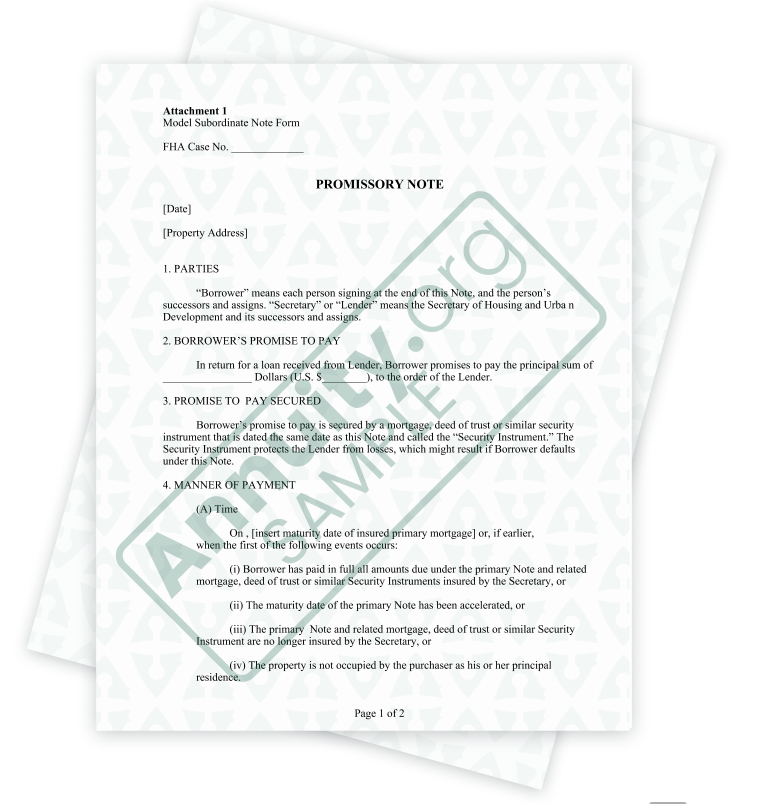
- Function: The mortgage note is the borrower’s personal promise to repay the debt. It is the evidence of the debt itself.
- Content: It details the amount borrowed, the interest rate, the payment schedule, and the borrower’s obligation to repay.
- Legal Standing: If a borrower defaults, the lender can sue them personally based on the mortgage note.
The Mortgage Deed/Deed of Trust: The Security for the Loan
- Function: The mortgage deed (or deed of trust, depending on the state) is the legal document that pledges the borrower’s property as collateral for the loan. It creates the lien on the property.
- Content: It describes the property being used as collateral, the terms of the lien, and the lender’s rights in the event of default, including the right to foreclose.
- Legal Standing: If a borrower defaults and the note isn’t satisfied, the lender can initiate foreclosure proceedings based on the mortgage deed/deed of trust.
Together, these two documents form the complete mortgage agreement. The note makes it your personal obligation to pay, and the mortgage deed/deed of trust gives the lender a claim on your home if you fail to do so.
Understanding Your Rights and Responsibilities
As a borrower, comprehending your mortgage note is not just about understanding the numbers; it’s about understanding your contractual obligations and the protections afforded to you.
Borrower’s Rights
- Right to Receive a Copy: You have the right to receive a copy of your fully executed mortgage note and all related loan documents at the closing.
- Right to Understand Terms: You have the right to have the terms and conditions of the loan explained to you. Don’t hesitate to ask your lender or a legal professional for clarification.
- Right to Prepay (with conditions): As mentioned, you may have the right to prepay your loan, though you should be aware of any potential prepayment penalties.
- Right to Receive Statements: You are entitled to regular loan statements that detail your payment history, principal balance, and interest paid.
Borrower’s Responsibilities
- Timely Payments: The most fundamental responsibility is to make your mortgage payments on time, every time, as outlined in the note.
- Maintaining Property: You are responsible for maintaining the property in good condition and ensuring it is adequately insured.
- Paying Property Taxes and Insurance: If an escrow account is used, you must ensure sufficient funds are available to cover these costs. If not, you are directly responsible for timely payment of these obligations.
- Adhering to Loan Terms: You must comply with all other terms and conditions stipulated in the mortgage note and security instrument.
Navigating the Mortgage Note in Practice
The mortgage note is a living document that influences your financial journey for the duration of the loan. Understanding its nuances can lead to better financial management and prevent costly mistakes.
When You Receive Your Mortgage Note
At the closing table, you will be presented with a stack of documents. The mortgage note will be among them. Take the time to review it carefully, even if it seems overwhelming.
- Review for Accuracy: Ensure all names, addresses, loan amounts, and interest rates are accurate. Any discrepancies should be addressed immediately before signing.
- Ask Questions: This is your opportunity to seek clarification on any clause or term you don’t understand. A good loan officer or closing attorney will be happy to explain.
After Closing: The Ongoing Relationship
The mortgage note continues to be relevant long after you’ve signed it.
- Loan Servicing: Your loan may be sold or transferred to a different loan servicer. While the terms of your note remain the same, the entity to whom you send your payments will change. You will receive notification of this transfer.
- Refinancing: If you decide to refinance your mortgage, you will essentially be replacing your old mortgage note with a new one under different terms.
- Modifications: In cases of financial hardship, you may be able to modify your existing mortgage note with your lender to adjust payment terms, interest rates, or loan balances.

Conclusion
The mortgage note is a cornerstone of the homeownership process. It is a legally binding document that articulates your financial commitment to repay a loan, secured by your property. By understanding its core components—the parties involved, the promise to pay, the loan terms, and its relationship with the security instrument—you equip yourself with the knowledge to navigate this significant financial undertaking. Treat your mortgage note with the seriousness it deserves, review it diligently, ask questions, and adhere to its terms to ensure a smooth and successful homeownership experience. It’s more than just a document; it’s the blueprint for your largest financial obligation.
aViewFromTheCave is a participant in the Amazon Services LLC Associates Program, an affiliate advertising program designed to provide a means for sites to earn advertising fees by advertising and linking to Amazon.com. Amazon, the Amazon logo, AmazonSupply, and the AmazonSupply logo are trademarks of Amazon.com, Inc. or its affiliates. As an Amazon Associate we earn affiliate commissions from qualifying purchases.