
In the realm of data analysis and statistical interpretation, understanding the nuances of dispersion is paramount. Among the various measures of variability, standard deviation stands out as a crucial indicator of how spread out a set of data points is from their average value. While a high standard deviation signals significant variability, a low standard deviation carries its own set of important implications, particularly within the context of financial markets and investment analysis. This article delves into the meaning of a low standard deviation, exploring its significance, applications, and the insights it offers to investors navigating the complexities of the financial landscape.

Understanding Standard Deviation in a Financial Context
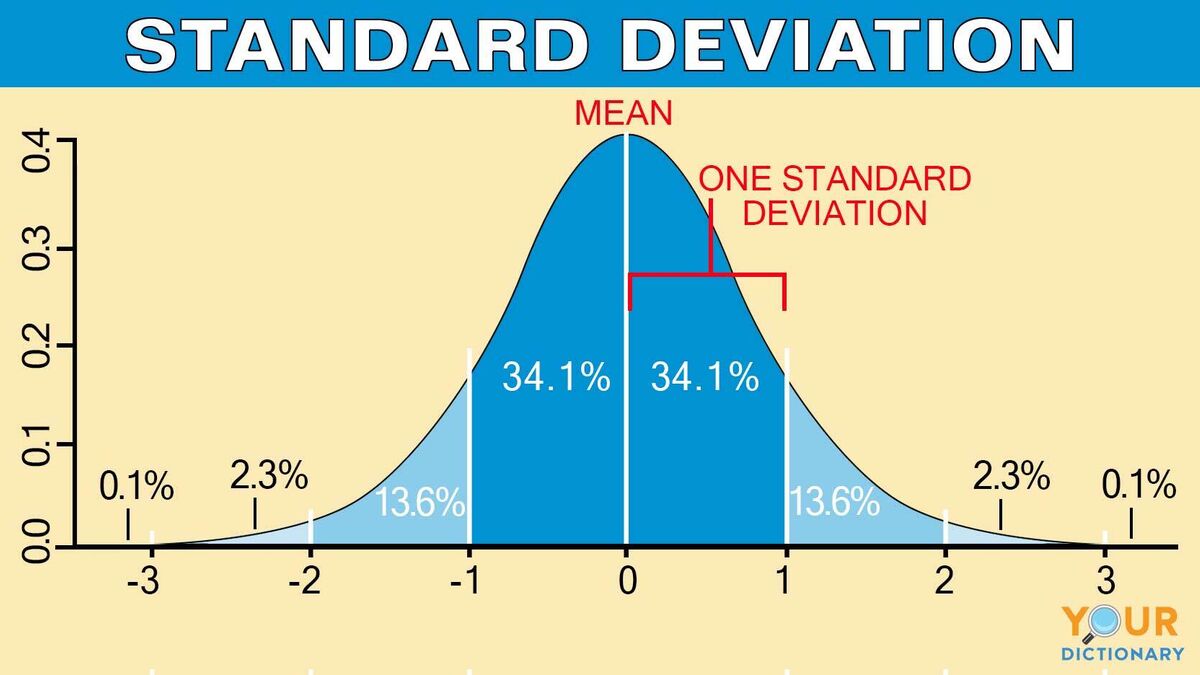
At its core, standard deviation quantifies the degree of variation or dispersion of a set of values. In finance, it is most commonly applied to the returns of an asset or a portfolio. Imagine a group of numbers representing the daily returns of a stock over a month. The average of these returns gives you the central tendency. However, the standard deviation tells you how much those daily returns typically deviate from that average.
The Calculation: A Glimpse Under the Hood
While the intricate mathematical formula for standard deviation might seem daunting, its conceptual understanding is essential. The process involves:
- Calculating the Mean: Summing all the data points (e.g., daily returns) and dividing by the number of data points.
- Finding Deviations: Subtracting the mean from each individual data point.
- Squaring the Deviations: Squaring each of these differences to eliminate negative values and give more weight to larger deviations.
- Calculating the Variance: Averaging the squared deviations.
- Taking the Square Root: The square root of the variance gives you the standard deviation.
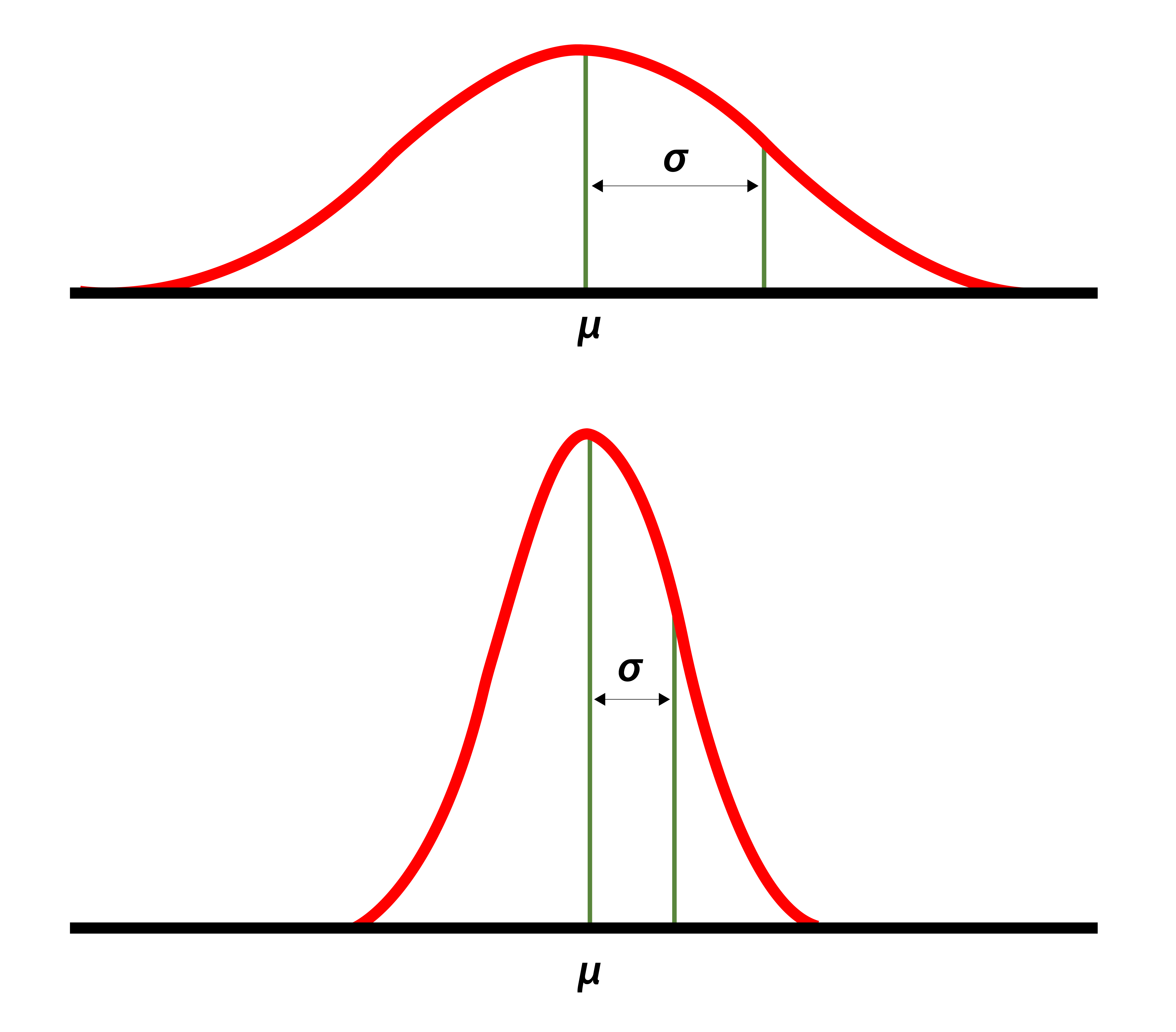
For investors, the practical takeaway is not the calculation itself, but what the resulting number signifies. A low standard deviation indicates that the data points tend to be very close to the mean, suggesting a high degree of consistency and predictability. Conversely, a high standard deviation implies that the data points are spread out over a wider range of values, indicating greater volatility and unpredictability.
Volatility as Risk: The Financial Interpretation
In finance, standard deviation is often used as a proxy for risk. This is because assets with historically higher standard deviations have experienced more dramatic price swings, both upwards and downwards. Investors generally associate greater volatility with higher risk, as it implies a greater chance of experiencing significant losses in a short period.
Therefore, a low standard deviation in financial returns suggests:
- Low Volatility: The asset or portfolio’s price movements have been relatively stable and consistent.
- Predictability: Future returns are likely to remain close to the historical average.
- Lower Risk (in terms of price fluctuation): While not a guarantee against all forms of risk, low standard deviation generally implies a reduced likelihood of sharp, unexpected price drops.
Beyond Returns: Standard Deviation in Other Financial Metrics
While the application to asset returns is the most prominent, standard deviation also plays a role in analyzing other financial metrics. For instance, it can be used to assess the consistency of a company’s earnings per share (EPS), the predictability of its cash flows, or the stability of its revenue growth. A low standard deviation in these areas would signal a more stable and predictable business, which can be attractive to investors seeking reliability.
The Implications of Low Standard Deviation for Investors
The interpretation of low standard deviation has significant implications for investment strategy and decision-making. It provides a quantitative basis for assessing the risk-reward profile of various assets and informs portfolio construction.
Stability and Predictability in Investment Choices
When an asset or investment strategy exhibits a low standard deviation, it implies a degree of stability and predictability. For investors who prioritize capital preservation and are risk-averse, such assets can be highly attractive.
- Conservative Investment Strategies: Low standard deviation is a hallmark of investments often found in conservative portfolios, such as high-grade bonds, certificates of deposit (CDs), or certain types of annuities. These investments aim to provide steady returns with minimal fluctuation.
- Forecasting and Planning: For investors who rely on consistent income streams or need to plan for specific future financial goals, an investment with a low standard deviation makes forecasting easier and more reliable. For example, retirees often favor investments that generate predictable income without significant drawdowns.
- Reduced Emotional Impact: The psychological impact of sharp market downturns can lead to impulsive decisions. Investments with low standard deviation tend to experience less dramatic swings, potentially reducing the emotional stress associated with investing and promoting a more disciplined approach.
A Measure of Confidence in Historical Performance
A low standard deviation can provide a greater sense of confidence in an asset’s historical performance. If an investment has consistently performed close to its average return over extended periods, it suggests that the underlying factors driving its performance have been stable.
- Benchmarking: When comparing different investment options, a low standard deviation can highlight those that have demonstrated more consistent performance against a benchmark index or peer group.
- Assessing Management Skill: For actively managed funds, a consistently low standard deviation alongside strong average returns might indicate skillful management that can navigate market conditions without excessive volatility. However, it’s crucial to distinguish between low standard deviation due to inherent asset class stability and low standard deviation achieved through active risk management.
The Nuance: Low Standard Deviation Doesn’t Equal No Risk
It is critically important to emphasize that a low standard deviation does not equate to the absence of risk. While it signifies low volatility in price movements, other forms of risk can still be present.
- Inflation Risk: An investment with a low standard deviation that yields very low returns might not keep pace with inflation, leading to a erosion of purchasing power over time. The real return (nominal return minus inflation) could be negative, representing a loss in value.
- Interest Rate Risk: For fixed-income securities, changes in interest rates can significantly impact their value, even if their historical standard deviation of returns appears low.
- Credit Risk: The risk that a borrower will default on their debt obligations is independent of the price volatility of the debt instrument.
- Liquidity Risk: An asset might have low price volatility but be difficult to sell quickly without impacting its price, especially during periods of market stress.
- Opportunity Cost: By opting for an asset with very low standard deviation, an investor might be foregoing potentially higher returns from assets with higher, albeit more volatile, standard deviations. This is the fundamental trade-off in investing: higher potential returns often come with higher risk.
Therefore, while low standard deviation is a valuable indicator of stability, it must be considered alongside other risk metrics and the investor’s overall financial goals and risk tolerance.
Applications of Low Standard Deviation in Financial Analysis
The understanding and interpretation of low standard deviation extend beyond simple observation and find practical applications in various aspects of financial analysis and decision-making.
Portfolio Diversification and Risk Management
Diversification is a cornerstone of sound investment strategy, aimed at reducing overall portfolio risk without necessarily sacrificing returns. Low standard deviation plays a role in how diversification is approached.
- Combining Assets: When constructing a diversified portfolio, investors often combine assets with different risk profiles and correlations. An asset with a low standard deviation can act as a stabilizing element within a portfolio composed of more volatile assets. By adding a low-volatility asset, the overall standard deviation of the portfolio can be reduced.
- Risk Budgeting: In sophisticated risk management frameworks, investors might allocate a certain “risk budget” to their portfolios, often measured by metrics like Value at Risk (VaR) or conditional VaR, which are themselves influenced by standard deviation. Assets with low standard deviations consume less of this risk budget.
- Tail Risk Mitigation: While low standard deviation suggests a lack of frequent large price swings, understanding the distribution of returns is also crucial. Even assets with low average standard deviation can, in rare circumstances, experience extreme negative events (tail risk). Analyzing historical data for such events is a necessary complement to simply looking at standard deviation.
Performance Attribution and Benchmarking
When evaluating the performance of an investment manager or a specific strategy, standard deviation is often used to assess the risk taken to achieve those returns.
- Risk-Adjusted Returns: Metrics like the Sharpe Ratio, which measures excess return per unit of risk (standard deviation), are heavily reliant on standard deviation. A higher Sharpe Ratio indicates a better risk-adjusted return. An investment with a low standard deviation and a decent return could achieve a good Sharpe Ratio, indicating efficiency in its risk-taking.
- Comparing Investment Strategies: When comparing two investment strategies that achieve similar average returns, the one with the lower standard deviation is generally preferred, as it implies that those returns were achieved with less risk.
- Consistency of Alpha: For active managers, “alpha” represents the excess return generated above what would be expected based on the market’s movement. A consistently low standard deviation in the alpha generated can signal a more robust and reliable strategy.
Economic Forecasting and Market Sentiment
While not as direct as in investment analysis, the concept of low standard deviation can also offer insights into broader economic trends and market sentiment.
- Economic Stability: Periods of sustained low volatility in financial markets, often reflected in low standard deviations of major market indices, can be indicative of economic stability and predictable growth. Conversely, rising standard deviations can signal increasing uncertainty and potential economic headwinds.
- Investor Confidence: When investors are confident in the economic outlook and the future prospects of companies, they tend to demand less compensation for taking on risk, leading to lower volatility in asset prices.
- Policy Impact: Central bank policies, such as interest rate adjustments or quantitative easing, can influence market volatility. A stable policy environment might contribute to a lower standard deviation in asset returns.
The Modern Investor’s Perspective on Low Standard Deviation
In today’s dynamic and often unpredictable financial markets, the allure of stability offered by low standard deviation is significant. However, a truly sophisticated investor understands that this metric is just one piece of a larger puzzle.
Balancing Stability with Growth Potential
The modern investor grapples with the perennial trade-off between security and growth. Low standard deviation is often associated with investments that offer security, but perhaps at the cost of lower growth potential.
- The Inflation Hurdle: As mentioned earlier, a primary concern for investors seeking solely low standard deviation is the risk of inflation eroding their real returns. A seemingly stable investment might be silently losing purchasing power over time.
- Long-Term Compounding: Compounding, the process of earning returns on returns, is most powerful over long periods. Investments that offer consistent, albeit modest, growth can significantly outperform those with minimal fluctuation but no meaningful growth. The power of compounding is often amplified by higher (and managed) returns.
- Lifecycle Investing: An investor’s need for stability changes throughout their life. Younger investors with a longer time horizon can typically afford to take on more risk (higher standard deviation) to pursue greater growth. As individuals approach retirement, the emphasis shifts towards capital preservation, making low standard deviation more desirable.
The Role of Technology and Data Analytics
The increasing sophistication of financial technology (FinTech) and data analytics has enhanced our ability to understand and utilize standard deviation more effectively.
- Advanced Risk Models: Modern risk management systems employ complex algorithms that go beyond simple standard deviation to model potential losses under various scenarios. These models incorporate factors like historical volatility, correlation, and tail risk probabilities.
- Algorithmic Trading: High-frequency trading algorithms often rely on identifying and exploiting very small price discrepancies. They are keenly aware of volatility and standard deviation, using these metrics to inform their rapid trading decisions.
- Personalized Financial Planning Tools: Digital financial advisors and planning software use individual risk profiles, often informed by questionnaires and past investment behavior, to recommend portfolios. These tools can translate an investor’s tolerance for standard deviation into specific asset allocations.
The Behavioral Finance Perspective
Behavioral finance highlights how psychological biases can influence investment decisions. Low standard deviation can appeal to certain biases, but a conscious effort is needed to overcome others.
- Loss Aversion: Investors tend to feel the pain of a loss more strongly than the pleasure of an equivalent gain. This can lead to an overemphasis on avoiding volatility (low standard deviation) even if it means sacrificing potential gains.
- Herding Behavior: During periods of market uncertainty, investors might flock to assets perceived as “safe,” characterized by low standard deviation, even if their underlying fundamentals are not strong.
- Confirmation Bias: Once an investor believes an asset is “safe” due to its low standard deviation, they may selectively seek out information that confirms this belief, ignoring contradictory evidence.
In conclusion, a low standard deviation in finance is a powerful indicator of stability and predictability, primarily reflecting low volatility in an asset’s historical returns. For investors, it signifies a reduced likelihood of sharp price swings, making it attractive for conservative strategies, capital preservation, and reliable financial planning. However, it is crucial to remember that low standard deviation is not synonymous with zero risk. Investors must consider inflation, liquidity, and opportunity costs, among other factors, and integrate this metric into a broader analytical framework. As financial markets continue to evolve, leveraging advanced tools and a nuanced understanding of standard deviation will remain essential for making informed and successful investment decisions.
aViewFromTheCave is a participant in the Amazon Services LLC Associates Program, an affiliate advertising program designed to provide a means for sites to earn advertising fees by advertising and linking to Amazon.com. Amazon, the Amazon logo, AmazonSupply, and the AmazonSupply logo are trademarks of Amazon.com, Inc. or its affiliates. As an Amazon Associate we earn affiliate commissions from qualifying purchases.