
In the intricate tapestry of the legal system, where disputes arise and rights are contested, the litigation lawyer stands as a pivotal figure. Far from the dramatic courtroom depictions often seen on screen, the day-to-day reality of a litigation lawyer is a complex, demanding, and intellectually stimulating pursuit. At its core, a litigation lawyer represents clients in civil lawsuits, from the initial investigation and filing of a claim to the potential trial and appeal process. They are the strategists, communicators, researchers, and advocates who guide individuals, businesses, and organizations through the often-turbulent waters of legal conflict. Their primary objective is to resolve disputes, whether through negotiation, mediation, or, if necessary, arguing a case before a judge or jury, always striving to achieve the best possible outcome for their clients. This role demands not only a deep understanding of the law but also sharp analytical skills, persuasive communication, and an unwavering commitment to justice, increasingly augmented by the powerful forces of technology, personal and corporate branding, and acute financial awareness.

The Core Responsibilities of a Litigation Lawyer
The journey of a lawsuit is rarely straightforward, and a litigation lawyer’s responsibilities span a wide array of tasks, each critical to building a compelling case and navigating the legal process effectively.
Investigation and Case Assessment
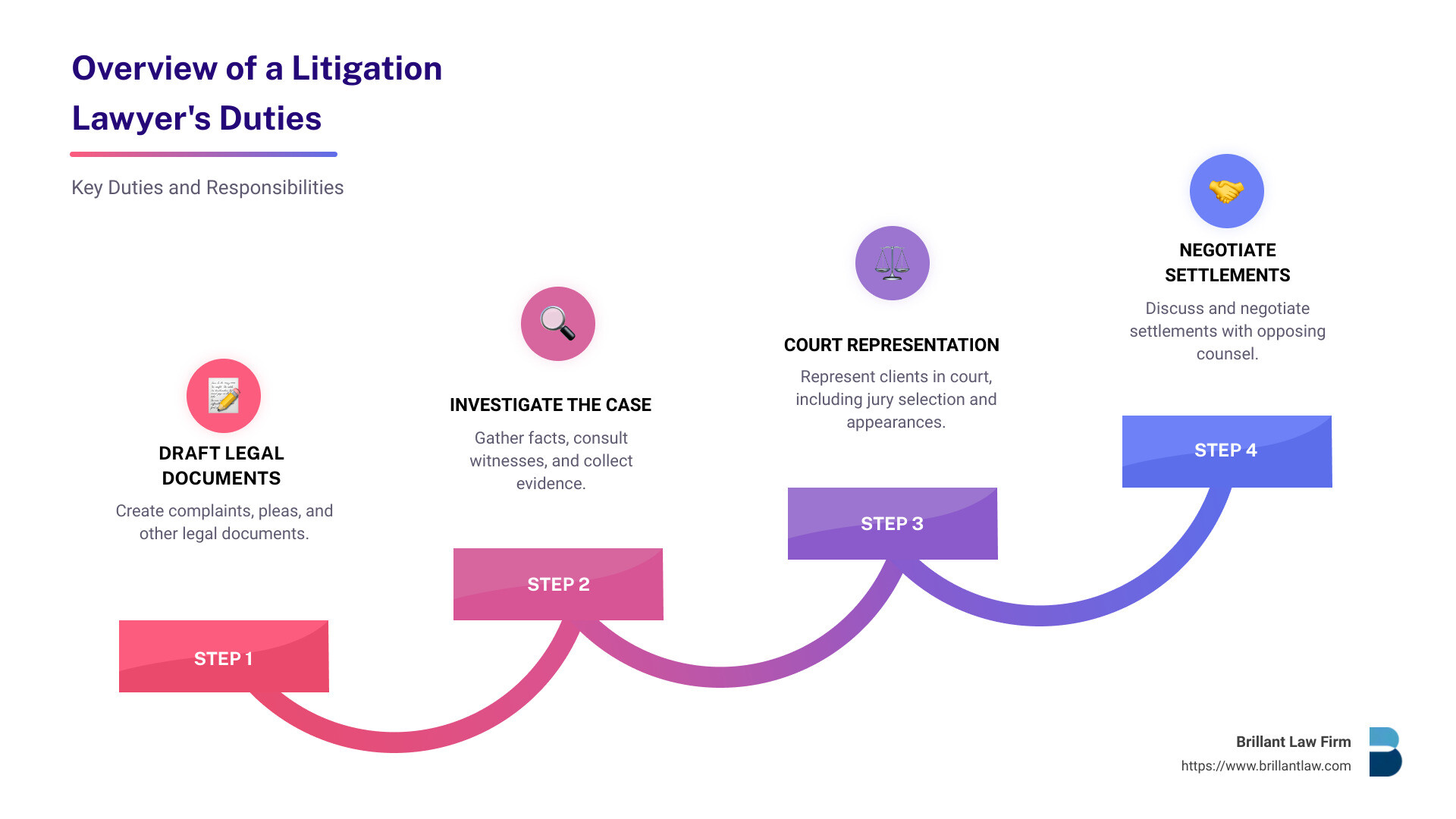
Before any formal legal action is taken, a litigation lawyer embarks on a meticulous investigation. This involves gathering facts, interviewing witnesses, collecting documents, and analyzing the legal merits and potential risks of a client’s situation. They must assess the strengths and weaknesses of a case, evaluate potential damages, and advise clients on the likelihood of success and various strategic options. This initial phase is crucial for laying a strong foundation and determining the best path forward, whether that involves pursuing litigation or exploring alternative dispute resolution methods.
Pleadings and Motions
Once a decision is made to proceed with litigation, the lawyer drafts and files “pleadings” – formal legal documents that initiate the lawsuit, such as the complaint (filed by the plaintiff) or the answer (filed by the defendant). These documents outline the claims, defenses, and requested remedies. Throughout the case, litigation lawyers also file various “motions,” which are formal requests to the court for a specific ruling or action. These can range from motions to dismiss a case, motions to compel discovery, or motions for summary judgment, which seek a ruling without a full trial. Each document requires precision, a deep understanding of procedural rules, and persuasive legal argumentation.
Discovery: The Heart of Fact-Finding
The discovery phase is often the longest and most resource-intensive part of litigation. It’s where both sides exchange information to prepare for trial. Litigation lawyers manage and participate in various discovery tools, including:
- Interrogatories: Written questions sent to the opposing party, requiring written answers under oath.
- Requests for Production of Documents: Demands for relevant documents, emails, contracts, and other electronic data.
- Depositions: Out-of-court sworn testimony taken from witnesses and parties involved in the case, conducted under oath and transcribed by a court reporter.
- Requests for Admission: Written requests asking the opposing party to admit or deny specific facts or genuineness of documents.
This phase is critical for uncovering evidence, understanding the opponent’s case, and identifying potential areas for settlement or trial strategy. It also highlights the growing importance of technological proficiency, as e-discovery (electronic discovery) becomes increasingly central.
Negotiation, Mediation, and Settlement
While trials capture public imagination, the vast majority of lawsuits are resolved outside of court through negotiation or alternative dispute resolution (ADR) methods. Litigation lawyers are skilled negotiators, constantly seeking opportunities to achieve a favorable settlement for their clients without the time, expense, and uncertainty of a trial. They often participate in mediation, where a neutral third party facilitates discussions, or arbitration, a more formal process where an arbitrator makes a binding decision. Their ability to analyze risk, assess leverage, and communicate effectively is paramount in reaching equitable resolutions.
Trial and Appeal
Should a settlement prove unattainable, the litigation lawyer must be prepared to go to trial. This involves meticulous preparation: selecting a jury (if applicable), delivering opening statements, presenting evidence, questioning witnesses, making legal arguments, and delivering closing statements. The trial lawyer must be an compelling storyteller, able to simplify complex legal issues for a jury or judge. If the trial outcome is unfavorable, the lawyer may also handle appeals, arguing before a higher court that legal errors were made during the initial trial. This requires extensive legal research and sophisticated written and oral advocacy.
The Modern Edge: Technology in Litigation
The legal profession, traditionally rooted in precedent and paper, has undergone a significant transformation with the advent of new technologies. For the contemporary litigation lawyer, leveraging technological advancements isn’t just an advantage—it’s a necessity.
E-Discovery and Data Analytics
In today’s digital age, a vast amount of potentially relevant information exists in electronic formats: emails, instant messages, social media posts, databases, and cloud storage. E-discovery has become a specialized field within litigation, requiring lawyers to master the identification, preservation, collection, processing, review, and production of electronically stored information (ESI). AI tools and advanced data analytics are now indispensable in sifting through colossal volumes of data, identifying key documents, recognizing patterns, and even predicting legal outcomes. This technology drastically reduces the time and cost associated with manual document review, allowing lawyers to focus on strategy rather than data processing. Digital Security also becomes paramount here, as sensitive client data must be protected from breaches and cyber threats throughout the e-discovery process.
AI and Advanced Legal Research
Gone are the days when legal research was solely about poring over physical law books. Litigation lawyers now rely heavily on sophisticated legal research platforms like Westlaw and LexisNexis, which offer vast databases of statutes, case law, and legal articles. Furthermore, AI tools are revolutionizing legal research by providing predictive analytics, identifying relevant precedents with greater accuracy, and even drafting initial summaries of legal arguments. These tools enhance productivity by streamlining research, allowing lawyers to quickly access the most pertinent information and develop stronger legal arguments. From analyzing millions of past rulings to identifying judicial tendencies, AI empowers lawyers with insights previously unimaginable.
Practice Management and Digital Security
Beyond case-specific applications, technology underpins the operational efficiency of a modern litigation practice. Practice management software helps lawyers track case deadlines, manage client communications, handle billing, and organize documents. These apps and gadgets improve workflow, ensure compliance, and free up valuable time for legal strategizing. Digital security is also a constant concern; litigation firms handle highly confidential and sensitive information. Implementing robust cybersecurity measures, including encryption, secure cloud storage, and regular security audits, is essential to protect client data from cyberattacks and ensure the integrity of legal processes. From secure client portals to remote work capabilities enabled by collaborative software, technology ensures continuity and security in an increasingly digital world.
Building a Reputation: Brand and Strategy in Litigation
In a competitive legal market, a litigation lawyer’s effectiveness extends beyond legal acumen to encompass strategic brand management and client relationship building. A strong professional and firm brand is crucial for attracting clients, fostering trust, and projecting expertise.
Personal Branding for Legal Professionals
For a litigation lawyer, personal branding is about cultivating a reputation as a trusted, skilled, and effective advocate. This involves developing a distinct professional identity, specializing in particular areas of law (e.g., intellectual property litigation, environmental law), and consistently delivering exceptional results. Building a personal brand also includes demonstrating thought leadership through articles, speaking engagements, and active participation in legal communities. Online presence, including a professional LinkedIn profile and a well-maintained firm bio, plays a significant role in how potential clients and peers perceive a lawyer’s expertise and credibility. This strategic communication builds trust and establishes authority.
Firm Identity and Client Acquisition
The corporate identity of a law firm is an amalgamation of its values, culture, and the collective expertise of its lawyers. For litigation practices, a strong firm brand signals reliability, ethical practice, and a track record of success. This brand strategy is vital for client acquisition, as potential clients often seek firms with a solid reputation in their specific area of need. Marketing efforts, including a professional website, targeted advertising, and positive media relations, contribute to shaping this brand image. Case studies of successful litigation outcomes can be powerful tools to demonstrate a firm’s capabilities and reinforce its brand message, attracting the right kind of clientele.
Managing Reputation in High-Stakes Cases
Litigation, by its nature, can be public and contentious, especially in high-profile cases. Managing the reputation of both the client and the firm throughout such proceedings is a critical aspect of a litigation lawyer’s role. This often involves strategic communication with the media, crisis management, and carefully crafted public statements to control the narrative and mitigate potential damage to a client’s or firm’s image. A litigation lawyer must anticipate and address public perceptions, ensuring that legal arguments are not undermined by negative publicity. Effective design in communication materials, both internal and external, also contributes to a professional and trustworthy image.
Navigating the Financial Landscape of Litigation
Litigation is not just a legal battle; it is also a significant financial undertaking. A proficient litigation lawyer must possess a strong understanding of the monetary implications for both their clients and their own practice.
Understanding Fee Structures and Costs
One of the first conversations a litigation lawyer has with a client revolves around fees and billing. There are several common fee structures:
- Hourly Rates: The lawyer charges for their time based on a set hourly fee. This is common in complex commercial litigation.
- Contingency Fees: The lawyer only gets paid if the client wins the case, receiving a percentage of the final award or settlement. This is typical in personal injury cases.
- Flat Fees: A set amount for a specific service, though less common in litigation due to its unpredictable nature.
Beyond legal fees, clients must also consider other costs, such as court filing fees, expert witness fees, deposition costs, and e-discovery expenses. A skilled litigation lawyer provides transparent explanations of these costs, helping clients understand the financial commitment and make informed decisions. They may also advise on financial tools for budgeting and cost tracking.
Financial Implications for Clients and Businesses
For individuals, litigation can represent a substantial financial risk or, conversely, the path to significant compensation. For businesses, the financial stakes are often much higher, impacting bottom lines, stock prices, and even long-term viability. Litigation lawyers advise clients on the cost-benefit analysis of pursuing a lawsuit versus settling. They help assess potential damages, analyze the financial impact of various outcomes, and consider the long-term financial health of their clients. This often involves understanding business finance principles and advising on strategies that mitigate financial exposure while maximizing potential recovery. The lawyer’s advice can be crucial in safeguarding a client’s investing portfolio or their overall financial stability.
Business Acumen in Legal Practice
From the firm’s perspective, running a successful litigation practice requires strong business finance management. This includes managing cash flow, projecting revenue, controlling operational costs, and making strategic investing decisions in technology, talent, and professional development. For lawyers interested in online income or side hustles, their expertise in litigation can translate into opportunities like providing expert witness testimony, legal consulting for other firms, or even developing legal tech solutions. Understanding the business side of law enables firms to remain profitable, attract top talent, and continue to provide high-quality legal services. Financial tools for invoicing, expense tracking, and trust account management are indispensable for efficient firm operation and compliance.

Conclusion
The role of a litigation lawyer is dynamic and multifaceted, evolving with the changing legal landscape and technological advancements. Beyond the traditional image of courtroom combatants, they are astute strategists, meticulous investigators, empathetic counselors, and formidable advocates. Their work, guided by a profound understanding of law and procedure, is increasingly intertwined with the strategic application of technology for efficiency and insight, the deliberate cultivation of personal and firm brands for trust and influence, and a keen awareness of the financial realities that underpin every legal dispute. In an ever more complex world, the litigation lawyer stands as a critical guardian of justice, helping individuals and businesses navigate disputes, protect their interests, and secure their future, whether through the power of persuasion or the unwavering pursuit of truth in a court of law.
aViewFromTheCave is a participant in the Amazon Services LLC Associates Program, an affiliate advertising program designed to provide a means for sites to earn advertising fees by advertising and linking to Amazon.com. Amazon, the Amazon logo, AmazonSupply, and the AmazonSupply logo are trademarks of Amazon.com, Inc. or its affiliates. As an Amazon Associate we earn affiliate commissions from qualifying purchases.