
Litigation attorneys are the gladiators of the legal world, the strategic minds who navigate the complex battlefield of the courtroom. While the term “lawyer” might conjure images of courtroom dramas and impassioned closing arguments, the reality of what a litigation attorney does is far more nuanced, encompassing a deep dive into research, meticulous planning, skilled negotiation, and, when necessary, forceful advocacy. They are the problem-solvers, the strategists, and the protectors of their clients’ rights and interests within the adversarial system of justice. This article will delve into the multifaceted role of a litigation attorney, exploring their core responsibilities, the stages of a legal dispute they manage, and the crucial skills that define their practice.

The Foundation of a Legal Battle: Investigation and Discovery
Before any courtroom doors swing open, the litigation attorney is already hard at work, laying the groundwork for their client’s case. This foundational stage is critical, as it shapes the entire trajectory of the legal proceedings. It’s during this phase that the attorney gathers the evidence, understands the opposing side’s position, and formulates a coherent strategy.
Unearthing the Facts: Case Investigation
The initial step for a litigation attorney is a thorough and exhaustive investigation into the facts of the case. This involves meeting with clients, understanding their narrative, and identifying all relevant individuals and events. Attorneys will collect documents, such as contracts, emails, financial records, medical reports, or any other tangible evidence that supports or refutes the claims being made. They may also conduct interviews with witnesses, experts, and even opposing parties to gain a comprehensive understanding of the situation. The goal is to piece together a complete and accurate picture of what transpired, identifying strengths and weaknesses in the client’s position. This early diligence is paramount; a case can be won or lost based on the thoroughness of the initial investigation.
The Art of Information Exchange: Discovery
Once the initial facts are gathered, litigation attorneys engage in the formal process of discovery. This is a crucial phase where both sides of a legal dispute exchange information and evidence. Discovery serves to prevent surprises at trial, allow parties to assess the strengths and weaknesses of their cases, and potentially facilitate settlement negotiations. The methods of discovery are varied and can include:
- Interrogatories: Written questions that the opposing party must answer under oath. These questions can be extensive and probe deeply into the facts, legal theories, and damages alleged.
- Requests for Production of Documents: Formal requests for the opposing party to produce relevant documents, such as emails, contracts, internal memos, financial statements, photographs, and any other tangible evidence.
- Depositions: Oral examinations of parties and witnesses under oath, conducted by attorneys. These proceedings are transcribed by a court reporter and can be used to lock in testimony, gather new information, and assess the credibility of individuals involved.
- Requests for Admission: Written statements that the opposing party is asked to admit or deny. If a party admits to a statement, it is considered fact for the purposes of the litigation, streamlining the issues to be decided.
- Physical and Mental Examinations: In cases where a party’s physical or mental condition is at issue (e.g., personal injury claims), the court may order an examination by an independent medical professional.
The litigation attorney’s role during discovery is to skillfully craft these requests to elicit the most favorable information for their client and to meticulously review and respond to the discovery demands of the opposing side. This phase often involves extensive legal research to ensure compliance with discovery rules and to challenge improper requests.
Crafting the Strategy: Pleadings, Motions, and Negotiation
With the factual landscape clarified through investigation and discovery, the litigation attorney moves on to developing and executing a legal strategy. This involves formally initiating legal proceedings, responding to claims, and strategically using legal tools to advance their client’s position.
Formalizing the Dispute: Pleadings
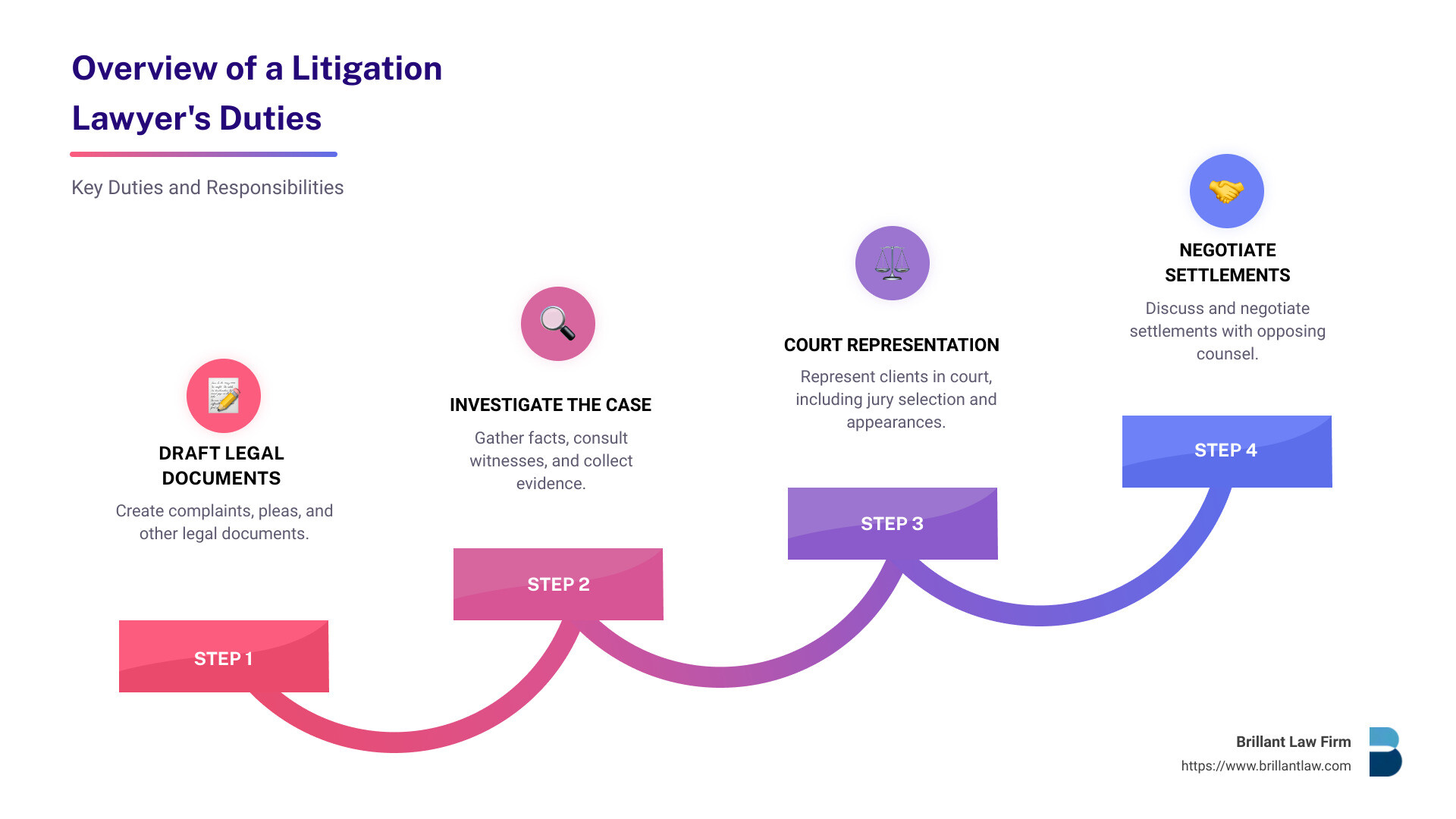
The formal commencement of a lawsuit begins with pleadings. The plaintiff’s attorney drafts a complaint, which outlines the factual allegations, the legal claims against the defendant, and the relief sought. The defendant’s attorney then prepares an answer to the complaint, admitting or denying each allegation and potentially raising affirmative defenses. These initial documents set the stage for the legal battle and define the scope of the dispute. Litigation attorneys meticulously draft these pleadings to present their client’s case in the strongest possible light, adhering to strict legal and procedural rules.
Strategic Legal Maneuvers: Motions
Throughout the litigation process, attorneys frequently file motions with the court. Motions are formal requests for the court to take a specific action. These can range from procedural matters, such as requests for extensions of time, to substantive legal arguments, such as a motion to dismiss (arguing that the complaint fails to state a valid legal claim) or a motion for summary judgment (arguing that there are no genuine disputes of material fact and that the moving party is entitled to judgment as a matter of law). Successfully navigating the rules of procedure and evidence to craft persuasive motions is a hallmark of an effective litigation attorney. They must be adept at legal research, statutory interpretation, and case law analysis to support their arguments.
The Pursuit of Resolution: Negotiation and Settlement
While litigation attorneys are prepared to go to trial, their primary objective is often to achieve the best possible outcome for their client, which frequently involves reaching a settlement. Negotiation is an integral part of their practice. They will engage in discussions with opposing counsel, exploring potential compromises and advocating for their client’s interests. This requires strong communication skills, an understanding of the strengths and weaknesses of both sides of the case, and the ability to assess the potential risks and rewards of litigation versus settlement. Many cases are resolved through negotiated agreements before reaching a trial verdict, saving clients time, expense, and the uncertainty of a courtroom decision.
The Climax of the Contest: Trial and Post-Trial Proceedings
When all attempts at settlement have failed, or when a trial is deemed the most advantageous path, the litigation attorney steps onto the stage to present their case before a judge or jury. This is the culmination of months, or even years, of preparation.
Presenting the Case: Trial Advocacy
Trial advocacy is the most visible aspect of a litigation attorney’s work. This involves a series of complex steps, each requiring precision and skill:
- Jury Selection (Voir Dire): Attorneys question potential jurors to identify biases and select individuals who are likely to be fair and impartial.
- Opening Statements: Each side presents an overview of their case, outlining the evidence they intend to present and what they expect it to prove.
- Presentation of Evidence: Attorneys call witnesses to testify, present documents, and introduce other forms of evidence to support their claims or defenses. This involves direct examination of their own witnesses and cross-examination of the opposing side’s witnesses.
- Closing Arguments: After all evidence has been presented, attorneys summarize their case, highlight key evidence, and urge the judge or jury to rule in their favor.
The litigation attorney’s ability to think on their feet, adapt to unforeseen circumstances, and present a compelling narrative is crucial during trial. They must possess a deep understanding of the rules of evidence and procedure, as well as the persuasive power to connect with and convince the fact-finder.

After the Verdict: Post-Trial Motions and Appeals
The work of a litigation attorney doesn’t necessarily end with a verdict. If the outcome is unfavorable, or if there are procedural errors during the trial, the attorney may file post-trial motions asking the judge to reconsider the verdict or grant a new trial. Furthermore, if a party is dissatisfied with the trial court’s decision, the attorney may initiate an appeal. Appeals involve reviewing the trial court’s proceedings for legal errors, rather than re-examining the facts. This process requires a different set of skills, focusing on legal arguments and adherence to appellate court rules and procedures. Litigation attorneys must be prepared to pursue justice for their clients through every available avenue, including the appellate courts.
aViewFromTheCave is a participant in the Amazon Services LLC Associates Program, an affiliate advertising program designed to provide a means for sites to earn advertising fees by advertising and linking to Amazon.com. Amazon, the Amazon logo, AmazonSupply, and the AmazonSupply logo are trademarks of Amazon.com, Inc. or its affiliates. As an Amazon Associate we earn affiliate commissions from qualifying purchases.