
Artificial Intelligence (AI) has transcended the realm of science fiction to become a ubiquitous force shaping our modern world. Far from being a singular, monolithic entity, AI encompasses a vast array of technologies and methodologies designed to enable machines to perform tasks that typically require human intelligence. From predicting market trends to powering self-driving cars, the capabilities of AI are as diverse as they are transformative. Understanding “what AI does” requires delving into its core functions, its widespread applications across industries, the underlying technologies that power it, and the exciting future it promises.

The Core Functions and Capabilities of Artificial Intelligence
At its heart, AI empowers machines to perceive, reason, learn, and act with a degree of autonomy. These capabilities are built upon several foundational functions that allow AI systems to interact with and make sense of complex data.
Learning from Data: Machine Learning and Deep Learning
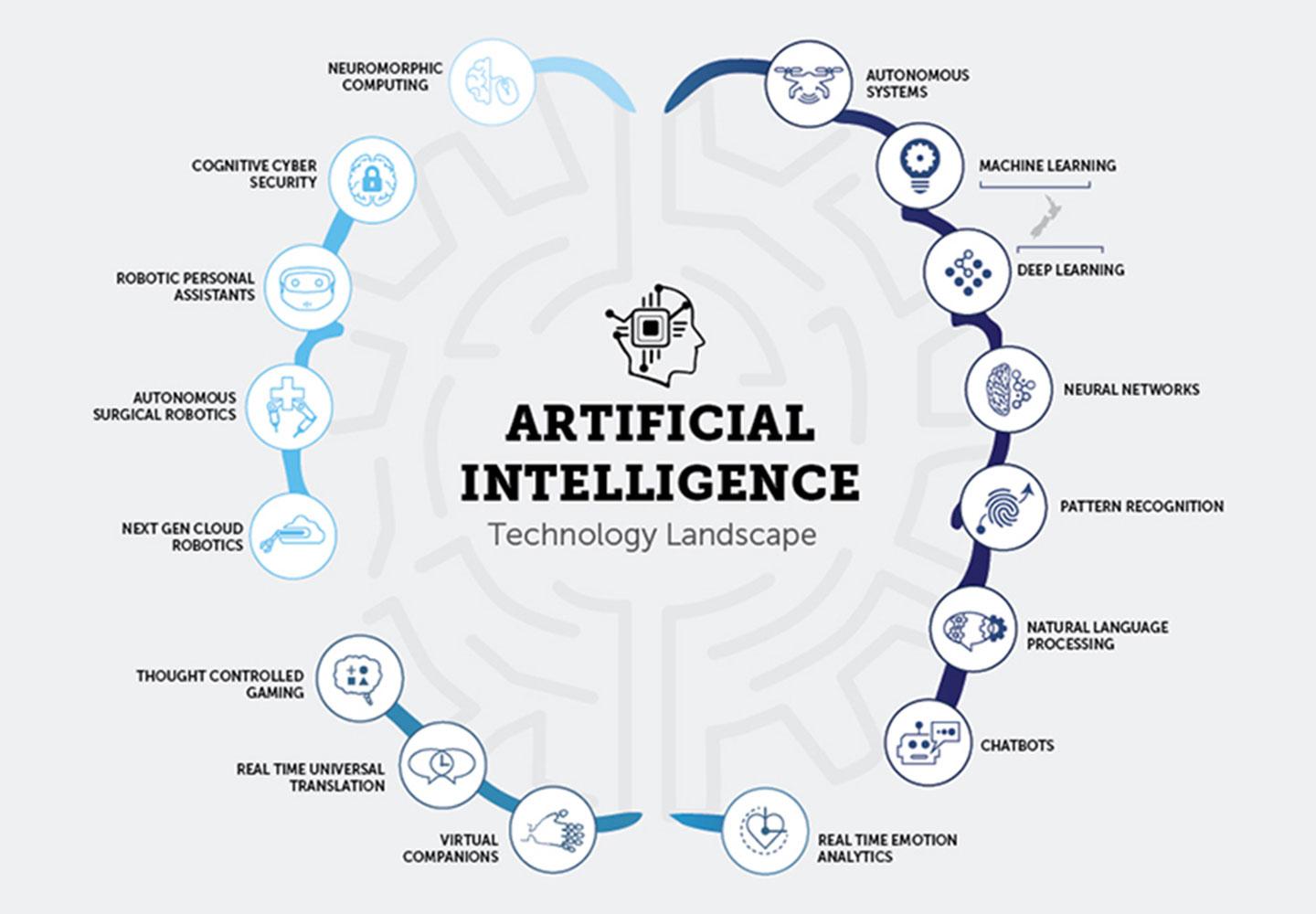
Perhaps the most recognized function of modern AI is its capacity to learn. Machine Learning (ML), a subset of AI, focuses on developing algorithms that allow computers to improve their performance on a task without being explicitly programmed. Instead, they learn from vast amounts of data. This learning process involves identifying patterns, correlations, and anomalies within data sets. Deep Learning (DL), a further specialized branch of ML, utilizes artificial neural networks with multiple layers (hence “deep”) to process complex data such as images, sound, and text, mimicking the hierarchical processing of the human brain. This allows AI to autonomously discover intricate features and representations within data, leading to unprecedented accuracy in tasks like object recognition and natural language understanding. For example, when you tag a face in a photo on social media, you’re leveraging an AI system trained through deep learning to recognize facial features.
Pattern Recognition and Prediction
One of AI’s most powerful capabilities is its ability to identify intricate patterns in data that might be imperceptible to humans. This pattern recognition is not just about spotting similarities; it’s about understanding relationships and deriving insights. Once these patterns are understood, AI systems can make highly accurate predictions. This function is critical in fields ranging from finance, where AI predicts stock market movements, to medicine, where it can forecast disease outbreaks or patient responses to treatments. Retailers use AI to predict consumer purchasing behavior, optimizing inventory and personalizing recommendations. Predictive maintenance in manufacturing, where AI anticipates machinery failures before they occur, is another testament to this core capability, significantly reducing downtime and costs.
Natural Language Processing (NLP) and Understanding
Natural Language Processing (NLP) is the branch of AI that enables computers to understand, interpret, and generate human language. This is what allows you to speak to a virtual assistant like Siri or Alexa and have it comprehend your commands, or for translation tools to convert text from one language to another. NLP systems can analyze sentiment in customer reviews, summarize lengthy documents, extract key information, and even generate human-like text. The advancements in large language models (LLMs) like GPT-3 and GPT-4 showcase the extraordinary potential of NLP to engage in complex conversations, write creative content, and assist with various text-based tasks, bridging the communication gap between humans and machines.
Computer Vision and Image Recognition
Computer Vision empowers AI systems to “see” and interpret the visual world. This involves enabling computers to acquire, process, analyze, and understand digital images and videos. Image recognition, a key component of computer vision, allows AI to identify and classify objects, people, text, and even emotions within visual data. Applications are widespread: self-driving cars use computer vision to interpret traffic signs, pedestrians, and other vehicles; medical imaging uses it for early detection of diseases like cancer; security systems employ facial recognition for authentication; and industrial automation relies on it for quality control. This capability extends beyond static images to real-time video analysis, opening doors for advanced surveillance, gesture recognition, and augmented reality applications.
Problem-Solving and Decision-Making
AI systems are increasingly adept at solving complex problems and assisting in decision-making processes. Through algorithms, AI can analyze vast amounts of data, consider multiple variables, and evaluate potential outcomes to recommend optimal solutions. This is evident in areas like strategic game playing (e.g., AlphaGo defeating human Go champions), logistical optimization (e.g., managing complex supply chains), and personalized recommendations (e.g., suggesting products or content based on user preferences). While human oversight remains crucial for high-stakes decisions, AI acts as a powerful analytical partner, providing insights and streamlining decision pathways that would be overwhelming for human cognition alone.
AI Across Industries: Transformative Applications
The diverse capabilities of AI have catalyzed profound transformations across virtually every sector, redefining operational paradigms and opening new avenues for innovation.
Revolutionizing Healthcare and Medicine
In healthcare, AI is a game-changer. It assists in diagnosis, analyzing medical images (X-rays, MRIs, CT scans) with greater speed and accuracy than human eyes, often detecting subtle anomalies indicative of disease in its earliest stages. AI accelerates drug discovery by predicting how compounds will interact and identifying promising candidates, drastically cutting down research time. It enables personalized medicine by analyzing a patient’s genetic makeup, lifestyle, and medical history to recommend tailored treatments. Furthermore, AI-powered systems monitor patient health, predict potential crises, and even perform robotic-assisted surgeries, enhancing precision and recovery.
Enhancing Business Operations and Customer Experience
Businesses leverage AI to boost efficiency and elevate customer interactions. Automation of repetitive tasks, such as data entry or invoice processing, frees human employees for more strategic work. Analytics powered by AI provides deep insights into market trends, operational bottlenecks, and financial performance. AI-driven chatbots and virtual assistants provide 24/7 customer support, resolving queries instantly, reducing call center loads, and improving customer satisfaction. Personalized marketing campaigns, fraud detection, and supply chain optimization are other critical areas where AI drives significant value, fostering agility and competitive advantage.
Powering Smart Homes and Autonomous Systems
The vision of smart environments is largely brought to life by AI. In smart homes, AI algorithms learn household routines, optimize energy consumption, and manage connected devices (lighting, heating, security) for comfort and efficiency. Beyond the home, autonomous systems like self-driving cars are perhaps the most compelling example. These vehicles rely on a sophisticated blend of computer vision, sensor fusion, and predictive algorithms to navigate, detect obstacles, and make real-time driving decisions safely. Drones for delivery or surveillance, and robots for industrial or domestic tasks, also exemplify AI’s role in creating intelligent, self-operating entities.
Advancing Science and Research
AI serves as an indispensable tool for scientific discovery. It can analyze massive datasets generated by experiments, simulations, and observations in fields like astrophysics, genomics, and climate science, revealing insights that would be impossible to uncover manually. AI aids in hypothesis generation, suggesting new research directions based on existing literature. It can also design and run complex simulations, accelerating the pace of research in materials science, drug development, and environmental modeling, allowing scientists to explore scenarios and test theories with unprecedented speed and scale.
Reshaping Creativity and Entertainment
AI is even venturing into traditionally human domains of creativity. It can generate content – from music compositions and poetry to realistic images and videos (deepfakes, although with ethical concerns). AI-powered tools assist designers and artists, augmenting their capabilities rather than replacing them. In entertainment, personalized recommendation systems for movies, music, and news are driven by AI, enhancing user engagement. AI is also used in game development for character behavior, level design, and adapting gameplay difficulty in real-time, creating more immersive and dynamic experiences.
The Underlying Technologies and Principles Driving AI
The remarkable feats of AI are not magic; they are the result of sophisticated engineering, vast data resources, and immense computational power.
Algorithms and Models: The Brain of AI
At the heart of every AI system are algorithms – sets of rules or instructions that define how a computer processes information. These algorithms form the basis for models, which are essentially the learned representation of patterns in data. For example, a machine learning model might be a neural network whose “weights” and “biases” have been optimized during training to recognize specific objects in images. The choice of algorithm (e.g., decision trees, support vector machines, convolutional neural networks) depends on the specific task, data type, and desired outcome. These algorithms are the “thinking” part of AI, dictating how it learns, reasons, and solves problems.
Data: The Fuel for AI Systems
No AI system can function without data. Data is the “fuel” that powers machine learning algorithms, enabling them to identify patterns, make predictions, and continuously improve. The quality, quantity, and diversity of data are paramount. Biased, incomplete, or insufficient data can lead to flawed models that perpetuate errors or make unfair decisions. Techniques for data collection, cleaning, annotation, and augmentation are critical steps in the AI development pipeline. The more relevant and robust the data, the more intelligent and effective the AI system becomes. Big data analytics often works hand-in-hand with AI to extract maximum value from vast information repositories.
Computational Power: The Engine Room
Processing immense datasets and running complex algorithms, especially for deep learning models, requires substantial computational power. High-performance computing, often leveraging Graphics Processing Units (GPUs) or specialized AI chips (like TPUs), provides the necessary parallel processing capabilities. Cloud computing platforms offer scalable access to this power, democratizing AI development by removing the barrier of expensive hardware investments. As AI models grow in complexity and data volumes expand, the demand for more efficient and powerful hardware continues to drive innovation in chip design and distributed computing architectures.
Ethical AI and Responsible Development
As AI’s capabilities grow, so does the importance of developing it ethically and responsibly. This encompasses several critical considerations: bias mitigation (ensuring AI systems do not perpetuate or amplify societal biases present in training data), transparency and explainability (understanding how AI reaches its conclusions, especially in high-stakes applications), privacy (protecting sensitive user data), and security (guarding against malicious use or cyber threats). Establishing ethical guidelines, regulatory frameworks, and robust testing protocols is essential to ensure AI serves humanity positively and equitably, fostering trust and preventing unintended consequences.
The Future Landscape of Artificial Intelligence
The journey of AI is far from over; it is continually evolving, promising even more profound impacts on society and technology.
Towards General AI and Superintelligence
Currently, most AI systems are “narrow AI” or “weak AI,” excelling at specific tasks (e.g., playing chess, recognizing faces) but lacking generalized intelligence. The long-term vision for many researchers is the development of Artificial General Intelligence (AGI), also known as “strong AI,” which would possess human-level cognitive abilities across a wide range of tasks, capable of learning anything an average human can. Beyond AGI lies the theoretical concept of Artificial Superintelligence (ASI), an intellect vastly superior to the best human brains in virtually every field. While AGI and ASI remain distant, speculative goals, current research is incrementally laying the groundwork, pushing the boundaries of what AI can learn and achieve autonomously.
AI’s Role in Human-Computer Collaboration
The future of AI is not necessarily about machines replacing humans but rather augmenting human capabilities through sophisticated collaboration. AI can act as an intelligent assistant, handling routine tasks, providing expert analysis, and suggesting creative solutions, thereby freeing humans to focus on higher-level problem-solving, innovation, and interpersonal interactions. This human-AI partnership, often termed “Cyborg Intelligence” or “Augmented Intelligence,” harnesses the strengths of both entities: AI’s speed, data processing power, and pattern recognition, combined with human intuition, emotional intelligence, and ethical reasoning. This synergy promises to unlock unprecedented levels of productivity and innovation in every domain.
Emerging Trends: Explainable AI and Federated Learning
The field of AI is characterized by continuous innovation. Explainable AI (XAI) is an emerging trend focused on developing AI models whose results can be understood by humans. As AI systems become more complex, especially deep learning models, their decision-making processes can become opaque (“black boxes”). XAI aims to make these processes transparent, which is crucial for building trust, debugging errors, ensuring fairness, and meeting regulatory requirements, particularly in sensitive areas like finance or healthcare. Another significant trend is Federated Learning, a privacy-preserving machine learning approach. Instead of sending raw data to a central server for training, models are trained locally on individual devices (e.g., smartphones, hospitals) and only the learned model updates (not the raw data) are aggregated. This allows AI models to learn from decentralized data without compromising user privacy, addressing critical data security and regulatory concerns.

Conclusion
In summary, “what AI does” encompasses an astonishing range of capabilities, from understanding human language and discerning complex visual patterns to learning from vast datasets and making highly accurate predictions. These core functions translate into transformative applications across healthcare, business, science, and daily life, driving efficiency, fostering innovation, and enhancing human potential. Powered by advanced algorithms, massive data, and unparalleled computational resources, AI is not just a technological tool; it’s a fundamental shift in how we approach problems, make decisions, and interact with the world. As we navigate the ethical considerations and continue to push the boundaries of research, the future promises an even deeper integration of AI into the fabric of our society, fundamentally reshaping what is possible and redefining the landscape of human achievement.
aViewFromTheCave is a participant in the Amazon Services LLC Associates Program, an affiliate advertising program designed to provide a means for sites to earn advertising fees by advertising and linking to Amazon.com. Amazon, the Amazon logo, AmazonSupply, and the AmazonSupply logo are trademarks of Amazon.com, Inc. or its affiliates. As an Amazon Associate we earn affiliate commissions from qualifying purchases.