
In the world of finance, precision is the currency of success. Whether you are an individual investor analyzing the historical performance of a mutual fund, a corporate CFO projecting next year’s revenue, or a day trader looking for patterns in market volatility, you are constantly dealing with estimates. However, an estimate is only as good as its reliability. This is where the concept of “Standard Error” (SE) becomes critical.
While many investors are familiar with “Standard Deviation” as a measure of risk, “Standard Error” is often misunderstood or overlooked. Specifically, a high standard error serves as a significant red flag in financial modeling. It suggests that the data you are relying on to make million-dollar decisions may be far less accurate than the “average” figures suggest. In this article, we will explore the implications of a high standard error within the niche of money and finance, and how you can navigate this statistical pitfall to protect your capital.
The Fundamentals: Distinguishing Standard Error from Volatility
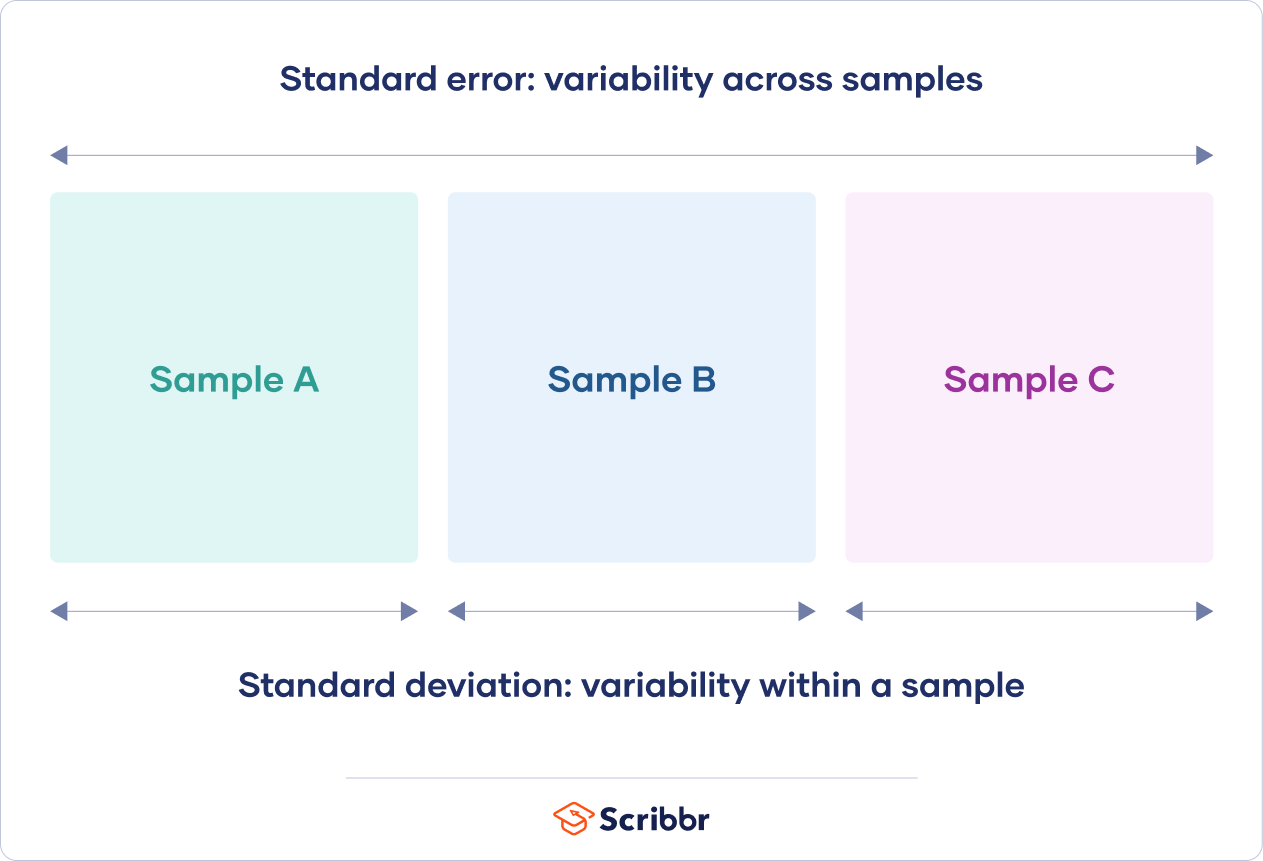
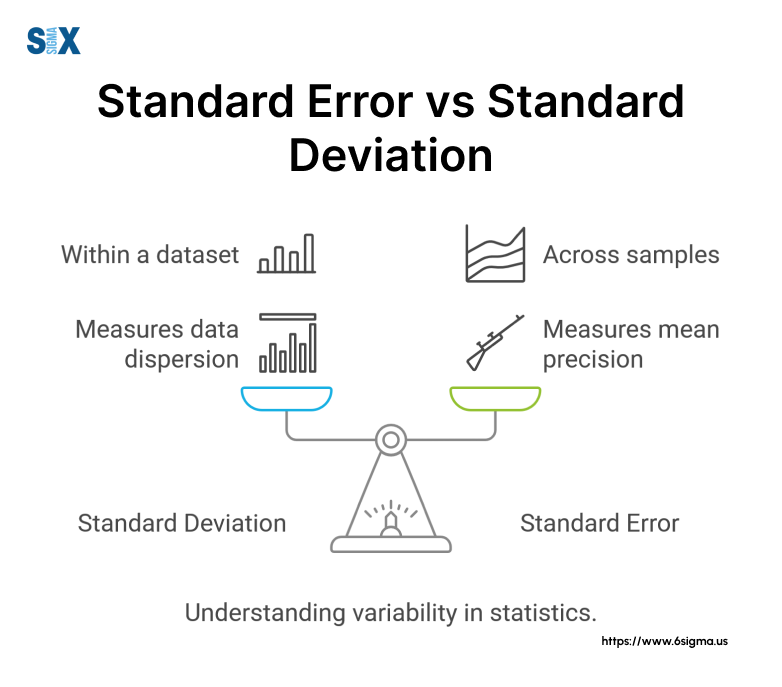
To understand what a high standard error means for your money, we must first distinguish it from its more famous cousin, standard deviation. In finance, standard deviation measures the volatility of an asset—how much the price swings around its own average. Standard error, however, measures the accuracy with which a sample distribution represents a population mean.
SE vs. SD: The Distinction in Finance
In personal finance and investing, standard deviation tells you how “bumpy” the ride will be. If a stock has a high standard deviation, its price fluctuates wildly. Standard error, conversely, tells you how much “faith” you should have in your calculated average return. If you calculate that a portfolio has an average annual return of 8% based on a five-year sample, a high standard error indicates that the 8% figure might be a statistical fluke rather than a reliable predictor of future performance. Mathematically, the standard error is the standard deviation divided by the square root of the sample size ($SE = sigma / sqrt{n}$).
The Role of Sample Size in Financial Reliability
A high standard error is often a direct byproduct of a small sample size. For instance, if an investment firm touts a new “High-Growth Fund” that has returned 20% over the last six months, the standard error of that mean return will be exceptionally high. Because the “n” (number of months) is low, the statistical “noise” is high. In finance, a high standard error essentially means that the “signal”—the true underlying performance of the asset—is being drowned out by random market fluctuations.
High Standard Error in Investment Analysis: Why Your ROI Might Be a Mirage
When evaluating investment opportunities, we often look at metrics like Alpha (excess return) and Beta (market sensitivity). Analysts use regression models to determine these values. However, every regression output includes a standard error for the coefficients. A high standard error in these metrics can lead to disastrous financial decisions.
The Reliability of Alpha and Beta Metrics
If you are looking at a hedge fund that claims a high “Alpha,” you are looking at their ability to beat the market. However, if the standard error associated with that Alpha is high, it means the manager’s “skill” might actually just be luck. Statistically, if the standard error is more than half the value of the Alpha itself, the result is often not statistically significant. For an investor, a high standard error means that the “outperformance” you are paying high management fees for may not actually exist; it is simply a result of a skewed sample of trades.
Risk Assessment and the Confidence Interval
In finance, we use standard error to calculate “Confidence Intervals.” A high standard error results in a very wide confidence interval. For example, a financial advisor might tell you that your projected retirement portfolio will grow at 7% per year. If the standard error is low, the 95% confidence interval might be between 6% and 8%. However, if the standard error is high, that interval might widen to between -2% and 16%.
For someone planning their financial future, a high standard error introduces “sequence of returns risk.” It means the probability of hitting your target is low, and the possibility of a catastrophic shortfall is high. In the niche of money management, high standard error is synonymous with “unquantified uncertainty.”
The Cost of Uncertainty: How High Standard Error Impacts Corporate Budgeting
Moving from personal investing to business finance, standard error plays a pivotal role in corporate strategy and capital allocation. Large corporations rely on statistical forecasting to decide whether to build a new factory, acquire a competitor, or launch a product line.
Revenue Projections and Margin of Error
When a finance team projects future revenue, they use historical sales data and market trends. If the data used for these projections has a high standard error, the “expected” revenue becomes a dangerous anchor. A high standard error suggests that the market is too volatile or the data points are too sparse to provide a reliable mean.
If a company budgets its operating expenses based on a revenue projection with a high standard error, it risks a liquidity crisis. If the actual revenue falls at the lower end of the wide confidence interval created by that high SE, the company may find itself unable to cover its fixed costs or debt obligations.
Capital Allocation and the Hurdle Rate
In corporate finance, the “Hurdle Rate” is the minimum rate of return a company expects on a project. Decisions are made by comparing the Internal Rate of Return (IRR) to this hurdle. If the IRR calculation has a high standard error, the company is essentially gambling. A high SE indicates that the project’s success is highly sensitive to variables that the model cannot accurately predict. Professional financial controllers will often demand a “risk premium” on projects where the data shows a high standard error, effectively raising the hurdle rate to compensate for the lack of statistical certainty.
Practical Solutions: Mitigating High Standard Error in Financial Decision-Making
Identifying a high standard error is the first step; the second is taking action to mitigate the risks it presents. In both personal and business finance, there are proven strategies to reduce SE and increase the reliability of your financial forecasts.
Increasing Sample Frequency and Data Granularity
The most effective way to reduce standard error is to increase the sample size ($n$). In the context of the stock market, this might mean analyzing 20 years of daily price data instead of 5 years of monthly data. By increasing the number of observations, you dilute the impact of outliers and “black swan” events on your mean calculation. For a business, this might involve running more extensive market pilot programs before a full-scale national launch. The more data points you collect, the more the standard error shrinks, providing a clearer picture of the “true” financial reality.
Diversification as a Statistical Hedge
In the niche of investing, diversification is often called the “only free lunch.” From a statistical perspective, diversification helps manage the implications of a high standard error. If you invest in a single, volatile biotech stock, the standard error of your expected return is massive. However, by holding a basket of 50 diverse stocks, the errors of individual estimates tend to cancel each other out.
While diversification doesn’t necessarily reduce the standard error of a single asset, it reduces the impact that any one “erroneous” estimate has on your total net worth. It is a way of acknowledging that your data may be imperfect and building a financial safety net around that imperfection.

Conclusion: Why Precision is Profit
In the final analysis, a high standard error is a warning sign that the numbers on your spreadsheet are not as solid as they appear. In the world of money, assuming that an “average” is a “certainty” is one of the most common paths to financial loss.
When you encounter a high standard error in your financial research or business reports, it is a signal to pause. It demands that you either gather more data, widen your margin of safety, or seek a more stable investment vehicle. By understanding that a high SE represents the gap between a “guess” and “knowledge,” you can make more informed, disciplined, and ultimately more profitable decisions. In finance, those who respect the error are the ones who ultimately keep the profit.
aViewFromTheCave is a participant in the Amazon Services LLC Associates Program, an affiliate advertising program designed to provide a means for sites to earn advertising fees by advertising and linking to Amazon.com. Amazon, the Amazon logo, AmazonSupply, and the AmazonSupply logo are trademarks of Amazon.com, Inc. or its affiliates. As an Amazon Associate we earn affiliate commissions from qualifying purchases.