
The flute is one of humanity’s oldest instruments, yet in the digital age, its sonic profile represents one of the most complex challenges for audio engineers and software developers. To ask “what does a flute sound like” in a modern technological context is to delve into the physics of longitudinal waves, the intricacies of spectral analysis, and the cutting edge of artificial intelligence. While a layperson might describe the sound as “breathy” or “pure,” a tech-professional views it as a specific arrangement of sine-like waveforms, harmonic overtones, and stochastic noise.
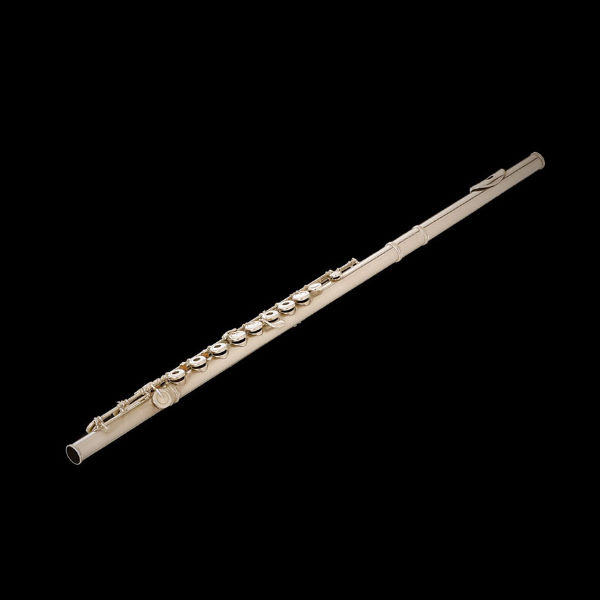
In this exploration, we move beyond the orchestral pit to examine how the flute’s unique acoustic signature is captured, modeled, and synthesized in the 21st century.
The Physics of Sound: Decoding the Flute’s Waveform
To understand the digital recreation of a flute, one must first understand its physical behavior. Unlike reed instruments or brass, the flute is an “air reed” instrument. The sound is produced by directing a stream of air against a sharp edge, creating an oscillating pressure wave within the tube.
Harmonic Overtones and Pure Tones
From a signal processing perspective, the flute is renowned for its proximity to a pure sine wave, especially in its middle register. However, it is the deviations from that purity that define its character. Technical analysis shows that the flute possesses a relatively weak series of upper harmonics compared to a violin or an oboe. This lack of harmonic density is why the flute sounds “clear” or “hollow.” For developers building Virtual Instrument Technology (VSTs), replicating this balance requires precise oscillators that can mimic the subtle prominence of the first and second harmonics while keeping the higher frequencies transparent.
The Role of Noise and “Chiff” in Digital Recreation
What distinguishes a high-end digital flute from a “keyboard preset” of the 1990s is the inclusion of non-harmonic transients. When a flutist begins a note, there is a momentary burst of white noise—the sound of air hitting the embouchure hole before the air column stabilizes. In the tech world, this is often referred to as “chiff.” High-fidelity audio software must use stochastic noise generators to simulate this breathiness. Without the inclusion of this “noise,” the sound lacks the organic texture that the human ear identifies as “real.”
Virtual Instrument Technology (VSTs): Beyond Simple Sampling
The quest to answer “what does a flute sound like” digitally has led to the development of massive sample libraries and sophisticated synthesis engines. No longer content with a single recording of a note, modern software seeks to capture the “performance” rather than just the “sound.”
Multisampled Libraries and Velocity Layers
The industry standard for professional composers involves multisampling. A single flute may be recorded tens of thousands of times in a silent studio. Each note is captured at different “velocity layers”—from the softest pianissimo to the most aggressive fortissimo.
The technology behind these libraries, such as Native Instruments’ Kontakt engine, uses complex scripting to trigger different samples based on the user’s MIDI input. If a producer hits a key harder, the software doesn’t just turn up the volume; it triggers a sample with a different harmonic profile, capturing the slight sharping of pitch and the increased air turbulence associated with a forceful blow. This “round-robin” sampling ensures that no two consecutive notes sound identical, avoiding the “machine-gun effect” that plagues lower-quality digital audio.
Physical Modeling: Simulating the Breath and the Bore
While sampling relies on recordings, physical modeling synthesis takes a different technological approach. Companies like Audio Modeling (with their SWAM engine) or Arturia use mathematical equations to simulate the physical properties of the flute in real-time.
Instead of playing back a recording, the CPU calculates how air would flow through a silver tube of a specific length. This allows for unparalleled expression. A user can digitally manipulate the “breath pressure” or the “lip position” mid-note, causing the virtual flute to overblow into a higher octave or introduce a vibrato that sounds fluid rather than mechanical. This represents a peak in audio engineering: the transition from static data (samples) to dynamic, reactive algorithms.

The Role of AI and Machine Learning in Sound Emulation
As we move further into the decade, Artificial Intelligence is redefining our ability to replicate acoustic instruments. AI doesn’t just look at the frequency; it learns the “intent” of the sound.
Generative Audio Models and Timbre Transfer
One of the most exciting developments in audio tech is “Timbre Transfer,” popularized by projects like Google’s Magenta. Using neural networks, developers can now take a source audio file—for instance, a human singing—and “map” the sonic characteristics of a flute onto it.
The AI analyzes the pitch and dynamics of the vocal and re-synthesizes it using a learned model of a flute’s tonal architecture. This answers the question of what a flute sounds like by demonstrating its DNA applied to non-traditional sources. The result is a hybrid sound that retains the “fluteness” (the breath, the purity) while following the phrasing of a human voice.
Neural Synthesis: Capturing the Nuance of Human Performance
Traditional synthesis often struggles with legato—the smooth transition between notes. AI models are now being trained on thousands of hours of professional flute performances to understand how one note “melts” into the next. By using recurrent neural networks (RNNs), software can predict how a flute’s spectrum should change during a transition, filling in the gaps that traditional sampling leaves behind. This technology is moving us toward a future where a digital flute is indistinguishable from a live recording, even to the trained ear of a professional musician.
Integrating Flute Textures in Modern Digital Production
In the professional landscape of sound design, the “flute sound” is a tool used for specific psychological and technical effects. Understanding its place in a digital mix is essential for modern producers and engineers.
Post-Processing and Spatial Audio
Because the flute occupies a high-frequency range (typically between 250 Hz and 3 kHz for the fundamental, with overtones reaching much higher), it requires specific digital processing to sit correctly in a mix. Engineers use “subtractive EQ” to remove harshness in the 2-4 kHz range and “convolution reverb” to place the instrument in a virtual space.
With the rise of Spatial Audio and Dolby Atmos, the flute’s sound is being treated as an object in 3D space. Because it lacks a heavy low-end, it is the perfect candidate for being placed “above” or “behind” the listener in a cinematic score, creating an ethereal sense of height that more grounded instruments like the cello cannot achieve.
The Future of Virtual Woodwinds in VR and Gaming
In the realm of gaming and Virtual Reality (VR), “what a flute sounds like” is increasingly determined by procedural audio. Instead of pre-recorded loops, game engines like Unreal or Unity can use real-time synthesis to change the flute’s sound based on the player’s environment. If a character is in a digital cave, the software adjusts the resonance and decay of the flute sound algorithmically.
Furthermore, as haptic feedback technology advances, we are seeing the emergence of “digital instruments” that provide tactile resistance. Imagine a VR interface where the haptic controllers simulate the vibration of the air column in a flute, allowing a user to “feel” the sound as they play.
Conclusion: The Digital Legacy of the Flute
The sound of a flute is a paradox: it is a simple column of vibrating air, yet it is one of the most difficult timbres to perfect in the digital domain. From the early days of 8-bit FM synthesis to the modern era of neural networks and physical modeling, our technological journey to replicate the flute has pushed the boundaries of what computers can do.
To the modern technologist, a flute sounds like a masterclass in acoustics. It is a reminder that even as we advance into an era dominated by AI and silicon, the organic, breathy, and imperfect nuances of a 35,000-year-old invention remain the gold standard for beauty in sound. Whether through a $50,000 silver instrument or a highly optimized VST, the essence of the flute remains a vital component of the global soundscape, proving that the best technology is that which captures the soul of human expression.
aViewFromTheCave is a participant in the Amazon Services LLC Associates Program, an affiliate advertising program designed to provide a means for sites to earn advertising fees by advertising and linking to Amazon.com. Amazon, the Amazon logo, AmazonSupply, and the AmazonSupply logo are trademarks of Amazon.com, Inc. or its affiliates. As an Amazon Associate we earn affiliate commissions from qualifying purchases.