
In the expansive ecosystem of Minecraft, the transition from a casual builder to a technical engineer is marked by the mastery of a single, complex block: the Redstone Comparator. While basic components like levers, pressure plates, and redstone dust provide the foundation for simple automation, the comparator introduces a level of computational logic that mirrors real-world electrical engineering and software development.
To understand what a comparator does is to understand the language of “signal strength”—the nuanced, 15-level gradient that powers the game’s most sophisticated machines. Whether you are designing an automated sorting facility, a hidden high-security entrance, or a functional 8-bit computer within the game, the comparator is the indispensable CPU of your circuit.

Understanding the Fundamentals: What is a Redstone Comparator?
At its core, the Redstone Comparator is a logic gate. However, unlike the “Repeater,” which simply boosts a signal back to full strength or adds a delay, the comparator is designed to maintain, compare, or modify the specific strength of the signal it receives.
The Anatomy of the Device
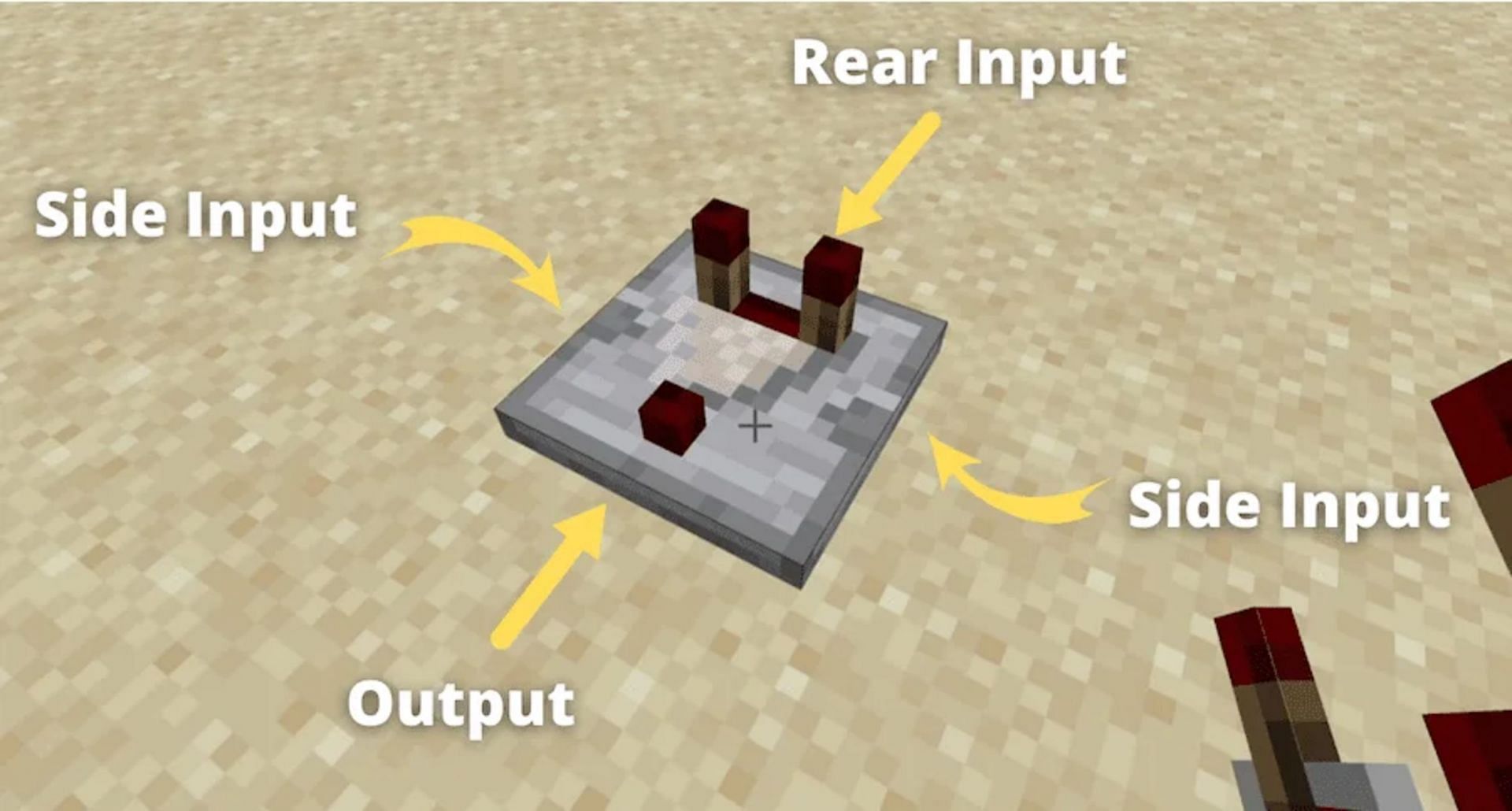
A comparator consists of three input sides (the back and the two lateral sides) and one output side (the front). Visually, it features two stationary redstone torches at the back and one movable torch at the front. The state of this front torch indicates the “mode” the device is currently in. Understanding these physical cues is essential for debugging complex circuits, as the device operates based on the mathematical relationship between the signals entering these different ports.
How Signals are Received and Processed
In Minecraft, redstone signals are not merely “on” or “off.” They possess a value ranging from 0 to 15. As redstone dust travels away from a power source, it loses one level of strength for every block it crosses. The comparator is unique because it can “read” this specific value. Unlike a repeater, which takes any input and converts it into a full 15-strength output, a comparator (by default) outputs the exact same signal strength it receives from the back, provided the conditions of its logic gate are met.
The Core Modes of Operation
The power of the comparator lies in its two distinct operational states: Comparison Mode and Subtraction Mode. You can toggle between these modes by right-clicking (or using the “interact” button) on the block, which toggles the front torch on or off.
Comparison Mode (The Default State)
When the front torch is unlit, the comparator is in Comparison Mode. In this state, the device acts as a gatekeeper. It looks at the signal strength coming into the back (Input A) and compares it to the strongest signal entering either of its sides (Input B).
-
If Input A is greater than or equal to Input B, the comparator outputs a signal equal to Input A.
-
If Input A is weaker than Input B, the output is zero.
This functionality is crucial for creating “threshold” sensors. For example, you can set a reference signal of 10 on the side of the comparator. The device will only activate its output once the main line reaches a strength of 10 or higher, allowing for precise control over when a machine should trigger.
Subtraction Mode (The Dynamic State)
By clicking the comparator so the front torch glows, you activate Subtraction Mode. This changes the logic from a simple “greater than” check to an arithmetic operation. The comparator takes the signal strength from the back (Input A) and subtracts the strongest signal from the sides (Input B).
- The Formula: Output = Input A – Input B (with a minimum output of 0).
Subtraction mode is the cornerstone of advanced redstone mathematics. It allows players to create “pulse extenders,” “faders,” and “clocks.” By looping the output of a comparator back into its own side, engineers can create a decaying signal that gradually counts down, a vital mechanic in timed sequences and complex user interfaces within the game.
Advanced Functionalities: Signal Strength and Container Monitoring
Beyond its role as a logic gate, the comparator possesses a “sensor” capability that allows it to interact with the physical world of Minecraft in ways other redstone components cannot. This is often referred to as its “inventory-checking” function.
Measuring Inventory Fullness
When placed directly against a container—such as a chest, hopper, dispenser, or furnace—the comparator outputs a signal strength proportional to how full that container is. This is not based on the number of items, but on the “fullness” of the slots.
-
A single unstackable item (like a diamond sword) counts as a full stack.
-
A stack of 64 cobblestones counts as one full slot.
The math behind this follows a specific ratio: the more items in the container, the higher the signal strength (from 0 to 15). This allows players to build “smart” storage systems that trigger an alarm when a chest is full or activate a furnace array only when a hopper has enough fuel to process a batch of ores.
Interaction with Non-Container Blocks
The comparator’s sensing ability extends to several non-storage blocks, providing a “tech” solution for environmental triggers:
-
Lecterns: It outputs a signal based on which page of the book is currently open.
-
Cauldrons: It measures the water level (0 to 3).
-
Composters: It reflects the level of compost inside (0 to 8).
-
Cake: It outputs a signal based on how many slices remain.
-
Item Frames: It measures the rotation of the item inside the frame (0 to 8).
These interactions allow for the creation of “combination locks” and “secret entrances.” By rotating an item in a frame to a specific position, a comparator can be made to output exactly the signal strength needed to open a hidden door, turning a simple decoration into a sophisticated biometric-style security key.
Practical Applications in Technical Minecraft Builds
To appreciate the comparator, one must look at how it is applied in the field of “Technical Minecraft”—the community-driven pursuit of peak efficiency and automation.
Sorting Systems and Item Filters
The most ubiquitous use of the comparator is in the “Standard Item Filter.” By using a comparator to monitor a hopper, a player can detect when the hopper contains exactly 23 items. When a 24th item enters, the signal strength increases from 2 to 3. This slight increase can be used to trigger a torch that unlocks the hopper, allowing the item to pass through. This logic allows for massive, automated warehouses where the game autonomously sorts thousands of items into designated chests.
Pulse Sustainers and Logic Clocks
In complex software-like systems, “clocks” are needed to synchronize operations. A “Comparator Clock” is one of the fastest and most compact clock designs available. By placing a comparator in subtraction mode and feeding its output back into its side, the signal rapidly turns itself off and on. This creates a high-frequency pulse that can drive rapid-fire dispensers or high-speed flying machines.
The Comparator as a Bridge to Real-World Computing Logic
While Minecraft is categorized as a game, the Redstone Comparator functions as a legitimate educational tool for understanding computer architecture. The principles it utilizes are nearly identical to those found in Analog-to-Digital Converters (ADCs) and Arithmetic Logic Units (ALUs) in modern hardware.
Boolean Logic and Analog Computing in a Digital Sandbox
In traditional computing, we deal with binary (0 and 1). Minecraft redstone is, in many ways, an analog system disguised as a digital one, because of the 15 levels of signal strength. The comparator is the device that allows players to bridge these two worlds. It allows for “Analog Addition” and “Analog Subtraction,” which are significantly more space-efficient than building binary adders using only basic logic gates like AND, OR, and NOT.
By mastering the comparator, players are essentially learning the basics of signal processing. They learn how to handle interference, how to manage “noise” (unwanted signals), and how to optimize data flow. It is no surprise that many computer science students and professional software engineers cite Minecraft’s redstone system as a formative influence on their understanding of how logic flows through a processor.

Conclusion: The Engineer’s Multi-Tool
What does a comparator do in Minecraft? It functions as the brain of the operation. It transforms a simple sequence of “on/off” pulses into a nuanced system capable of measurement, calculation, and decision-making. From the simple task of checking if a furnace has finished smelting to the monumental task of powering a working cellular automaton, the comparator is the technical heart of Minecraft. It represents the point where the game ceases to be a toy and becomes a sophisticated engineering simulation, providing players with the tools to build a digital world limited only by their understanding of logic.
aViewFromTheCave is a participant in the Amazon Services LLC Associates Program, an affiliate advertising program designed to provide a means for sites to earn advertising fees by advertising and linking to Amazon.com. Amazon, the Amazon logo, AmazonSupply, and the AmazonSupply logo are trademarks of Amazon.com, Inc. or its affiliates. As an Amazon Associate we earn affiliate commissions from qualifying purchases.