
The humble coil, often overlooked in the grand symphony of a car’s internal combustion engine, plays a surprisingly critical role. While not a component that immediately springs to mind for the average driver, its function is fundamental to the very act of igniting the fuel-air mixture that powers our journeys. In the realm of automotive technology, understanding the purpose and operation of such components demystifies the complex machinery we rely on daily. This exploration delves into the technological significance of the ignition coil, its place within the automotive electrical system, and the underlying scientific principles that make it an indispensable part of modern vehicles.
The Core Function: Generating a Spark of Life
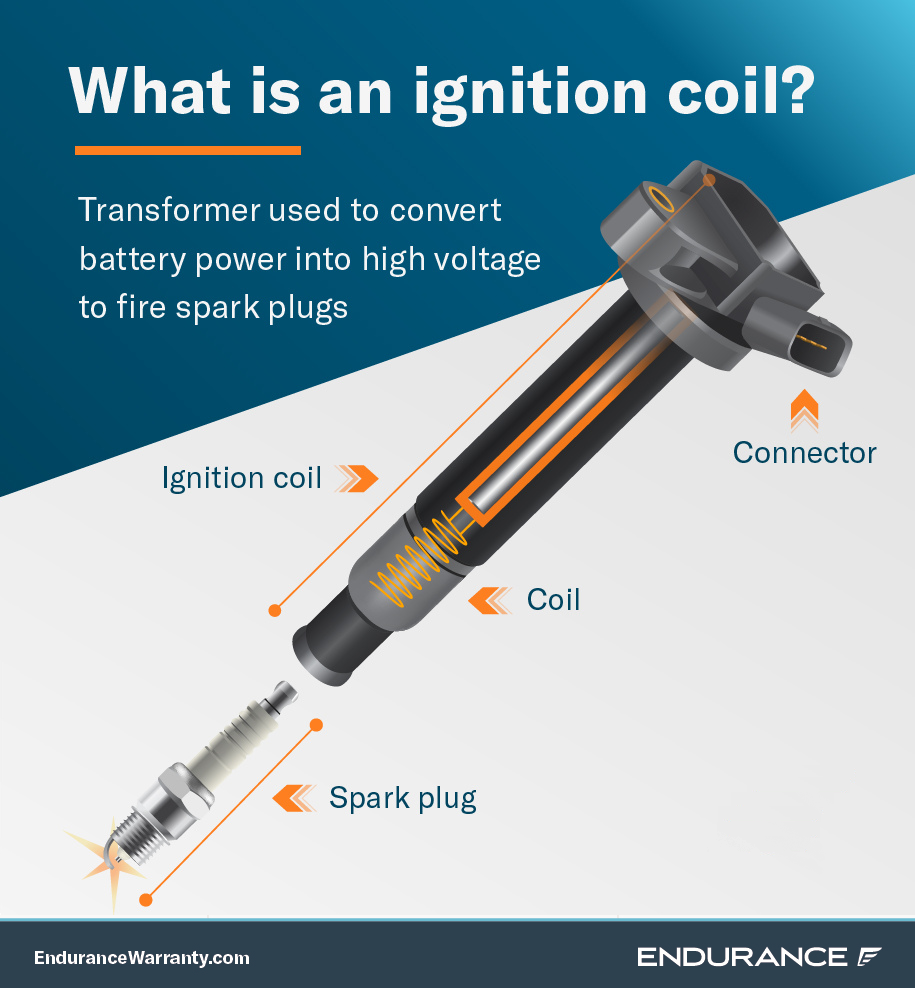
At its heart, the ignition coil’s primary responsibility is to transform the car’s relatively low battery voltage into the extremely high voltage required to create a spark within the engine’s combustion chambers. This spark is the catalyst that ignites the compressed fuel-air mixture, initiating the combustion process that drives the pistons and ultimately propels the vehicle. Without a sufficiently powerful spark, the engine would simply sputter and fail to run.
The Principle of Electromagnetic Induction
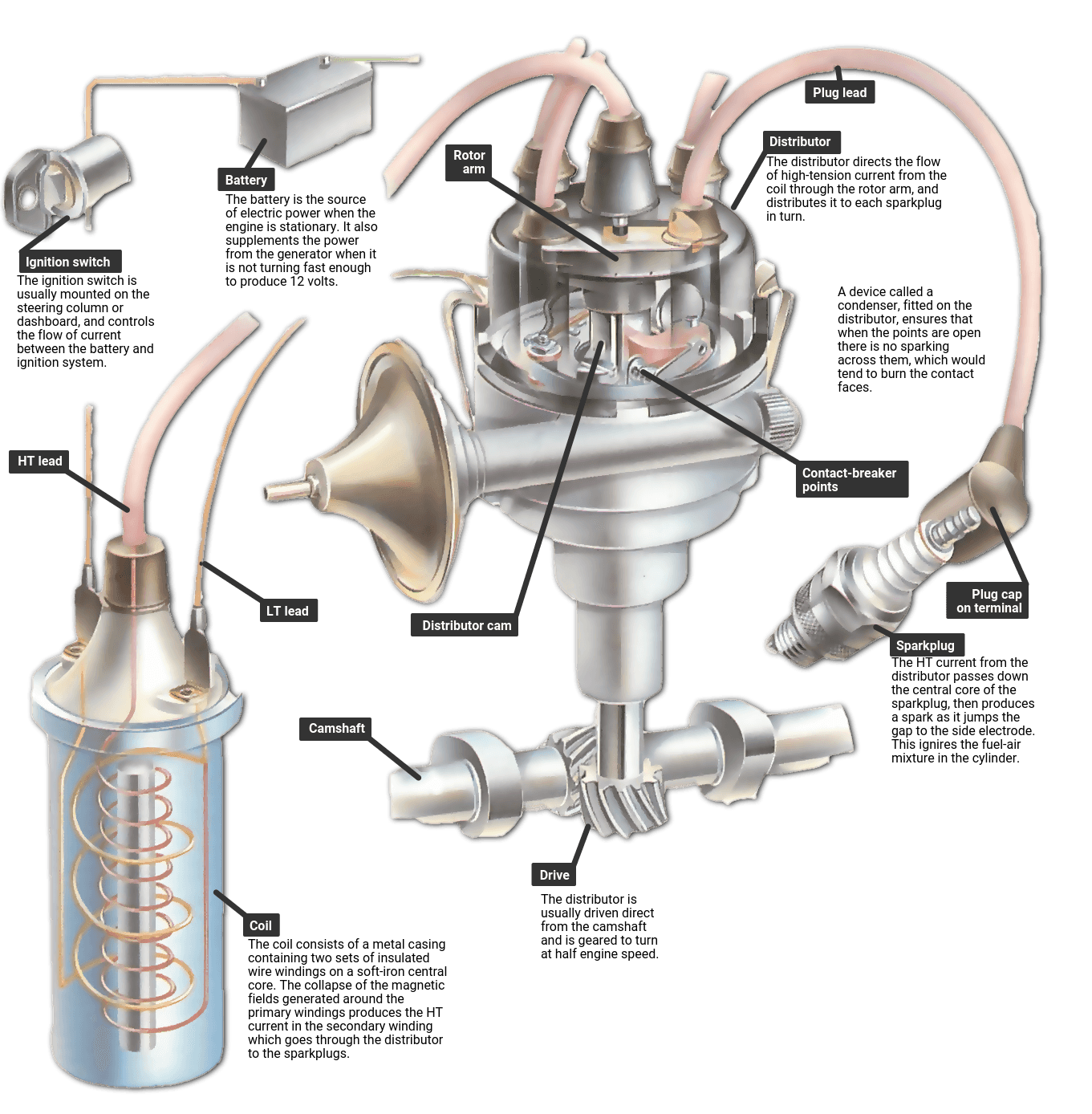
The operation of an ignition coil is rooted in the fundamental principles of electromagnetic induction, a phenomenon discovered by Michael Faraday. The coil itself is essentially a type of electrical transformer, consisting of two distinct windings of insulated wire wrapped around a common iron core. These windings are referred to as the primary coil and the secondary coil.
- The Primary Coil: This winding is made of relatively thick wire and has a smaller number of turns. It is connected to the vehicle’s 12-volt battery and the ignition system’s control module (or points and condenser in older vehicles). When current flows through the primary coil, it generates a magnetic field in the iron core.
- The Secondary Coil: This winding is made of much thinner wire and has a significantly greater number of turns, often hundreds or even thousands more than the primary coil. It is insulated from the primary coil and is connected to the spark plug (either directly or via a spark plug wire).
The magic happens when the current flowing through the primary coil is suddenly interrupted. This interruption, controlled by the engine’s control unit (ECU) or a mechanical distributor, causes the magnetic field within the iron core to collapse rapidly. According to Faraday’s law of induction, a changing magnetic field will induce a voltage in any conductor that it passes through. In this case, the collapsing magnetic field passes through the secondary coil, inducing a very high voltage across its windings. This voltage is amplified due to the vast difference in the number of turns between the primary and secondary coils – a core principle of transformer action.
From Low Voltage to High Voltage Ignition
The transformation from the car’s 12-volt system to the tens of thousands of volts needed for a spark is a testament to the efficient design of the ignition coil. This high voltage is essential because it must overcome the resistance of the air and the gap between the electrodes of the spark plug. Once the voltage reaches a critical point, it ionizes the air within the spark plug gap, creating a conductive path. This allows a surge of electrical current to jump across the gap, producing the intense spark. This spark then ignites the compressed fuel and air in the cylinder, leading to the power stroke.
The Ignition Coil within the Automotive Electrical System
The ignition coil does not operate in isolation. It is an integral part of a sophisticated electrical system designed to precisely control the timing and delivery of the spark to each cylinder. The evolution of ignition systems has seen the coil transition from being a standalone component in older vehicles to being integrated into more complex electronic systems in modern cars.
Traditional Ignition Systems (Points and Condenser)
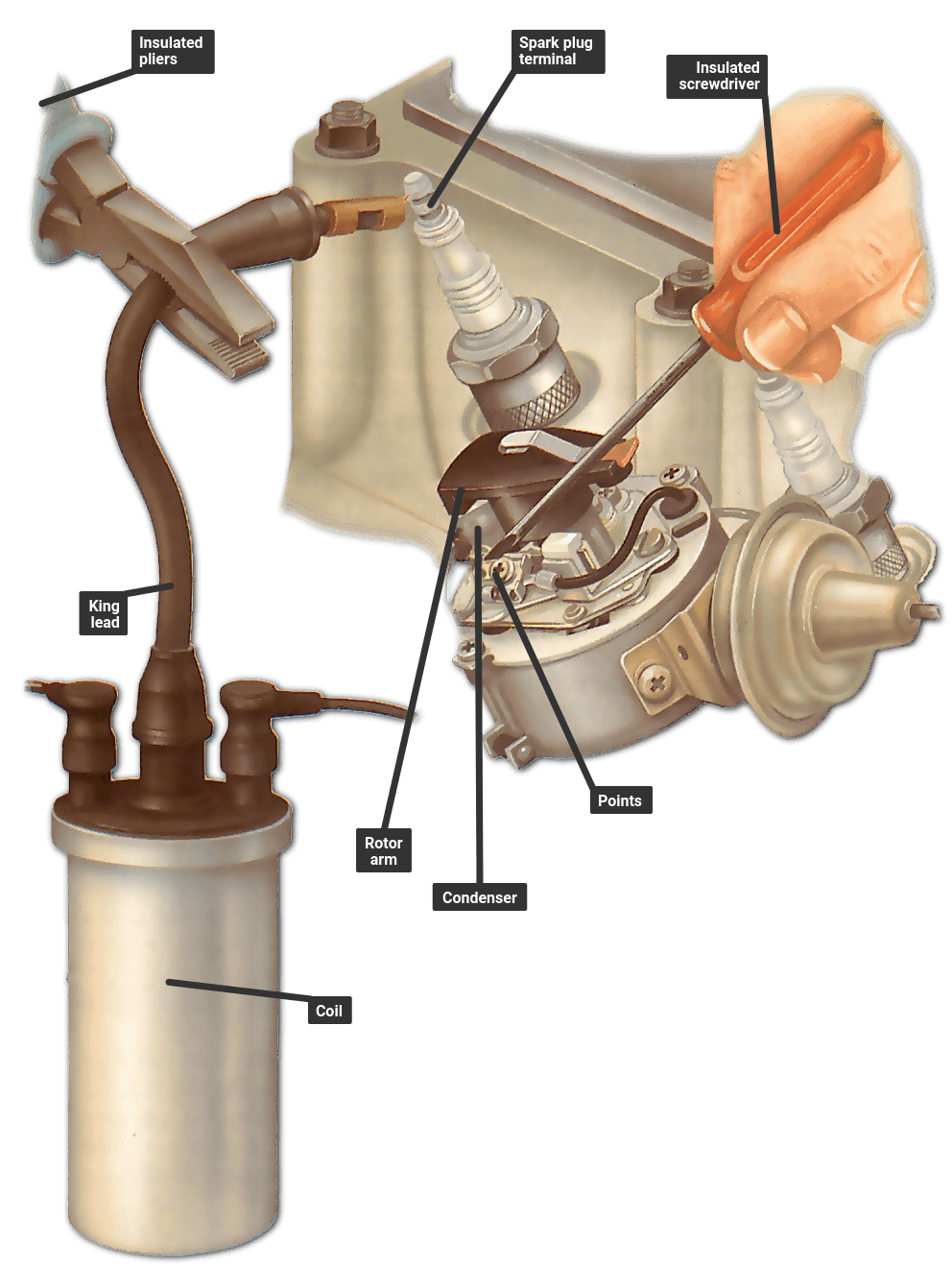
In older vehicles, the ignition system relied on mechanical components. The timing of the current interruption to the primary coil was controlled by a set of breaker points within the distributor. As the engine rotated, a cam on the distributor shaft would open and close these points. When the points opened, the current to the primary coil was broken, inducing the high voltage. A condenser was also used in conjunction with the points to reduce arcing and improve the efficiency of the current interruption. While effective for its time, this system required regular maintenance and was susceptible to wear and tear.
Electronic Ignition Systems
The advent of electronic ignition systems marked a significant advancement. In these systems, the mechanical points are replaced by an electronic control module (ECU) or a dedicated ignition control unit. This module uses sensors, such as the crankshaft position sensor and camshaft position sensor, to precisely determine the engine’s speed and the optimal timing for ignition. The ECU then signals a transistor or other switching device to interrupt the current to the primary coil. This electronic control offers greater accuracy, reliability, and a wider range of adjustability, leading to improved engine performance and fuel efficiency.
Coil-on-Plug (COP) Technology
The most modern ignition systems often employ Coil-on-Plug (COP) technology. In a COP system, each spark plug has its own dedicated ignition coil mounted directly on top of it. This eliminates the need for traditional spark plug wires, which can be a source of energy loss and interference. Each COP unit contains both the coil and the necessary control electronics. This design further enhances spark energy, improves ignition timing precision for each cylinder individually, and reduces the complexity and potential failure points within the ignition system.
Types and Variations of Ignition Coils
While the fundamental principle of operation remains the same, ignition coils have evolved in design and form factor to meet the demands of different engine technologies and packaging constraints.
Canister Coils
These are the traditional, cylindrical ignition coils that were commonly found in vehicles with distributors. They are typically mounted in a central location and connected to the spark plugs via spark plug wires. The canister design offers a robust and relatively simple solution for generating the necessary high voltage.
Distributorless Ignition Systems (DIS)
In distributorless ignition systems, two spark plugs fire simultaneously, with one firing during the power stroke and the other during the exhaust stroke (a wasted spark). These systems often use a pair of coils, each serving two cylinders. This design eliminates the distributor but still utilizes spark plug wires.
Coil-on-Plug (COP)
As mentioned earlier, COP coils are the most advanced and prevalent in modern vehicles. Each coil is a self-contained unit, directly attaching to the spark plug. This integrated design allows for precise individual cylinder timing, maximizes spark energy transfer, and simplifies the ignition system by eliminating spark plug wires.
Pencil Coils
A variation of COP coils, pencil coils are a more elongated and slender design. They are particularly useful in engines with limited space between the cylinder head and other components, allowing for easier installation and servicing.
The Impact of Coil Function on Engine Performance and Maintenance
The proper functioning of the ignition coil is directly linked to the overall health and performance of a vehicle’s engine. A malfunctioning coil can lead to a cascade of issues, impacting fuel economy, emissions, and drivability.
Symptoms of a Failing Ignition Coil
When an ignition coil begins to fail or malfunctions, several noticeable symptoms can arise. These include:
- Engine Misfires: This is perhaps the most common symptom. A weak or absent spark from a faulty coil means that the fuel-air mixture in that cylinder is not igniting properly, leading to an incomplete combustion cycle. This can manifest as a rough idle, hesitation during acceleration, or a general lack of power.
- Reduced Fuel Efficiency: When an engine misfires, it is not burning fuel efficiently. The unburned fuel can be expelled through the exhaust, leading to a noticeable drop in miles per gallon.
- Check Engine Light: Modern vehicles are equipped with sophisticated onboard diagnostics. A persistent engine misfire or an issue with the ignition system will trigger the “Check Engine” light on the dashboard, often with a specific diagnostic trouble code (DTC) indicating a misfire or an ignition circuit fault.
- Difficulty Starting: In severe cases, a completely failed ignition coil can prevent the engine from starting altogether, especially if multiple coils are affected.
- Catalytic Converter Damage: Unburned fuel passing through the exhaust system can overheat and damage the catalytic converter, a costly repair.
Diagnostics and Replacement
Diagnosing a faulty ignition coil typically involves using an OBD-II scanner to read diagnostic trouble codes. Mechanics can also perform voltage and resistance tests on the coils and their associated wiring. In systems with multiple coils (like COP), swapping a suspected faulty coil with a known good one from another cylinder can quickly help isolate the problem.
Replacement of ignition coils is a common maintenance task. In older vehicles with canister coils, replacement might involve removing spark plug wires and the coil from its mounting bracket. For COP systems, the process is usually simpler, involving the removal of a retaining bolt and electrical connector, followed by the installation of the new coil directly onto the spark plug. The cost of replacement can vary depending on the type of coil and the vehicle model, but it is generally a more affordable repair compared to major engine work.
Conclusion: The Indispensable Spark Generator
In conclusion, the ignition coil, though often unseen and unheard by the driver, is a cornerstone of the internal combustion engine’s operation. Its ability to amplify low voltage into a high-energy spark is a testament to clever engineering and the application of fundamental physics. From its early incarnations in mechanical ignition systems to the highly integrated Coil-on-Plug technology of today, the ignition coil has continuously evolved to meet the demands of performance, efficiency, and reliability. Understanding what this crucial component does provides valuable insight into the intricate technological ballet that brings our vehicles to life and keeps them running smoothly on the road.
aViewFromTheCave is a participant in the Amazon Services LLC Associates Program, an affiliate advertising program designed to provide a means for sites to earn advertising fees by advertising and linking to Amazon.com. Amazon, the Amazon logo, AmazonSupply, and the AmazonSupply logo are trademarks of Amazon.com, Inc. or its affiliates. As an Amazon Associate we earn affiliate commissions from qualifying purchases.