
In the landscape of modern education, the term “charter school” is frequently invoked, yet its systemic and financial implications are often misunderstood. From a financial perspective, a charter school represents more than just a classroom; it is a unique fiscal entity—a hybrid of public funding and private management. To understand what a charter school means in the context of the current economy, one must look past the curriculum and examine the flow of capital, the principles of market competition, and the value proposition it offers to both the state and the individual household.
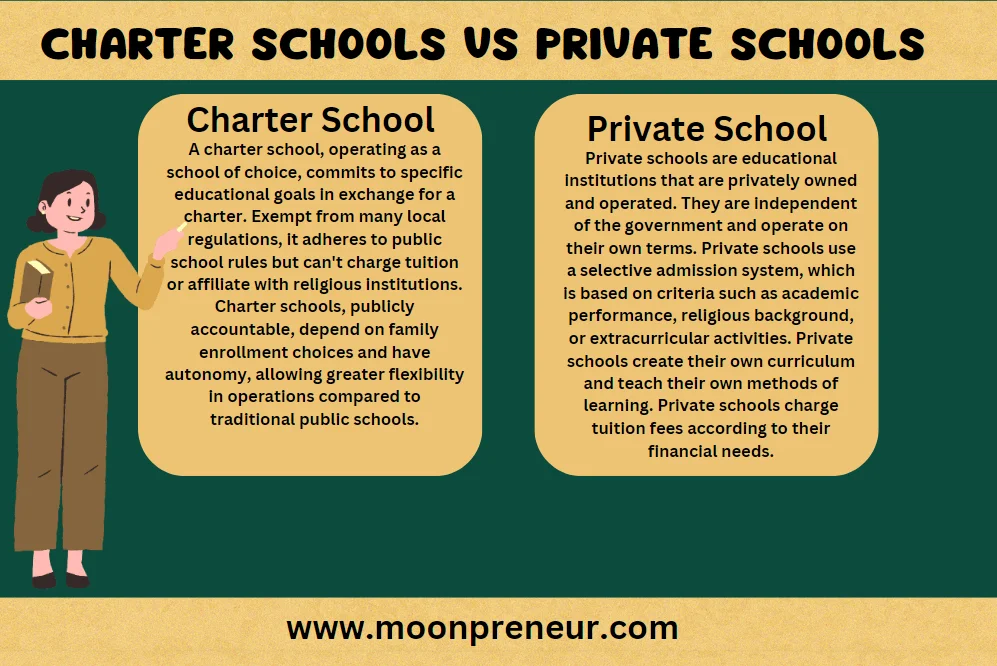
At its core, a charter school is a publicly funded, independently operated institution that exists under a “charter” or contract with a local or state authority. This contract grants the school autonomy over its operations in exchange for a commitment to meet specific performance goals. In the world of finance and business strategy, this is a quintessential “performance-based contract.” This article explores the financial mechanics of charter schools, their impact on personal finance for families, and the broader economic implications of this educational model.
The Financial DNA of Charter Schools: Public Funding vs. Private Management
The most critical distinction of a charter school lies in its financial structure. Unlike traditional public schools, which are governed by elected school boards and bureaucratic mandates, charter schools operate with a level of fiscal autonomy akin to a private corporation or a non-profit organization.
The Per-Pupil Expenditure Model
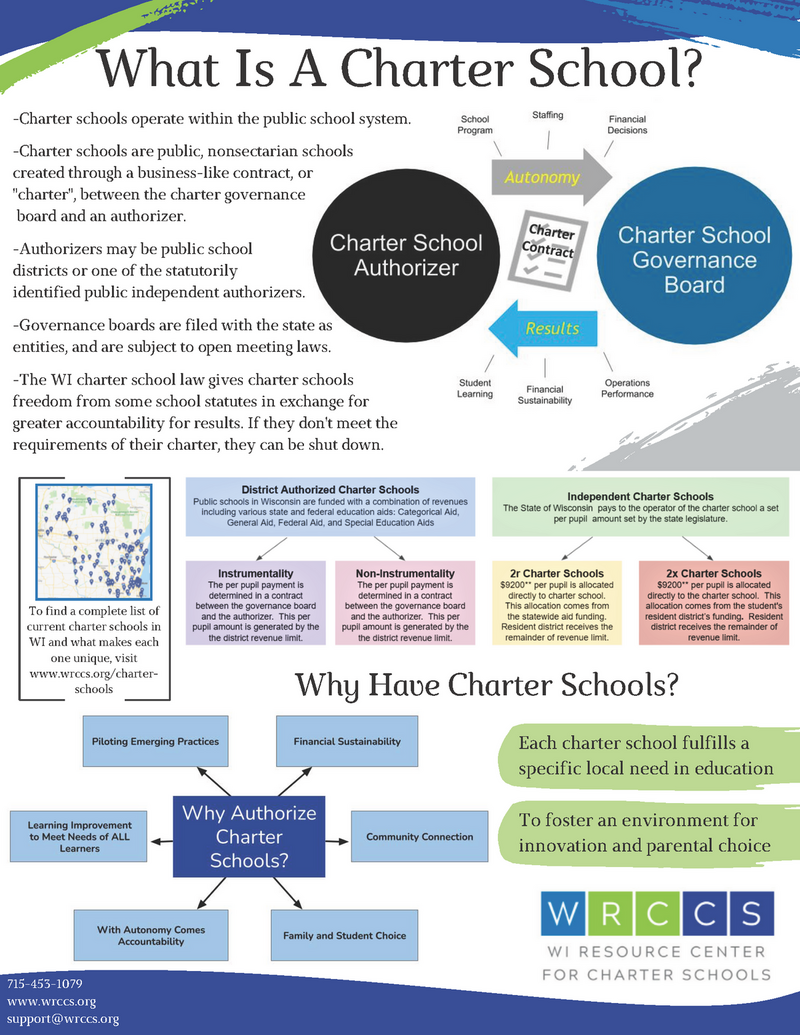
The primary revenue stream for a charter school is derived from the “money follows the child” principle. When a student moves from a traditional district school to a charter school, a portion of the tax revenue allocated for that student—the per-pupil expenditure—is transferred to the charter institution.
From a business finance perspective, this creates a competitive marketplace. Charter schools must attract and retain “customers” (students) to maintain their revenue. If a school fails to provide a desirable service, its enrollment drops, its funding decreases, and it faces the very real threat of insolvency. This is a stark departure from the traditional public school model, where funding is often guaranteed by geographic zoning regardless of localized performance.
Private Philanthropy and Capital Investment
While charter schools receive public operational funding, they often face a significant financial hurdle: facilities. In many jurisdictions, charter schools do not receive the same level of funding for infrastructure and buildings that traditional districts do. This has led to the rise of a complex financial ecosystem involving private philanthropy and capital markets.
High-net-worth individuals and charitable foundations often provide the “seed capital” for charter networks. Furthermore, many charter schools tap into the municipal bond market or utilize New Markets Tax Credits (NMTC) to finance their facilities. For investors, charter school bonds represent a specific niche of the fixed-income market, offering a blend of social impact and tax-exempt interest. Understanding “what a charter school means” therefore requires recognizing it as a vehicle for private investment in public infrastructure.
The Value Proposition: Charter Schools as a Personal Finance Strategy for Families
For the average household, the decision to enroll a child in a charter school is often a strategic financial move. In an era where private school tuition can rival the cost of a luxury mortgage, charter schools offer a middle-ground alternative that impacts a family’s long-term financial health.
Bridging the Gap Between Public and Private
A charter school often mimics the “brand” of a private academy—specialized curricula, smaller class sizes, or a focus on specific disciplines like STEM or the arts—but without the tuition fee. For a family in a struggling school district, a charter school represents an “arbitrage” opportunity. They can access a high-quality, specialized education (which would typically cost $20,000 to $40,000 annually in the private sector) at no out-of-pocket cost.
This “free” access to specialized education allows families to redirect those potential tuition funds into other wealth-building vehicles, such as 529 College Savings Plans, retirement accounts, or home equity. In this sense, a charter school is a significant tool for household capital preservation.
Impact on Local Property Values and Neighborhood Economics
Real estate is the largest asset for most individuals, and nothing influences property value more than the quality of local schools. Historically, high-performing schools were locked behind high-barrier-to-entry neighborhoods. Charter schools decouple “place” from “educational quality.”
When a high-performing charter school opens in a lower-income or transitioning neighborhood, it can act as an economic catalyst. It attracts families who might otherwise have moved to the suburbs, thereby stabilizing the local tax base and increasing demand for local housing. For the savvy real estate investor or homeowner, the “meaning” of a charter school is its potential to drive localized property appreciation by providing a high-value amenity to the community.
Fiscal Accountability and the Business of Education
The “charter” in charter school is essentially a business license. If the school does not produce the results outlined in its contract—either academically or financially—the charter can be revoked. This introduces a level of risk and accountability that is rare in the public sector.
Operational Autonomy and Budgetary Flexibility
Because they are not bound by the same collective bargaining agreements or district-wide procurement rules as traditional schools, charter school administrators have significant flexibility in how they allocate their budgets. They can choose to spend more on teacher bonuses and less on administrative overhead, or invest heavily in classroom technology rather than sports facilities.
This flexibility allows charter schools to operate as “lean startups” in the education space. They can pivot their strategies based on data, adopting new software tools or pedagogical techniques much faster than a massive district bureaucracy. For a business analyst, the charter model is a study in operational efficiency and the decentralized management of public funds.
The Risks of Financial Insolvency and School Closure
The flip side of autonomy is the risk of failure. Unlike traditional schools, charter schools can and do go bankrupt. Financial mismanagement, declining enrollment, or the loss of a facility lease can lead to sudden closures.
For stakeholders, this means that “what a charter school means” also includes a degree of market risk. When a charter school fails, it creates a “liquidation” scenario for the community—students must be re-absorbed into other schools, and the physical assets must be repurposed. This creative destruction is a core feature of the charter model, intended to ensure that public funds are only directed toward institutions that provide measurable value.
Investing in Human Capital: The Long-Term Economic Impact of the Charter Model
From a macro-economic perspective, charter schools are an experiment in human capital development. The ultimate goal of any educational system is to produce a workforce capable of driving economic growth, and charter schools aim to do this through innovation and specialization.
Outcome-Based Funding and Student ROI
Economists often look at the “Return on Investment” (ROI) of a student’s education. Charter schools that focus on college preparatory curricula or high-demand vocational skills (like coding or medical assisting) are essentially trying to maximize the lifetime earnings of their graduates.
By tailoring their “product” to the demands of the modern economy, charter schools attempt to reduce the “skills gap.” When a charter school successfully graduates students who are better prepared for the workforce or higher education, it contributes to a higher regional GDP and a more robust tax base. In this light, charter schools are an investment in the long-term economic viability of the state.
Scalability and the Future of Educational Markets
The “charter school movement” has also given birth to Charter Management Organizations (CMOs)—non-profit or for-profit entities that manage networks of schools across multiple states. These organizations function like corporate chains, leveraging economies of scale to lower costs on everything from textbooks to healthcare for employees.
This scalability is a key trend in the “business of education.” It allows successful models to be exported to different regions, creating a brand identity that parents can trust. As these networks grow, they increasingly compete for market share, driving innovation across the entire educational sector. Whether one views this as the “commodification of education” or the “optimization of public service,” it is undeniably a shift toward a more market-driven economic model.

Conclusion: The Bottom Line of the Charter Model
What does a charter school mean? Beyond the debates over policy and pedagogy, a charter school is a fundamental shift in the financial philosophy of public education. It is an acknowledgment that the “one-size-fits-all” bureaucratic model can be supplemented—or challenged—by a more agile, market-responsive, and fiscally autonomous structure.
For the parent, it is a personal finance tool that provides private-school value at a public-school price. For the administrator, it is an exercise in entrepreneurial management and budgetary freedom. For the taxpayer and the investor, it is a performance-based contract designed to maximize the “return” on every tax dollar spent.
Ultimately, charter schools signify the introduction of competition and choice into a sector that was once a monopoly. In any economy, the introduction of choice shifts the power from the provider to the consumer. In the case of charter schools, that shift has profound implications for how we fund, manage, and value the education of the next generation. As the global economy becomes increasingly driven by specialized knowledge and human capital, the charter model’s focus on efficiency and outcomes will likely continue to make it a focal point of financial and social investment.
aViewFromTheCave is a participant in the Amazon Services LLC Associates Program, an affiliate advertising program designed to provide a means for sites to earn advertising fees by advertising and linking to Amazon.com. Amazon, the Amazon logo, AmazonSupply, and the AmazonSupply logo are trademarks of Amazon.com, Inc. or its affiliates. As an Amazon Associate we earn affiliate commissions from qualifying purchases.