
In the contemporary landscape of consumer electronics, power tools, and electric transportation, the term “brushless” has become a ubiquitous marker of quality and performance. Whether you are browsing for a new cordless drill, a high-end drone, or investigating the drivetrain of a modern electric vehicle, “brushless motor” is often cited as a premium feature. But what does a brushless motor actually mean in technical terms, and why has it become the gold standard for high-performance gadgets?
To understand the brushless motor, we must first understand the shift from mechanical commutation to electronic sophistication. This transition represents a significant milestone in electrical engineering, moving away from friction-heavy designs toward high-efficiency, digitally controlled systems that define the current era of technology.
The Architecture of Motion: How Brushless Technology Works
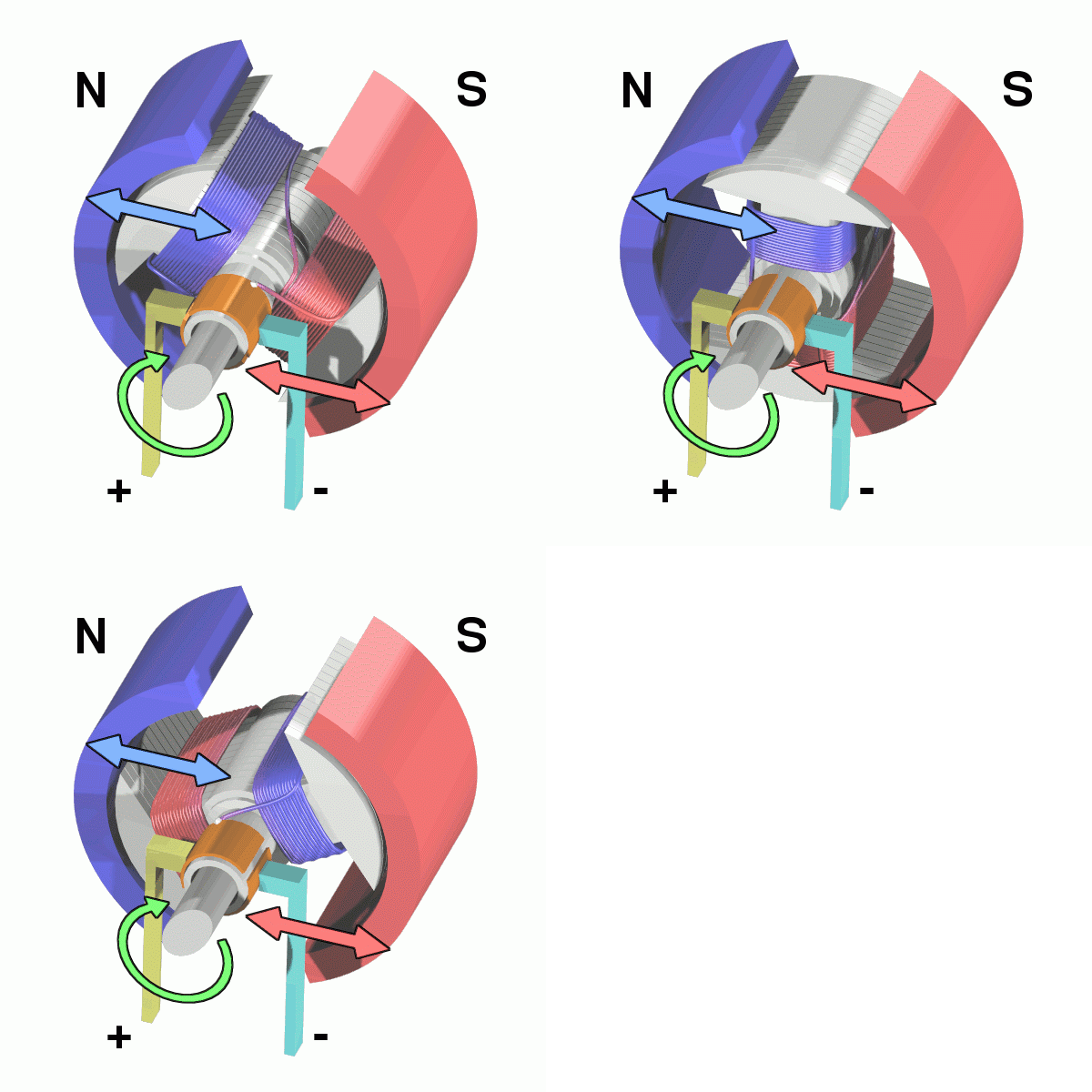
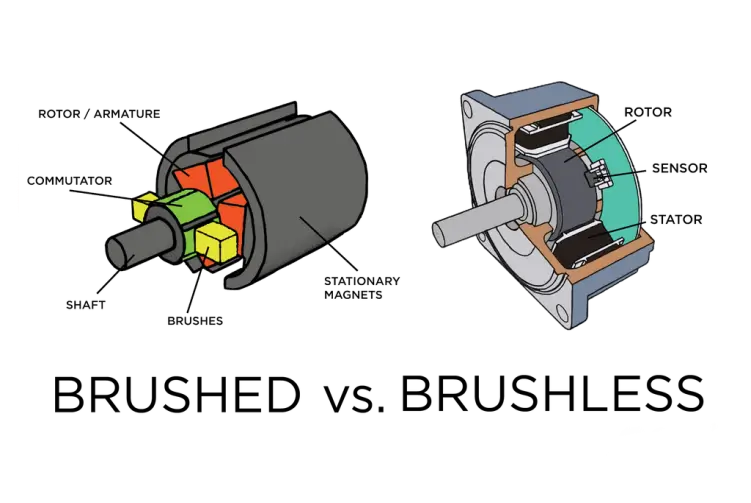
At its core, any electric motor operates on the principle of electromagnetism: using electricity to create magnetic fields that repel and attract one another, causing a central shaft to spin. For decades, the “brushed” DC motor was the industry standard. These motors used physical carbon brushes to deliver electricity to the rotating internal coils (the armature) via a mechanical switch called a commutator.
The Fundamental Shift from Brushes to Controllers
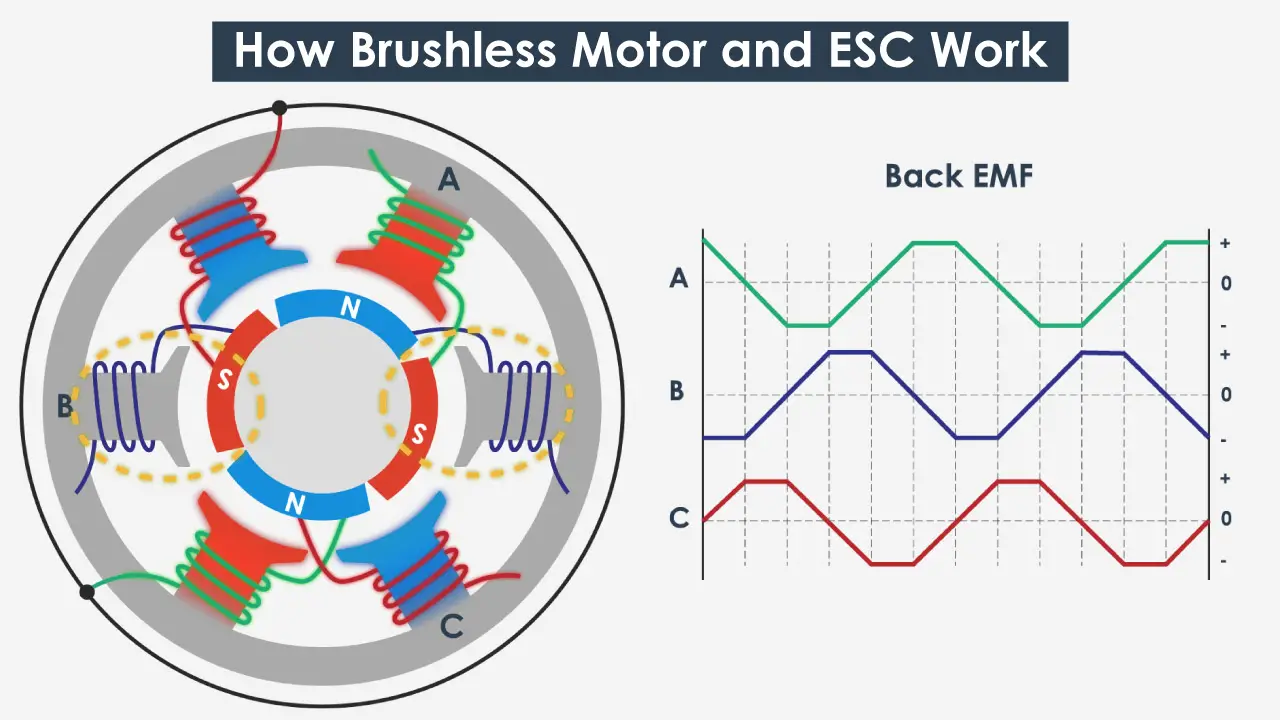
A brushless motor (BLDC) flips this design inside out. In a brushless system, the permanent magnets are placed on the rotor (the part that spins), and the copper coils are fixed on the stator (the outer shell). Because the coils do not move, there is no need for physical brushes to deliver current to them.
However, removing the brushes creates a challenge: how do you tell the motor which coils to energize and when? This is where the “tech” in brushless technology truly shines. Instead of a mechanical brush sliding against a commutator, a brushless motor relies on an Electronic Speed Controller (ESC). This sophisticated circuit uses sensors (often Hall-effect sensors) or back-EMF (electromotive force) to track the rotor’s position and switch the current with microsecond precision.
The Role of the Electronic Speed Controller (ESC)
The ESC is the “brain” of the brushless motor. It converts DC power from a battery into a three-phase alternating current that creates a rotating magnetic field. By precisely timing these pulses, the ESC can control the speed, torque, and direction of the motor with incredible accuracy. This digital control is what separates modern brushless tech from the “dumb” mechanical motors of the past, allowing for software-driven performance optimizations.
Why Brushless Technology Dominates Modern Gadgets
The move toward brushless motors is not merely an incremental upgrade; it is a fundamental shift that addresses the three biggest enemies of electronic devices: friction, heat, and energy waste.
Unparalleled Efficiency and Battery Life
In a brushed motor, the physical contact between the brushes and the commutator creates significant friction. This friction converts electrical energy into heat rather than motion. Because brushless motors eliminate this contact, they are significantly more efficient—often reaching 85-90% efficiency compared to the 75-80% typically seen in brushed counterparts. For tech users, this translates directly into longer battery life. Whether it is a smartphone vibrator motor or a professional-grade leaf blower, brushless tech extracts more work out of every milliampere-hour of battery capacity.
Longevity and Reduced Maintenance
One of the primary failure points in traditional electronics is mechanical wear. Brushes eventually wear down, spark, and require replacement or lead to the total failure of the motor. By removing the physical contact point, brushless motors are virtually maintenance-free. The only wearing parts are the ball bearings, which means a brushless motor can often outlast the device it powers. This reliability is why “brushless” has become a synonym for “professional grade” in the world of hardware and tech reviews.
Power-to-Weight Ratio and Form Factor
Because they are more efficient and generate less heat, brushless motors can be made much smaller and lighter while producing the same amount of torque. This has revolutionized the “gadget” space. High-performance drones would be nearly impossible with brushed motors, as they would be too heavy and burn out under the high RPMs required for flight. The compact nature of brushless tech allows for slimmer laptops with powerful cooling fans and more ergonomic handheld devices.
Practical Applications: Where You Encounter Brushless Tech
While the theory behind brushless motors is rooted in physics, the practical applications are what drive the consumer tech market. From hobbyist gear to essential infrastructure, this technology is everywhere.
High-Performance Drones and RC Vehicles
The drone revolution was arguably powered by the maturation of brushless motors and ESCs. To hover stably and maneuver rapidly, a drone’s flight controller must adjust the speed of the motors hundreds of times per second. The digital nature of brushless systems allows for this instantaneous response. In the RC world, brushless systems have pushed speeds to over 100 mph, providing a level of performance that was previously reserved for internal combustion engines.
The Evolution of Cordless Power Tools
If you walk into a hardware store today, the most expensive tools from brands like Milwaukee, DeWalt, or Makita are all branded as “Brushless.” In this context, the technology allows for “smart” tools. For example, a brushless drill can sense the resistance of a screw; if it hits a knot in the wood, the electronic controller can increase the current to maintain torque without the user having to adjust a dial. This intelligent power delivery prevents the motor from “cooking” itself under load.
Electric Vehicles (EVs) and Personal Transport
At a larger scale, brushless technology—specifically Permanent Magnet Synchronous Motors (PMSM)—is the heartbeat of the electric vehicle industry. From the Tesla Model 3 to electric scooters and e-bikes, the ability to precisely control power delivery and capture energy through regenerative braking is only possible thanks to the brushless design. In these applications, the “tech” isn’t just about spinning a wheel; it’s about a complex interplay between the battery management system (BMS), the inverter, and the motor.
Choosing the Right Gear: Is Brushless Worth the Premium?
When consumers see a “brushless” version of a product, it often comes with a 20% to 50% price increase. Understanding the tech helps in making an informed purchasing decision.
Assessing Your Use Case
For occasional or light use—such as a drill used once a year to hang a picture—the traditional brushed motor is perfectly adequate and more cost-effective. However, for “power users,” the investment in brushless tech pays for itself. If you are a content creator using a gimbal, a professional contractor, or a tech enthusiast building a custom PC, the precision and reliability of brushless components are essential.
The Hidden Cost: The Complexity of Repair
While brushless motors last longer, they are significantly more complex to repair. A brushed motor is a simple mechanical device; a brushless motor is an integrated system of magnets, coils, and sensors connected to a computer board. If the ESC fails, the motor won’t run, regardless of how healthy the mechanical parts are. In the tech world, this means we are moving toward a “modular replacement” culture rather than a “repair” culture.
Future Trends: The Next Frontier of Motor Technology
As we look toward the future, brushless technology continues to evolve, merging with other tech trends like Artificial Intelligence and sustainable manufacturing.
AI Integration and Smart Controllers
We are entering an era where the ESC is no longer just a switch, but an AI-driven processor. Future brushless systems will use machine learning to predict mechanical failure before it happens by analyzing micro-vibrations in the motor’s rotation. This “predictive maintenance” will be vital in industrial robotics and autonomous delivery drones, where downtime is costly.
Sustainable Materials and Engineering
One of the challenges of the current brushless tech is the reliance on “rare earth” magnets (like Neodymium). The tech industry is currently pivoting toward “Rare-Earth-Free” brushless motors, using advanced software and new coil geometries to achieve the same efficiency without the environmental and geopolitical costs of mining rare minerals. This shift represents the next great hurdle for tech manufacturers aiming for carbon neutrality.
Conclusion: The Invisible Revolution
What does a brushless motor mean? It means a transition from the mechanical age to the digital age. It represents a world where our tools are smarter, our gadgets last longer, and our transport is more efficient. While it may seem like a minor technical detail on a spec sheet, the brushless motor is one of the most significant engineering triumphs of the last fifty years. By replacing friction with code and carbon brushes with silicon chips, we have unlocked a level of performance that continues to push the boundaries of what our technology can achieve. Whether it’s the quiet hum of an electric car or the high-pitched whine of a racing drone, the brushless motor is the silent force driving the future of tech.
aViewFromTheCave is a participant in the Amazon Services LLC Associates Program, an affiliate advertising program designed to provide a means for sites to earn advertising fees by advertising and linking to Amazon.com. Amazon, the Amazon logo, AmazonSupply, and the AmazonSupply logo are trademarks of Amazon.com, Inc. or its affiliates. As an Amazon Associate we earn affiliate commissions from qualifying purchases.