
When most people think of a bread maker, they picture a simple kitchen appliance that produces a loaf of bread at the touch of a button. However, from a technological standpoint, the modern bread maker is a sophisticated marvel of engineering. It is a compact, automated factory that integrates mechanical movement, thermal precision, and microprocessor logic to replicate a process that previously required hours of human labor and artisanal intuition.
In this exploration, we will dive into the hardware and software components that answer the question: what does a bread maker actually do? We will look at the sensors, the programming, and the mechanical dynamics that allow these gadgets to turn raw ingredients into a finished culinary product.

The Core Mechanics: How Microprocessors Mimic Artisanal Skills
At its heart, a bread maker is a robotics exercise in miniaturization. To understand what the machine does, one must first look at the “brain” and the “muscle” of the unit. Unlike a standard oven, which is a passive heating vessel, a bread maker is an active system governed by a Central Processing Unit (CPU).
The Central Processing Unit (CPU) and Cycle Logic
The CPU is the command center of the bread maker. When a user selects a “Basic White,” “Whole Wheat,” or “Gluten-Free” setting, they are initiating a specific software algorithm. This algorithm dictates a precise sequence of events: the rest period, the first knead, the rise, the second knead (or “knock down”), the final proofing, and the bake.
What the machine does here is manage time and sequence with a level of accuracy a human baker might struggle to maintain. The firmware stored in the machine’s memory contains data tables that adjust the duration of each phase based on the density of the flour and the required fermentation time. Modern high-end machines even utilize “fuzzy logic,” allowing the microprocessor to make minor adjustments to the cycle duration based on external variables.
Motor Dynamics and Torque Management
The “muscle” of the bread maker is its electric motor, usually located at the base of the unit. This motor drives a paddle (or dual paddles) via a belt-and-pulley system. What the machine does during the kneading phase is more complex than simple rotation.
The motor must be designed for high torque at low speeds. As flour hydrates and gluten strands develop, the dough becomes increasingly resistant. A sophisticated bread maker uses feedback loops to maintain a consistent RPM even as the load increases. This mechanical action replicates the folding and stretching of traditional hand-kneading, which is essential for developing the structural protein network that gives bread its texture.
Thermal Engineering and Precision Sensors
If the motor handles the physical structure, the heating element and sensors handle the chemistry. Bread making is a series of chemical reactions—enzymatic activity, yeast fermentation, and Maillard reactions—all of which are highly temperature-sensitive.
Thermistor Integration and Ambient Temperature Compensation
One of the most impressive things a high-tech bread maker does is monitor its own internal environment. Most modern units are equipped with NTC (Negative Temperature Coefficient) thermistors. These sensors provide real-time temperature data to the CPU.
Why does this matter? Yeast is a living organism. If the internal temperature is too low, the dough won’t rise; if it’s too high, the yeast will die. Sophisticated bread makers, such as those from industry leaders like Zojirushi or Panasonic, actually measure the ambient room temperature before the cycle begins. If the kitchen is cold, the machine will subtly warm the ingredients during the “rest” phase. If the kitchen is hot, the machine may shorten the rise time to prevent over-fermentation.
Controlled Heating Elements and Heat Distribution
The heating element in a bread maker is usually a Calrod-style loop located at the bottom of the chamber. However, the tech challenge is preventing “hot spots” in a small, enclosed space. What the machine does during the baking phase is modulate the power to this element through a relay or a Triac.
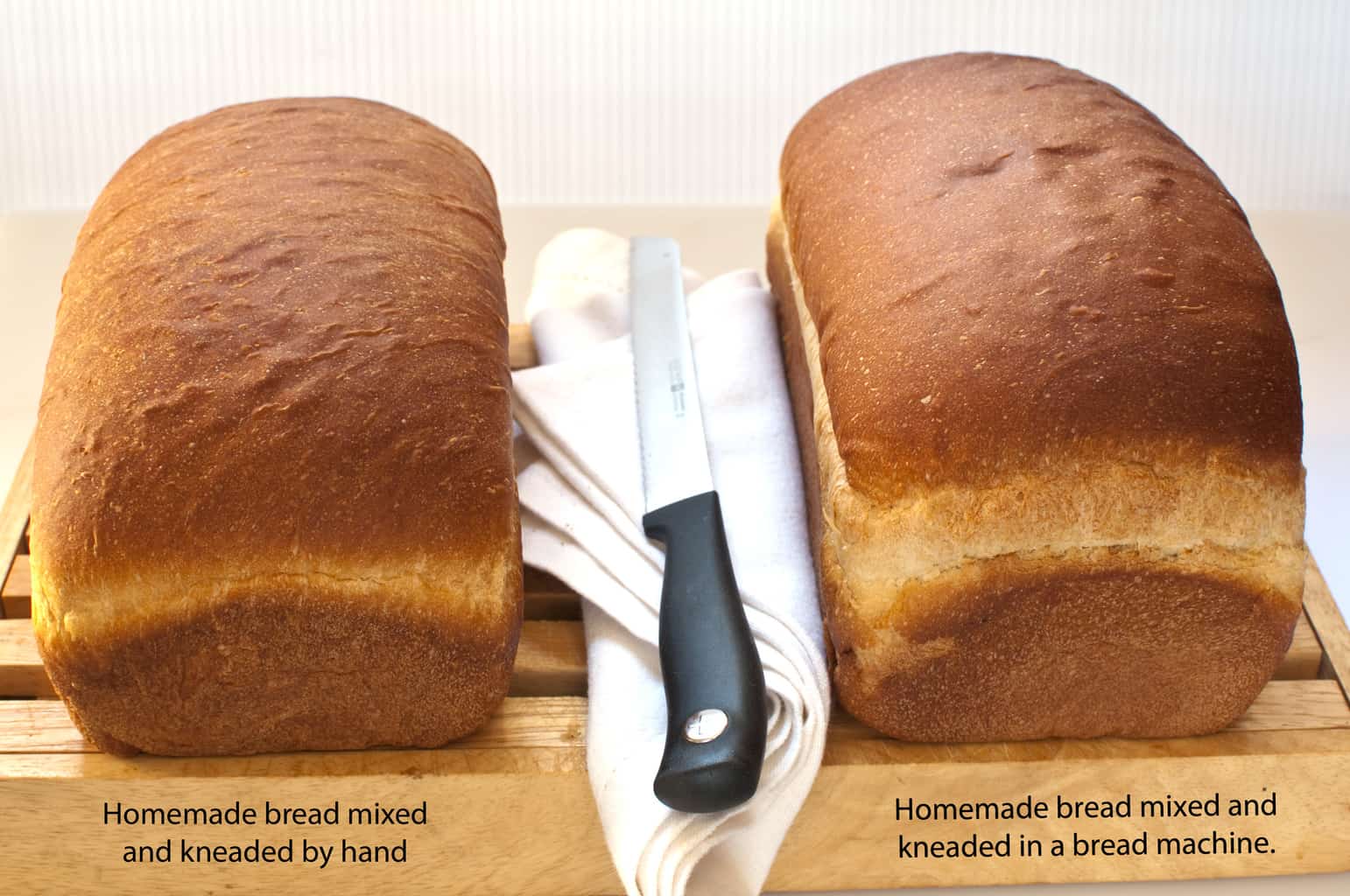
To achieve an even, golden-brown crust, the machine must manage radiant heat and convection within the small cavity. Some premium models include an internal fan for true convection baking, ensuring that the top of the loaf reaches the same temperature as the sides, a common technological hurdle in earlier generations of bread machines.
Advanced Features: The Evolution of Smart Kitchen Gadgets
As we move further into the digital age, the bread maker has evolved from a single-purpose tool into a multi-functional gadget with complex user interfaces and expanded hardware capabilities.
Specialty Cycles and Software Presets
Modern bread makers do far more than bake bread. Through the expansion of their software libraries, these machines now include cycles for jam, cake, sourdough starters, and even yogurt. Each of these functions requires a different “profile.”
For example, the “Jam” setting involves a constant, low-speed stir combined with a high-heat simmer to evaporate moisture—a completely different mechanical and thermal profile than baking a loaf of bread. The ability of a single piece of hardware to pivot between these various tasks is a testament to the versatility of its embedded programming.
Delayed Start Timers and Real-Time Clocks
The “Delay Start” feature is a staple of bread maker tech, but its implementation requires a reliable real-time clock (RTC) integrated into the circuit board. The machine must calculate the end-time and work backward to determine exactly when to drop the yeast or start the motor. This allows the user to load ingredients in the evening and have the machine complete the bake exactly at 7:00 AM, ensuring maximum freshness through automated scheduling.
The Future of Bread Making Tech: Connectivity and Customization
The next frontier for the bread maker lies in the Internet of Things (IoT) and open-source customization. As kitchen gadgets become smarter, the definition of what a bread maker does is expanding into the cloud.
IoT Integration and Remote Monitoring
We are now seeing the emergence of Wi-Fi-enabled bread makers. These devices allow users to monitor the progress of their loaf from a smartphone app. Beyond mere monitoring, connectivity allows for “over-the-air” (OTA) updates. If a brand develops a better algorithm for gluten-free baking, the machine can update its own firmware to improve performance without the consumer needing to buy a new model.
This connectivity also allows for integration with smart home ecosystems. Imagine a scenario where your bread maker communicates with your smart coffee machine, ensuring that both your fresh toast and your espresso are ready at the exact same moment based on your morning alarm.
User-Programmed Algorithms for Specialized Diets
For the “prosumer” or tech enthusiast, some high-end bread makers now offer fully programmable cycles. This moves the machine away from a “black box” appliance toward an open platform. Users can specify exactly how many minutes the machine should knead, what temperature it should maintain during the second rise, and the precise wattage of the heating element during the bake.
This level of customization is particularly important for the growing market of specialized diets. Alternative flours—such as almond, coconut, or oat flour—do not behave like wheat. They require different hydration levels and thermal exposures. By allowing users to “code” their own baking cycles, manufacturers are turning the bread maker into a specialized laboratory for food science.
Conclusion: More Than Just a Box
When you ask, “What does a bread maker do?” the answer is far more complex than “it bakes bread.” It is a device that uses sensors to feel the temperature, microprocessors to think through a timeline, and high-torque motors to perform physical labor. It is a prime example of how technology can take a traditional, labor-intensive craft and translate it into a series of automated, repeatable, and precise digital steps.
As hardware continues to shrink and software becomes more intelligent, the bread maker will continue to evolve. It stands as a bridge between the ancient art of fermentation and the modern world of automated robotics, proving that even the most basic staples of human life can be enhanced through thoughtful technological application. Whether it is through IoT connectivity or precision thermal management, the bread maker remains a quintessential gadget for the modern, tech-integrated home.
aViewFromTheCave is a participant in the Amazon Services LLC Associates Program, an affiliate advertising program designed to provide a means for sites to earn advertising fees by advertising and linking to Amazon.com. Amazon, the Amazon logo, AmazonSupply, and the AmazonSupply logo are trademarks of Amazon.com, Inc. or its affiliates. As an Amazon Associate we earn affiliate commissions from qualifying purchases.