
A bonded title, often referred to as a “defective title” or “brand title” in certain jurisdictions, is a crucial concept within the realm of vehicle ownership and financial transactions, particularly when dealing with vehicles that have had their original title lost, stolen, or are otherwise encumbered. In essence, it’s a mechanism that allows individuals to legally obtain ownership of a vehicle when the standard title process is complicated or impossible due to missing or problematic documentation. This process is primarily concerned with mitigating financial risk, ensuring the integrity of vehicle ownership records, and providing a pathway for legitimate acquisition of vehicles that might otherwise be unsellable or unusable. Understanding what a bonded title means is essential for anyone who finds themselves in such a situation, or for those in the automotive industry who deal with these complexities.

The Genesis of a Bonded Title: When Standard Ownership is Compromised
The need for a bonded title arises when the traditional method of transferring vehicle ownership, which relies on a clear and unencumbered Certificate of Title, is not feasible. This typically occurs in several specific scenarios, each carrying its own set of challenges and implications for potential owners. The core issue is the absence of a verifiable, legal document that definitively proves ownership and clears the vehicle of any liens or claims.
Lost or Stolen Titles: The Most Common Culprit
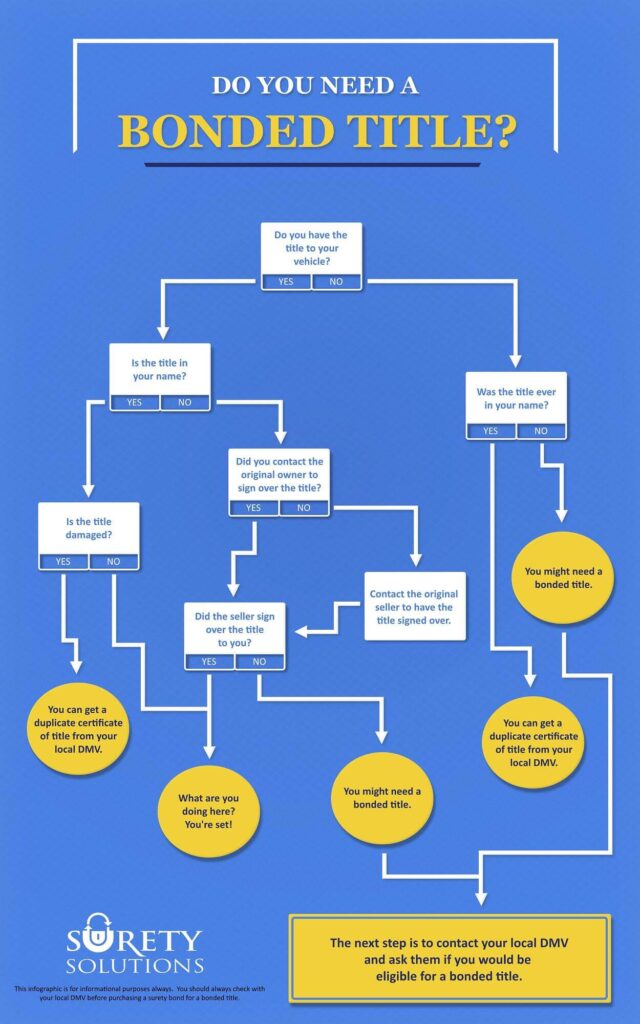
One of the most frequent reasons for requiring a bonded title is the loss or theft of the original vehicle title. This can happen to the registered owner, a lienholder, or even during a transaction. Without the physical title document, the rightful owner cannot legally sell or transfer the vehicle. While a duplicate title can often be obtained from the Department of Motor Vehicles (DMV) or equivalent state agency, this process can be lengthy and sometimes impossible if the original was irrevocably lost or if there are discrepancies in ownership records. In such cases, a bonded title acts as a surrogate, allowing the new owner to establish legal possession. The DMV will often require a surety bond to be purchased before issuing a bonded title. This bond serves as a financial guarantee to protect previous owners or lienholders who might have a valid claim to the vehicle, even if their documentation was lost.
Title Brands and Their Implications
Beyond simple loss, titles can carry “brands” that denote specific conditions or histories of the vehicle. These brands, such as “salvage,” “rebuilt,” “flood,” or “lemon,” significantly impact the vehicle’s value and marketability. While a bonded title is not directly synonymous with these brands, it can sometimes be a consequence of dealing with vehicles that have had their titles “washed” or improperly handled after incurring such brands. For example, if a vehicle was salvaged and then rebuilt, but the original salvage title was lost or never properly reassigned after repairs, a bonded title might be the only way to legally register and sell it. The surety bond in this instance would protect potential buyers from undisclosed past issues that might resurface.
Out-of-State Purchases and Title Issues
Acquiring a vehicle from another state can also lead to situations where a bonded title becomes necessary. This might occur if the seller is unable to produce the original title due to any of the aforementioned reasons, or if there are inconsistencies between the vehicle’s VIN and the information on the seller’s records. The complexities of inter-state titling laws can further complicate matters, and a bonded title can provide a standardized solution to navigate these discrepancies and ensure legal ownership in the new state.
The Mechanics of a Bonded Title: Navigating the Surety Bond Landscape
At the heart of the bonded title process lies the surety bond. This is not an insurance policy in the traditional sense but rather a three-party contract involving the principal (the applicant for the bonded title), the obligee (the state DMV), and the surety company. The bond acts as a financial safeguard, ensuring that if a legitimate claim is made against the bonded title, the obligee (and by extension, any harmed third party) will be compensated up to the bond’s limit.
Understanding the Surety Bond: A Guarantee of Good Faith
A surety bond for a bonded title is essentially a promise from a third-party surety company that the bondholder will fulfill their legal obligations. In this context, the applicant is promising that they believe they have legitimate ownership and that they are not attempting to defraud anyone. The surety company, by issuing the bond, is vouching for the applicant’s good faith, but with a financial backstop. The bond amount is typically determined by the DMV and is often based on the vehicle’s fair market value. This ensures that any potential claim against the title, such as from a previous owner or lienholder who reappears, can be adequately covered.
The Application Process: Requirements and Due Diligence
Obtaining a bonded title is not a simple transaction; it involves a rigorous application process designed to prevent fraudulent title transfers. The applicant must usually demonstrate to the DMV that they have made a genuine effort to locate the original title and that they have a valid reason for not being able to obtain it through standard channels. This often involves providing documentation such as bills of sale, proof of prior ownership attempts, and a sworn affidavit outlining the circumstances. Once the application is reviewed and approved, the applicant will be instructed to purchase a surety bond from a licensed surety company. The DMV will then issue a bonded title, which serves as the official legal document of ownership, albeit with a notation indicating its bonded status.
The Waiting Period and Potential Claims
Once the bonded title is issued, there is typically a statutory waiting period, often ranging from one to several years, during which time any rightful owner or lienholder who believes they have a claim to the vehicle can come forward. If no legitimate claims are filed during this period, the bonded title eventually becomes a clear and regular title, effectively removing the “bonded” designation. However, if a claim is filed, the surety company will investigate. If the claim is deemed valid, the surety company will pay the claimant up to the bond’s limit. The bondholder (the person who obtained the bonded title) is then responsible for reimbursing the surety company for any claims paid out. This is why it is crucial for applicants to be absolutely certain of their ownership rights and to have exhausted all other avenues before pursuing a bonded title.
The Implications of a Bonded Title: Value, Transferability, and Risk
A bonded title, while providing a legal pathway to ownership, is not without its implications. It carries certain distinctions that can affect the vehicle’s value, its ability to be transferred, and the overall risk involved for all parties. Understanding these nuances is critical for making informed decisions.
Reduced Market Value and Saleability
Vehicles with bonded titles generally have a lower market value compared to vehicles with clear titles. This is due to the inherent uncertainty and potential risk associated with a bonded title. Potential buyers may be wary of purchasing a vehicle that has had its ownership history clouded, fearing that undisclosed issues could arise in the future. The “bonded” status on the title can also make it more difficult to secure financing or comprehensive insurance, further limiting the pool of potential buyers and driving down the price. Sellers must be transparent about the bonded title status and be prepared to offer a lower price to compensate for the added risk.
Restrictions on Transfer and Financing
While a bonded title allows for legal ownership and registration, it can sometimes impose restrictions on future transactions. Some states may have specific rules regarding the transfer of vehicles with bonded titles, and certain jurisdictions might not allow them to be titled or registered at all until the bond period expires and the title is cleared. Furthermore, obtaining loans or financing for a vehicle with a bonded title can be challenging. Lenders are often hesitant to extend credit when there’s a lingering possibility of a prior claim against the collateral. Similarly, some insurance companies may be reluctant to offer full coverage, preferring to offer only liability insurance.
Long-Term Security and the Path to a Clear Title
The ultimate goal for anyone holding a bonded title is to transition it to a clear title. This is achieved by successfully navigating the statutory waiting period without any legitimate claims being filed. Once the period expires, and assuming the DMV is satisfied that all obligations have been met, the bonded status is removed, and the vehicle receives a clear title. This process restores the vehicle’s marketability and value. However, until that point, the owner must remain diligent. It’s imperative to keep records of all transactions, payments, and any communications related to the vehicle’s history. This meticulous record-keeping is crucial for protecting oneself and for facilitating the eventual transition to a clear title.
Who Benefits from a Bonded Title and When It’s the Right Solution
The existence of the bonded title process serves a vital purpose by providing a resolution for situations that would otherwise leave individuals in legal limbo regarding vehicle ownership. It’s a mechanism that balances the need for established ownership records with the practical realities of lost documentation and complex histories.
Individuals Acquiring Vehicles in Specific Circumstances
The primary beneficiaries of the bonded title process are individuals who have acquired a vehicle under circumstances where the seller could not provide a clear title. This might include purchasing a vehicle at an estate sale, from a private seller who lost the title, or even inheriting a vehicle where the title is missing. It also includes situations where a vehicle has been impounded and the original owner cannot be located, or when a vehicle has been rebuilt and the original title documentation is incomplete. In these scenarios, a bonded title offers a legal avenue to establish ownership and use the vehicle, rather than abandoning the purchase or being unable to register it.
Dealerships and Automotive Businesses
Automotive businesses, including dealerships and salvage yards, also frequently utilize the bonded title process. When acquiring vehicles at auctions or from individuals where title issues exist, a bonded title can be a necessary step to bring the vehicle into legal inventory. For dealerships, this allows them to properly register, sell, and finance these vehicles, albeit with the understanding of the reduced market value and the need for transparency with potential buyers. It’s a tool that allows businesses to operate efficiently while adhering to legal requirements, even when faced with imperfect documentation.

A Solution for Complex Ownership Trails
Ultimately, a bonded title is a solution for situations where the “chain of ownership” is broken or unclear. It provides a legal framework to re-establish that chain, albeit with a temporary financial guarantee. It’s not a shortcut to acquiring a vehicle with questionable origins, but rather a procedural step to legalize ownership when standard methods fail. For those who find themselves in this unique situation, understanding the requirements, risks, and the eventual path to a clear title is paramount to navigating the process successfully and regaining full, unencumbered ownership.
aViewFromTheCave is a participant in the Amazon Services LLC Associates Program, an affiliate advertising program designed to provide a means for sites to earn advertising fees by advertising and linking to Amazon.com. Amazon, the Amazon logo, AmazonSupply, and the AmazonSupply logo are trademarks of Amazon.com, Inc. or its affiliates. As an Amazon Associate we earn affiliate commissions from qualifying purchases.